If you're in Florida and your power bills keep reminding you how much air conditioning costs, you're probably doing the same math most smart property owners do. You look at your annual usage, see something around 10000 kWh, and ask a simple question: what kind of solar system do I need to offset that, and is it worth doing now?
That’s the right question. A common mistake is to begin by shopping panels first. You shouldn’t. You should start with your usage, your roof, your outage risk, and your financial target. A 10000 kWh solar system isn’t really about a shiny equipment list. It’s about building a Florida energy plan that cuts utility spend and gives you a more resilient property during storm season.
In Florida, the best solar decisions come from sizing correctly, not buying the biggest system someone tries to sell you. If your goal is to produce around 10000 kWh per year, you need to understand what that means in system size, roof space, battery strategy, and return on investment. You also need to account for heat, humidity, orientation, and outage planning. Those details decide whether solar performs like an asset or turns into a disappointing purchase.
Is A 10000 kWh Solar System Right For You
If your annual electricity use is close to 10000 kWh, you're in a very common planning range for Florida homes and some small commercial properties. That puts you in a practical solar target zone. You're not guessing at a vanity project. You're trying to match solar production to a real utility burden.
The first move is simple. Pull 12 months of electric bills and total your annual consumption. If you're near that 10000 kWh mark, you likely need a system that can produce roughly that amount over a year under Florida conditions. That doesn't automatically mean a 10kW array. Production target and system size are not the same thing, and that distinction matters.
Start With Your Actual Goal
Some Florida clients want the lowest possible electric bill. Others care more about resilience during storm outages. Others want both. Those are different projects, even if annual usage is similar.
Use this filter:
- Bill reduction focus: Size the system around annual usage and utility rate exposure.
- Backup power focus: Add battery planning early, because outage performance changes the design.
- Cash flow focus: Compare purchase, loan, and contract structures such as a solar power purchase agreement before you lock into procurement.
Practical rule: If you don't know your annual kWh usage, your daytime load pattern, and what you want backed up during an outage, you're not ready to approve a solar proposal.
Who Should Move Forward
A 10000 kWh target usually makes sense for owners who plan to stay put long enough to benefit from ongoing savings and who have a roof or site with usable solar access. It’s also a strong fit for buyers who are tired of relying completely on the grid during summer strain and hurricane season.
My advice is direct. If your Florida property has solid sun exposure and your electric usage is consistently high enough to justify the investment, you should seriously evaluate solar now. But evaluate it like a capital project, not a retail purchase.
Decoding What 10000 kWh Of Solar Production Means
Most confusion starts here. kWh and kW are not interchangeable, and if a proposal blurs them, slow down.
A kilowatt-hour (kWh) is energy over time, comparable to the total miles you drive in a year. A kilowatt (kW) is power capacity, akin to engine size. So when someone says they want a 10000 kWh solar system, what they usually mean is they want a solar setup that produces 10000 kWh annually, not a system with a 10000 kW power rating.

What That Production Level Looks Like
For planning purposes, a 10kW solar system is ideally suited for homes using 900 to 1,250 kWh monthly, or 10,800 to 15,000 kWh annually, and this system size generates 11,000 to 15,000 kWh annually across most U.S. locations according to 10 kW home usage and yield data.
That matters because a Florida owner targeting 10000 kWh per year may not need to chase the biggest residential system on the market. In many cases, you're trying to land in the zone where production closely matches your annual use without overspending on excess capacity you won’t value properly.
Why Florida Owners Need This Distinction
A proposal can sound impressive because the panel count is high or the equipment brand is familiar. That’s not the same as matching your production goal. The better question is this: how much electricity will this system realistically generate on your property over a year?
Here is a clear explanation:
- Your utility bill tells the demand story.
- Your roof and site tell the production story.
- The right system size is where those two meet.
When a buyer says, “I want a 10000 kWh solar system,” the real consulting job is translating that annual energy target into the right Florida-specific design.
A Simple Reality Check
If your home has three to five occupants, an electric vehicle, or all-electric appliances, your annual use can easily justify a system in this planning range. If your usage is lower, downsizing may produce a better return. If your usage is higher because of cooling loads, pool equipment, or electrification, your target may need to increase beyond 10000 kWh.
That’s why smart solar planning starts with annual production goals, not gadget shopping.
Sizing The Right Solar System In Florida
You are in Florida, your bill spikes every summer, and a sales rep waves around a 10kW proposal like it is automatically the right answer. It is not. Sizing a system for 10000 kWh a year starts with your property, your outage risk, and your financial target. A good design hits the production goal without creating roof, insurance, or replacement headaches later.

Start With Real-World Constraints
For a Florida home, the right size is shaped by four things fast.
- Usable roof space: Clear roof area matters more than total square footage.
- Roof orientation and pitch: South, southwest, and west exposures often help offset Florida afternoon cooling demand.
- Shading and heat losses: Trees, neighboring structures, and high roof temperatures all cut production.
- Resilience goals: If you want battery backup later, the layout and inverter choice need to support that from day one.
This is procurement strategy, not just equipment selection. If an installer sizes your system from satellite imagery and one utility bill, you are not getting a serious plan.
Size For Production, Then Stress-Test The Design
A proposal should show how the system is expected to perform on your specific roof over a full year. That includes module placement, setback rules, vent locations, and the losses built into the model. If those assumptions are sloppy, the output estimate is sloppy too.
Florida clients should press on three points:
- What roof planes are being used, and why
- What losses were assumed for heat, shading, and system design
- How the design changes if you add a battery, EV charger, or electric water heater later
That last point gets ignored too often. A cheap design can trap you in an inverter setup that limits battery options or forces expensive electrical rework later.
Roof Geometry Changes The Economics
A large roof does not guarantee an easy solar project. Hips, valleys, plumbing vents, ridges, fire setbacks, and homeowner association visibility rules can all reduce the space that works for panels.
Roof age matters too. If the roof has limited life left, solve that before installation or coordinate both scopes together. A proper solar and roof planning review usually saves money because it reduces duplicate labor, permit friction, and the risk of removing panels for reroofing sooner than expected.
Florida Buyers Should Size For Storm Reality
In Florida, hurricane exposure belongs in the sizing discussion. It affects attachment method, equipment placement, and what kind of resilience you are buying. Panels alone cut bills. They do not keep the lights on during a grid outage unless the system is designed for backup from the start.
My recommendation is simple. Choose the smallest system that reliably meets your annual production target under realistic Florida conditions, then vet the design like a risk manager. Ask how it performs in heat. Ask where the equipment sits relative to wind and flood exposure. Ask what future battery integration will cost before you sign.
The right solar system is the one that produces as promised, survives Florida conditions, and fits a long-term plan for savings and backup power.
Estimating Costs And Payback In The Sunshine State
You get three proposals for a Florida solar project. One shows the lowest price. One promises the fastest payback. One includes battery-ready design and better storm-hardening details. The right choice is usually the third one, because a cheap system that underperforms or creates upgrade headaches is expensive in practice.
Cost and payback only make sense after the system is designed correctly. In Florida, that means looking past the headline price and checking roof complexity, interconnection requirements, equipment placement, and whether the project is being procured as a long-term asset or just sold as a monthly payment.

Start With Net Cost, Not Sticker Price
The number that matters is your installed cost after incentives, because that is the amount your savings need to recover. For many eligible buyers, the federal tax credit materially improves the return. Florida buyers should also verify utility compensation rules and tax treatment before comparing proposals, since those details can change the value of exported solar and the pace of payback.
If you need a policy refresher before reviewing bids, use this Florida solar incentive guide and then bring those assumptions into your proposal comparison.
Payback Is A Design Question First
Too many Florida buyers ask for a payback number before anyone has validated production. That is the wrong order.
First confirm annual production from your actual roof. Then test the economics against your utility bill, your daytime usage pattern, and your financing terms. If the production model is weak, the payback estimate is weak too.
A disciplined payback review should include:
- Installed cost after incentives. This sets the recovery target.
- Estimated annual production. Use the site-specific design, not a generic statewide average.
- Current utility rate and expected escalation. Solar offsets more value as utility costs rise.
- Self-consumption versus export value. Power used on-site is often more valuable than power sent out.
- Battery-ready costs. Even if you do not add storage now, know what future integration will require.
- Ownership timeline. Returns improve when you hold the property long enough to capture the savings.
What Florida Clients Should Demand From The Model
Ask every bidder for the same financial view so you can compare apples to apples. I recommend a simple consultant-style decision model with a base utility case, a solar production case, and a sensitivity check for lower export value or higher installation cost.
Then ask harder questions. What happens if the roof work is more involved than expected? What happens if you want battery backup later? What parts of the quoted savings depend on assumptions that the contractor did not explain clearly?
That process removes a lot of sales fluff.
A solid solar proposal should hold up under review by your accountant, your insurance advisor, and anyone in your household who cares about storm risk and long-term costs.
In Florida, the best solar investment is rarely the cheapest bid. It is the project that produces close to forecast, qualifies cleanly for incentives, and is procured with hurricane exposure, future battery integration, and long-term ownership in mind.
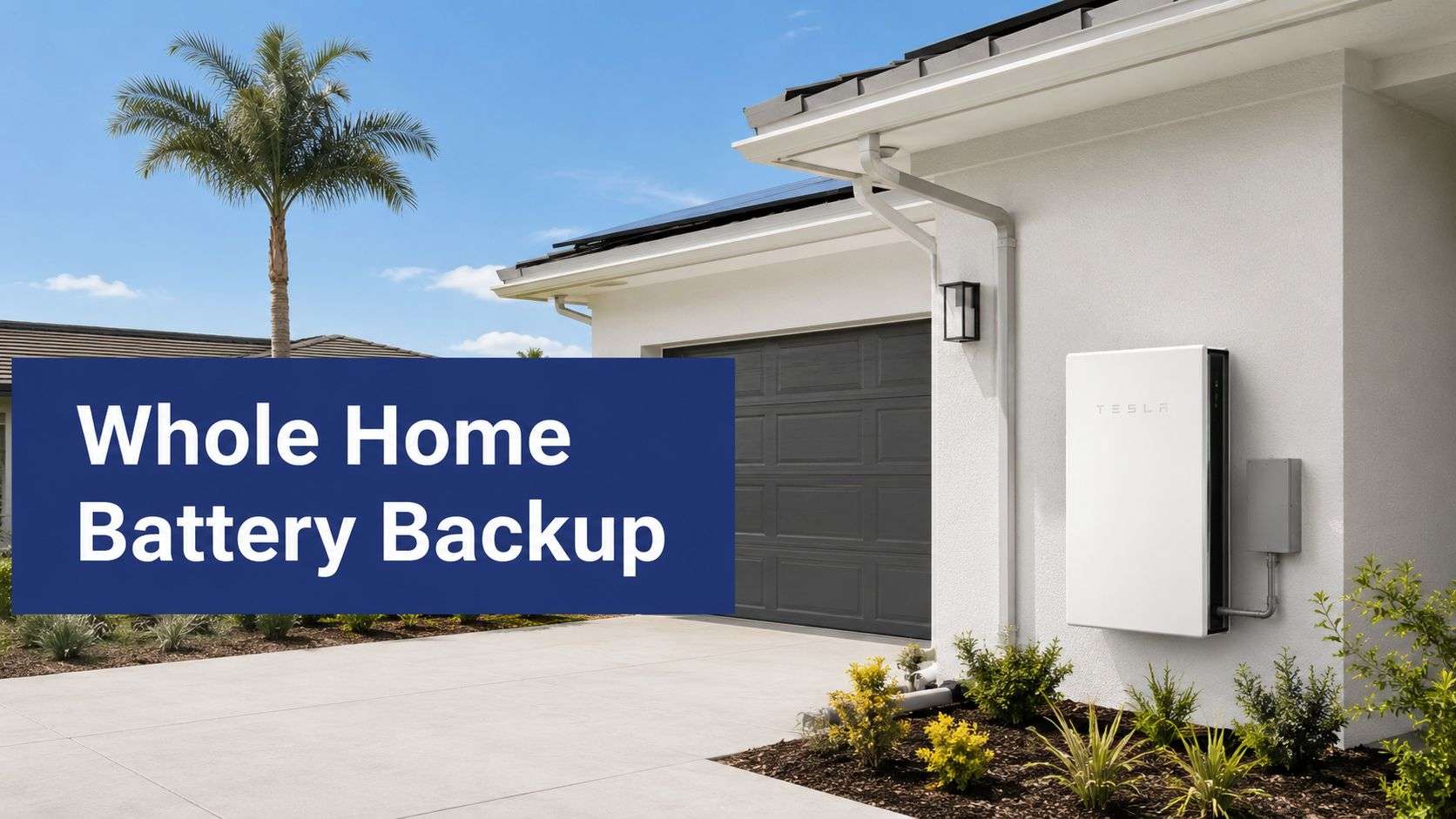
Building Resilience With Battery Storage
If you live in Florida and you're evaluating solar without considering battery storage, you're only solving half the problem. Utility savings matter. But during storm season, resilience becomes the issue that people care about immediately.
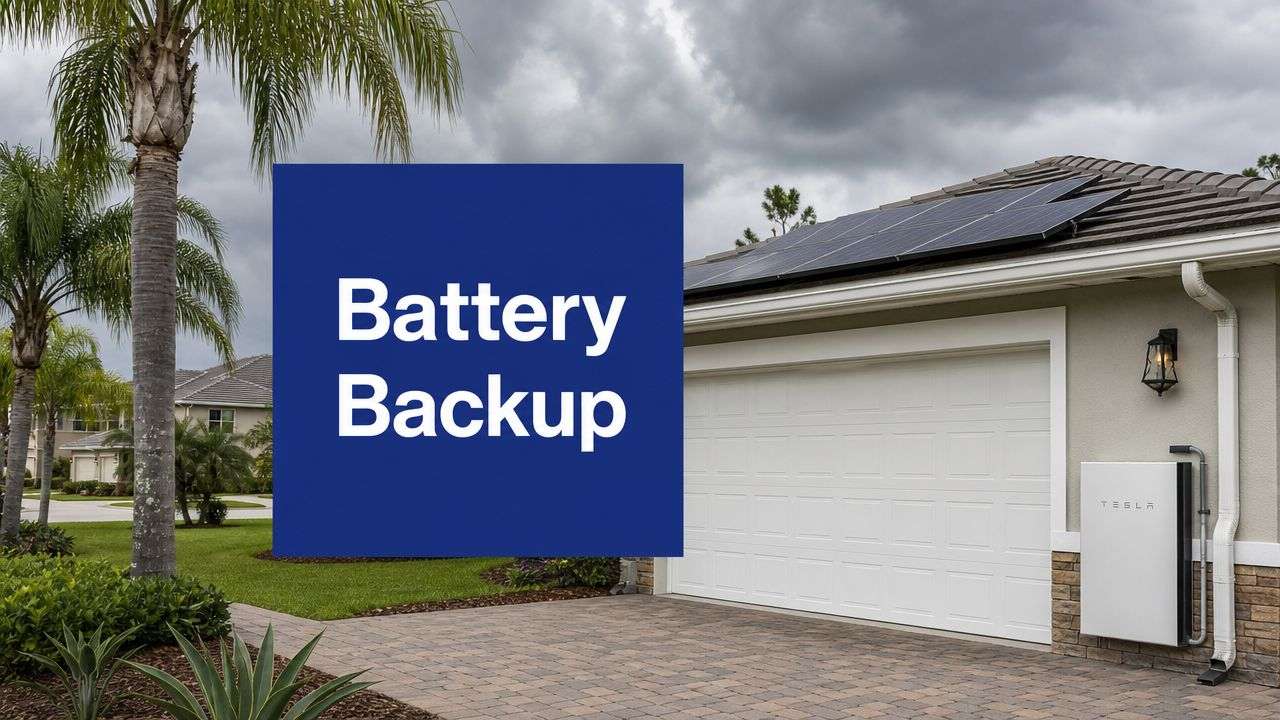
A grid-tied solar system without storage may reduce bills well. It does not automatically keep your property powered during an outage. If backup matters, the battery design needs to be intentional from day one.

What Battery Storage Changes
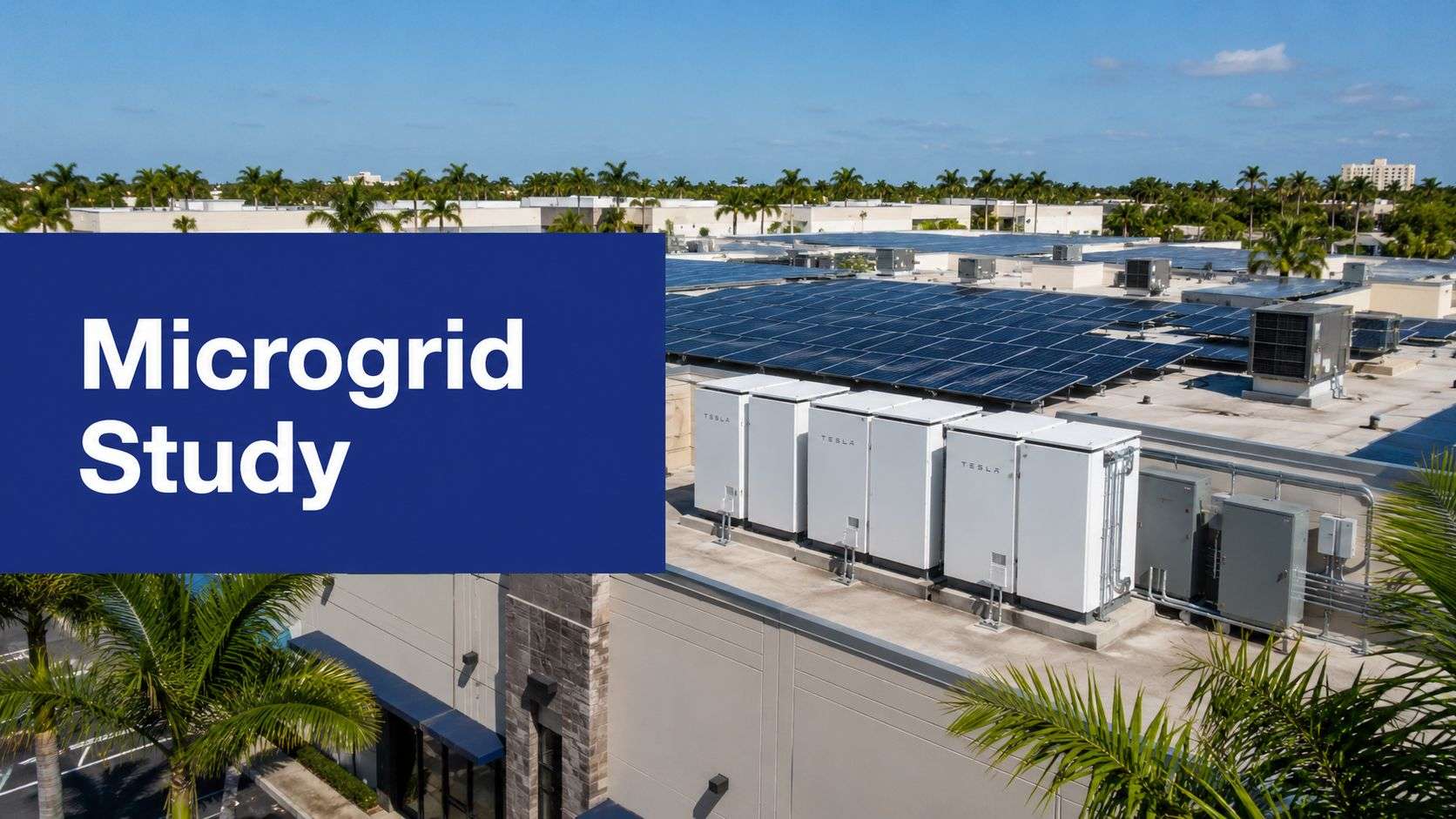
With battery integration, 20 to 48kWh storage paired with a 10kW system can enable 80 to 100% self-consumption and power critical loads in the 5 to 10kW range, such as HVAC and refrigeration, during Florida storm outages. The same setup can store a daily surplus of 30 to 45kWh and recharge fully in under 3 days post-outage according to 10kW solar kit and battery storage performance details.
That’s the difference between solar as a bill tool and solar as a resilience asset.
Size Batteries Around Critical Loads
Don’t start battery planning by asking how many batteries you can afford. Start by listing what must stay on when the grid fails.
For most Florida properties, the critical-load conversation usually includes:
- Refrigeration and food protection
- Basic lighting and communications
- Medical devices if applicable
- Selected HVAC loads
- Security systems and internet
- Water pumping or essential building controls
Battery planning involves practical considerations. A whole-home backup goal is different from a critical-load backup goal. The second is usually the smarter starting point because it reduces cost pressure while preserving the functions you need during a prolonged outage.
Why Storage Is A Strategic Decision
Storage also improves how much of your own solar production you use on-site. That matters under net billing structures because exported power may not be as valuable to you as self-used power.
If you want a familiar benchmark for residential backup storage options, review how a Powerwall-style installation is approached. The right battery system, though, should be chosen based on your load profile, outage tolerance, and electrical setup, not brand hype.
During hurricane season, the right battery system does more than keep lights on. It keeps a property functional, safer, and far less dependent on uncertain restoration timelines.
My view is simple. In Florida, battery storage isn't a luxury add-on for many buyers anymore. It's part of a serious energy strategy.
Maximizing Your Solar Production And Value
Two Florida homes can buy similar solar equipment and get very different outcomes. The difference is design discipline.
A 10kW solar system's production can vary from 11,000 to 18,000 kWh annually depending on location, with regions like Florida averaging 3.7 to 4.0 daily sun hours, and east or west-facing systems can produce 15 to 20% less energy than south-facing installations according to 10kW solar production and orientation data. That single fact should change how you evaluate every proposal.
Orientation And Shading Decide More Than Brand Names
Panel brand matters. Roof orientation matters more.
If your best roof planes face east or west, your system can still work in Florida. But you need to accurately price the tradeoff because lower production changes your return. The same goes for shading. A few hours of obstruction from trees, nearby structures, or roof features can gradually erode output.
The practical takeaway is straightforward:
- Prioritize the cleanest solar exposure first
- Treat shading as a design problem, not a minor inconvenience
- Push for production modeling based on your actual roof geometry
- Avoid buying solely on panel wattage or panel count
Florida Heat Is Not A Footnote
Florida gives you strong solar resource, but it also gives you heat and humidity. Hot panels don't perform at their lab rating. That's why design assumptions need to be conservative enough to reflect real operating conditions.
This is also why monitoring matters. Once the system is online, owners should watch production trends and compare them against expected seasonal behavior. If output starts drifting, you want to know whether soiling, shading growth, hardware issues, or inverter faults are responsible.
Utility Strategy Affects Value Too
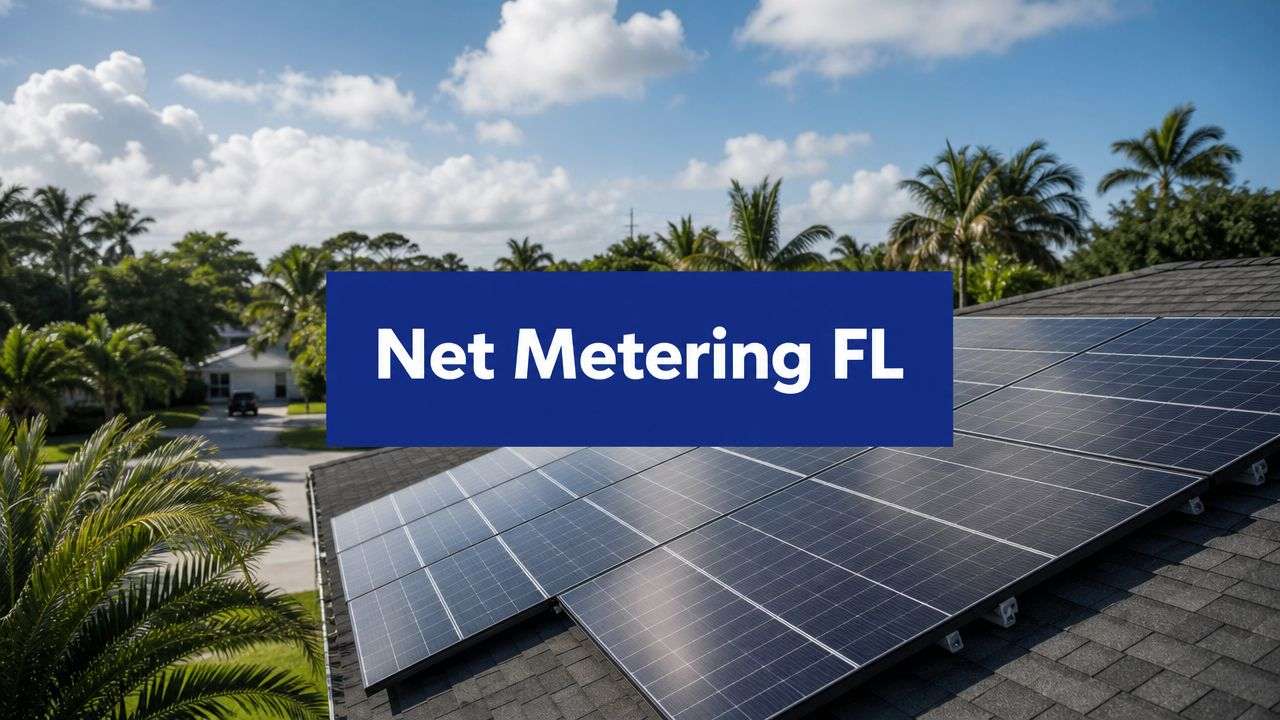
Production is only half the equation. Capturing value from that production depends on how your utility interaction is structured. If you're in TECO territory, review the utility-facing mechanics through this TECO net metering resource.
A well-designed Florida solar system wins twice. It produces predictably, and it sends that production into the most valuable use case possible.
The highest-return projects are rarely the flashiest. They’re the ones designed around roof physics, local sun, export rules, and the owner’s actual load pattern.
Your Strategic Checklist For Solar Success
If you're serious about a 10000 kWh solar system in Florida, stop thinking like a shopper and start thinking like an owner making a long-term energy decision. The right process removes guesswork and protects your return.
Use This Order
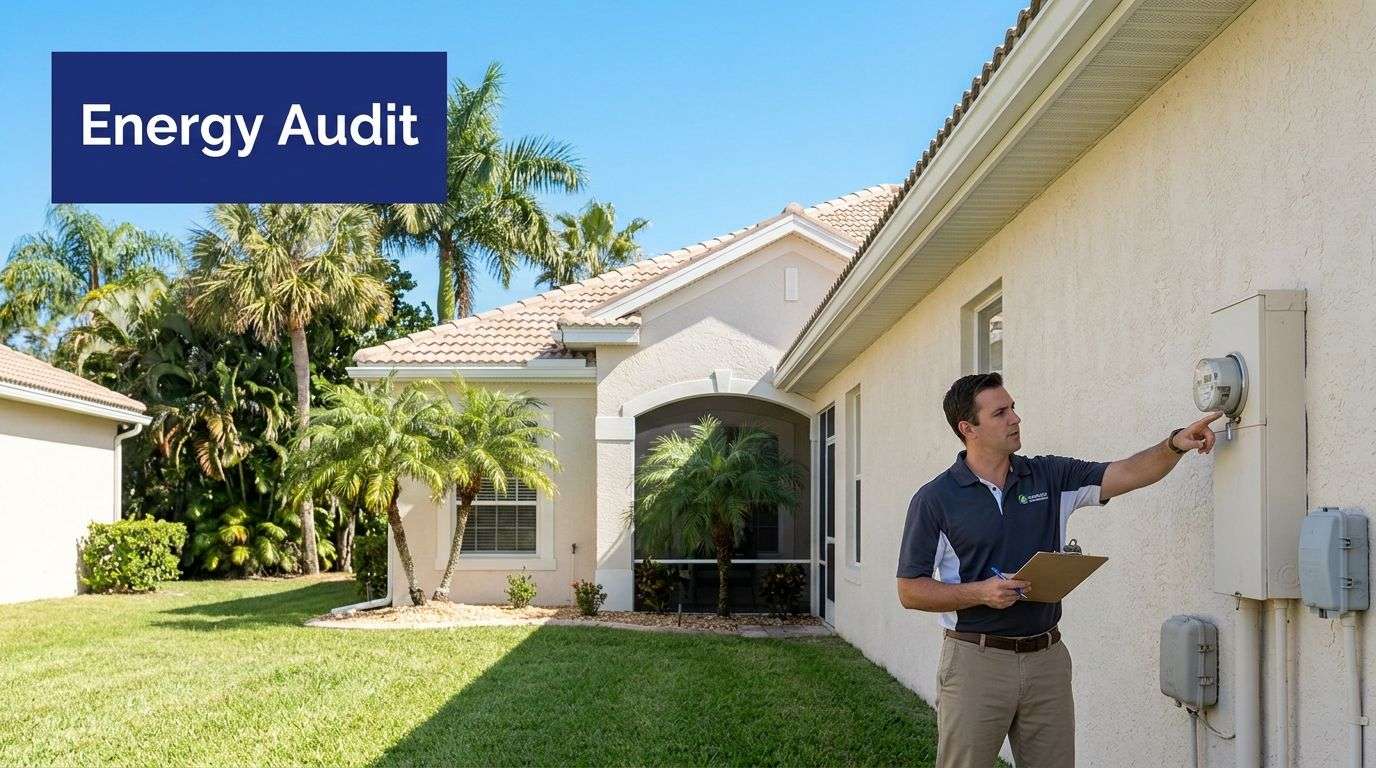
Collect a full year of utility data.
Don’t rely on one high summer bill. Use a full annual history so the production target reflects real consumption.Check the site before discussing equipment.
Roof age, usable square footage, orientation, shading, and electrical constraints should be reviewed before anyone pushes a specific panel package.Define your actual objective.
Decide whether your priority is maximum bill offset, outage backup, or a balanced approach. These goals produce different system designs.
Demand Decision-Grade Analysis
A serious buyer should insist on more than a sales estimate. Ask for:
- A feasibility study based on your property conditions
- A production model that reflects orientation and losses
- An ROI model tied to your utility pattern and incentive eligibility
- A storage scenario if resilience matters during storms
De-Risk Procurement
Independent advice is of utmost importance. A consultant-led process helps you compare proposals, challenge assumptions, and avoid overbuying or underbuilding. It also helps coordinate design intent with the licensed parties who eventually install the system.
Use this final gut check before moving ahead:
- If the proposal is vague on production, slow down
- If the battery plan ignores critical loads, redesign it
- If the financial model depends on broad assumptions, tighten it
- If the roof condition is uncertain, resolve that first
Florida solar can be a smart investment. But only when the project is sized correctly, modeled accurately, and built around how your property uses power.
If you want a clear answer before committing to equipment or installation contracts, Solar Energy Management LLC helps Florida property owners evaluate feasibility, model ROI, plan battery storage, and coordinate a lower-risk procurement process. Their role is advisory, not high-pressure sales, which is exactly what you want when the goal is turning solar into a durable financial and resilience asset.