You’re probably here because a real decision is in front of you. A utility bill keeps landing higher than expected, or three solar proposals are already sitting in your inbox and each one claims the best savings, the best equipment, and the best warranty. In Florida, that confusion is common because the market includes national sales brands, local installers, battery-focused firms, and large commercial EPCs serving very different types of projects.
For homeowners, solar usually comes down to lowering monthly power costs, adding backup capability, and reducing exposure to future rate increases. For commercial owners, the discussion is broader. System sizing, demand profiles, tax treatment, roof condition, insurance requirements, and resiliency planning can all change whether a project performs like an asset or turns into a disappointing capital expense.
That is why this guide sorts the best solar companies in florida by specialty instead of treating every provider as interchangeable. Some companies are stronger for standard residential installs. Others stand out in battery storage, hurricane-conscious engineering, or commercial execution at scale.
One category matters more than many buyers realize. Independent consultation before contractor selection.
An advisory firm such as Solar Energy Management LLC can review system size, production assumptions, financing terms, battery scope, and contractor proposals before you commit. That step is often where expensive mistakes are prevented, especially when quotes look similar on the surface but use different assumptions underneath. Installer lists are useful. Independent planning is what helps a property owner choose the right installer for the right project.
If your decision process also involves lead generation and market research from a broader industry angle, UK solar leads generation is a separate resource worth knowing about.
1. Solar Energy Management LLC

A Florida property owner gets three solar quotes. One proposes a larger array, another pushes batteries on every critical load, and the third uses financing terms that make the monthly payment look better than the long-term return. On paper, all three can look reasonable. In practice, that is where many costly mistakes begin.
Solar Energy Management LLC belongs in a different category than the installers on this list. It is an independent solar consulting firm that helps owners decide what should be built, what it should cost, and how the economics should pencil out before a contractor is selected. For buyers who want a cleaner decision process, that role matters.
The advantage is straightforward. Installer proposals are built to sell a project. Independent consultation is built to test the assumptions behind it. That includes system size, production estimates, battery scope, utility bill offsets, roof or site constraints, and the difference between a financing structure that feels affordable now and one that performs well over time.
Where This Firm Adds Value
Solar Energy Management LLC is a strong fit for projects where a standard rooftop sales process is not enough. That often includes commercial buildings, facilities with backup power needs, custom homes, and owners comparing multiple bids that do not match.
Their work usually centers on four decisions:
- Project feasibility: Review the site, usage profile, and stated goals before installation proposals start driving the conversation.
- Financial analysis: Model savings, tax credit treatment, payback expectations, and cash flow with more discipline than a typical sales quote.
- Battery and resilience planning: Define which loads need backup and whether storage is being sized for outage protection or upsold.
- Contractor coordination: Help narrow the scope so bids from EPCs and installers are easier to compare on real terms.
One practical example. A homeowner may be shown a battery proposal sized for whole-home backup, even though the actual requirement is keeping refrigeration, internet, lighting, and one HVAC zone online during outages. An advisor can cut that scope to something that fits the resilience goal without inflating project cost.
For buyers comparing ownership against third-party financing, it also helps to understand how a solar power purchase agreement works before signing a long-term contract.
Best Fit And Trade-Offs
This firm makes the most sense for owners who want an independent review before committing capital. That includes businesses evaluating solar as an operating asset, homeowners planning around backup power, and institutions that need clearer procurement discipline.
There is a trade-off. Solar Energy Management LLC does not install the equipment. You will still need a licensed contractor or EPC for final engineering and construction, and advisory work adds an upfront planning step. For many Florida buyers, that extra step improves the outcome. It reduces the odds of buying the wrong system based on a polished-looking proposal.
2. Sunrun
Sunrun makes the most sense for homeowners who want a large residential provider with multiple financing paths and a familiar solar-plus-storage pitch. In Florida, that usually means buyers who prioritize low upfront cost and would rather outsource system ownership, maintenance, or both.
That model works well for some households and poorly for others. The practical dividing line is whether you care more about immediate cash flow or maximum long-term savings. Sunrun’s lease and PPA options can reduce entry friction, but they also require careful contract review.
Where Sunrun Fits Best
Sunrun’s Florida solar plans and services are best for homeowners who want one company handling design, installation coordination, service, and a managed battery offering like Brightbox. If outage resilience is high on your list, that bundled approach can be attractive.
The main strength here is accessibility. Buyers who don’t want to fund a full cash purchase often find these structures easier to start with than a traditional ownership model.
- Best For Low Upfront Entry: Lease and PPA pathways can work when preserving capital matters more than owning equipment.
- Best For Managed Service: Some homeowners prefer a provider that keeps ongoing support under the same umbrella.
- Best For Simple Residential Projects: Straightforward roofs and conventional backup expectations fit this model better than highly customized energy strategies.
Lease and PPA offers aren’t automatically good or bad. They’re contract products, not shortcuts. Read the escalation terms, transfer terms, and service obligations closely.
For anyone weighing ownership against third-party models, it helps to understand how a solar power purchase agreement works in practice.
Trade-Offs To Watch
Sunrun’s biggest advantage is financing flexibility. Its biggest risk is that financing convenience can distract from total project value. Buyers sometimes focus on “monthly payment versus current bill” and miss equipment details, buyout terms, or what happens when they sell the property.
Service experience can also feel uneven in large national organizations. That doesn’t make Sunrun a poor option. It just means the contract, system design, and support expectations should be reviewed with more discipline than the sales pitch usually encourages.
3. Tesla Energy
A common Florida scenario looks like this. The homeowner is less concerned with squeezing out the last few cents per watt and more concerned with keeping the refrigerator, internet, lights, and a few key circuits running after a storm. That is the buyer Tesla tends to fit best.
Tesla earns a place on this list because it is not just a panel seller. It is usually a storage-led choice. For homeowners who want solar, battery backup, and monitoring under one brand, the appeal is obvious. The app experience is clean, the hardware is familiar, and the system usually feels more unified than projects built from several unrelated components.
Why Buyers Choose Tesla
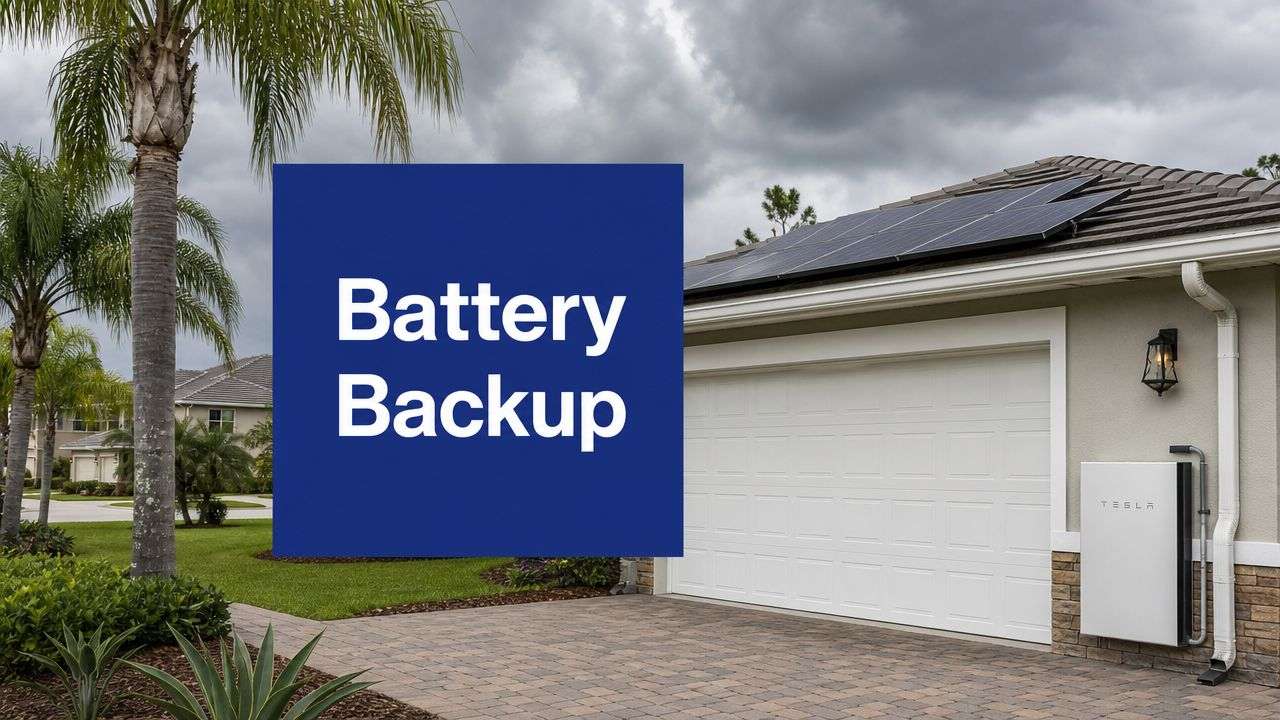
Tesla Energy is a stronger option when storage is part of the plan from the start. In Florida, that matters. Many buyers now evaluate solar less as a pure bill-reduction purchase and more as a resilience upgrade that also lowers utility costs.
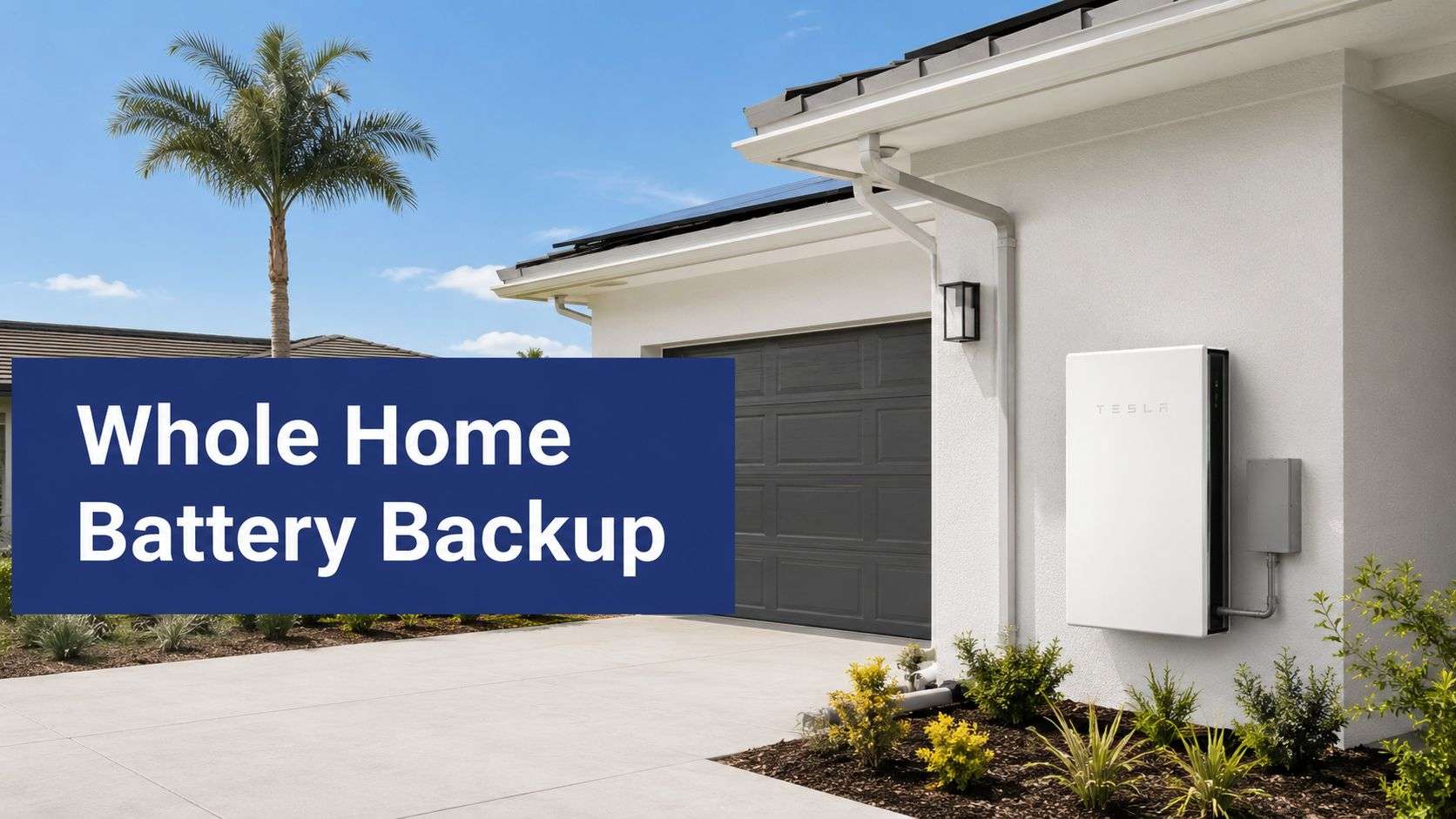
That difference changes the buying process. If backup power is the primary goal, panel count alone is not the main decision. Load planning, battery sizing, backup panel configuration, and outage priorities matter more than a headline production estimate. Buyers comparing Tesla against other installers should review Powerwall installation considerations for Florida homes before signing, especially if they expect whole-home backup from a battery setup that may only be designed for critical loads.
Tesla also appeals to customers who prefer standardization over a highly customized contractor-style process. That can be a benefit. Standard packages are often easier to compare, and the software side is one of Tesla’s strongest selling points.
- Best For Battery-Centered Projects: Tesla stands out when backup strategy drives the purchase.
- Best For Buyers Who Want One App Experience: Solar production, storage behavior, and system status are easier to follow in a single interface.
- Best For Homes With Clear Priorities: If the goal is critical-load backup and straightforward equipment selection, Tesla can be a practical fit.
Trade-Offs To Watch
The same standardization that makes Tesla attractive can also narrow your options. Buyers who want specific panel brands, more inverter flexibility, or detailed design revisions may find the process too rigid.
Service expectations also need a reality check. A nationally recognized brand can offer strong equipment and still feel less personal during design changes, scheduling, or post-install support. That does not make Tesla a poor choice. It means the buyer should separate product quality from project management quality.
This is also where independent consultation has real value. Tesla may be the right battery specialist for one home and the wrong fit for another, particularly if the house has complex loads, a challenging roof, or expectations that exceed what a standard storage package will cover. Florida property owners usually make better decisions when they first define the job clearly, then choose the contractor whose specialty matches it.
4. Solar Source

Some buyers don’t want the newest pitch. They want a Florida company with a long operating history, a local service footprint, and familiarity with the practicalities of permitting and utility coordination across the state. That’s where Solar Source stands out.
Solar Source is a good fit for homeowners who value longevity and a practical, local approach. It also has appeal for buyers who want one vendor that can discuss both photovoltaic systems and solar thermal applications such as pool or water heating.
Why Longevity Matters
Florida isn’t an easy market operationally. Roof conditions vary, code compliance matters, weather exposure is serious, and post-install service can become just as important as the original proposal. Companies with long local history tend to understand where projects get delayed and where assumptions fail.
Solar Source is often a safer choice for customers who prioritize service continuity over flashy marketing. That’s especially true if the home has quirks, older electrical infrastructure, or a broader energy retrofit plan rather than a simple panel-only installation.
A company’s sales process tells you very little about its service department. Ask who handles troubleshooting after commissioning, not just who closes the deal.
Practical Trade-Offs
The strongest case for Solar Source is local execution discipline. The trade-off is that quote-based pricing and variable equipment choices require more buyer diligence. You should ask for exact panel, inverter, and warranty specifications in writing before comparing it to another proposal.
This isn’t unusual in Florida. Many reputable firms build around approved equipment sets that change by project, distributor availability, and design constraints. The key is transparency. If you like the installer but can’t clearly identify the hardware and workmanship terms, the proposal isn’t ready for signature.
5. Solar-Ray
Solar-Ray is one of the better fits for buyers who care about technical rigor more than brand scale. That usually means homeowners who ask detailed questions about roof attachment, code compliance, electrical layout, and certification pedigree before they ask about monthly savings.
Solar-Ray has built its reputation around a more engineering-minded presentation. In a state where wind exposure and roof integrity matter, that approach carries weight.
Best For Detail-Oriented Buyers
Florida’s solar market isn’t just about production estimates. It’s also about whether the installer respects structural realities, permitting requirements, and local authority expectations. Solar-Ray’s local focus makes it attractive for customers in and around Central Florida who want a company that understands those conditions thoroughly.
This is often the right fit when buyers are skeptical of broad statewide sales messaging and want more direct technical communication.
- Certification Mindset: Buyers who value accredited training and formal technical standards usually respond well to Solar-Ray’s positioning.
- Regional Familiarity: Local utility and AHJ knowledge can reduce friction during design and approval.
- Hurricane-Aware Thinking: Roof work and attachment details matter more in Florida than many sales presentations suggest.
Where It May Not Be Ideal
Boutique firms usually trade scale for attention to detail. That can be a good trade, but it can also mean tighter appointment availability during busy periods. If your project has a hard deadline, scheduling may matter as much as system design quality.
Solar-Ray is also less suited to buyers who want a broad menu of financing gimmicks or a highly standardized national process. Its appeal is technical confidence, not mass-market convenience.
6. May Electric Solar

Battery conversations in Florida are often handled poorly. Some companies treat storage as an upsell with vague promises about “whole-home backup,” even when the scope only supports selected circuits. May Electric Solar tends to fit better when the buyer wants a more grounded discussion about solar plus storage.
Its focus on Enphase microinverters and battery systems makes it relevant for homeowners who prioritize outage planning, modular architecture, and direct workmanship accountability from in-house teams.
Strong Option For Storage-Focused Homes
This is a practical choice for households where resilience is the main reason to go solar. If your concern is keeping essentials running through outages, May Electric Solar is easier to place on a shortlist than a company that treats batteries as an afterthought.
BLUETTI’s overview of leading Florida solar companies specifically notes service-scope differentiation across the state, including SunPower’s broad electrification platform, Goldin Solar’s hurricane-resilient design specialty since 2004, and Blue Raven’s financing focus, in its Florida installer specialization roundup. That broader pattern matters here because it shows how much installer choice depends on the buyer’s actual priority. May Electric Solar fits the resilience-minded segment of that market.
- Best For Enphase-Oriented Buyers: Some homeowners already know they want microinverters and battery integration in the same ecosystem.
- Best For Direct Crews: In-house installation matters to buyers who want tighter workmanship accountability.
- Best For Backup Planning: This is stronger when you care about critical loads and usable resilience, not just panel count.
Real Trade-Offs
A more focused equipment lineup can be a strength or a limitation. If you already prefer REC and Enphase, it simplifies the decision. If you want broad equipment choice, it narrows the menu.
Regional coverage can also matter. Buyers outside its core service footprint should confirm availability early rather than assuming statewide scheduling works the same way.
7. Advanced Green Technologies AGT

A Florida property owner comparing solar bids for a warehouse, school campus, or municipal facility is solving a different problem than a homeowner pricing a rooftop system. The contractor has to handle engineering, permitting, interconnection, site logistics, and procurement rules at a level many residential installers never touch. Advanced Green Technologies is one of the companies that clearly operates in that larger-project category.
AGT makes the most sense for commercial, industrial, and public-sector buyers who need an EPC-style partner rather than a sales-first residential installer. That distinction matters. A firm can perform well in home solar and still be poorly matched for carports, occupied commercial roofs, phased campus work, or projects with multiple decision-makers.
As noted earlier in the article, AGT ranks among Florida's established solar contractors. The practical takeaway is not the exact placement. It is what that standing usually signals in the market: repeat experience with larger systems, more demanding project management, and a business model built around commercial execution.
Why AGT Belongs On Commercial Shortlists
AGT is strongest where project complexity is the main risk. That includes facilities with structural review requirements, active operations that cannot tolerate long shutdowns, and procurement processes that involve owners, finance teams, engineers, and legal review.
This is also where independent consultation adds real value.
Before hiring an installer like AGT, owners with larger roofs or multi-building portfolios often benefit from working with an advisor such as Solar Energy Management LLC to pressure-test production assumptions, tariff impacts, tax strategy, battery economics, and contractor scope. That step helps separate two questions that buyers often blend together: whether the project should be built, and which contractor should build it. On straightforward residential jobs, those questions may collapse into one buying decision. On commercial projects, they usually should not.
Best Fit And Limits
AGT fits buyers who want a contractor comfortable with engineering discipline and active-site coordination. It is a strong category match for commercial owners, institutions, and public entities that need a partner used to formal project delivery.
Single-family homeowners usually need something else. A residential specialist will often offer a simpler sales process, more standardized equipment packages, and financing options designed for household buyers.
The trade-off is clear. AGT's specialization can be a real advantage on complex projects, but that same focus makes it less relevant for small, price-driven home installations. In Florida solar, choosing by specialty is often the difference between a contractor that looks good online and one that fits the job.
Top 7 Florida Solar Companies Comparison
A Florida property owner comparing solar bids is usually balancing three separate questions at once. Who designs the right system. Who installs it well. Who helps protect the economics if the project is larger, more complex, or tied to backup power goals. That is why this list works best by specialty, not brand recognition alone.
For a straightforward home installation, a turnkey installer may be enough. For a commercial site, a multi-building portfolio, or a battery-heavy project, independent consultation from a firm such as Solar Energy Management LLC can help buyers validate assumptions before a contractor is selected.
| Provider | Primary specialty | Buying model and complexity | Best fit | Main trade-offs | Key strengths |
|---|---|---|---|---|---|
| Solar Energy Management LLC | Independent solar consulting, project planning, procurement support | Advisory engagement. Does not install. Clients still hire licensed EPCs or installers after planning and bid review | Commercial owners, institutions, and high-value residential buyers who want an independent view before signing with a contractor | Adds an extra planning step and consulting cost, but often reduces design, pricing, and scope risk | Independent system modeling, financial review, incentive strategy, contractor bid comparison, battery and resilience planning |
| Sunrun | Residential solar and service-based ownership options | Turnkey residential sales process with cash, loan, lease, and PPA structures in many cases | Homeowners who prioritize lower upfront cost, ongoing service, and a familiar national platform | Lease and PPA agreements can be less attractive for buyers focused on long-term asset value or resale simplicity | Broad residential reach, multiple financing paths, battery pairing, managed-service model |
| Tesla Energy (Solar Panels, Solar Roof, Powerwall) | Residential solar plus battery integration | Direct online design and quoting, with installation handled by Tesla or approved partners depending on market | Buyers who want a tightly integrated hardware and software experience, especially with Powerwall | Standardized process may be less flexible for roof complexity, contractor preference, or highly customized project scope | Clear online pricing approach, strong battery ecosystem, app-based monitoring and control |
| Solar Source | Local residential installer with solar electric and solar thermal experience | Full-service local contractor model with design, permitting, installation, and service | Homeowners who value long operating history, local support, and a contractor familiar with Florida permitting | Equipment and financing options may feel less standardized than large national sales platforms | Established Florida presence, service depth, solar thermal capability, local execution experience |
| Solar‑Ray | Residential specialist with a technical, certification-focused approach | Hands-on design and permitting process with attention to code, wind exposure, and workmanship | Buyers who care about installer credentials, technical detail, and region-specific installation quality | Boutique approach may not appeal to shoppers who want the fastest quote flow or the widest financing menu | NABCEP-focused credibility, careful design work, permitting strength, hurricane-aware installation practices |
| May Electric Solar | Residential installer with strong battery and in-house installation focus | Direct contractor model with in-house crews and a narrower equipment lineup | Homeowners in its service territory who want battery-ready design, direct workmanship accountability, and local support | Geographic coverage is narrower than national brands, and product choice is more curated than open-ended | In-house installation, storage expertise, long labor coverage, consistent equipment pairing |
| Advanced Green Technologies (AGT) | Commercial and industrial EPC | Larger-scale engineering, procurement, and construction process with longer timelines and more stakeholders | Schools, municipalities, enterprises, and large facilities that need a contractor experienced in formal project delivery | Usually not the right fit for small residential projects or buyers seeking a quick, low-friction purchase | Commercial execution, public-sector experience, wind-load and code expertise, capability across rooftop, carport, and ground-mount work |
The practical takeaway is simple. Florida does not have one "best" solar company for every buyer. It has firms that are better matched to residential simplicity, commercial execution, or battery-centered planning.
That distinction matters most before a contract is signed. Buyers often compare installers only on price per watt or monthly payment. A better screening method is to first identify the project type, then decide whether independent advice is warranted, and only then compare contractors inside that lane.
From Shortlist To Strategic Asset Making Your Final Choice
The best solar company isn’t the company with the loudest advertising or the most familiar logo. It’s the one that fits your property, your financial objectives, and your tolerance for contract, construction, and performance risk. In Florida, those variables matter more than buyers expect because project outcomes change based on roof condition, storm exposure, utility structure, battery goals, and ownership model.
For homeowners, the first fork in the road is usually ownership versus convenience. If you want the strongest long-term control over project economics, ownership often deserves the closest look. If you need lower upfront cost and don’t mind a more complex agreement, lease or PPA offers may still fit. The mistake is treating those as interchangeable just because both put panels on the roof.
For commercial owners, the decision gets broader. Tax position, depreciation, critical load planning, tenant structure, operational hours, and capital allocation all affect whether the project should be built now, phased, financed differently, or combined with efficiency work first. That’s why choosing among the best solar companies in florida should start with your use case, not with a generic top-ten list.
A practical buying process is still simple. Ask every company for the exact panel and inverter models, the battery scope if storage is included, and the warranty breakdown across workmanship, equipment, and performance. Ask how they handle permitting, interconnection, and post-install service in Florida. If those answers stay vague, the proposal isn’t mature enough yet.
Independent consulting becomes especially valuable at that point. Solar Energy Management LLC helps buyers de-risk the entire process before contractor selection through feasibility studies, ROI modeling, design guidance, battery planning, and procurement support. That matters because the system that looks cheapest on paper isn’t always the one that delivers the best long-term value, and the system with the biggest battery isn’t always the one that protects the loads you care about most.
The strongest solar projects in Florida don’t start with equipment. They start with a clear plan.
If you want an unbiased path through Florida’s solar market, Solar Energy Management LLC can help you evaluate feasibility, compare quotes, model ROI, and plan solar plus storage before you hire an installer. For homeowners, commercial properties, and resilience-focused projects, that independent guidance can turn a confusing shortlist into a practical, financially sound energy strategy.