Your electric bill lands, you scan the total, and the same thought hits again. Florida gives you sun almost every day, but your building still runs on expensive utility power you don't control. That frustration is usually what starts the commercial solar conversation.
Most owners make one mistake right away. They treat solar as a construction purchase. It's not. It's a financing decision first, an engineering decision second, and a procurement decision third. If the financing structure is wrong, even a technically solid system can become a bad business deal.
That matters even more in Florida, where storm hardening, insurance questions, utility interconnection, roof condition, and local permitting all affect whether a project is bankable. A good independent consultant doesn't sell you a pitch deck. A good consultant stress-tests the numbers, the ownership structure, the tax position, and the project documents before you sign anything.
Why Florida Businesses Are Turning to Solar Financing
A Florida property owner looks at solar and sees the same problem twice. The utility bill is too high, and the upfront project price looks too high too. Financing solves that second problem without ignoring the first.
That is why more businesses are taking solar seriously. The decision is not just about producing power on the roof. It is about controlling one of the few operating costs that rarely gets cheaper on its own, while keeping working capital available for the business.
Solar Is a Cash Flow Decision
For a small or mid-sized company, commercial solar usually works or fails on cash flow. A project can look attractive in a proposal and still be a poor fit if it strains liquidity, conflicts with loan covenants, or traps capital you need elsewhere.
That is why I tell owners to start with the payment structure, not the panel count.
If you're reviewing options for a warehouse, office, medical building, church, school, or retail property, start by looking at the full business case for commercial solar power systems in Florida. Then match the financing structure to your tax position, debt capacity, building hold period, and tolerance for contract complexity.
Many first-time commercial solar buyers make one mistake right away. They compare solar to doing nothing. The better comparison is your current utility spend versus the full cost of financing, owning, operating, and protecting the system over time.
Why Lenders Care About This Sector
Lenders care about solar because business borrowers want predictable expenses, and financed energy assets can support that goal. Banks also see recurring demand from owners who want lower power costs without writing a large check on day one.
That demand is showing up in the finance market. Visbanking published bank data on energy financing earnings that helps explain why more institutions keep adding green lending products.
For owners, the takeaway is practical. The key question is which financing structure best protects cash flow and reduces long-term energy price risk.
Where Owners Go Wrong
In Florida, I see the same three errors repeatedly.
- Using the wrong benchmark: Owners compare a financed solar payment to a cash purchase instead of comparing it to current utility bills, expected rate increases, and demand-charge exposure.
- Ignoring the property plan: The financing has to fit the building's hold period, tenant structure, roof timeline, and any refinance or sale plans.
- Letting the installer choose the capital stack: The seller's lending partner may be convenient, but convenience is not a financing strategy.
A financed project can still be the right move when the business has cash in the bank. In many cases, keeping liquidity available for operations, reserves, or expansion is the stronger financial decision. In Florida, the deals that hold up best are the ones built around underwriting discipline, realistic storm and insurance assumptions, and a payment structure the business can live with for years.
The Main Funding Options for Commercial Solar
A Florida warehouse owner gets two solar proposals on the same week. One promises ownership and tax benefits. The other promises no upfront cost and a lower utility rate on day one. Both sound good. Only one will fit the building, the balance sheet, and the owner's exit plan.
That is the actual job here. You are not picking panels. You are choosing how risk, savings, control, and tax value get divided over the life of the project.

Cash Purchase
Cash gives you the cleanest ownership position. You buy the system outright, keep full control, and avoid lender covenants, payment schedules, and third-party approval rights.
It is also the easiest option to misuse.
For small and mid-sized Florida businesses, a cash purchase only makes sense when three things are true at the same time. The company has excess liquidity, the property will be held long enough to justify the investment, and the tax benefits can be used. If one of those breaks, cash stops being the smart default and starts becoming an expensive convenience.
Use cash when preserving simplicity matters more than preserving capital.
Solar Loan
A solar loan is usually the best starting point for an owner-occupied commercial property. You keep ownership, spread the cost over time, and avoid draining operating cash that may be better used for inventory, hiring, reserves, or expansion.
Commercial loan terms vary by lender, project size, borrower strength, and whether the system is mounted on a roof, carport, or ground array. The practical point is straightforward. This is long-term asset financing, and the structure has to match the useful life of the system and the business's monthly cash flow.
A well-structured loan works well for Florida businesses because it can:
- preserve cash while still creating an owned asset
- let the business keep available tax benefits and depreciation value
- support a clearer long-term return once the debt is retired
- provide more control over future upgrades, roof work, and property disposition
The failure points are predictable.
- The term is too short, so the payment squeezes cash flow.
- The amortization is too long, so savings look weak for too many years.
- The lender package is incomplete, and closing gets delayed by insurance requirements, roof consents, tenant issues, or UCC questions.
- The borrower accepts installer-arranged financing without testing local banks, specialty energy lenders, and equipment finance groups.
For the Florida middle market, this is often the most practical ownership structure. It is not flashy. It is usually the one that holds up best under real underwriting.
Solar Lease
A lease gives you use of the equipment without direct ownership. That can help a business that wants predictable payments and a lighter internal approval process.
The tradeoff is simple. You usually give up a portion of the upside in exchange for convenience and a more service-oriented arrangement.
Leases can fit companies with weak tax appetite, limited capital budgets, or management teams that do not want to deal with asset ownership issues. They are less attractive for owners who plan to stay in the property for years and want the full economic benefit of the system. In that case, a lease often leaves money with the lessor that could have stayed with the business.
Power Purchase Agreement
A PPA is an electricity contract, not an equipment purchase. A third party owns the system. Your business agrees to buy the power it produces at a contracted rate.
For a plain-English explanation, review this guide on how a solar power purchase agreement works.
PPAs are often a strong fit for Florida businesses that want immediate bill relief, limited upfront spend, and no maintenance responsibility. They are also useful when the business cannot use tax credits or depreciation efficiently, because the third-party owner can price those benefits into the power rate.
Read the contract carefully. Escalators, buyout terms, production guarantees, roof access rights, casualty provisions, and property sale language matter more than the headline rate. A PPA with a weak escalation structure can look attractive in year one and disappointing by mid-term.
If your main priority is lower operating cost with minimal capital outlay, a PPA deserves a serious look. If your main priority is building equity in an energy asset, it is usually the wrong structure.
Which Option Usually Fits Best
Here is the practical screen I use with Florida owners.
- Choose cash if liquidity is strong, ownership is the goal, and the business can use the tax benefits.
- Choose a loan if you want ownership and long-term value without tying up too much capital.
- Choose a lease if internal approval is easier with a rental-style payment and giving up some upside is acceptable.
- Choose a PPA if you want lower power costs and outsourced system responsibility, not asset ownership.
For small-to-mid-sized commercial properties, compare a loan and a PPA first. That side-by-side review usually clarifies the key decision. Do you want an owned asset with more upside, or a service contract with less capital commitment and less operational responsibility?
If you are also trying to sort through incentive timing, Understanding EV and solar incentives is a useful starting reference before you model the full economics.
Unlocking Value with Tax Incentives and Depreciation
A commercial solar project doesn't live or die on panel price alone. The economics often depend on whether the owner can utilize the tax benefits. If you ignore that, your model is incomplete.

Why Tax Position Matters More Than Sales Price
Owners love to compare proposals by installed cost. That's understandable, but it's shallow analysis. A more expensive project with stronger tax utilization and cleaner financing can outperform a cheaper one with poor structure.
In practice, you need to answer three questions before you get excited about projected returns:
- Can your business use the available tax benefits directly?
- If not, who captures them under the financing structure?
- How long do you wait between installation and realizing those benefits?
That third question matters more than many Florida owners expect.
The Timing Problem Is Real
Recent guidance aimed at small businesses and underserved markets says commercial solar adoption is constrained by a complicated financing process and the need for bridge capital between installation and the receipt of tax credit, especially for businesses that can't fully monetize tax benefits, as noted in this small-business solar and storage financing guidance.
That means a project can look strong on paper and still create a cash timing problem in practice. I see this often with smaller firms, nonprofits, schools, and owner-operators with uneven taxable income.
Key judgment: Don't count tax benefits as immediate liquidity unless your CPA and financing structure say otherwise.
What To Do With Incentive Complexity
Many deals frequently get muddled. The owner hears “tax credit” and assumes that equals instant value. It doesn't. It equals potential value, subject to tax liability, ownership structure, accounting treatment, and timing.
You need your solar model and tax review to line up. If they don't, somebody is using a brochure version of finance instead of actual underwriting.
For a Florida-specific overview, this page on solar energy tax credits for businesses is a useful starting point. It helps frame the incentive conversation before you push numbers into a proposal review.
If you also want a tax-planning perspective from the CPA side, Allied Tax Advisors published a plain-English overview on understanding EV and solar incentives. Use that as context, then bring your own tax advisor into the conversation.
My Recommendation
For Florida commercial projects, I recommend separating value into three buckets:
- Immediate operational value: Lower purchased electricity and better budget predictability.
- Tax value: Benefits available only if your entity can use them effectively.
- Resilience value: Backup power, critical load support, and business continuity if storage is included.
A financing structure that captures all three is rare. A structure that captures the right two for your business is usually the winner.
If your company has strong tax appetite, ownership structures deserve serious attention. If it doesn't, stop pretending the tax upside is the center of the deal. Build around cash flow, risk reduction, and the right third-party structure instead.
Advanced and Specialized Financing Structures
The basic options aren't always enough in Florida. Some projects need more specialized financing because the property is held a certain way, the owner wants storage, or the business cares about outage resilience as much as utility savings.
C-PACE for Property Owners
For owner-occupied commercial real estate, commercial PACE deserves a hard look. The EPA describes third-party ownership and long-duration project finance as historical mainstays of solar finance, with newer tools such as PACE added later. It also notes that commercial PACE products offer fixed-rate financing for up to 30 years with no upfront cost in more than 30 states, according to the EPA guide to green power purchasing.
That structure can work well in Florida when the property owner wants long-term financing matched to the useful life of the asset. It's not ideal for every building, but it often fits better than a conventional equipment loan for real-estate-driven projects.
C-PACE is especially worth reviewing if you:
- Own the building long term: The structure rewards owners thinking in property cycles, not short operating cycles.
- Want to conserve cash: No upfront cost changes the conversation immediately.
- Need term length: A longer repayment horizon can keep annual cash flow manageable.
ESAs and Broader Performance Contracts
An Energy Service Agreement can resemble a PPA, but it often sits inside a broader efficiency or performance package. That matters for Florida facilities with high cooling loads, outdated lighting, weak controls, or demand-management opportunities.
If your building needs more than rooftop solar, an ESA-style structure can sometimes bundle improvements into one financial framework. That can be useful. It can also hide weak assumptions. Read the performance language carefully and make sure the measurement standard is clear.
Storage Changes the Financing Conversation
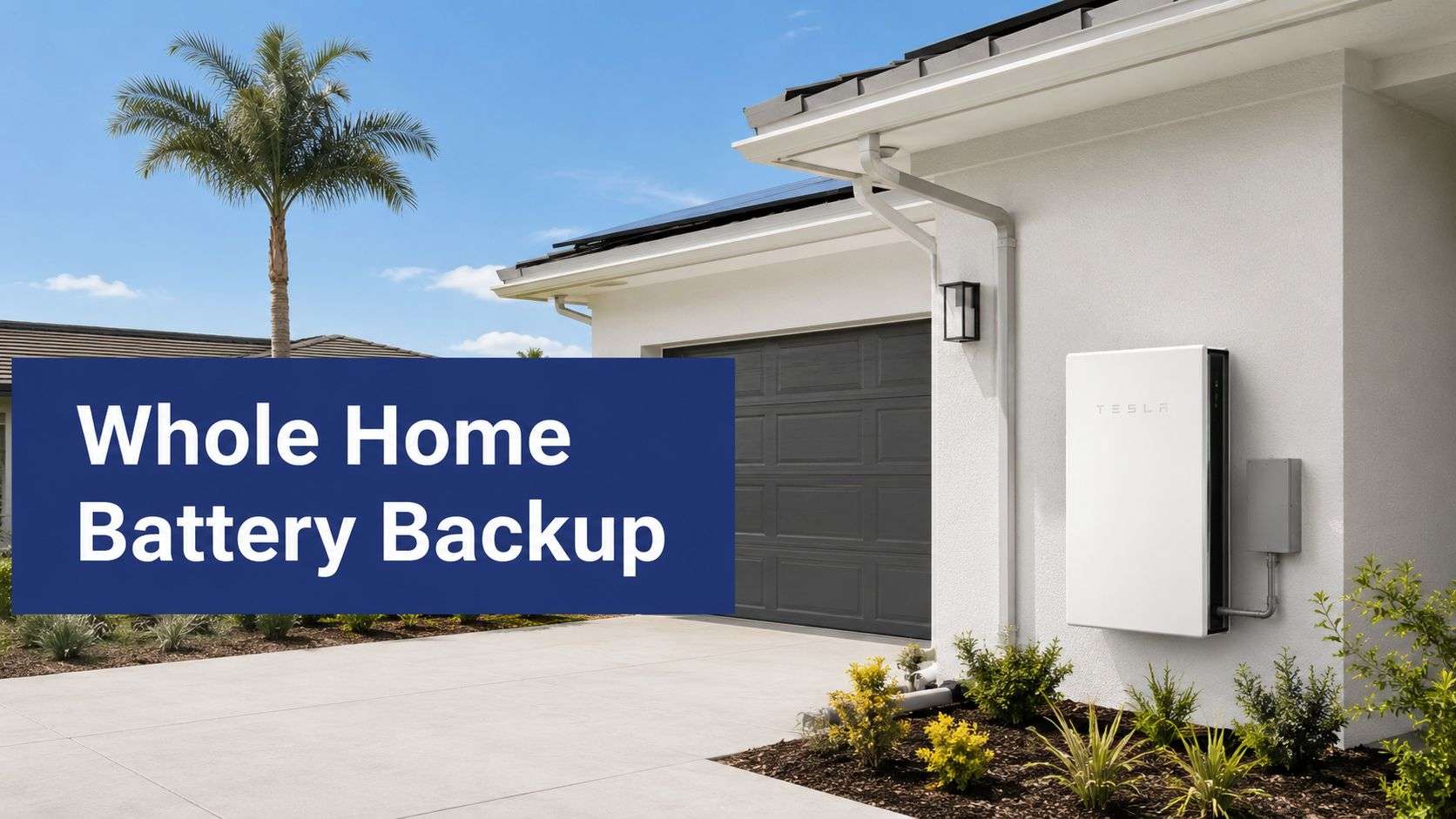
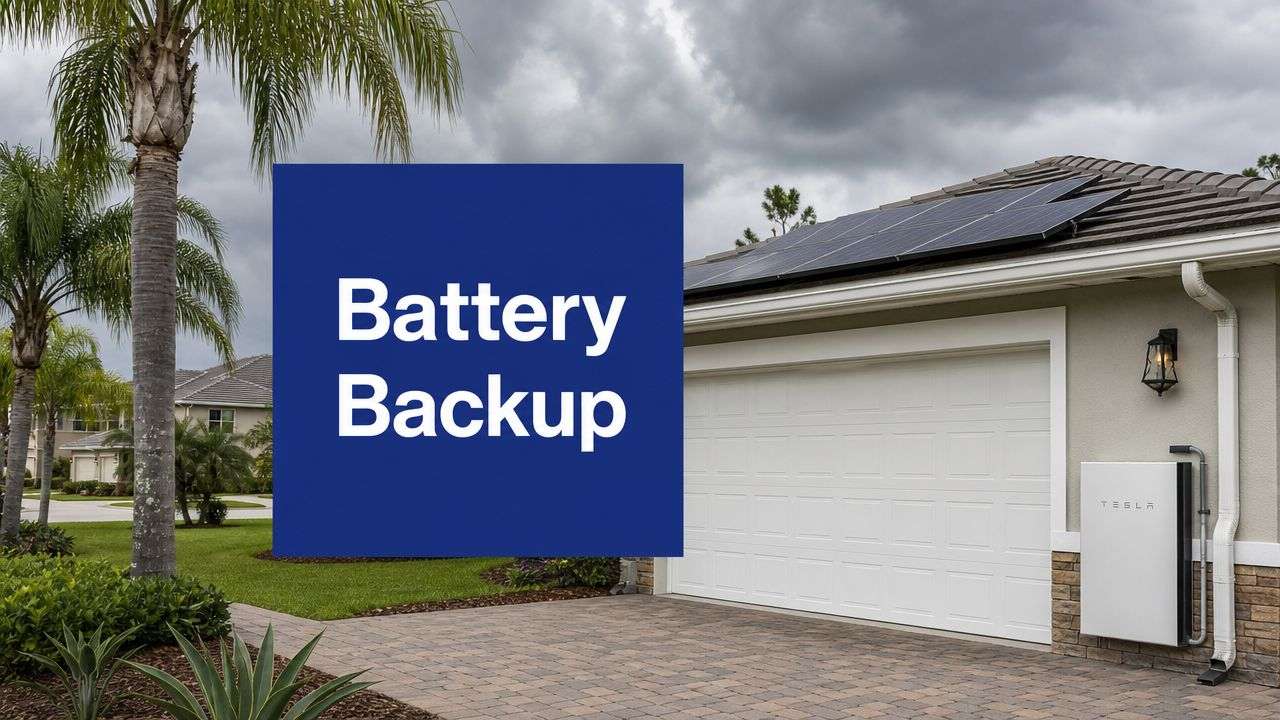
Solar alone lowers energy purchases. Solar plus battery storage changes operations. In Florida, that matters during storm season, utility disturbances, and any situation where downtime costs more than electricity.
If resilience is part of the objective, review commercial solar battery storage options in Florida before picking the financing vehicle. Storage pushes you into a different risk-benefit calculation. You're no longer just buying kilowatt-hours. You're paying for continuity, load management, and control over critical circuits.
Storm resilience isn't a marketing add-on in Florida. For many facilities, it's the reason to finance storage at all.
My View on Specialized Structures
Use specialized financing only when it solves a real constraint.
Don't choose C-PACE because it sounds impressive. Choose it if the asset is property-centric and the term structure improves the deal. Don't add storage because it looks advanced. Add it if outage risk, operational sensitivity, or demand management justify the extra complexity.
The right Florida project often looks less glamorous than the sales presentation. That's fine. Bankable beats flashy every time.
Navigating Florida's Permitting and Lender Landscape
A lot of commercial solar deals in Florida don't fail because the system is a bad idea. They fail because the transaction is messy. Lenders hate messy.
What Makes a Project Bankable
The small commercial middle market is where this shows up most. Projects in that band often stall because there's a lack of fit-for-purpose capital and high transaction costs. Coverage focused on that segment also notes that lender experience and bankable contract structures matter as much as headline price, because financing can fail when the process isn't standardized, as explained in this piece on the small commercial solar middle market.
That's exactly what happens in Florida when an owner tries to finance a project with incomplete roof documentation, weak interconnection planning, vague scope language, or inconsistent savings assumptions.
Lenders and finance partners usually want confidence in five areas:
- Borrower quality: Stable operations, credible financials, and clear authority to sign.
- Property control: Proof that the site owner or tenant has the right to place the system.
- Project documents: Consistent proposals, scopes, site plans, and operating assumptions.
- Construction viability: A path through permitting, code compliance, and utility coordination.
- Exit clarity: What happens if the property sells, refinances, or changes tenancy.
Florida-Specific Friction Points
Florida adds its own layer of underwriting pressure. Local jurisdictions can vary on permitting flow, review comments, and documentation standards. Utility interconnection also matters. If your project connects through FPL, Duke Energy, TECO, or another utility territory, the paperwork and timeline affect lender confidence even before installation starts.
Then there's wind exposure and structural review. Florida code expectations aren't optional. A lender looking at a rooftop system wants to know the project has been designed, documented, and permitted in a way that survives both inspection and insurance scrutiny.
If you're exploring SBA-aligned capital as part of the stack, this page on Orlando commercial solar power for SBA green loans is worth reviewing because it connects energy projects to a real financing pathway owners often overlook.
Where Legal Review Helps
Commercial solar contracts touch lending, property rights, insurance, default remedies, and assignment terms. If the documents are material to a larger financing or property transaction, legal review is not overkill. It's basic risk control.
For owners who need that lens, a Florida commercial lending law firm can help identify issues around security interests, loan terms, and enforceability before those issues become expensive.
The cheapest proposal often becomes the most expensive one when lender comments start landing and nobody can fix the contract package cleanly.
A Step-by-Step Checklist to Secure Financing
Most financing problems start early, not late. The owner rushes to price before the project is documented well enough to underwrite. Fix that, and the process gets smoother.

The Checklist I'd Use for a Florida Client
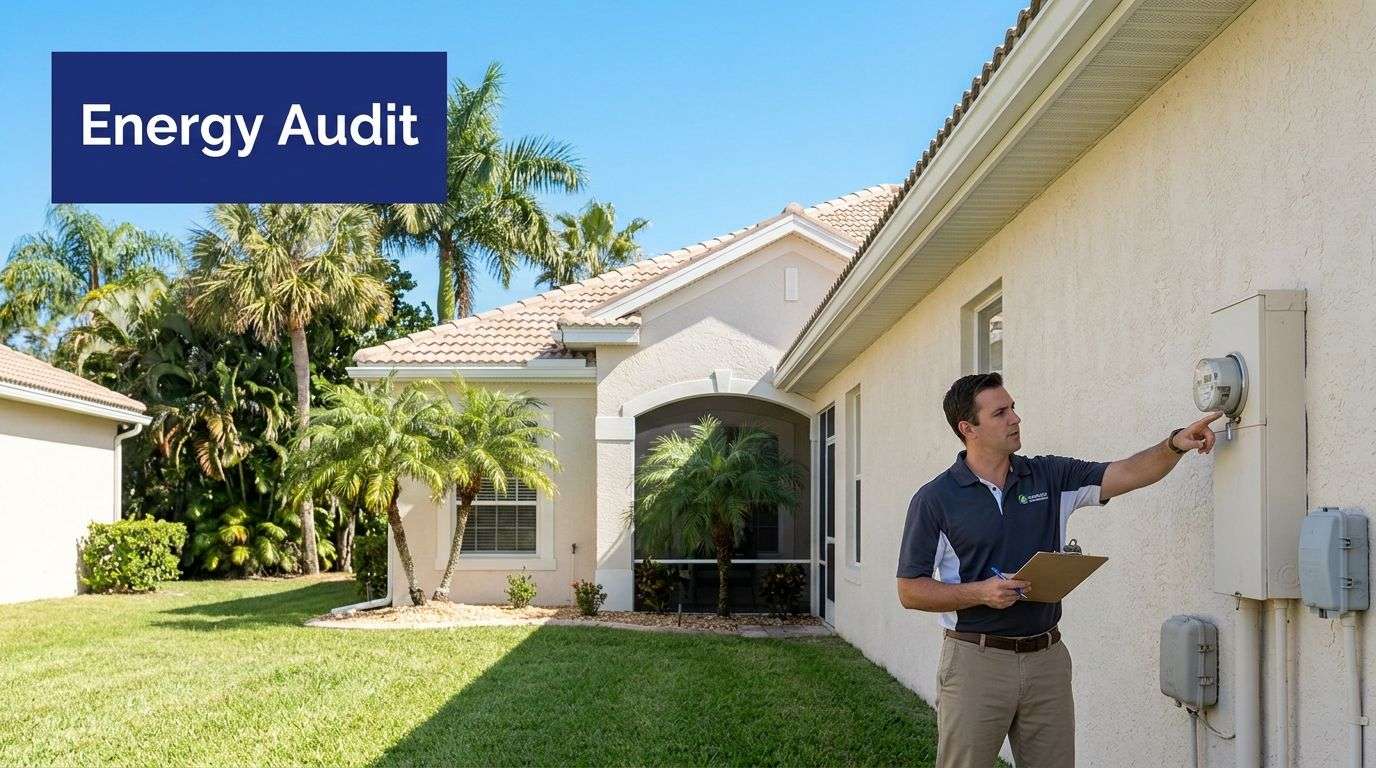
Pull real utility data
Gather a full billing history, not one recent invoice. Solar finance models are only as good as the consumption pattern behind them.Confirm site readiness
Review roof age, structural condition, shading, electrical infrastructure, and any known building issues. Financing gets harder when the site itself is questionable.Define the ownership objective
Decide whether you want to own the asset, buy power only, preserve borrowing capacity, or prioritize resilience. Don't compare financing options before this is clear.Get multiple proposals with consistent assumptions
Different system sizes, production assumptions, and scope exclusions make bid comparison useless. Normalize the inputs first.Package the borrower clearly
Lenders want organized financials, entity documents, property details, and signer authority. A clean package reduces friction.Review contract transfer and default terms
Many owners get blindsided concerning these provisions. Sale of property, lease rollover, casualty events, and roof replacement have to be addressed before closing.Close only after due diligence is complete
Not “close enough.” Complete. That includes utility coordination, permit pathway, insurance review, and final scope alignment.
What Owners Should Watch Closely
Some steps matter more than others depending on the project, but three items deserve extra attention:
- Roof timeline: If your roof won't outlast the finance term, you have a problem.
- Entity structure: The borrowing entity, property owner, and operating company aren't always the same. That creates complexity fast.
- Contract consistency: Proposal, loan documents, scope of work, and interconnection assumptions must all match.
The Consultant's Role
A consultant's job isn't to “help you go solar.” That's too vague. The job is to keep the analysis honest, organize the documentation, and prevent financing mistakes before they become legal or operational ones.
That's where one mention is warranted. Solar Energy Management LLC provides feasibility studies, ROI and financial modeling, system design guidance, and financing review for Florida projects. That kind of advisory work is useful when you want an independent analysis before committing to an installer-led structure.
Sample Financial Model and ROI Projections
A financial model is where sales language meets reality. If the model is weak, the project is weak. That doesn't mean the numbers have to be fancy. It means they have to be disciplined.

How a Florida Owner Should Read the Model
Start with the basics. A solid model for a Florida commercial property usually includes system cost, expected production, current utility pricing, financing terms, maintenance assumptions, insurance impact, and any tax-related inputs relevant to the entity.
Then focus on the outputs that matter:
- Cash flow by year: When does the project stop being a drag and start contributing?
- Payback logic: What drives the recovery period, and which assumptions are most sensitive?
- IRR and NPV: These are useful only if the assumptions behind them are realistic.
- Stress cases: What happens if production underperforms, utility rates change differently than expected, or roof work is needed?
A Simple Example
Say you own a Florida light industrial building. The roof is viable, daytime load is strong, and management wants lower energy spend without wrecking liquidity. You model a loan option against a PPA option.
The loan case may show stronger long-term value because the business keeps the asset and captures more of the upside. The PPA case may show better near-term simplicity because the third-party owner handles operations and maintenance. Neither is “better” in the abstract. One fits the company better.
That's why I tell owners to stop chasing one headline metric. A short payback with ugly contract terms can be worse than a slightly longer return profile with cleaner transfer rights and lower operational risk.
What IRR and NPV Really Mean Here
If you're not a finance person, keep it simple.
IRR tells you how hard the dollars are working over time. NPV tells you whether the project creates value after accounting for the time value of money and your required return. Both are helpful. Neither should overrule common sense.
If the model depends on aggressive assumptions, the return metrics are decoration, not decision tools.
A useful commercial solar financing model for Florida should let you compare ownership, third-party, and storage-inclusive scenarios on equal footing. It should also show when tax timing helps, when it doesn't, and where risk sits if the building changes hands.
Frequently Asked Questions on Solar Financing
Can My Business Finance Solar If We Don't Want a Large Upfront Payment
Yes. That's usually the starting point, not the exception. Florida businesses commonly look at loans, PPAs, leases, and property-based structures when they want to conserve cash.
The right answer depends on whether you want ownership, whether you can use tax-related value effectively, and how long you expect to hold the building. If you want control and long-term upside, ownership structures are usually stronger. If you want simplicity and limited capital exposure, third-party ownership may fit better.
What If We're a Small or Mid-Sized Business That Doesn't Fit a Big Project Template
That's one of the most important real-world issues in commercial solar financing. Smaller commercial projects often don't fit neatly into residential-style lending or large tax-equity structures. That's why these deals can stall even when the site looks viable.
For Florida owners in that middle band, the fix usually isn't “more financing.” It's better-matched financing, better contract standardization, and a cleaner underwriting package. If the lender, installer documents, and property structure don't line up, the deal drags or dies.
Should We Add Battery Storage at the Same Time
Only if storage solves a real business problem. In Florida, those problems usually include outage exposure, critical load support, storm resilience, and operational continuity.
If your facility can tolerate utility outages without serious disruption, solar-only may be enough. If downtime creates revenue loss, product loss, tenant issues, safety concerns, or service interruption, storage deserves serious consideration. Don't treat batteries as an automatic add-on. Treat them as an operational hedge.
How Long Does Financing Approval Take
It depends on the financing type and the quality of the project package. I'm being direct here because owners need the truth. Good projects move faster than disorganized ones.
If your utility data is complete, site control is clear, roof condition is documented, and contracts are consistent, approvals move more cleanly. If those items are missing, even an interested lender can stall while everyone scrambles to rebuild the file.
What's the Single Best Way to Avoid a Bad Solar Finance Deal
Separate sales from analysis.
Get the engineering assumptions reviewed. Get the contract terms reviewed. Get the tax position reviewed. Then compare structures on cash flow, transferability, maintenance responsibility, and downside risk. If a proposal only looks good when nobody asks hard questions, it isn't a good proposal.
If you're evaluating commercial solar financing in Florida and want an independent review before you commit, Solar Energy Management LLC can help you assess feasibility, compare financing structures, model ROI, and align solar and storage decisions with your property strategy, tax position, and risk tolerance.