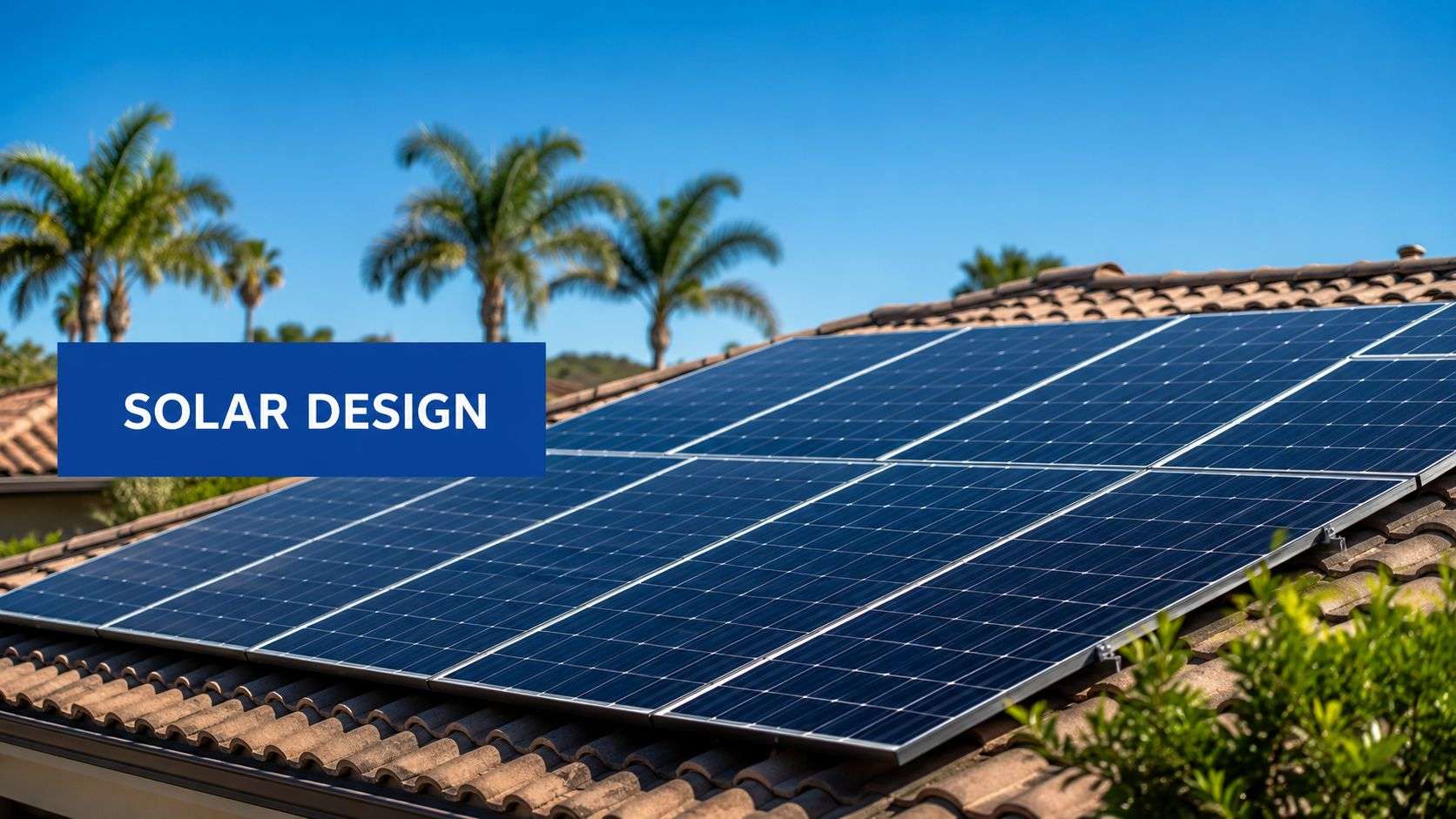
Solar panels don’t automatically void a roof warranty in Florida. In most cases, the result depends on the installation process, and the covered panel area often shifts to the solar provider while the rest of the roof keeps its original protection.
If you’re looking at solar right after paying for a new roof, or you’ve still got years left on your shingle warranty, that concern is reasonable. Florida homeowners deal with stronger wind requirements, stricter attachment details, and more scrutiny around roof penetrations than buyers in many other states.
The good news is that this is a process problem, not a luck problem. When the roofer, the solar installer, and the roof manufacturer all work from the same set of approved details, warranty risk becomes manageable. When they don’t, small mistakes around mounting, flashing, or documentation can turn a simple claim into a finger-pointing exercise.
Solar Panels and Your Roof Warranty The Florida Truth
You replace your roof, then a few months later start pricing solar. The first question usually is not panel output. It is whether one trade is about to blame the other if a leak shows up after the next storm season.
In Florida, that concern is reasonable. Roofs here take sun, wind-driven rain, salt exposure near the coast, and stricter uplift requirements than roofs in many other states. Solar can still be added without wiping out warranty protection, but only if the project is set up correctly from the start.
Roof warranties usually are not canceled just because panels go on the house. What changes is responsibility. The roofing manufacturer, the roofer, and the solar installer each have to define in writing who covers the penetrations, flashing, and any disturbed roof areas. The distinction is important because homeowners often hear the word “void” and assume all coverage disappears, when the key point is whether the installation followed approved details and who owns any future repair.
I tell Florida homeowners to treat this as a coordination job, not just a purchase. If the mounting plan matches the roof system, the attachment and flashing details are approved, and the paperwork is clean, the warranty risk is manageable. If one contractor installs first and explains later, that is where claims get messy.
What Works In Florida
A well-managed project usually includes:
- Roof-specific attachment details: The mounting plan fits the actual roofing system, whether that is architectural shingle, tile, or metal, and it follows manufacturer requirements.
- Qualified trades on both sides: The solar crew understands roof penetrations and flashing, and the roofer is brought in before installation, not after a problem.
- Written allocation of responsibility: The solar company covers its penetrations and related workmanship. The roofer and manufacturer keep their original obligations for unaffected areas, subject to their warranty terms.
- Documentation the homeowner can keep: Permit set, product data sheets, installer scope, roofer sign-off when available, and photos of penetrations before and after flashing.
For a practical overview of how these responsibilities are typically divided, review this guide on solar and roof warranty coordination in Florida.
What Usually Goes Wrong
The failures are rarely mysterious. A crew uses attachment hardware the roof manufacturer never approved. Flashing details are handled like a standard job in a state where uplift and water intrusion risks are higher. A homeowner is told the warranty will be “fine,” but nobody will put that in writing.
That is why independent review has value in Florida. Someone needs to check that the roofer, installer, and manufacturer requirements line up before holes are drilled. The same principle shows up in other building products too. Warranty protection depends on following the stated terms and installation rules, as you can see in the policy for Vivid Skylights products.
The safer path is a documented process with clear approvals, clear scopes, and clear responsibility before installation day. That is how you protect the roof warranty in Florida.
Understanding Your Florida Roof Warranty Coverage
Florida homeowners usually have more than one roof warranty in play. Before solar goes up, identify which party covers the roofing materials, which party covers the installation, and what each warranty says about later penetrations, repairs, or modifications. That review is what keeps a solar project from turning into a finger-pointing exercise after the first hard rain or named storm.

Material Warranty Versus Workmanship Warranty
A material warranty comes from the manufacturer. It covers defects in the roofing product itself, such as premature shingle failure or a tile issue tied to manufacturing rather than installation.
A workmanship warranty comes from the roofing contractor. It covers installation-related problems, including flashing errors, fastening mistakes, or poor detailing around vulnerable roof areas.
Those warranties do not respond the same way once solar is added. In Florida, that distinction affects who pays for an investigation, who makes the repair, and whether the claim is tied to the roofing product, the original roof install, or the solar attachment work. The Solar Energy Industries Association explains that solar projects involve multiple warranties, including equipment, workmanship, and roof penetration responsibilities, in its guide to solar consumer protection and contract review.
What Often Happens After Solar Is Installed
In practice, solar does not usually erase every roof protection you had before. Coverage is more often divided by location and cause of damage.
If a leak develops at an attachment point, the solar installer's workmanship warranty is usually the first place to look. If shingles or tile fail in an untouched part of the roof for a reason covered by the manufacturer, that original warranty may still apply. The problem for homeowners is not the word "void." The problem is proving which trade caused the failure and whether the installation followed the roof manufacturer's requirements.
That is why I tell Florida homeowners to treat warranty review as a pre-install task, not a cleanup task.
Read The Actual Exclusions
Warranty documents often use phrases like improper alterations, unauthorized penetrations, or damage caused by other trades. Those terms define responsibility. They also tell you where a manufacturer or roofer may try to deny a claim if solar was installed without approved hardware, approved flashing details, or written coordination.
A simple way to sort it out:
- Manufacturer coverage: Product defects in the roofing material
- Roofer coverage: Errors in the original roof installation
- Solar installer coverage: Damage or leaks tied to solar attachments, penetrations, and related workmanship
In Florida, I also want homeowners looking at wind-related language. A roof system can perform well under normal conditions and still become a warranty dispute after a hurricane if the installer used attachments or flashing details that were not approved for that roof assembly. That is where an independent review helps. Someone needs to verify that the roofer's terms, the manufacturer's instructions, and the solar install plan match before the permit set is finalized.
For a practical side-by-side explanation of those responsibilities, review this guide to solar and roof warranty coordination in Florida.
If you want a simple example of how product warranties define exclusions, limitations, and owner obligations, reviewing a non-solar document like the policy for Vivid Skylights products can help.
How Solar Mounting Methods Impact Roof Integrity
The mounting method decides whether a solar project feels routine or risky. On Florida homes with asphalt shingles, the most common system is a penetrated rail mount. That sounds alarming to homeowners because it involves fastening hardware into the roof structure, but on the right roof, using the right hardware and flashing, it’s a normal approach.

Penetrating Mounts On Asphalt Roofs
Asphalt shingles dominate Florida’s market, and they generally tolerate standard penetrated rail systems well when they’re installed correctly. Brittle roof materials like cedar shake are far more vulnerable and can crack under mounting torque, which raises the risk of full warranty problems. On asphalt, proper installation preserves warranty coverage on unmodified sections and can even extend shingle life by 20 to 30% through added UV and thermal protection from panel shading, as described in this mounting and roof-material analysis.
What matters most is how each penetration is treated. Every attachment point needs to be flashed and sealed in a way that works with the roof’s water-shedding design. A roof should send water downhill and away. A bad penetration interrupts that path.
Non-Penetrating Options And Their Limits
Non-penetrating systems are often discussed like they’re always safer. They can be, but mostly on compatible low-slope roofs where ballast or specialized clamping methods make sense. They aren’t the default answer for every Florida home.
For many sloped residential roofs, a properly flashed penetrated system is the practical choice. The issue isn’t whether the roof gets penetrated. The issue is whether the attachment is engineered, placed correctly, and weatherproofed correctly.
Here’s the comparison homeowners should keep in mind:
- Penetrating mounts: Strong attachment, common on shingle roofs, but highly dependent on flashing quality
- Non-penetrating mounts: Avoid drilling in some applications, but roof type and structural design have to support the method
- Ground mount alternative: Removes the roof from the equation, but requires yard space, layout flexibility, and a different cost profile
If you’re weighing roof risk versus site flexibility, it’s worth reviewing when ground-mounted solar systems make more sense than a rooftop array.
The Pre-Install Roof Check That Saves Trouble
A good solar plan starts with a roof inspection, not a panel layout. The question isn’t just “Can panels fit?” It’s “Is this roof in the right condition for attachment?”
For homeowners who want to understand what a structured inspection looks like before another trade touches the roof, this guide to finding a Roof Survey Near Me shows the kind of condition review that helps surface problems early.
A sound mounting design protects the roof by respecting how the roof already works.
Your Action Plan to Preserve Warranty Coverage
Homeowners usually lose their advantage on warranty issues because they start asking questions after the panels are already on the roof. The safer path is to build a paper trail before installation starts.

Before Installation
Start with your existing roof documents. Pull the manufacturer warranty, the roofer’s workmanship warranty, permit records if you have them, and any paperwork showing the roof age and material.
Then contact both the roofing contractor and the manufacturer or warranty administrator. Ask three practical questions:
- Does the planned solar attachment require prior notice?
- Are there approved mounting details for this roof system?
- Which party is responsible if penetrations create a leak later?
Don’t settle for verbal reassurance. Get answers in writing whenever possible.
During Design And Contract Review
This is the point where homeowners should pay attention to scope language. The solar proposal should clearly describe roof penetrations, flashing method, attachment hardware, and the installer’s responsibility for any roof damage caused by the solar work.
Use this review checklist:
- Confirm roof responsibility: The solar agreement should state who handles penetration-related repairs.
- Match plans to the roof type: A tile roof, shingle roof, and low-slope roof each need different attachment details.
- Request photo documentation: Ask for pre-install and post-install photos of attachment and flashing locations.
- Verify reroof procedure: If the roof needs replacement later, ask how removal and reinstallation will be handled.
If your roof may need work in the future, it helps to understand the logistics of solar panel removal service before you sign the original solar contract.
After Installation
The job isn’t finished when the panels start producing power. This is when you organize your file.
Keep:
- Final approved plans
- Permit and inspection records
- Photos of penetrations and flashing
- Installer workmanship warranty
- Any manufacturer correspondence
- A dated copy of the signed contract
Homeowner safeguard: The better your documentation, the easier it is to identify whether the roofer, the installer, or the manufacturer should respond if something goes wrong.
Florida homeowners don’t need to become roofing experts. They do need to act like project managers long enough to make sure every responsibility is written down.
Navigating Florida's Unique Hurricane and Code Requirements
Florida changes the warranty conversation because roof penetrations here don’t just need to stay dry. They also need to stay secure under severe wind loading.

Wind Design Is A Warranty Issue
In Florida’s high-wind zones, solar systems may need to be designed for 130 to 150 mph winds under ASCE 7-16 standards. Proper installation also requires specific attachment details such as #14 lag screws spaced 24 to 48 inches and roof flashings tested to ASTM E2140 for water penetration. Using uplift-resistant hardware such as IronRidge XR100 clamps is part of that approach, and this level of coordination has been associated with 90% fewer claim denials in the source material from Today’s Homeowner’s Florida-relevant installation guidance.
Those numbers matter because a panel system that survives ordinary weather but fails at edge uplift, attachment points, or flashing details during a storm doesn’t just create a solar problem. It can create a roofing claim dispute.
What Homeowners Should Ask For
You don’t need to calculate wind loads yourself. You do need to ask for proof that someone qualified did.
Ask for:
- Engineering review: The plans should reflect Florida wind exposure and local code requirements.
- Racking details: The hardware should be listed clearly, not described vaguely.
- Attachment map: Mount locations should follow the structural plan, not field guesswork.
- Flashing specification: The installer should identify the flashing product or method being used.
The Florida Coordination Problem
Most warranty disputes in Florida aren’t caused by one dramatic mistake. They come from a chain of smaller misses. The roof crew doesn’t review solar attachment locations. The solar crew assumes standard details are enough. Nobody checks whether the selected hardware and flashing package match the roof assembly and local wind requirements.
In Florida, code compliance, wind resistance, and warranty preservation all sit on the same roof. They shouldn’t be treated as separate tasks.
That’s why the process has to be deliberate. If your project team can’t explain how the system handles wind uplift, water intrusion, and warranty accountability together, the planning isn’t finished.
How an Independent Solar Consultant De-Risks the Process
Florida homeowners often assume the installer will manage every warranty detail automatically. Sometimes they do. Sometimes they manage only the parts inside their own contract. That gap is where avoidable problems start.
An independent consultant helps by looking at the project from the homeowner’s side, not from the perspective of selling equipment or rushing to install it. The role is less about adding complexity and more about preventing missed handoffs between the roofer, the solar installer, and the manufacturer.
Where Independent Oversight Helps
A consultant can pressure-test the process before work begins:
- Reviewing the roof condition and warranty documents
- Checking whether the proposed mounting method fits the roof type
- Making sure responsibility for penetrations is clearly assigned
- Confirming the documentation package is complete before and after installation
That kind of oversight matters in Florida because roof work and solar work often involve different trades, different warranties, and different assumptions.
For homeowners unfamiliar with what independent construction guidance looks like in practice, this Awesim Building Consultants guide offers a useful example of how an outside advisor can help coordinate technical decisions and protect the owner’s interests.
Why This Matters More In Florida
Florida projects often require tighter coordination around wind design, permitting, and roof condition. If one party says “that’s not our scope,” the homeowner is usually the one left sorting out the issue later.
That’s one reason many property owners compare providers carefully before choosing among solar companies in Tampa Florida. The important difference isn’t just price or panel brand. It’s whether someone is managing the interfaces between trades so the roof warranty stays protected.
Frequently Asked Questions About Solar and Roof Warranties
A lot of Florida homeowners do not worry about the warranty until something goes wrong. The better approach is to clear up these questions before the contract is signed, while the roofer, installer, and manufacturer can still agree on the process.
What happens if my roof leaks after solar is installed
Start with evidence. Pin down the leak location, the first time you noticed it, and whether it lines up with a mount, flashing, or conduit penetration. If it does, the solar installer’s workmanship warranty is usually the first place to file a claim. If the leak shows up in an area the solar crew never touched, the roof warranty may still apply.
For that reason, photos, plans, and final inspection records are essential. They help separate normal roof aging from installation damage and keep the discussion focused on facts instead of finger-pointing.
Do not start with blame. Start with records, photos, and the exact leak location.
In Florida, I also tell homeowners to act fast after heavy rain or a named storm. Water can travel before it shows up on the ceiling, so the visible stain is not always the true entry point.
Can a roofer legally void my whole roof warranty just because I added solar
Usually, no. A roofer or manufacturer may deny coverage for damage tied to unapproved modifications or poor installation, but that is not the same as canceling every part of the warranty across the entire roof.
The pertinent question is narrower. What area was altered, what does the warranty document say about penetrations or third-party work, and was the solar installation done in a way the roofing manufacturer accepts? If you get a broad denial, ask for the exact warranty clause and a written explanation tied to the condition they say caused the problem.
That written record helps later if the installer, roofer, and manufacturer start shifting responsibility to each other.
What if I need a new roof after the solar system is already up
It happens all the time. A homeowner installs solar on a roof with a few good years left, then ends up paying to remove and reinstall the system sooner than expected so the home can be reroofed.
That extra step adds labor, scheduling delays, and another opportunity for warranty confusion if the scopes are not clearly assigned. It also makes sense to check the home’s electrical service before final design, especially if you may be dealing with older equipment such as Zinsco electrical panel issues.
The cleaner path is to match roof life to solar life before installation. If the roof is close to replacement, reroof first. In Florida, that decision usually reduces long-term cost and lowers the risk of disputes later, especially when wind-resistance details and permit sign-offs need to stay well documented.
Independent review helps here because someone needs to confirm who handles removal, who protects the roof warranty during reinstall, and whether the new roofing system has any manufacturer requirements the solar contractor must follow.
If you want help sorting through roof warranty language, solar scope, wind-code concerns, and installer coordination in Florida, Solar Energy Management LLC provides independent solar power consulting that helps homeowners de-risk the decision before they commit to installation.