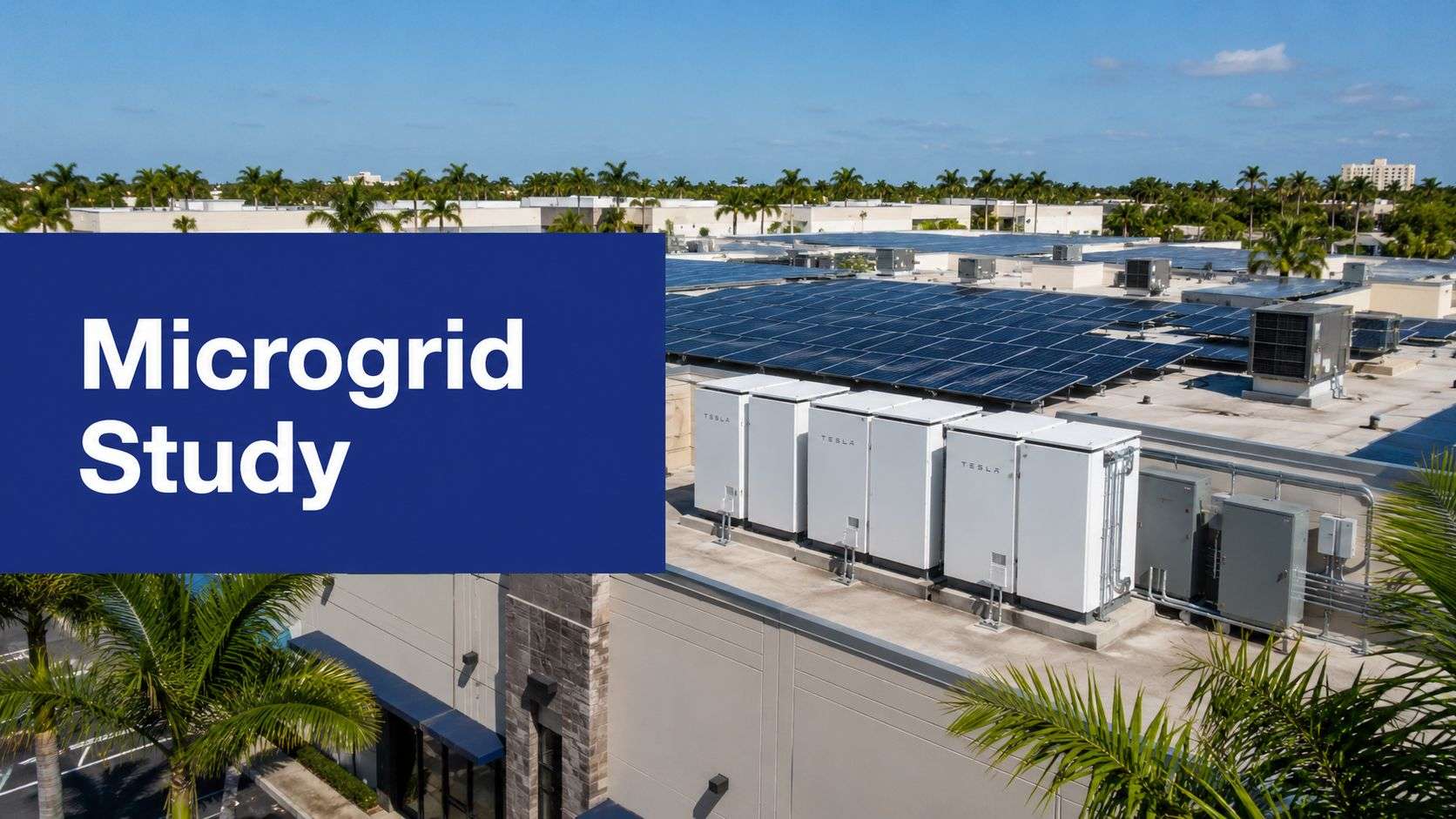
Florida property owners usually start the solar conversation with utility bills. Then the conversation widens. A homeowner in St. Petersburg starts thinking about hurricane outages and grid dependence. A school facilities director in Tampa starts asking how to cut emissions without straining an operating budget. A commercial owner in Clearwater wants cleaner energy, but also wants to know the environmental trade-offs before putting anything on the roof or on the ground.
That’s the right instinct.
In Florida, the environmental benefits of solar energy aren’t abstract. They connect directly to the conditions people deal with every year: heat, storm risk, water pressure, air quality concerns, and the need to make smarter use of developed land. Solar can reduce emissions, improve air quality, and conserve water. It can also create new planning questions around land use, manufacturing impacts, and battery strategy. The value comes from looking at the full picture, not just the sales brochure.
Why Solar Is Florida’s Ultimate Environmental Asset
Florida has one clear advantage that never goes away. Sunlight is abundant, predictable, and widely distributed across homes, schools, warehouses, churches, offices, and municipal properties. That makes solar one of the few environmental strategies that can work at both the household scale and the portfolio scale.

The state also has environmental pressure points that make clean electricity more valuable than it looks on a spreadsheet. Coastal communities face stronger storm resilience demands. Inland properties deal with heat and peak electricity use. Water management matters across the state. When a building can produce a meaningful share of its own electricity from the roof or a well-sited canopy, it reduces dependence on power that has to be generated elsewhere by fuel-burning plants.
That’s why I don’t treat solar as just a rate-reduction tactic. In Florida, it’s an environmental asset tied to risk management. A rooftop array on a commercial building avoids putting new equipment on undeveloped land. A parking canopy can create shade while producing power. A school or municipal site can combine solar with emergency planning. Those choices improve the environmental return of the project before anyone talks about payback.
For readers comparing broader advantages, this overview of solar panel benefits in Florida is a useful companion to the environmental lens.
Solar works best in Florida when it’s treated as infrastructure. Not décor, not a trend, and not a one-line utility fix.
Slashing Greenhouse Gas Emissions and Improving Air Quality
Florida’s grid still depends heavily on fuel-burning generation, especially natural gas. That matters because every kilowatt-hour from a solar array can displace power that would otherwise come from combustion. The environmental case starts there.

What the emissions data shows
A Harvard T.H. Chan School of Public Health-led study found that a 15% increase in solar power generation across 12 U.S. regions is associated with an annual reduction of 8.54 million metric tons of CO2 emissions, and the reduction isn’t only local because solar generation changes fossil fuel dispatch across connected grids (Harvard-led study via PMC). That grid-wide spillover effect matters for Florida because the environmental value of solar isn’t limited to the property where the panels sit.
For a Florida owner, that means a solar system does more than lower on-site grid purchases. It contributes to a broader reduction in the need to run emitting generation elsewhere on the network. The exact effect varies by location, load profile, and utility mix, but the strategic point is simple: solar changes what gets dispatched.
If your goal is to reduce your carbon footprint, electricity is one of the first places to look because it’s a recurring, high-impact part of daily life at both home and business scale.
Cleaner air is an environmental benefit people actually feel
Carbon gets most of the attention, but air pollution is often the more immediate local issue. The same fossil plants that emit carbon dioxide also release sulfur dioxide and nitrogen oxides. Those pollutants affect respiratory and cardiovascular health.
A Lawrence Berkeley National Laboratory analysis found that in the U.S., wind and solar generation provided $249 billion in combined climate and air quality health benefits between 2019 and 2022, and solar specifically was found to prevent 1,200 to 1,600 premature mortalities annually by reducing SO2 and NOx emissions from fossil fuel power plants (Lawrence Berkeley National Laboratory analysis).
That’s why the environmental benefits of solar energy shouldn’t be framed as only a climate argument. In Florida communities near traffic corridors, industrial areas, or generation assets, cleaner electricity also supports cleaner air.
Practical rule: If a property can produce power during the same hours the grid is under the most strain, its environmental value is usually higher than a simple annual production total suggests.
What works better than generic “go solar” messaging
The strongest environmental results usually come from projects with a clear operating profile. Examples include:
- Daytime-loaded buildings: Offices, schools, warehouses, and retail properties often use a lot of electricity when the sun is strongest. That aligns solar production with real demand.
- Large unobstructed roofs: These reduce the need for land conversion and make it easier to generate clean electricity where it’s consumed.
- Sites with efficiency work first: Lowering waste before sizing solar usually improves both system design and environmental performance.
- Facilities with resilience goals: If backup power is part of the plan, solar can support a more durable low-emissions strategy than generators alone.
For additional perspective on the climate side of the conversation, the broader discussion around global warming and energy choices helps connect property-level decisions to Florida’s longer-term environmental exposure.
Analyzing Solar's Full Lifecycle From Production to Power
A fair question comes up in nearly every serious solar review: what about the emissions created when panels are manufactured?
That question should be asked. It forces a better standard. If someone claims solar is clean, they should be talking about the full lifecycle, not just what happens after the system is switched on.
Manufacturing has an impact, but the comparison still favors solar
Solar panels don’t appear out of thin air. Raw materials have to be mined, refined, processed, transported, and assembled. Those steps carry an environmental footprint. Ignoring that weakens the credibility of the solar case.
But once the comparison is made on a lifecycle basis, solar still comes out far ahead. Solar PV systems have a life-cycle carbon footprint of 40 to 50 grams of CO2 equivalent per kWh, compared to 820 g CO2eq/kWh for coal and 490 g CO2eq/kWh for natural gas, representing a 90% to 95% decrease in lifecycle greenhouse gas emissions (lifecycle comparison from Earth.org).
That matters in Florida because many property owners are comparing solar against a grid mix that still includes substantial fossil generation. Even after you count manufacturing emissions, the long-run carbon profile is far lower.
Energy payback in Florida is one of the strongest parts of the case
The key concept here is Energy Payback Time, often shortened to EPBT. It’s the amount of time a solar system needs to generate the same amount of energy that was used to produce it.
The verified data shows that modern silicon-based PV modules typically have an EPBT of 1 to 2 years under average conditions, and in Florida’s high-sun conditions that payback can be under 1.5 years under the cited assumptions from the same source. After that point, the system keeps generating electricity for the rest of its operating life without combustion.
That’s why the manufacturing objection usually sounds stronger than it is. Manufacturing emissions are front-loaded. Fossil fuel emissions keep happening every time power is generated.
A panel doesn’t need to be impact-free to be environmentally worthwhile. It needs to outperform the alternative over its working life. Solar does.
Where careful buyers should stay skeptical
There are parts of the lifecycle conversation that deserve more scrutiny than they usually get.
- Manufacturing water use: Operational solar uses very little water, but manufacturing still has an embedded water footprint. Buyers who care about full environmental accounting should ask lifecycle questions, not just operational ones.
- End-of-life planning: Recycling pathways are improving, but disposal and materials recovery still require attention during procurement.
- Supply-chain quality: Better manufacturing standards and traceability matter. A cheaper module isn’t automatically a better environmental choice.
- System longevity: A durable system with solid design, proper mounting, and realistic maintenance assumptions will outperform a poorly planned one, environmentally and financially.
What doesn’t work is using manufacturing impacts as an excuse to default back to fossil power. If the benchmark is natural gas or coal-heavy electricity, the lifecycle data still points strongly toward solar.
Conserving Water and Supporting Biodiversity in Florida
Water doesn’t get enough attention in energy planning. In Florida, it should.
Electricity systems affect aquifers, cooling demand, storm recovery planning, and land management. When people talk about the environmental benefits of solar energy, they often stop at carbon. For Florida, water belongs in the first sentence.

Why water savings matter here
Conventional thermoelectric plants need large amounts of water for cooling. Solar PV doesn’t. According to the verified data, solar PV systems provide 90% to 99% water savings per MWh compared to conventional coal and nuclear plants, which can withdraw 20,000 to 50,000 gallons per MWh for cooling. The same source notes that a 100 kW commercial PV array in Florida can save up to 1 million gallons of water annually (water use comparison from Qmerit).
For a Florida business owner, that changes the discussion. The project isn’t just lowering purchased electricity. It’s reducing reliance on generation that consumes large water volumes somewhere else in the system.
That’s particularly relevant for facilities with their own sustainability targets, campuses with public reporting obligations, and owners who think in terms of long-term regional resource pressure rather than only monthly bills.
Good solar siting protects the environmental upside
Water savings don’t erase land-use mistakes. A solar project can be environmentally beneficial overall and still be badly sited. That’s why the land conversation has to be direct.
The U.S. Energy Information Administration notes that large solar power plants can affect habitat through land clearing and ecosystem disruption, which is a real trade-off for developers and communities to weigh (EIA discussion of solar and the environment). In Florida, that means wetlands, native vegetation, stormwater pathways, and wildlife corridors should never be treated as afterthoughts.
The best environmental approach usually follows this order:
- Rooftops first: Homes, schools, shopping centers, self-storage, warehouses, and industrial buildings often have underused roof area.
- Then parking canopies: They generate power while improving the site with shade and heat reduction.
- Then previously disturbed land: Closed landfills, brownfields, and already altered parcels are generally preferable to clearing intact habitat.
- Only then consider greenfield sites: Even then, the ecological plan has to be part of the project, not an add-on at the end.
Field note: In Florida, the cleanest kilowatt-hour is often the one generated on a roof that was already built years ago.
Biodiversity planning separates strong projects from careless ones
Solar doesn’t have to mean scraped, sterile ground. In fact, the most credible projects are moving the other direction. Native groundcover, low-mow vegetation, and pollinator-friendly planting can make a site more ecologically functional than a bare, gravel-heavy design.
That same principle applies at the property scale. Around homes and commercial parcels, water-smart site design complements solar well. If a site owner is already rethinking irrigation and runoff, these drought tolerant grass alternative solutions are a practical companion resource for reducing outdoor water demand around the same property.
For owners considering higher levels of independence and resilience, planning for off-grid living in Florida also pushes the conversation beyond simple utility offset and into water, land, storage, and backup strategy.
What doesn’t work is pretending every solar project is automatically benign. Ground-mounted systems need stormwater planning, habitat review, and realistic vegetation management. In sensitive locations, bad clearing decisions can undermine community support fast. The environmental case gets stronger when those trade-offs are acknowledged early and addressed directly.
Maximizing Solar Benefits With Storage and Efficiency
Solar panels alone can do a lot. Solar paired with batteries and efficiency upgrades does more, and usually does it with less waste.
That’s the framework I recommend for Florida properties that care about both environmental impact and outage resilience. Generate clean power. Store more of it for use when the sun isn’t producing. Reduce unnecessary demand so the whole system can work harder with fewer resources.

Why storage changes the environmental result
A battery doesn’t create electricity. It changes when solar electricity gets used.
That matters because the grid often leans on less efficient fossil generation during high-demand periods. When a Florida home or business stores daytime solar production and uses it later, it can reduce dependence on dirtier peak-period electricity. It also gives the property a cleaner resilience option during outages than relying only on fuel-based backup.
The broader system effect is important too. As noted earlier in the article, a 15% increase in solar power generation can reduce annual CO2 emissions by 8.54 million metric tons because solar in one region reduces the need for fossil fuel dispatch in connected regions. That finding supports a practical point: the more effectively solar output is captured and used, the stronger the overall environmental benefit.
Efficiency first keeps systems honest
A lot of oversized energy plans begin with the wrong question. People ask how many panels or batteries they need before they ask where the waste is.
For Florida buildings, environmental performance usually improves when owners address loads first. That can include HVAC optimization, duct sealing, lighting upgrades, controls, insulation improvements, or demand management. The goal isn’t to avoid solar. The goal is to stop using expensive clean equipment to feed avoidable waste.
A tighter building envelope and better load profile can support a smaller array, a more focused battery strategy, and a cleaner project footprint.
A practical Florida sequence
This order tends to produce better outcomes than rushing straight to equipment selection:
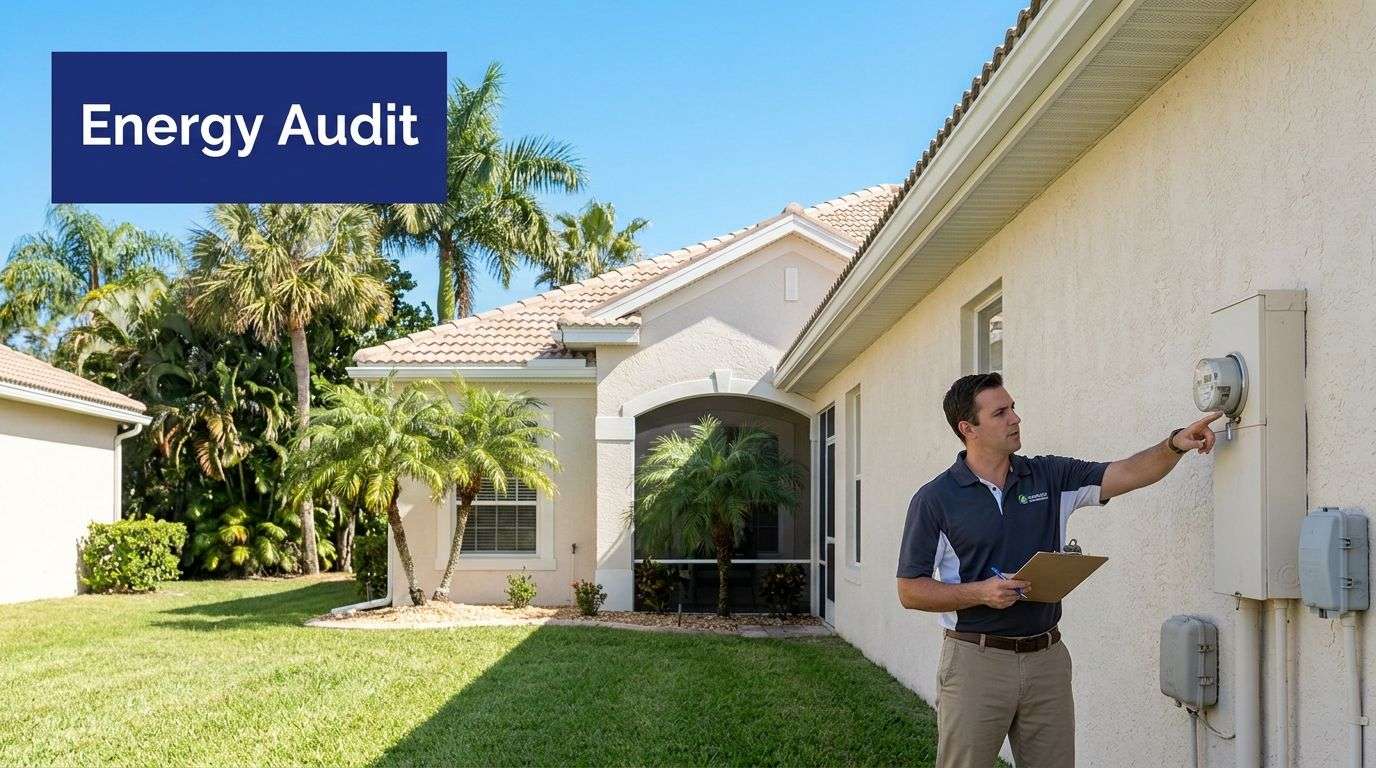
- Measure current use carefully. Review interval data, seasonal peaks, and critical loads.
- Cut obvious waste. Fix efficiency problems that inflate required system size.
- Size solar to the load. Use production assumptions that match the site, not generic marketing estimates.
- Add storage for a reason. Backup power, peak shifting, and resilience are different goals. Don’t blend them carelessly.
- Plan controls and backup circuits. Battery value depends heavily on what the system is set up to support.
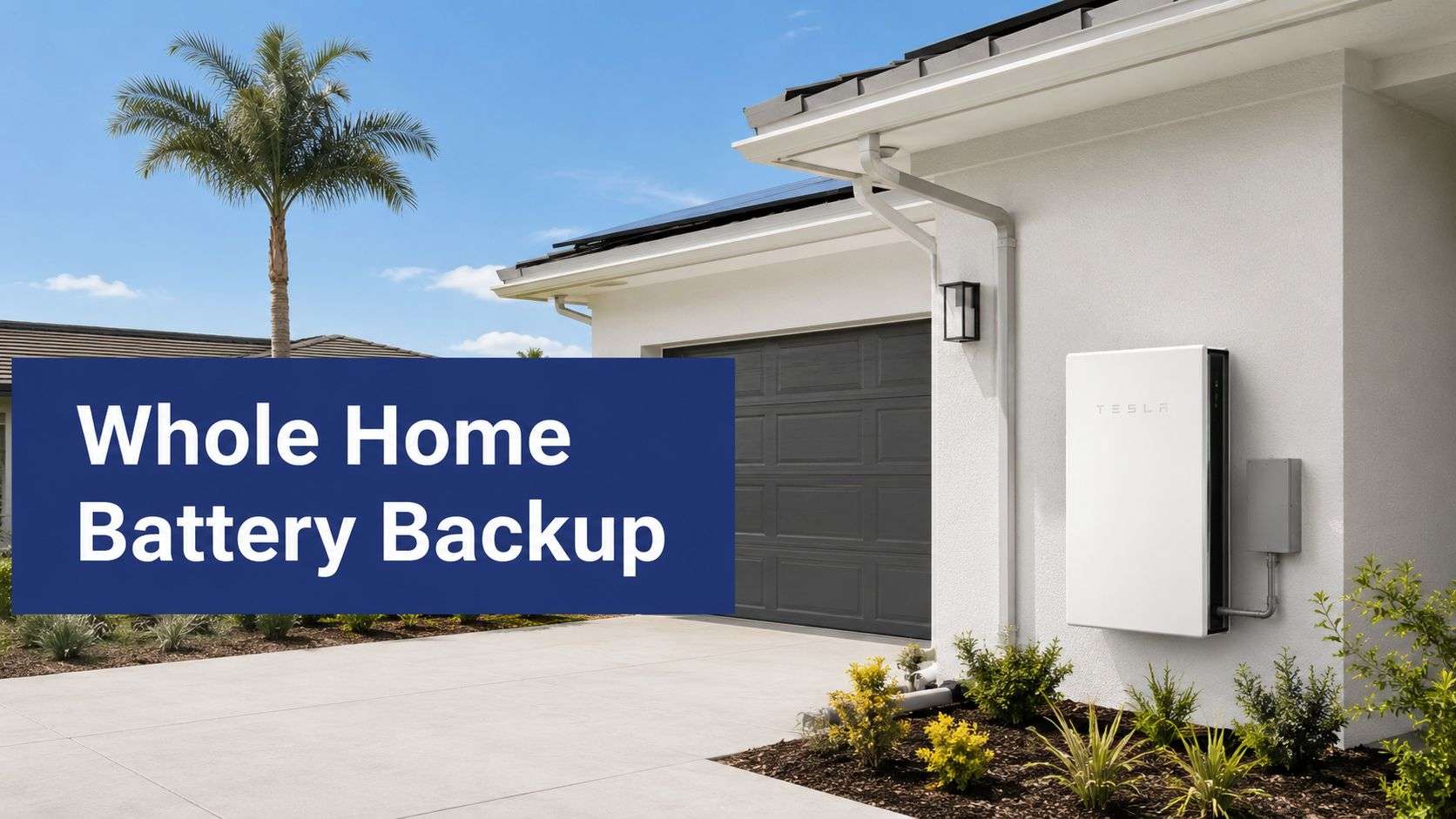
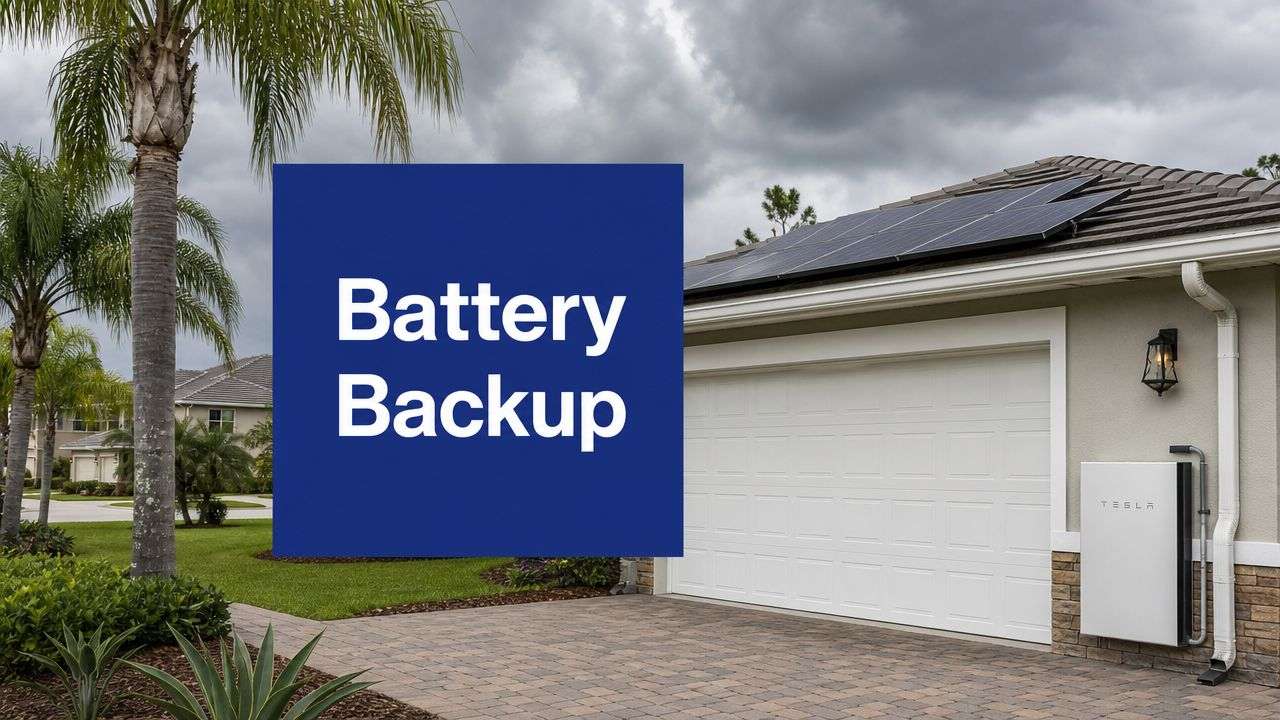
For owners exploring backup systems, this overview of Tesla Powerwall planning is one useful example of how storage fits into a broader Florida resilience strategy.
Storage makes the most environmental sense when it helps a building use more of its own clean generation and depend less on high-emissions grid power during stressed hours.
Quantifying Your Environmental Impact in Florida
A solar project becomes more useful when the environmental value is measurable. That’s true for a homeowner who wants to know what changed, and it’s just as true for a school district, nonprofit, condo association, or business preparing sustainability reporting.
The first step is simple. Start with annual electricity use and expected solar production for the specific property. Don’t rely on generic statewide averages if you can avoid it. Roof orientation, shading, operating hours, and seasonal loads all matter.
What to track after installation
The most helpful environmental reporting usually includes a small set of metrics that people can understand and verify:
- Annual solar production: Pulled from the monitoring platform or inverter data.
- Grid electricity reduced: Useful for understanding how much conventional generation the property is avoiding.
- Operational patterns: Daytime self-consumption, exported power, and battery usage tell a more complete story than annual output alone.
- Site context: Rooftop, canopy, or disturbed-land deployment adds important environmental context to the numbers.
If you’re modeling a home-sized system, this guide to a 10000 kWh solar system is a practical reference point for translating usage into system planning terms.
How to make the impact understandable
For homeowners, the best framing is often personal and local. Did the project lower dependence on fossil-generated grid power? Did it improve outage readiness? Did it shift more consumption into clean daytime generation?
For businesses and institutions, the communication standard is usually higher. Facilities teams should be able to explain not only the electricity impact, but also why the project design supports environmental goals. Was it rooftop-first? Was habitat disruption avoided? Was storage used strategically instead of just added for optics?
A concise internal summary often works better than a glossy sustainability claim. State what the system produces, what it displaces, how the site was chosen, and what trade-offs were considered.
That’s what credible environmental reporting looks like in Florida. It’s specific, location-aware, and grounded in actual property conditions.
If you want a Florida-specific assessment before you commit to equipment, Solar Energy Management LLC helps homeowners, commercial owners, municipalities, and organizations evaluate solar, storage, efficiency, and microgrid options with data-driven planning. Their role is advisory. They model feasibility, environmental impact, and resilience strategy so you can make a sound decision before moving into procurement or installation.