Your electric bill shows up. You look outside at a bright Florida afternoon and think the same thing many homeowners and business owners think: with this much sun, why does power still feel expensive and unpredictable?
That question sits at the center of florida electric and solar. Homeowners aren't just deciding whether panels look good on a roof. They're deciding whether solar is a smart asset, how it works with their utility, whether battery backup is worth it, and how to avoid making a costly decision based on a rushed sales pitch.
Florida is no longer an early-stage solar market. Independent reporting says the state reached 14,303 MW of installed solar capacity by Q2 2025, ranking 3rd nationally, and that solar's share of total electricity generation rose to 9.80%. The same reporting says that installed base can power about 2,368,717 homes (Florida solar adoption statistics). That matters because it tells you solar in Florida is no longer theoretical. It's part of the grid, the market, and household decision-making.
Still, adoption doesn't make the buying process simple. A good solar decision in Florida depends on system design, utility rules, tax treatment, building use, outage risk, and your actual load profile. A house with steady daytime usage has a different best-fit design than a home occupied mostly at night. A retail building has different priorities than a school or warehouse.
Some owners also look beyond rooftop PV and explore related building-efficiency strategies, such as Jacksonville solar air heating solutions, because lowering heating or ventilation loads can change the right solar system size. For a broader look at Florida solar power systems, it helps to think of solar as part energy source, part financial tool, and part resilience decision.
Solar works best when it matches the way your property actually uses power, not the way a proposal assumes you use it.
Your Guide To Florida Electric And Solar Power
Florida gives solar buyers a rare mix of strong sunlight, established utility programs, and state-level tax treatment that can improve project economics. But those advantages only help if you understand how the pieces fit together.
What Most Buyers Need To Understand First
A typical prospect starts with one of three goals:
- Lower electric bills: You want the roof to offset utility purchases.
- Protect against outages: You want critical loads to stay on when the grid fails.
- Improve long-term property economics: You want energy spending to become more predictable.
Those goals sound similar, but they lead to different designs. A bill-reduction system may be mostly about annual production and net metering. A resilience-focused system may need batteries, load prioritization, and backup planning. A business project may hinge on cash flow, operating hours, and how power demand lines up with solar production.
Why Florida Requires A Local Lens
Florida solar isn't just “solar in a sunny state.” The utility relationship matters. The permitting path matters. Roof condition matters. Hurricane exposure matters. The difference between a good outcome and a frustrating one usually comes down to sizing, policy fit, and whether the design matches real operating needs.
That's why a consultant's job is not to push equipment. It's to translate the relevant factors into a decision framework you can trust. If you understand grid interaction, net metering, tax treatment, storage, and ROI logic, you can evaluate proposals with much more confidence.
How Solar Connects To Florida's Electric Grid
Most Florida solar systems are grid-tied. That means they work with the utility grid, not apart from it. The easiest way to understand this is to picture a two-way street.
Electricity can travel from your solar system into your building. It can also move from your building back to the utility grid when you produce more than you use. Then later, when your system isn't producing enough, your building takes electricity from the grid again.

The Main Parts And What They Do
A grid-tied solar setup usually includes a few core components:
- Solar panels: They capture sunlight and produce direct current, or DC, electricity.
- Inverter: This converts DC power into alternating current, or AC, which your home or business can use.
- Electrical panel: This distributes solar power to lights, appliances, equipment, and circuits.
- Utility meter: This tracks electricity moving in both directions between your property and the grid.
Think of the inverter as a translator. Your panels speak one electrical language. Your building and the utility grid use another. The inverter makes that conversation possible.
What Happens During A Normal Day
At midday, a solar system may produce enough power to run part or most of your building load. If production is greater than immediate use, the excess goes outward through the meter to the utility grid.
At night, or during low production periods, your property pulls electricity back from the grid. You're still connected the whole time. The grid acts like a large shared reservoir.
Practical rule: Solar doesn't have to cover every minute of usage to be financially useful. It just needs to offset enough purchased electricity, at the right times, under the right utility rules.
Where People Often Get Confused
Many buyers hear “generate your own power” and assume that means full independence. That usually isn't true for a standard Florida grid-tied system. Without storage and specific backup design, the system is part of a grid-connected setup.
Another point of confusion is meter behavior. Some people think solar first “sells” power to the utility and then they “buy” it back separately. In practice, the meter records flows in both directions, and the billing treatment depends on your utility's policy.
That's why reviewing system design and interconnection details matters just as much as panel count. If you want a deeper look at design choices for florida electric and solar, the most useful question isn't “How many panels fit?” It's “How does this system interact with my load and my utility?”
Understanding Florida Net Metering And Utility Policies
Once you understand the two-way street, the next question is financial. If your building sends extra electricity to the grid, how does the utility account for it?
That's where net metering comes in. In plain language, it's the billing structure that tracks the energy you export and the energy you import. Instead of acting only as a customer, you become a customer who can also contribute power to the grid.

FPL As A Concrete Example
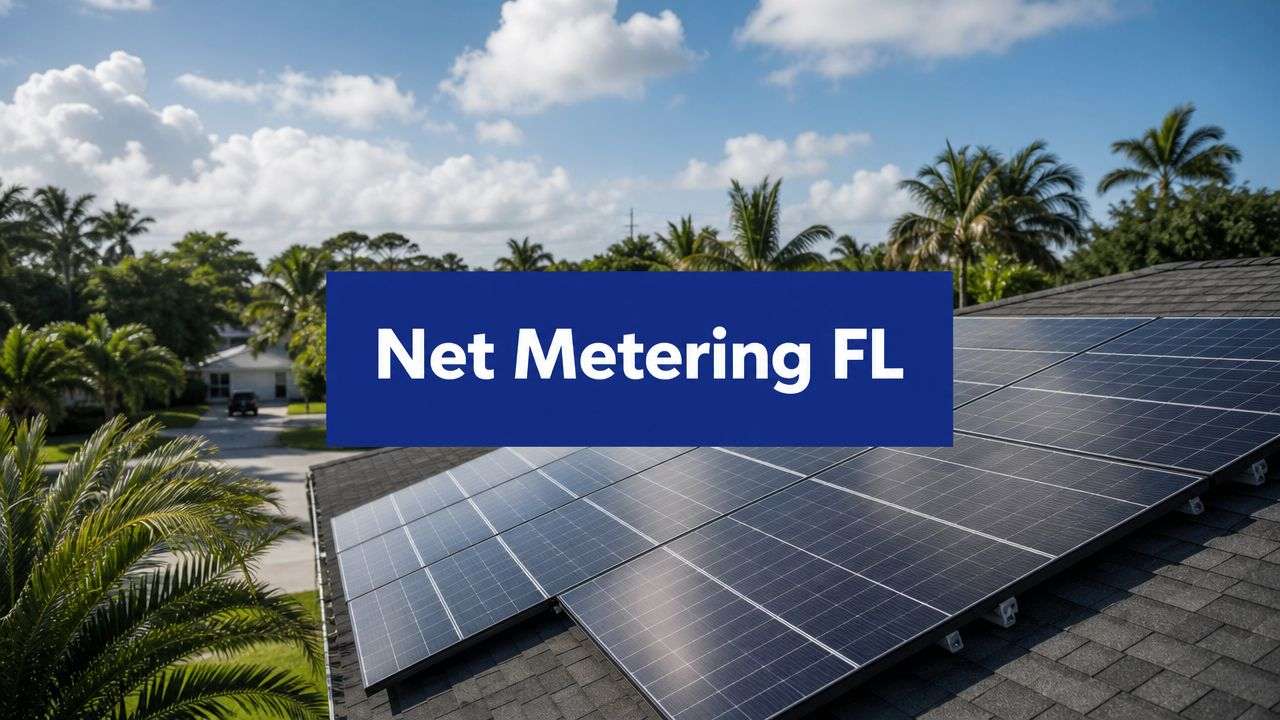
Florida Power & Light covers most of Florida outside the Panhandle, including major population centers. According to EnergySage, FPL's program is structured by system size, and those tiers shape both application cost and project planning (FPL net metering details).
Here are the published tiers:
- Tier 1: Under 10 kW AC, with no application fee
- Tier 2: 10 to 100 kW AC, with a $400 fee
- Tier 3: 100 to 2,000 kW AC, with a $1,000 fee
EnergySage also notes that systems above 10 kW require liability insurance, with coverage requirements rising by tier. That can affect both homeowner and commercial economics, especially for larger rooftops or facilities.
If you're comparing utility structures, this guide to Duke Energy net metering is useful because policy details can vary by provider even when the basic concept looks similar.
Why Utility Differences Matter
A common mistake is assuming all Florida utilities operate the same way. They don't. Investor-owned utilities, cooperatives, and municipal utilities can differ in application process, interconnection steps, bill presentation, and how easy it is to model project economics before installation.
For a homeowner, that may affect whether a system is best sized close to annual usage or kept smaller for simplicity. For a business, utility details can influence whether a project should be phased, whether storage deserves deeper analysis, and how the project team handles compliance.
The Real Decision Behind Net Metering
Net metering is not just a billing feature. It's a design constraint and an economic input.
A consultant usually asks questions like these before recommending a size:
- How much energy does the building use over a year?
- When does that usage occur, daytime or evening?
- Which utility serves the property, and what are its interconnection rules?
- Will the project stay under a key threshold, or cross into a tier with added cost or insurance requirements?
A system that looks efficient on paper can become less attractive if it crosses into a utility tier that adds friction the owner didn't plan for.
That's why florida electric and solar decisions shouldn't start with equipment brands. They should start with utility fit.
Financial Incentives And Tax Benefits For Florida Solar
A solar project can succeed technically and still fail financially if the buyer doesn't account for incentives correctly. In Florida, the biggest state-level advantages are straightforward and important.
Florida's solar policy framework includes a sales tax exemption on solar system purchases and a property tax exemption on the added home value from the installation. The same source explains that exemption from the 6% sales tax lowers upfront capital expenditure, while the property tax benefit means the value added by the system doesn't raise the owner's ongoing property tax burden (Florida solar tax treatment overview).
How These Benefits Work In Real Life
Think about a solar purchase the way you'd think about buying a productive piece of equipment for a building. You care about acquisition cost, tax treatment, operating savings, and whether ownership creates any new long-term expense.
Florida's tax structure helps on two fronts:
- At purchase: The sales tax exemption reduces the amount you pay to acquire the system.
- After installation: The property tax exemption protects you from being taxed on the added value the solar system contributes.
That combination matters because some upgrades save money on utility bills but, imperceptibly, increase tax friction. Florida solar avoids that particular problem.
Why Incentives Should Be Stacked Carefully
Many buyers talk about incentives as if they're one item. They're not. They're layers. A credible financial review separates federal tax treatment from Florida-specific state benefits, then tests whether the remaining investment still makes sense based on the property's actual usage.
If you want a clean summary of Florida solar incentives, use it as a checklist, not as a shortcut to a yes-or-no decision. Incentives improve the economics. They don't rescue a poorly sized system.
The Consultant View
A disciplined review usually asks:
- Does the building consume enough electricity to justify the proposed size?
- Does the roof or site support the system without avoidable compromise?
- Do the incentives improve a project that already makes operational sense?
For many Florida properties, the answer is yes. But the right answer comes from matching incentives to a technically sound design, not from starting with the tax benefit and forcing the rest of the project to fit.
Beyond Savings With Battery Storage And Backup Power
Many Florida buyers assume solar means backup power. That assumption causes a lot of disappointment after storms.
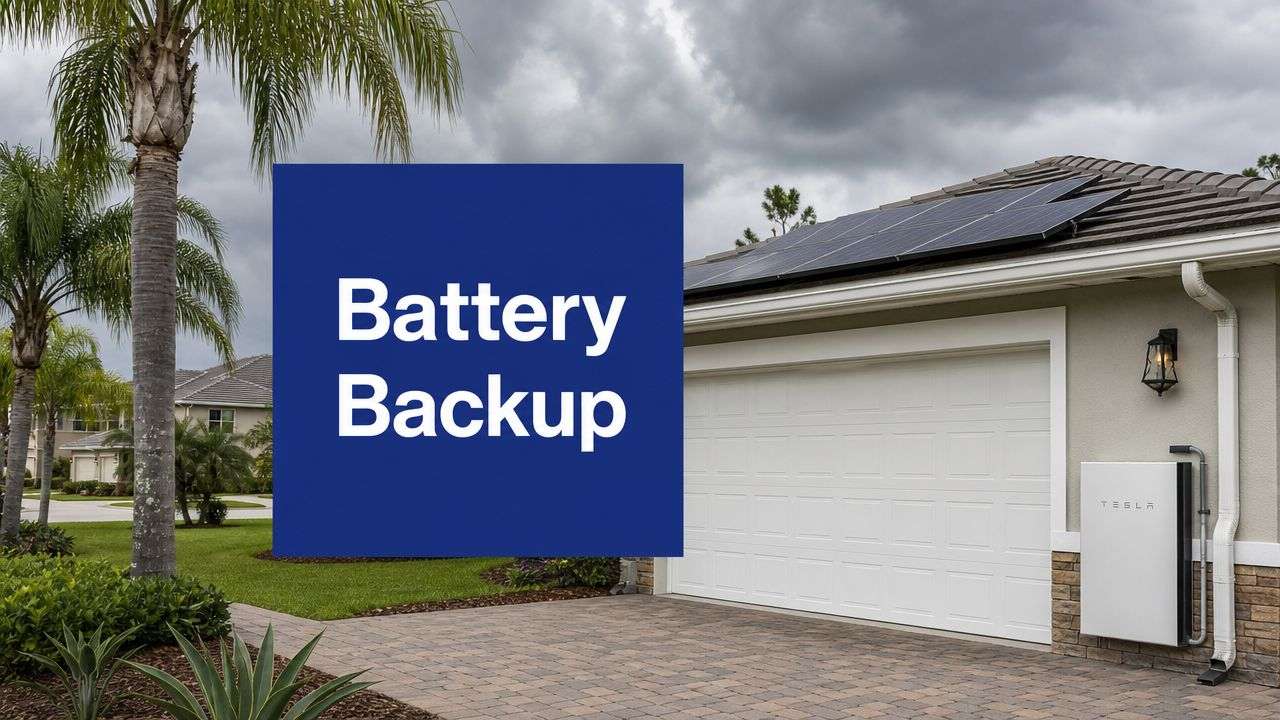
A standard grid-tied solar system usually does not keep your lights on during an outage. Florida-focused guidance notes that standard solar systems do not provide backup power when the grid is down, and that only the addition of battery storage turns solar into a resilience tool for critical loads (Florida solar and outage resilience).

Why Solar Shuts Down During Outages
This happens for safety. When the utility grid is down, line workers need to assume the wires they're repairing are not being energized by homes or businesses nearby. A standard grid-tied system is designed to shut off in that scenario.
That means rooftop panels can be in full sun and still not power the building if there's no battery and no backup-capable configuration. People find that counterintuitive, but it's a basic part of grid safety design.
What A Battery Changes
A battery adds storage and control. Instead of sending all excess power outward or relying completely on the grid when conditions change, the system can reserve energy on site and use it to support selected circuits.
That opens up a different set of planning questions:
- Critical-load backup: Keep essentials running, such as refrigeration, lighting, internet, medical equipment, or a small office server room.
- Broader backup coverage: Support more circuits for comfort and continuity, if budget and system design allow.
- Operational flexibility: Use stored energy strategically rather than only when the sun is shining.
For readers trying to understand the relationship between panel size and charging needs, this plain-language resource on a larger solar panel for battery packs helps illustrate the general sizing logic, even though home and commercial systems are more complex.
How To Think About Battery Value In Florida
Battery value in Florida often has less to do with abstract energy independence and more to do with practical continuity during storms. A homeowner may want food preservation, communications, and a sleeping area cooled. A business may want to keep point-of-sale systems, security, or critical process loads running.
Backup planning starts with one question: what absolutely must stay on?
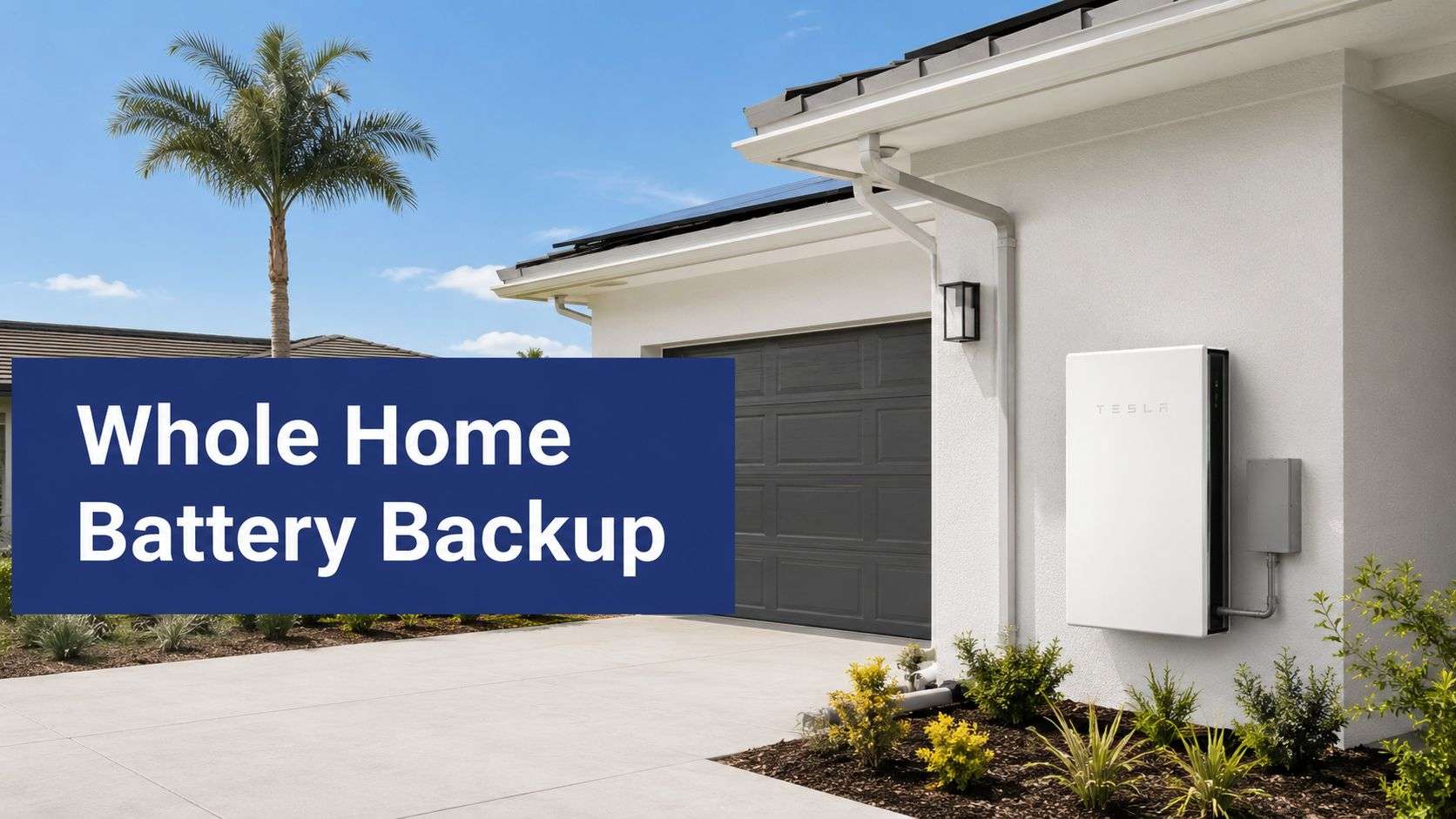
If you're exploring solar battery backup for power outages, separate wants from must-haves. Whole-home backup is a different project from critical-load backup. Both can be valid. They just solve different problems.
Calculating Your Florida Solar ROI And Feasibility
A solar proposal is only as good as its assumptions. If you want to judge a project properly, don't start with the monthly payment. Start with the model behind it.
A serious ROI review asks how much electricity the property uses, when it uses it, how much solar the site can realistically produce, how the utility treats exported power, what incentives apply, and whether storage adds enough value to justify the extra cost. Without those inputs, the output is just marketing.

The Inputs That Actually Matter
A useful feasibility study usually includes these inputs:
- Electric bills and usage history: This shows how much power the property buys and whether usage is steady, seasonal, or concentrated at certain times.
- Site conditions: Roof orientation, shading, available area, and electrical infrastructure all affect production and installation practicality.
- System scope: The size of the array, whether batteries are included, and whether critical-load backup is part of the design.
- Policy assumptions: Utility interconnection rules, net metering treatment, and state tax treatment shape financial performance.
- Ownership structure: Cash purchase, financing, or a commercial ownership entity can change the economics and tax handling.
The Outputs You Should Expect To See
A credible model should translate those inputs into a few decision-friendly outputs.
First is payback period. That tells you how long it takes for cumulative savings to recover the net project cost. It's simple, and buyers like it, but it doesn't tell the whole story.
Second is return on investment. That asks whether the savings justify the capital deployed. For commercial properties, many analysts also look at internal rate of return, or IRR. A simple way to think about IRR is this: it estimates how hard your invested dollars are working over time compared with other uses of capital.
If a proposal can't explain its assumptions in plain language, treat the savings estimate with caution.
Questions That Improve The Decision
Before you approve any system, ask:
- What annual usage did you model from my bills?
- What utility assumptions did you use?
- Did you size the system to my real load or to the roof's maximum capacity?
- How did you treat batteries, if included? As savings equipment, resilience equipment, or both?
- What happens to project economics if my usage changes?
For buyers who want an independent analysis rather than a sales estimate, solar ROI and feasibility tools can help frame the conversation. Solar Energy Management LLC, for example, provides feasibility studies and financial modeling for Florida projects, which is useful when you want to compare options before committing to installation.
Your Pathway To A Florida Solar Project
A Florida solar project becomes manageable when you treat it like a sequence of decisions, not one big leap. The right path is usually slower at the beginning and faster later, because careful planning removes rework.
Start With The Property, Not The Product
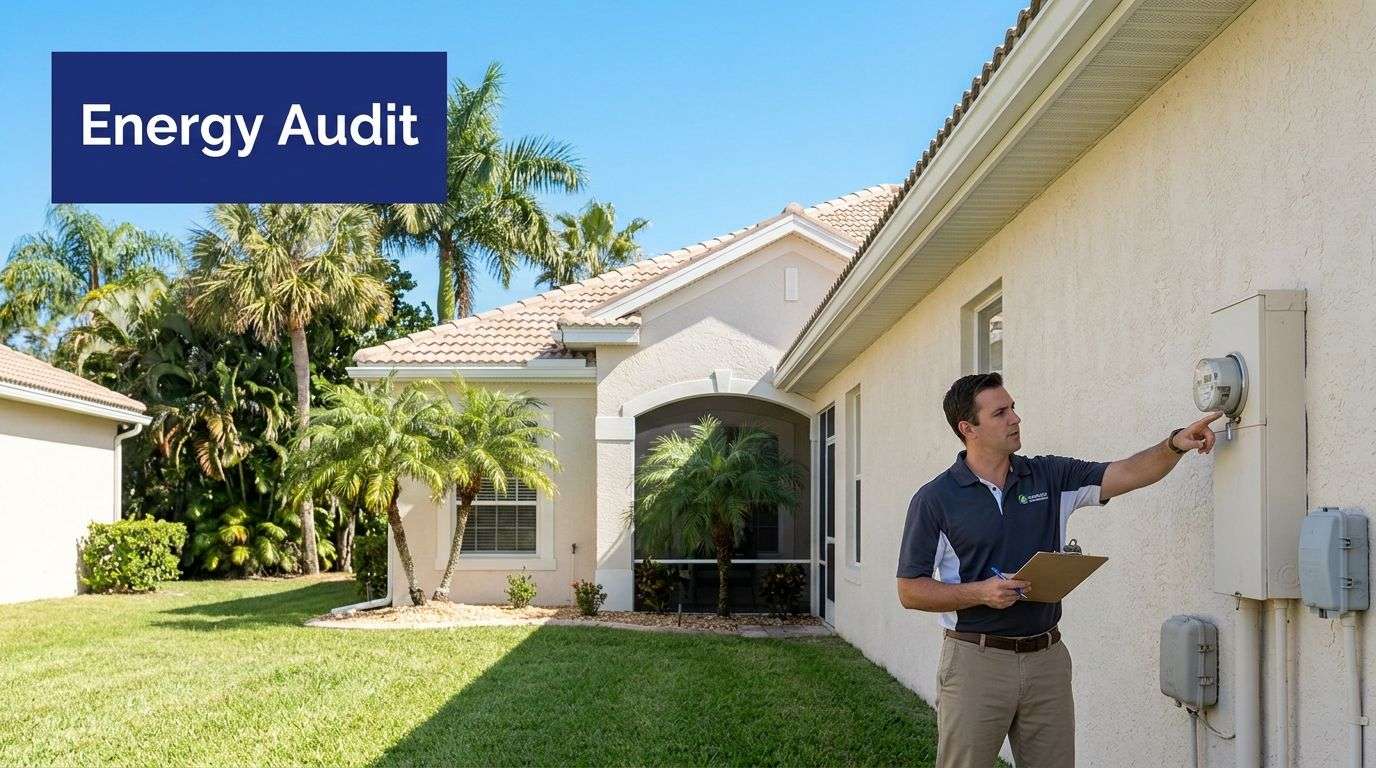
Get your recent electric bills together. Look at when the building uses power, not just how much it uses. A daytime-heavy property and an evening-heavy property can reach very different conclusions from the same annual total.
Then look at the site itself. Roof age, usable space, shading, electrical service, and storm exposure all matter. If the roof needs major work soon, replacing it before solar may be the smarter move.
Pressure-Test The Proposal
When a proposal arrives, don't focus only on panel brand or headline savings. Test the logic behind the recommendation.
Use this quick review lens:
- Check system sizing: Does it match annual usage and utility rules, or does it just fill the roof?
- Check assumptions: Are the incentives, interconnection steps, and backup claims explained clearly?
- Check resilience claims: If the proposal mentions outages, does it include battery storage and critical-load planning?
- Check responsibility lines: Who handles design, permitting coordination, utility paperwork, and commissioning support?
Why Independent Advice Matters
Installers sell and build systems. That's their role. A consultant's role is different. A consultant helps you decide whether the project should happen, what scope makes sense, and which tradeoffs are acceptable before you sign anything.
That matters in florida electric and solar because several variables can move the outcome: utility thresholds, battery sizing, building load patterns, tax treatment, and local permitting requirements. An independent review can catch overbuilt systems, weak savings assumptions, or resilience claims that don't hold up.
For homeowners, that can prevent buying a system that looks impressive but doesn't match how the home runs. For businesses, it can prevent locking capital into an energy project that doesn't align with operations.
A smart solar project in Florida is rarely the one with the flashiest proposal. It's the one with the clearest logic, the cleanest assumptions, and the right fit for the property.
If you want an independent, Florida-specific review before you commit to a solar or storage project, Solar Energy Management LLC helps homeowners, businesses, and organizations evaluate feasibility, model ROI, plan battery backup, and make informed decisions based on site conditions, utility rules, and long-term financial goals.