Your electric bill lands, the air conditioning has been running hard, and solar starts to look less like a nice idea and more like a capital decision. That's the point where most Florida property owners start searching for a florida solar installer and quickly run into a noisy market filled with sales promises, financing pitches, equipment claims, and very different opinions about what system you “need.”
That's also where expensive mistakes start.
In Florida, solar is no longer fringe. It's mainstream enough to attract strong installers, aggressive sales organizations, and companies that aren't built for long-term service. If you're hiring for a home, retail center, warehouse, nonprofit facility, or office building, the job is not just to find someone who can put panels on a roof. The job is to select the right team, define the right scope, and protect yourself before a contract is signed.
The Smart Way to Go Solar in the Sunshine State
Florida gives solar buyers a real opportunity, but it also demands discipline. The state has become one of the country's biggest markets, with 14,303 MW of total installed solar capacity as of Q2 2025 and a third-place national ranking, while 3,385 MWac was added in 2024 alone according to Florida solar adoption statistics. That kind of expansion creates momentum. It also creates crowding.

When a market grows this fast, buyers see more options on paper than they have in reality. Some companies are skilled at system design, permitting, and after-install support. Others are mostly lead generation operations with polished proposals and weak execution. A few rely heavily on subcontractors, which isn't automatically bad, but it becomes risky when no one clearly owns engineering decisions, warranty follow-through, or service calls after the install is complete.
Solar only works when the project logic works
A good solar outcome in Florida starts with a simple question: what problem are you trying to solve?
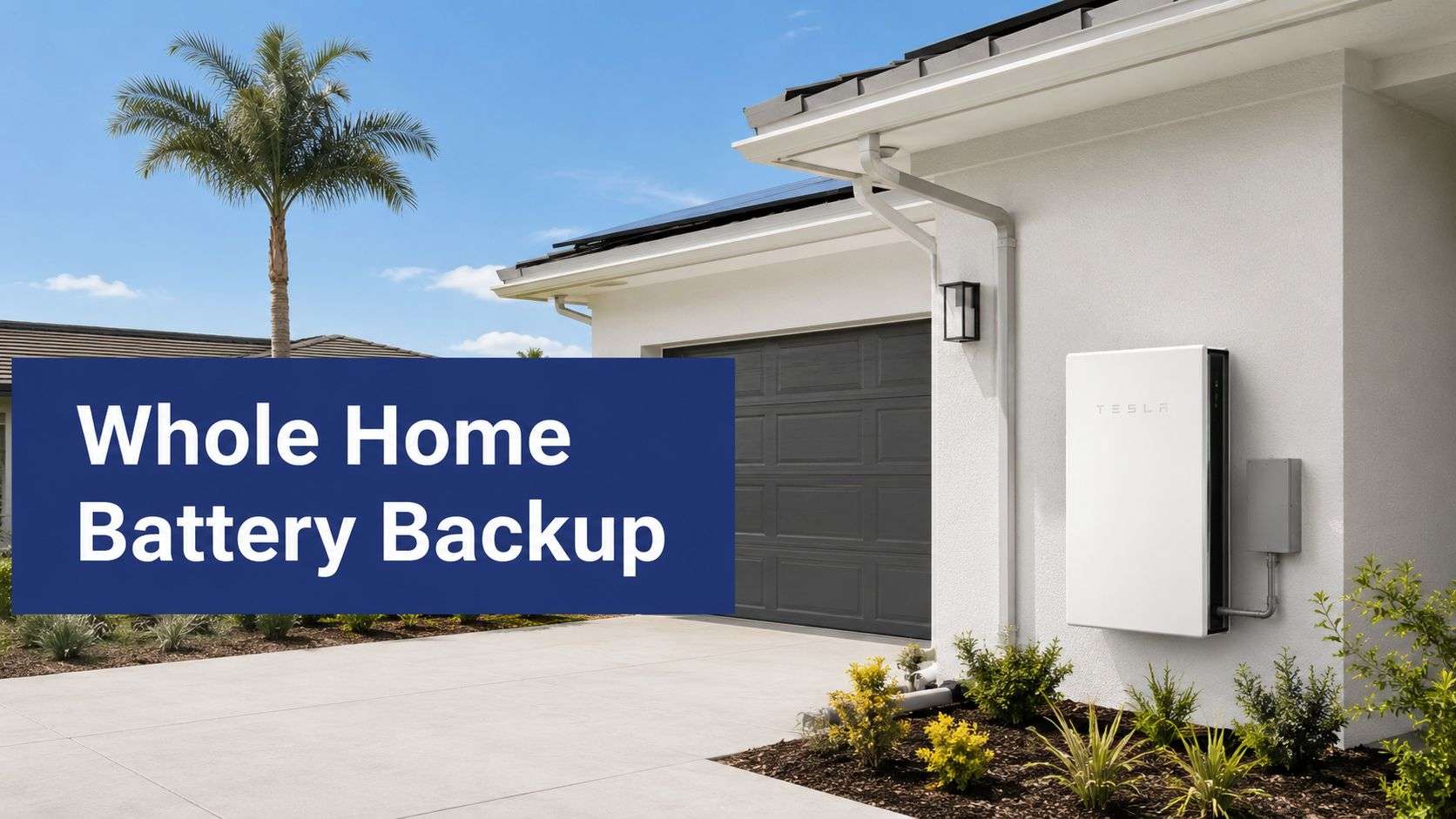
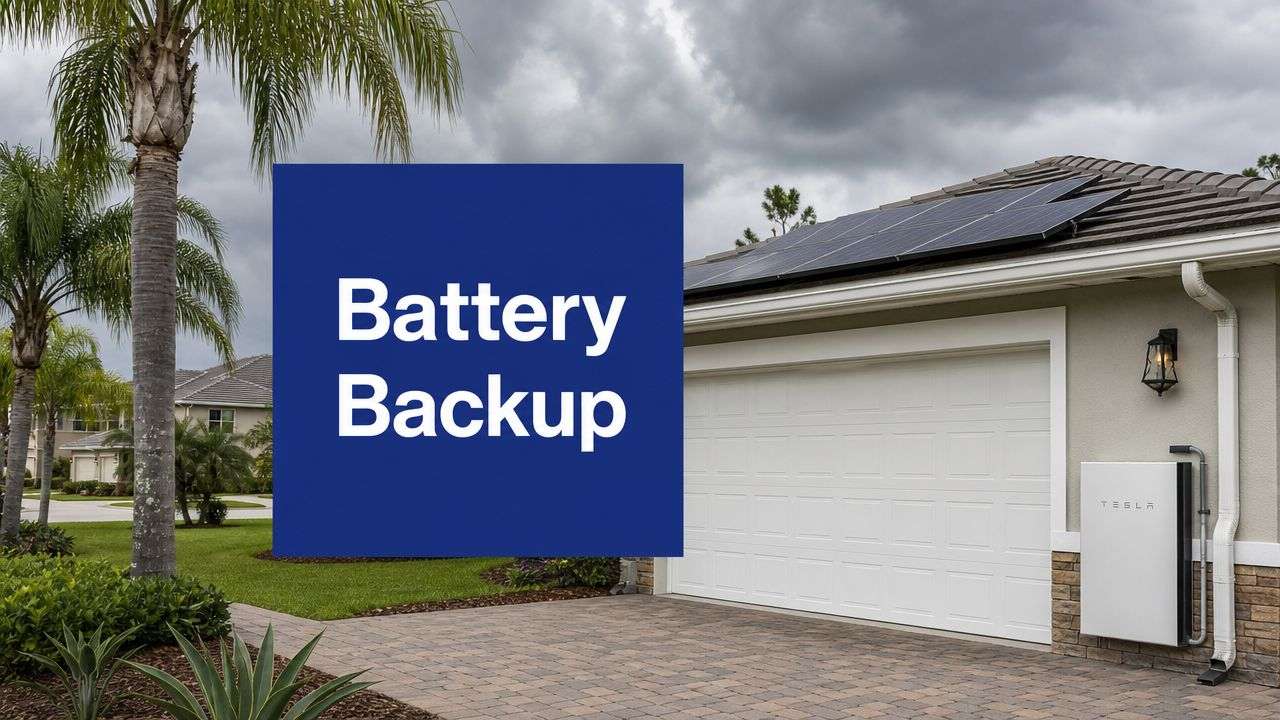
For one owner, the answer is utility bill reduction. For another, it's outage resilience with battery backup. For a commercial facility, it may be demand management, tenant stability, or protecting operations during disruptions. Those goals produce different system designs, different economics, and different installer requirements.
Practical rule: If the sales conversation starts with panel quantity before anyone studies your usage, roof condition, critical loads, and operating pattern, you're being sold a product instead of being guided through a project.
That distinction matters. A florida solar installer may be technically capable and still not be the right fit for your property. A beachfront home with storm exposure, a church with weekend load spikes, and a warehouse with daytime usage all need different design logic.
The hiring decision matters as much as the hardware
Panels, inverters, racking, monitoring, and batteries all matter. But procurement discipline matters first.
Before comparing brands, you need to know:
- Who is responsible for design, permitting, installation, and service
- Whether the proposal matches your building instead of a generic production model
- How the installer handles post-install support if there's an issue with monitoring, roof penetrations, or equipment replacement
- Whether the numbers are realistic or optimized to close the deal
In Florida, solar can be an excellent asset. It can reduce operating costs, improve resilience, and give a property owner more control over long-term energy exposure. But the returns people expect from solar don't come from optimism. They come from design accuracy, contractor quality, and a contract you can live with after the truck leaves.
Vetting Your Florida Solar Installer Beyond the Sales Pitch
Most buyers spend too much time listening to presentations and not enough time checking what sits behind them. A professional proposal is useful. It is not proof.
Start with licensing and insurance, then work outward into project experience, references, warranty structure, and service capacity. In Florida, that sequence protects you from the most common procurement errors.

What to verify before discussing price
A serious florida solar installer should be ready to provide documentation without friction. If they get evasive, slow, or defensive, treat that as useful information.
- Active Florida license: Ask for the contractor's license information and verify it through the Florida DBPR. Don't rely on a logo in a slide deck or a statement from a salesperson.
- Insurance certificates: Request proof of general liability and workers' compensation coverage. Make sure the documents are current and issued to the actual company named in your proposal.
- Local project experience: Ask what they've completed in your area of Florida and what kinds of roofs, utility territories, and municipalities they work with most often.
- Recent references: Speak with clients who had their systems installed recently enough to comment on both construction and follow-up service.
- Warranty responsibility: Clarify who handles workmanship claims, manufacturer coordination, monitoring issues, and roof-related callbacks.
A company that says “we handle everything” should be able to map that claim to names, documents, and process.
What often goes wrong in the field
The failures I see most often are not glamorous technical problems. They're handoff problems.
Sales says one thing. Engineering draws something else. Installation crews discover roof constraints late. A battery gets proposed before anyone defines critical loads. Monitoring access never gets transferred cleanly. The owner assumes savings will begin on a certain schedule, but utility approvals stretch longer than expected. None of that shows up in a polished quote.
A strong installer doesn't just sell equipment well. They communicate constraints early, document assumptions, and stay accountable after commissioning.
That's why online reviews should be handled carefully. They can reveal patterns, but they can also reflect marketing strength more than operational strength. If you want a better way to think about review visibility and why some firms dominate search even when buyers still need deeper vetting, Constructo Marketing's guide to local SEO gives useful context.
For your own due diligence, build your interview around real project questions, not generic “why choose us” prompts. A practical list of owner-side questions appears in these questions to ask a solar company.
Red flags that deserve a hard stop
Some warning signs are enough to pause the process immediately.
Pressure to sign before design review
If the rep pushes urgency before site-specific details are settled, the priority is closing, not fit.Unclear subcontracting chain
If you can't tell who will engineer, permit, and install the job, you can't manage risk properly.Vague warranty language
“Full warranty” means nothing without a written breakdown of equipment, labor, response process, exclusions, and transferability.No serious load analysis
If your bills, interval usage, operating hours, or backup needs haven't been analyzed, the production model is guesswork.
The right installer won't object to scrutiny. Good companies expect it.
How To Create a Solar Request for Proposal
Most property owners ask for “a quote” and then receive proposals that can't be compared fairly. One includes premium modules, another assumes a different offset target, a third leaves out battery-ready wiring, and all of them model savings differently. You can avoid that by issuing a short, clear request for proposal.
Give bidders the same job to price
Your RFP doesn't need to be formal or complicated. It needs to remove ambiguity.
Include the property address, electric utility, recent usage history, roof type, and whether the project is residential or commercial. State your priority clearly. Bill reduction, backup power, electric vehicle charging support, or future battery integration all lead to different system choices.
Then define what each bidder must answer. Ask for:
- System concept and layout assumptions
- Major equipment proposed, including panel and inverter brands
- Monitoring platform details
- Warranty breakdown, separated by equipment and workmanship
- Estimated project schedule, from contract to permission to operate
- Any exclusions, such as main service upgrades, roof work, trenching, or cellular monitoring fees
When bidders answer the same questions, weak proposals become obvious quickly.
Require clarity on design assumptions
Many proposal errors stem from assumptions that the buyer never sees. The model may assume a clean, obstruction-free roof plane, minimal shading, or a usage pattern that does not match how the building operates.
Ask each bidder to state, in writing, what they assumed about:
- Roof condition and available install area
- Electrical service and panel capacity
- Shading or nearby obstructions
- Interconnection path
- Battery readiness or critical load planning
If they can't explain how they arrived at the design, they're asking you to approve a moving target.
A useful way to frame the technical side before you seek bids is to review how rooftop projects are physically planned, wired, and staged. This overview on how to install rooftop solar panels helps owners understand what should already be reflected in a serious proposal.
Ask for documents, not promises
Verbal reassurances disappear fast once a project changes hands inside a company.
Request sample deliverables such as a draft site plan, a single-line diagram summary if available, product cut sheets, and the exact contract form they expect you to sign. You don't need every engineering document at this stage, but you do need enough paper to judge whether the company operates with discipline.
If one bidder gives you a detailed scope and another gives you a glossy savings sheet, they are not offering the same level of professional rigor.
A clean RFP changes the tone of the buying process. You stop reacting to sales packages and start managing a procurement.
Comparing Proposals and Financial Projections
Once proposals come in, most buyers jump straight to total price. That's understandable, but it's the wrong first move. Solar proposals should be compared like long-life infrastructure. You need to judge design quality, modeling assumptions, equipment fit, service risk, and how the system behaves under real Florida conditions.

Read the production model like an auditor
Start with the assumptions under the savings estimate. A proposal can look attractive because the model is optimistic, not because the design is better.
Check whether the installer explains:
- How annual production was modeled
- What shading assumptions were used
- How usage timing affects value
- Whether the system is sized for current loads or expected future loads
- How storage changes the economics and resilience profile
You don't need advanced software expertise to ask hard questions. You need consistency. If one proposal uses a more conservative design basis and another leans on aggressive assumptions, the lower-cost system may not be the better deal.
For buyers who want a sharper understanding of property-level solar analysis before evaluating bids, analyzing home solar capabilities through BatchData is a useful reference for seeing how roof and parcel characteristics shape project feasibility.
A cheaper array can be the worse financial choice
Not every low bid is bad. But a low bid that strips out design discipline usually becomes expensive later.
Compare proposals across these categories:
| Comparison Area | What To Look For |
|---|---|
| Equipment fit | Is the panel and inverter pairing appropriate for your roof, layout, and monitoring needs? |
| Installation scope | Does the quote clearly identify what is included and excluded? |
| Serviceability | Will replacement parts, app support, and warranty administration be straightforward years later? |
| Battery readiness | If you may add storage later, is the design prepared for that path? |
| Contract clarity | Are allowances, contingencies, and change-order triggers spelled out? |
A proposal should survive questions without becoming vague. If detail disappears once you challenge the numbers, the numbers were never solid.
Florida design trade-offs matter
One of the most overlooked design decisions in Florida is panel orientation. Standard advice often favors due-south arrays because they maximize annual output. That sounds right until you consider batteries, backup power, and when the building uses energy.
According to Florida solar design guidance on panel orientation, an east-west panel spread can boost morning and afternoon production by 20-40% while reducing total annual output by only 5-10%. For battery-backed systems, that flatter production curve can be more useful than chasing peak noon output.
That's a real trade-off. A south-facing design may win on annual production totals. A multi-orientation layout may better support resilience and critical loads. In Florida, where backup strategy matters, that difference should be discussed before a contract is signed.
Don't ask which proposal makes the biggest number on paper. Ask which proposal fits how the property operates when the grid is normal and when it isn't.
If you want to pressure-test the financial side further, this guide to solar return on investment gives owners a practical framework for reading payback logic, not just marketing projections.
Navigating Florida Permitting Interconnection and Incentives
The project doesn't become real when you choose a contractor. It becomes real when documents start moving through permitting, utility review, procurement, installation scheduling, inspection, and permission to operate. Many owners underestimate this phase because it doesn't produce visible progress right away.
Permitting requires more coordination than most buyers expect
In Florida, permitting runs through the local authority having jurisdiction. Requirements vary by municipality, building type, and whether the project includes batteries, service upgrades, or structural considerations.
A well-managed installer should be ready to handle permit submissions, but the owner still needs visibility into what is being filed. Ask to see the permit scope summary, equipment list, and any assumptions about structural review or electrical modifications. If roof age or condition is a concern, resolve that before permit drawings are finalized.
Common slowdowns include incomplete site information, utility meter issues, roof conflicts, and changes to equipment availability after permit submission. None of these are unusual. What matters is whether your contractor communicates them early.
Interconnection is not a formality
Utilities need to review and approve how your system connects to the grid. That process affects project timing and energization.
For owners in Florida utility territories such as FPL, Duke Energy, or TECO, interconnection paperwork should match the actual design, meter setup, and equipment package. If the proposal changes later, interconnection documents may need updates too. That's one reason change orders should be controlled tightly after contract signing.
You should also ask who will manage final inspection closeout, utility coordination, and monitoring setup. If the answer sounds fragmented, expect delays.
Incentives only help if the project is documented correctly
Florida buyers often focus on incentives early, but they should be treated as part of a complete financial structure, not the whole story. Eligibility, filing process, tax treatment, and ownership structure all matter.
For a practical Florida-specific overview, review this guide to Florida solar incentives. It's a good starting point for understanding how incentives fit into project planning.
For businesses, depreciation treatment can materially affect economics. For homeowners and commercial owners alike, the main discipline is documentation. Keep contracts, equipment schedules, invoices, change orders, commissioning records, and any utility approvals organized from day one. If the project paperwork is sloppy, incentive capture and warranty follow-through both get harder.
Administrative mistakes don't usually kill a solar project. They do erode returns, delay energization, and create avoidable disputes later.
The Role of an Independent Consultant in De-Risking Your Project
A booming market gives buyers choice, but it also shifts too much responsibility onto them. Most owners are not equipped to verify every production assumption, battery strategy, contract clause, and procurement risk buried inside competing proposals. That's where an independent consultant changes the outcome.

Independent review protects the buyer, not the sale
An installer is there to win and execute the job. A consultant is there to protect the owner's decision quality.
That difference matters in Florida because installer failures and unlicensed operations are real risks in a fast-growing market. According to Florida guidance on orphaned solar clients and procurement risk, independent consulting can de-risk procurement through feasibility studies, ROI modeling, and system design, potentially saving clients 20-30% in long-term costs compared to hiring an installer directly.
That doesn't mean every installer is a risk. It means buyers shouldn't rely solely on seller-provided analysis when the asset is expected to perform for years.
Where consulting adds practical value
A good consultant does more than review quotes. They tighten the entire process.
- Feasibility first: The project gets tested against building conditions, usage patterns, resilience goals, and budget constraints before contractor selection.
- RFP discipline: Installers bid against a defined scope, which produces cleaner comparisons and fewer hidden assumptions.
- Financial review: Savings models, ROI logic, storage scenarios, and incentive assumptions get checked before anyone signs.
- Design sanity check: Orientation, battery sizing logic, critical loads, and expansion options are reviewed from the owner's side.
- Procurement oversight: The buyer gets help comparing contracts, exclusions, subcontracting structure, and service obligations.
This is especially valuable for owners planning battery-backed systems, microgrids, phased projects, or commercial installations where operating schedules matter as much as raw annual production.
The strongest projects start before installer selection
By the time most buyers call for help, they already have proposals in hand. That's still useful, but the strongest results happen earlier, when someone independent defines the decision criteria before sales pressure takes over.
If you're looking for owner-side guidance before choosing a florida solar installer, this resource on solar energy consultants near me gives a practical overview of what independent advisory support should include.
The cheapest mistake in solar is the one you catch before contract signing. The expensive ones show up after the system is installed and the salesperson is gone.
A disciplined solar project in Florida isn't just about buying panels. It's about buying the right design, the right execution path, and the right long-term support structure.
If you want an independent second opinion before hiring a florida solar installer, Solar Energy Management LLC helps Florida homeowners, businesses, and organizations evaluate feasibility, compare proposals, model ROI, and plan resilient solar and storage systems with a consultant's perspective. That owner-side guidance can make the difference between a project that merely gets installed and one that performs the way it should.