If you're in Florida and asking how much battery backup do I need, you're probably not asking in the abstract. You're thinking about the next thunderstorm outage, the next named storm, the fridge full of food, the Wi-Fi your business depends on, or the air handler you wish you could keep running when the grid drops.
The right answer isn't "buy the biggest battery you can afford." It's to match storage to the way your property uses power during an outage. That means deciding what must stay on, how long you need it, how much surge power those loads require, and whether your battery will recharge from solar during a multi-day event. For homes and businesses in Florida, those details matter more than brochure claims.
Why "More is Better" Is the Wrong Approach to Battery Sizing
Oversizing sounds safe. In practice, it often means paying for capacity you'll rarely use, while still missing the parts of the design that determine whether the system performs when the lights go out.
A battery plan starts with an appliance and equipment checklist. Not a wish list. A real operating list. Separate what you want into essential, semi-essential, and non-essential loads. That single step usually clears up most sizing confusion.
Start With Circuits, Not Marketing Labels
For a Florida home, essential loads usually include refrigeration, internet, phones, a few lights, garage access, and any medical equipment. Semi-essential loads might include selected receptacles, a home office, or limited cooling in one area. Non-essential loads often include pool pumps, electric dryers, ovens, and whole-home cooling if you're trying to control battery size.
Commercial properties use the same logic. Essential may mean security, POS, network gear, emergency lighting, and refrigeration. Semi-essential may include select office zones or one small HVAC area. Non-essential may include decorative lighting, noncritical plug loads, or equipment that can stay off until utility service returns.
Practical rule: If you haven't decided what can stay off, you aren't ready to size a battery.
Battery systems are part of a broader storage strategy, not a magic box that erases every trade-off. If you want a clear primer on how storage fits into a Florida solar plan, this overview of an energy storage system is a useful starting point.
What Works and What Doesn't
What works is a system built around outage behavior. People use power differently during storms than they do on a normal Tuesday. They open the fridge less. They shut off extra lights. They skip laundry. Good sizing reflects that.
What doesn't work is choosing "whole-home backup" without checking actual load behavior. That phrase sounds simple, but it can hide major cost increases and performance problems if the inverter can't handle startup surges or if the battery drains faster than expected.
A well-sized system gives you reliable backup for the loads that matter most. That's the goal. Not the biggest battery. The right battery.
Start by Auditing Your Critical Loads
Before anyone should recommend battery capacity, they need a clean load audit. That applies to a house in St. Petersburg, a retail suite in Tampa, or a small office in Clearwater. If the load list is sloppy, the battery recommendation will be sloppy too.

Build Three Load Buckets
Start with three categories:
- Essential loads. These are the circuits that protect health, safety, communication, and food. Think refrigerator, freezer, Wi-Fi, phone charging, a few lights, security system, garage door opener, and medical devices.
- Important but flexible loads. These improve comfort or allow you to keep working. Examples include a home office setup, more lighting, television, microwave, or a limited cooling zone.
- Discretionary loads. These are the first items to remove if battery size starts getting expensive. Pool equipment, electric water heating, whole-home AC, dryers, and cooking appliances usually land here.
For commercial properties, the buckets are different but the method is the same.
- Keep operating. Security, alarm panel, modem, network switch, payment processing, key refrigeration, select lighting.
- Nice to maintain. Back-office workstations, limited customer area comfort, signage, one ice machine, or a small server rack.
- Can wait. Full lighting package, noncritical HVAC zones, decorative loads, and equipment that doesn't affect safety or inventory.
Look at Outage Consequences, Not Just Wattage
A refrigerator matters because food spoilage is costly and avoidable. A router matters because communication during a storm matters. A pool pump usually doesn't matter in the first outage window. For a café, refrigerated inventory matters more than ambient dining lights. For a medical office, networking and records access may rank above lobby comfort.
That mindset is why a good audit feels less like shopping and more like triage.
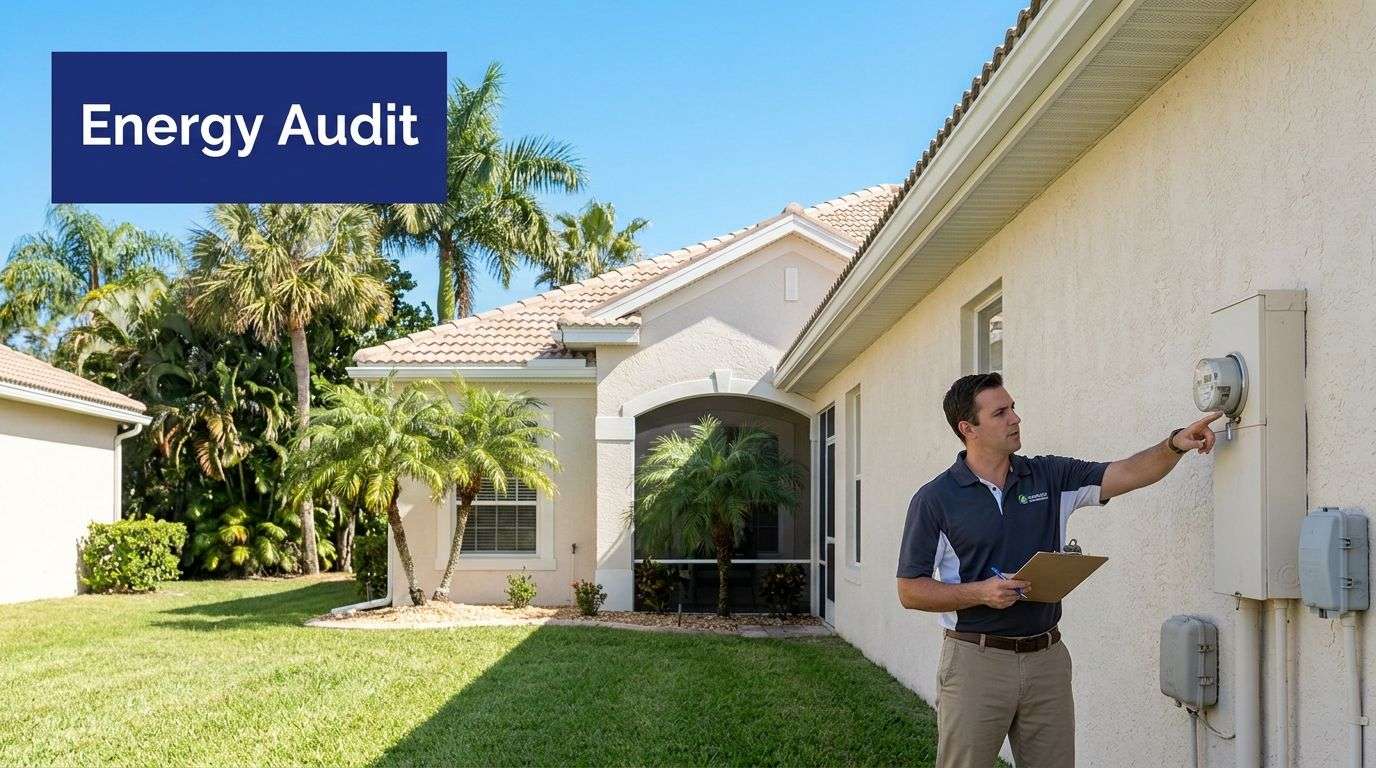
If you're evaluating a larger property, especially mixed-use or commercial space, a structured business energy audit helps sort critical loads from expensive distractions before storage gets sized.
The fastest way to overspend on batteries is to back up habits instead of priorities.
Include New Electrical Demands Before You Size
One mistake I see often is sizing storage around today's panel schedule while ignoring what the owner plans to add next. Maybe that's an EV charger, a mini-split in a detached office, or upgraded refrigeration in a storefront.
If EV charging is part of your future plan, it helps to see how electrical upgrades affect load planning. This guide to Forward Electrical EV charging services is based outside Florida, but the underlying lesson is relevant. New charging equipment changes how you think about panel capacity, circuits, and what should or shouldn't sit behind battery backup.
Write the audit down. Circuit by circuit. Device by device. Then decide what must run at the same time. That last part matters more than is commonly understood.
Estimate Your Energy Use and Desired Runtime
A load list tells you what matters. The next step is to convert that list into energy over time. Batteries store energy in kilowatt-hours, so you need two numbers: how much your selected loads consume, and how long you want to carry them.

Use Your Bill as the Reality Check
Historical data from the U.S. Energy Information Administration shows the average U.S. household consumed about 886 kWh per month in 2021, which works out to roughly 29 to 30 kWh per day. In hot climates like Florida, summer use can rise above 40 kWh per day because air conditioning and dehumidification add major demand. For resilience planning, a common rule of thumb is to back up 12 to 24 hours of essential loads, not necessarily the full household total, as summarized in this battery backup sizing guide.
That benchmark helps in two ways. First, it tells you whether your own bill is in a normal range. Second, it reminds you that the question isn't "How much does my house use on a normal day?" It's "How much will my selected outage loads use during the period I care about?"
Calculate Load by Load
The practical math is simple:
- Find the wattage of each critical device.
- Estimate how many hours it runs during an outage day.
- Multiply watts by hours to get watt-hours.
- Add those device totals together.
- Convert watt-hours to kilowatt-hours.
For example, refrigeration may cycle. Lighting may only run at night. Internet equipment may run all day. A laptop may only need charging part of the day. This is why copying a neighbor's battery size rarely works.
If the utility bill gives you the annual average and the load audit gives you the outage essentials, the battery size lives somewhere between those two numbers.
Runtime in Florida Is a Strategy Choice
A summer thunderstorm outage and a hurricane outage are different design problems. For a short event, you may only want evening refrigeration, communications, and selected lighting. For a multi-day storm recovery window, you're planning for repeated overnight use, possible solar recharge, and stricter load discipline.
That runtime choice changes everything. A battery sized for overnight resilience may be a poor fit for a two-day interruption. A battery sized for normal living during a hurricane may be larger than you need if your real goal is preserving food, communications, and one comfort circuit.
Reducing AC demand can also change the equation materially. This homeowner-focused guide on Residential AC energy savings is useful because cooling is usually the first load that pushes a Florida battery plan from manageable to expensive.
If you're pairing storage with solar, this overview of how to size a solar system helps you align daytime production with nighttime backup expectations.
Translate Your Energy Needs into Battery Specifications
A property owner in Tampa asked for "about a day of backup." On paper, that sounded simple. Once the actual loads were listed, the answer split into two separate design paths.

The Tampa Family Example
The family wanted the refrigerator, internet, key lights, phone charging, garage access, and a limited cooling strategy. They were not trying to run the whole house. That distinction saved them from buying a system built around their largest occasional loads instead of their true outage priorities.
This is where battery terminology starts to matter. You don't size from appliance names alone. You size from peak power and energy. The method used by experienced planners is to separate essential, semi-essential, and discretionary loads, then calculate both kW and kWh. The peak load must stay below the inverter's continuous and surge limits, and the battery energy requirement is derived by multiplying the combined running load by outage duration and dividing by depth of discharge and system efficiency, which is typically 85 to 90 percent usable, as outlined in this battery backup guide.
The family's key lesson wasn't about battery chemistry. It was about startup behavior. Refrigeration and compressor-based loads don't just draw steady power. They surge. If the inverter is undersized, the system can fail even when the battery still has plenty of stored energy.
The Clearwater Small Business Example
A small business in Clearwater had a different problem. The owner didn't care about residential-style comfort. They cared about keeping operations intact during a daytime outage. POS, modem, router, cameras, alarm, and refrigeration all had to remain live. The break room, decorative lighting, and noncritical plug loads did not.
That changes the specification conversation. For business continuity, you often need a tighter power-quality and load-priority plan than a home does. The battery may be modest compared with a whole-home system, but the inverter and subpanel design have to be very intentional.
Here is the formula I use when reviewing proposals:
- Energy need = critical load in kW × outage duration
- Gross battery target = energy need ÷ usable battery fraction ÷ system efficiency
- Inverter check = verify continuous and surge output against simultaneous equipment startup
Why Nameplate Capacity Isn't the Same as Usable Backup
If your loads need a certain amount of delivered energy, the battery system must be larger than that number on paper because not all stored energy is available in a real installation. Some capacity is reserved by battery controls, and some energy is lost as power moves through the system.
A battery proposal becomes much easier to evaluate once you understand that difference. You're not buying a label. You're buying usable outage performance.
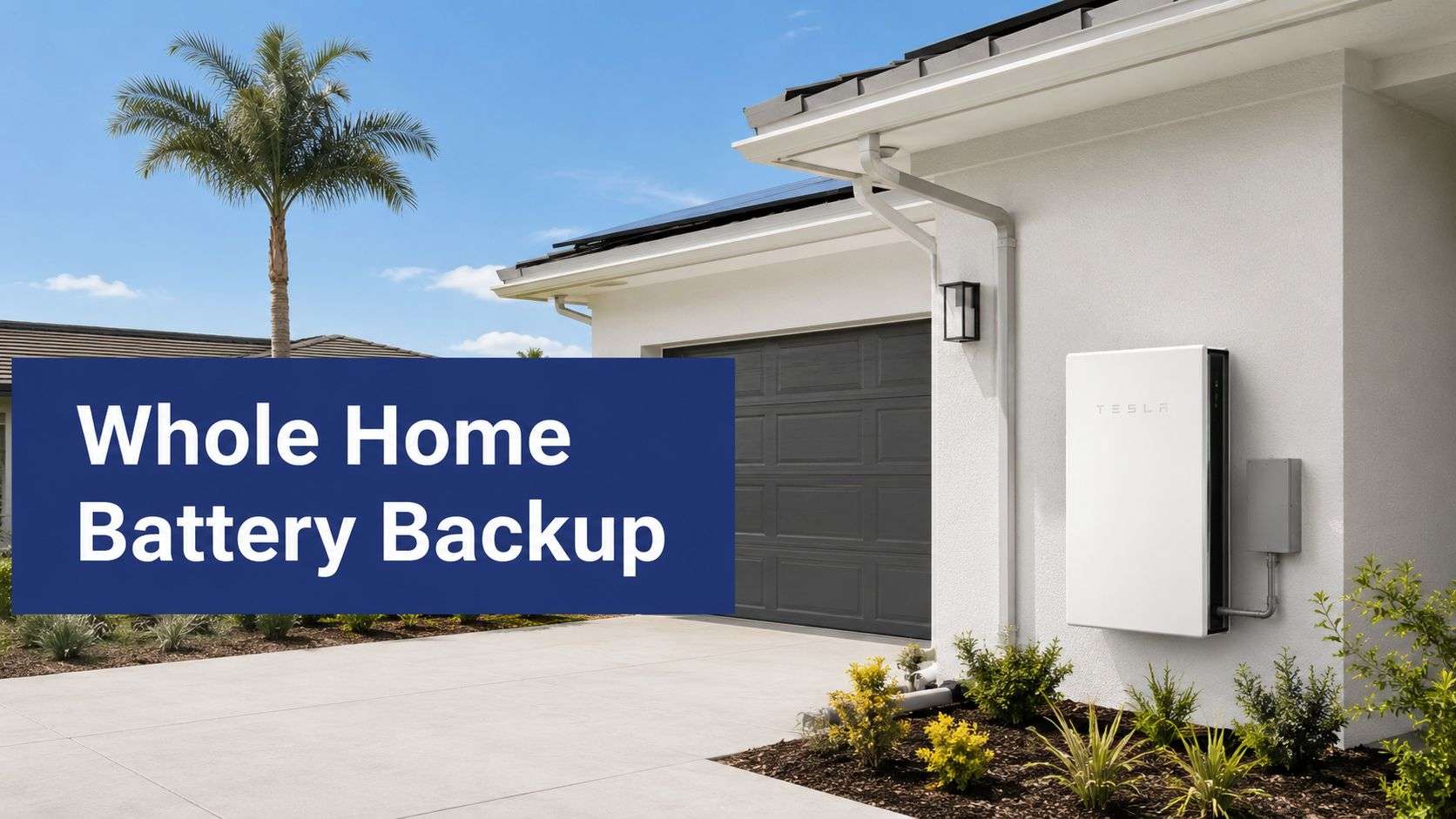
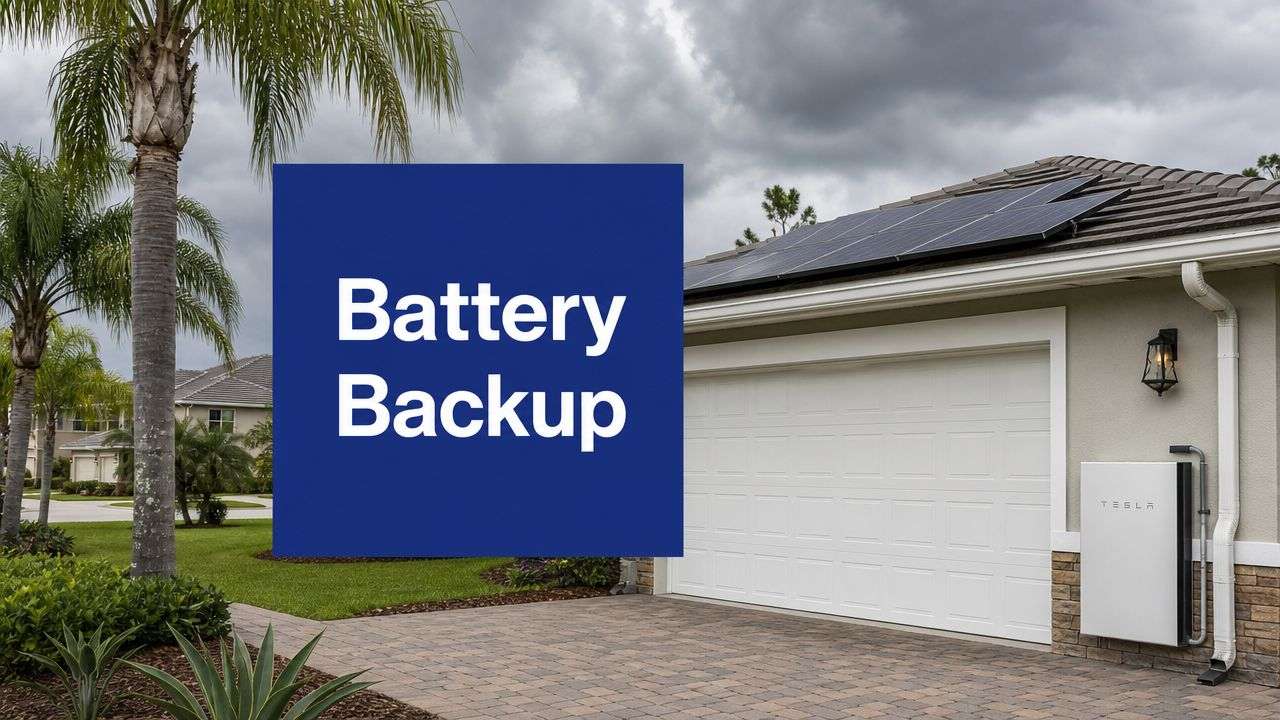
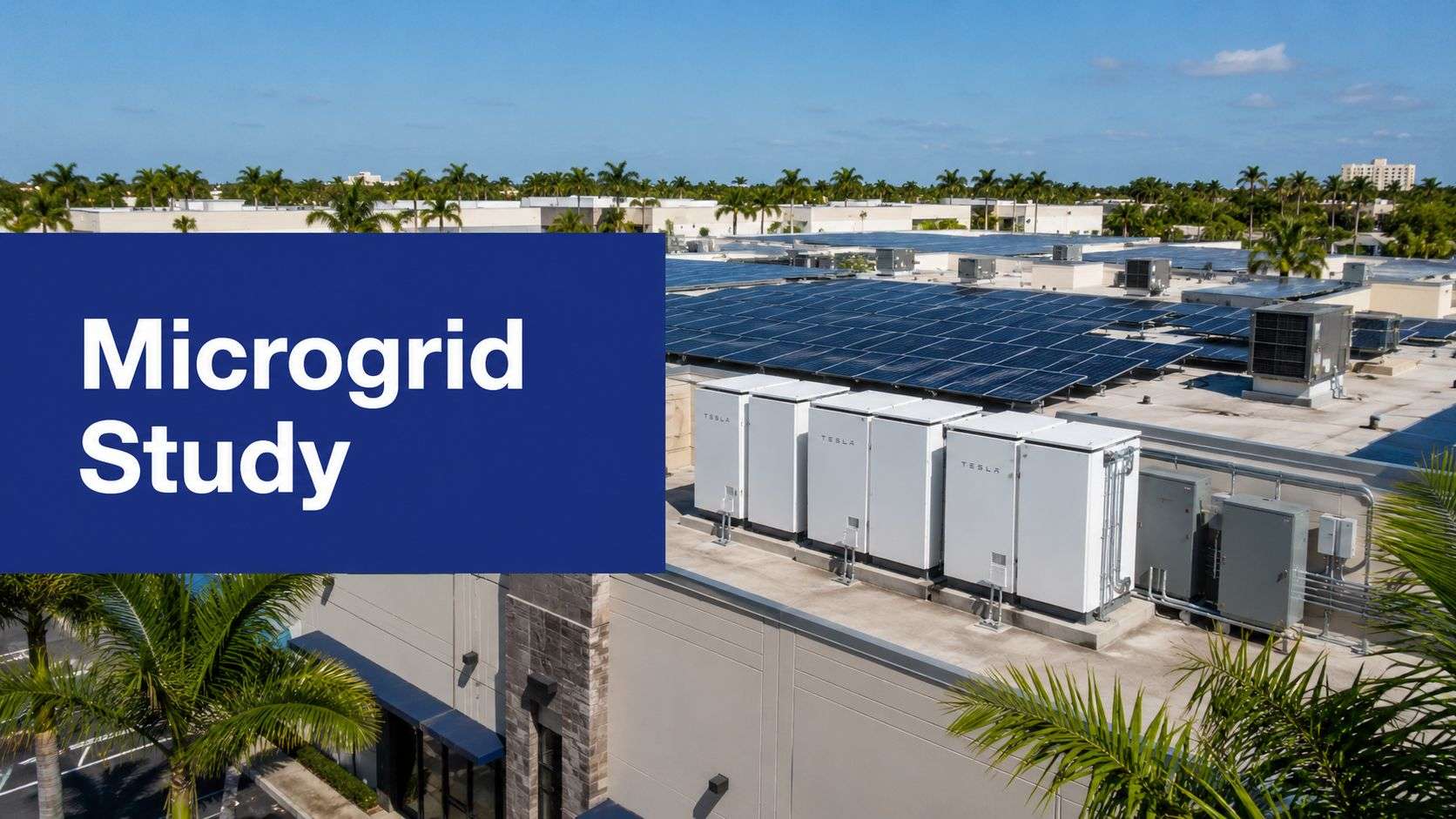
For readers comparing equipment approaches, this overview of Tesla battery storage systems is a practical reference point for how consultants and owners think about modular storage in Florida projects.
Putting It All Together Florida Sizing Examples
The cleanest way to answer how much battery backup do I need is to work through a Florida scenario with real priorities and realistic trade-offs.

Example One St. Petersburg Family Preparing for Hurricane Season
Take a household that uses about 30 kWh per day. A practical way to estimate backup need is to multiply daily use by the number of outage days desired. For two days of essential-load backup, the starting point is about 60 kWh, and many installers then add 10 to 20 percent for inefficiencies, as described in this Florida home battery sizing guide.
That doesn't mean every St. Petersburg family needs that much. It means that if the family wants to live close to normal for two days, the math rises quickly. If they shed major loads and focus on refrigeration, lights, communications, and medical equipment, the target can be much lower than a full-home design.
Here's how I would frame the decision:
- Resilience-first plan. Prioritize food protection, communications, nighttime lighting, and any medical equipment. This is the most cost-controlled route.
- Comfort-assisted plan. Add one targeted cooling area, office loads, and selected convenience circuits. This usually needs more careful inverter planning.
- Normal-living plan. Try to maintain near-normal household behavior through a storm outage. Storage requirements and costs expand fast with this plan.
A family rarely regrets backing up the right circuits. They often regret paying for the wrong ones.
Example Two Tampa Café Focused on Revenue Protection
Now consider a small café in Tampa. The owner wants enough battery support for the workday if a grid outage hits. The mission is simple: protect refrigerated inventory, keep the POS active, maintain internet and security, and preserve enough lighting for safe limited operation.
Consultants must separate continuity value from comfort value. The café may not need full HVAC support through the outage window if customers can be limited or service can shift to essentials. But it does need refrigeration and transaction capability. Losing those can create immediate business disruption.
A business case like this often leads to a hybrid conversation:
- Battery for instant continuity. Keep electronics and refrigeration online without the delay or noise of a generator startup.
- Solar for daytime recovery. Offset battery depletion if the outage extends through daylight.
- Optional generator layer. Add longer-duration support if the facility cannot tolerate extended low-sun conditions.
The Bigger Design Insight
Sizing isn't only about battery volume. It's about what recharges the battery and what financial outcome the owner wants. A larger battery may reduce business interruption risk, but if solar production can replenish key daytime consumption, the total storage requirement may not need to be as large as a battery-only plan suggests.
For Florida property owners, that is the core design question. Not "How many kWh can I buy?" but "What combination of load control, solar charging, and storage gives me the resilience I want?"
Considering Charging Sources and Long Term Strategy
A battery doesn't operate in isolation. In Florida, the charging source often determines whether a system is just a short outage tool or a serious resilience asset.
Solar Changes the Sizing Conversation
Independent government and industry data indicate that highly resilient homes often target 2 to 4 days of autonomy, and supporting full home loads for 2 to 3 days often requires 40 to 90 kWh of stored energy. For Florida homeowners planning around hurricane-related outages of 2 to 3 days, total storage may need to reach roughly 60 to 90 kWh before accounting for solar recharge, according to this battery storage planning resource.
That's why solar matters so much. If the array can recharge batteries during usable daylight, your storage doesn't have to carry the entire outage by itself. Without that recharge path, the battery must be sized around the full duration you're trying to survive.
Generator, Battery, or Both
For some properties, battery-only is the right answer. It gives quiet operation, fast switchover, and useful daily value if the owner wants to shift energy use strategically.
For others, especially businesses with stricter uptime needs, a blended design works better:
- Battery handles immediate transition. Sensitive electronics and control systems stay online.
- Solar supports daytime replenishment. Useful when weather allows and loads are managed well.
- Generator extends endurance. Valuable when the outage lasts longer than the battery and solar window can comfortably handle.
That layered approach is often more economical than trying to brute-force every resilience goal with batteries alone.
The cheapest battery is not the smallest one. It's the one that fits the charging strategy and outage pattern you actually face.
Think Beyond the Purchase
Long-term strategy includes operations, replacement planning, and end-of-life handling. Commercial owners especially should think about procurement standards, maintenance access, warranty terms, and eventual recycling pathways. If you're managing a portfolio or facility program, this guide to responsible battery recycling for enterprises is a useful operational reference.
For Florida projects that combine utility economics with resilience planning, it's smart to evaluate storage as part of the broader building energy strategy, not as a standalone gadget. This overview of electric and solar planning is a helpful way to think about how backup power, solar production, and property-level energy decisions interact.
The owners who make the best decisions usually settle three questions early:
- What outage are we designing for?
- What loads are critical?
- What will recharge the battery when the outage isn't over tomorrow morning?
Answer those clearly, and the battery size usually becomes obvious.
If you want an independent, Florida-focused answer to how much battery backup you need, Solar Energy Management LLC helps homeowners, businesses, and facility managers turn load data, outage goals, and financial constraints into a practical storage plan. They provide unbiased consulting, feasibility analysis, solar and battery modeling, and resilience planning so you can make a confident decision before committing to equipment or installation.