
TL;DR:
- Florida requires homeowners and contractors to obtain both building and electrical permits before installing rooftop solar systems. The process includes submitting complete documentation within five days under HB 683, with permit costs generally ranging from $250 to $800. Utility interconnection approval is a separate step that takes 2 to 8 weeks after final inspections before the system can operate.
Solar permits in Florida are defined as mandatory building and electrical authorizations that every homeowner or contractor must obtain from their local Authority Having Jurisdiction (AHJ) before installing any rooftop solar system. Florida HB 683, effective july 1, 2025, now requires local building departments to review single-trade residential solar permit applications within 5 business days, with automatic approval if that deadline is missed. Understanding how solar permits work in Florida means recognizing two separate tracks: the municipal permit process and the utility interconnection approval. Both are required, and confusing them is the single most common cause of project delays. Permit costs for residential projects typically fall between $250 and $800, though the full range runs from $100 to $1,000 depending on system size and municipality.
How does the solar permit process work in Florida?
The Florida solar permit process follows a clear sequence, and skipping any step creates compliance risk. All rooftop solar installations require both a building permit and an electrical permit, posted visibly at the job site during the entire installation. That posting requirement is not optional. A missing permit sign can trigger a stop-work order and additional fees that push your project back by weeks.
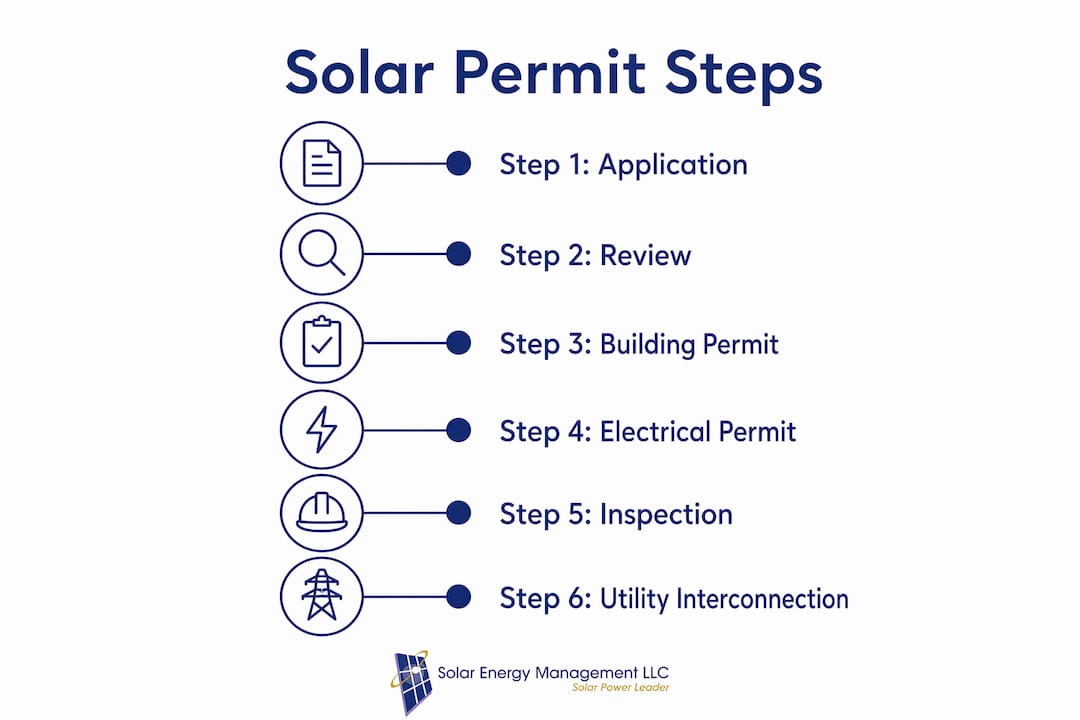
The process runs in this order:
- Prepare your documentation package. Assemble site plans, structural drawings, electrical diagrams, and contractor credentials. For the expedited HB 683 review, your package must include PE-stamped engineering documents. Incomplete submissions reset the five-day clock.
- Submit to your local AHJ. Each county or city building department has its own portal or counter submission process. Confirm local requirements before submitting, since each AHJ may request different documentation.
- Pay permit fees. Fees are assessed at submission. Most residential projects pay between $250 and $800, though larger or commercial systems attract higher fees due to additional engineering reviews.
- Await plan review. Under HB 683, the AHJ must respond within 5 business days for qualifying single-trade residential applications. If they miss that window, the permit is automatically approved.
- Schedule rough-in inspection. Once the permit is issued, work begins. The rough-in inspection covers structural mounting and electrical rough work before panels are fully installed.
- Pass final inspection. The final inspection confirms the completed system meets Florida Building Code. After this, you apply for utility interconnection.
- Receive Permission to Operate (PTO). Utility interconnection approval is a separate process from city or county permitting and typically takes 2 to 8 weeks after the final building inspection. Your system must stay off until PTO is granted.
Pro Tip: Submit your permit application through your AHJ’s online portal if available. Digital submissions reach reviewers faster and create a timestamped record that protects you if the five-day HB 683 deadline is disputed.
How much do Florida solar permits cost?

Solar permit costs in Florida vary widely but generally range between $100 and $1,000 based on system size and municipality. Most residential projects land between $250 and $800. That range matters because it represents a real budget line item, not a rounding error.
Several factors push fees toward the higher end of that range:
- System size. Larger systems require more detailed plan review, which many jurisdictions price per kilowatt of installed capacity.
- Commercial projects. The commercial solar permitting process in Florida involves additional engineering reviews, structural load calculations, and sometimes fire department sign-off, all of which add fees.
- Municipality. Miami-Dade County, Broward County, and Orange County each publish their own fee schedules under Florida statutes. Rural counties often charge less than urban ones.
- Permit type count. A project requiring both a building permit and a separate electrical permit pays two fee schedules, not one.
| Fee factor | Typical impact on cost |
|---|---|
| Residential system under 10 kW | $250–$500 |
| Residential system 10–25 kW | $500–$800 |
| Commercial system over 25 kW | $800–$1,000+ |
| Additional electrical permit | $75–$200 added |
Local jurisdictions set these schedules independently, so always confirm current fees directly with your AHJ before budgeting. Fee caps exist in some counties, but they are not statewide.
What role do HOAs play in Florida solar permitting?
Florida Statute §163.04 prohibits HOAs from banning solar energy systems outright, but they retain the right to impose reasonable architectural restrictions that do not significantly reduce system efficiency or increase costs. That legal boundary is important. Your HOA cannot say no to solar. It can say where panels are placed or how conduit is routed, within limits.
The practical implication is that HOA approval and permit filing are two parallel tracks, not sequential ones. Waiting for HOA sign-off before submitting your permit application wastes weeks. Start both at the same time.
Key points every homeowner should know about HOAs and solar:
- HOA restrictions cannot reduce your system’s energy output by a meaningful amount or add unreasonable cost to the installation.
- Architectural review committees typically have 30 to 45 days to respond under Florida law. Submit your HOA application with renderings and a site plan.
- Condo owners face additional layers of HOA governance that differ from single-family home rules. Confirm your specific governing documents before filing.
- HOA approval does not replace the municipal permit. Both are required before work begins.
Pro Tip: Send your HOA a written application with a copy of Florida Statute §163.04 attached. This signals that you know your rights and often accelerates the review process.
What are the most common pitfalls in the Florida solar permit process?
The most preventable cause of permit delays is an incomplete application package. Only complete and code-compliant applications trigger the five-day automatic approval timeline under HB 683. A missing structural calculation or an unsigned contractor credential sheet resets that clock entirely.
Contractor licensing is the second major risk area. Florida requires specific state licenses for solar work, specifically a Certified Roofing Contractor (CVC) or Electrical Contractor (EC) license depending on the scope of work. Unlicensed subcontracting is a documented problem in the Florida solar market. Verify every contractor’s license on the Department of Business and Professional Regulation (DBPR) online database before signing any agreement.
Submitting a permit package that looks complete but lacks PE-stamped engineering drawings is the single most expensive mistake a contractor can make on a Florida solar project. The AHJ rejects it, the five-day clock resets, and the homeowner loses weeks. Get the engineering right before you submit, not after.
Virtual and private third-party inspections are now authorized under HB 683 to speed final approvals. These alternatives reduce the wait for a municipal inspector and can shorten the final inspection phase by days in busy jurisdictions like Hillsborough or Palm Beach County.
Additional best practices to protect your project timeline:
- Confirm your contractor’s license type covers both structural and electrical scope, or hire two licensed contractors for each trade.
- Post your permit at the job site before any work begins. Inspectors will check for it.
- Do not activate your solar system after the final building inspection. Permission to Operate from your utility is legally required before a grid-tied system can run.
- For rooftop installations that involve structural roof work, review Florida roofing permit requirements alongside your solar permit to confirm no additional permits are needed for the roof itself.
Key Takeaways
Florida solar permits require both a building permit and an electrical permit from your local AHJ, with utility interconnection approval as a separate mandatory step before system activation.
| Point | Details |
|---|---|
| Dual permit requirement | Both a building permit and an electrical permit are required for every Florida solar installation. |
| HB 683 five-day rule | Complete applications trigger automatic approval if the AHJ misses the five-business-day review window. |
| Permit cost range | Most residential projects pay $250–$800; commercial systems can exceed $1,000 depending on scope. |
| HOA rights and limits | HOAs cannot ban solar under Florida Statute §163.04 but may impose reasonable placement restrictions. |
| Utility PTO is separate | Permission to Operate from your utility takes 2–8 weeks after final inspection and is required before activation. |
What Solar Energy Management has learned about Florida permits
After more than 20 years working with Florida homeowners and commercial clients on solar projects, the pattern is consistent: the projects that move fastest are the ones where the permit package was treated as a technical document, not a formality.
HB 683 is genuinely good news for contractors and homeowners who submit complete applications. The five-day mandate removes the old uncertainty of waiting three to six weeks for a response. But the law only helps you if your submission is airtight. I have seen projects where a single missing page in the engineering drawings reset the review clock twice, adding a month to a project that should have taken two weeks.
The utility interconnection step surprises homeowners most. They assume that passing the final building inspection means the system can turn on. It does not. The utility’s Permission to Operate process runs on its own timeline, and pushing a utility to move faster rarely works. Plan for 2 to 8 weeks after your final inspection before your system goes live. Build that window into your project schedule from day one.
On HOAs: the homeowners who handle this best are the ones who approach their HOA with documentation, not just a request. Bring the statute, bring the site plan, and bring a rendering. HOAs that understand the legal boundary tend to approve quickly. The ones that don’t understand it tend to delay, and that delay costs money.
Hiring a licensed Florida solar installer who knows your specific AHJ’s documentation preferences is the single highest-value decision you can make before starting the permit process.
— Solar Energy Management
Solar Energy Management can simplify your permit process
Navigating Florida’s solar permit requirements takes time, documentation discipline, and knowledge of local AHJ preferences that vary by county.

Solar Energy Management has guided Florida homeowners and commercial clients through the full permit and installation process for over 20 years. The team prepares complete, code-compliant permit packages built for HB 683 compliance, coordinates HOA communications, and manages utility interconnection submissions so your system reaches Permission to Operate on schedule. If you are also planning battery storage for your solar system, Solar Energy Management integrates storage planning into the permit package from the start, avoiding the cost of a second permit application later. Contact Solar Energy Management to get your project moving with the right documentation the first time.
FAQ
Do you need a permit for solar panels in Florida?
Yes. All rooftop solar installations in Florida require both a building permit and an electrical permit from your local AHJ before work begins. Installing without permits can result in stop-work orders and additional fees.
How long does a solar permit take to approve in Florida?
Under Florida HB 683, qualifying single-trade residential applications must receive a response within 5 business days. If the AHJ misses that deadline, the permit is automatically approved, provided the application is complete and code-compliant.
What documents are needed for a Florida solar permit application?
A complete application includes site plans, structural drawings, electrical diagrams, PE-stamped engineering documents, and verified contractor credentials. Missing any of these resets the HB 683 five-day review clock.
Can an HOA block solar panel installation in Florida?
No. Florida Statute §163.04 prohibits HOAs from banning solar systems outright. HOAs may impose reasonable architectural restrictions, but those restrictions cannot significantly reduce system efficiency or add unreasonable cost.
What is the difference between a solar permit and utility interconnection?
A solar permit is issued by your local city or county building department. Utility interconnection approval, called Permission to Operate, is a separate process managed by your utility company and typically takes 2 to 8 weeks after the final building inspection.
Recommended
- Solar Power Systems Florida Your Complete 2026 Guide – Commercial + Residential Solar Power Florida
- Top Solar Power Contractors Florida: Your 2026 Guide – Commercial + Residential Solar Power Florida
- Pros and Cons of Solar Panels in Florida: A 2026 Guide – Commercial + Residential Solar Power Florida
- Solar Power Financing Options in Florida: A 2026 Guide – Commercial + Residential Solar Power Florida


