Your Florida bill looks manageable in spring. Then July hits, the AC runs deep into the evening, indoor humidity creeps up, and the monthly total jumps hard enough to change your budget. At that point, homeowners do not need generic advice. They need a sequence that cuts waste fast, prioritizes upgrades that pay back, and tests whether solar makes financial sense for that specific house.
I approach Florida energy planning the same way I would for a client who wants lower bills and better outage resilience without getting pushed into the wrong equipment. Start with the no-cost and low-cost corrections. Then fix the parts of the house that force the air conditioner to work too hard. After that, look at demand patterns, rate structure, and whether solar or battery storage can produce a return that holds up over time.
That order matters.
Many high bills come from stacked losses, not one dramatic problem. A thermostat set aggressively low. A dirty filter. Duct leakage. Afternoon sun pouring through west-facing windows. Pool equipment or laundry running during expensive periods. In homes that already have decent efficiency, solar can be a strong final step. In homes with major cooling waste, solar installed too early often covers an inefficient load instead of reducing it.
For broader context on rates, solar economics, and how Florida homeowners compare options, review this guide to Florida electric and solar costs.
The goal of this roadmap is simple. Reduce consumption first, control when energy is used second, and evaluate solar and storage last with clear ROI in mind. That is how you lower an electric bill in Florida without guessing, and without buying more system than the house needs.
Immediate Bill Reductions You Can Make Today
The fastest savings in Florida usually come from changing how you cool the house. That's not glamorous, but it works.
Set The Thermostat Like A Floridian
Tampa Electric says the highest-return bill reduction step in Florida is usually setting the thermostat to about 78°F when occupied, and it advises 85°F when away. It also notes that every degree below 78°F can add 6% to 8% to the cooling portion of the bill, and its example shows that moving a typical $200 bill from 72°F to 78°F can save more than $40 per month according to Tampa Electric's Florida cooling guidance.
That one change is where I'd start in almost every Florida home. If a house feels warm at 78°F, the first question isn't “Do you need more AC?” It's usually “Are you using the fan correctly, changing the filter, and keeping solar gain down during the afternoon?”
Practical rule: Use ceiling fans to cool people, not empty rooms. If nobody is in the room, turn the fan off.
Close blinds during sunny hours. Keep the HVAC fan set to auto, not on. If you leave the house for work or a long errand, let the thermostat rise instead of paying to maintain a lower temperature in an empty home.
For more Florida-specific context on rates, utility pressure, and solar economics, review this guide to Florida electric and solar costs.
Cut Small Loads That Run All Day
A lot of homes have quiet, constant electricity use that never gets attention because it doesn't feel dramatic. Chargers, entertainment equipment, office gear, garage devices, and kitchen electronics can all draw power when you're not actively using them.
The U.S. Department of Energy recommends using an advanced power strip to reduce vampire loads and checking hourly smart-meter data. A simple test helps: if your usage around 3AM doesn't drop much compared with the evening, standby loads are probably still eating power.
Use this as a same-day checklist:
- Unplug clustered electronics: TV accessories, gaming consoles, printers, and spare chargers are easy targets.
- Group devices on advanced power strips: That gives you one control point instead of hunting outlet by outlet.
- Check overnight usage: Your utility portal can often show whether your home settles down at night or stays artificially active.
- Stop overcooling unused spaces: Keep doors closed only when that matches your return-air setup and doesn't work against the HVAC design.
Fix Daily Habits That Quietly Inflate Bills
Behavior still matters, especially with laundry, dishwashing, and pool equipment.
Tampa Electric recommends running dishwashers and washers only when full, washing laundry in cold water, and limiting a pool pump to about 8 hours per day. Those aren't flashy upgrades. They're operating rules, and in Florida they often produce faster savings than buying another gadget.
If you want relief on the next bill, this is the order I'd use: thermostat first, fan discipline second, filter check third, then appliance timing.
Investing In Your Home's Long-Term Efficiency
Quick wins matter, but they won't solve a house that wastes cooling every hour of every day. In Florida, the homes with the lowest bills usually aren't just run better. They're built or upgraded so the AC doesn't have to fight the house itself.

Start With The HVAC System
Most Florida bill reduction plans begin with HVAC because cooling dominates. Duke Energy Florida says a dirty air filter can raise air conditioner energy use by 5% to 15%, sealing air leaks can reduce cooling costs by 10% to 20%, and upgrading to ENERGY STAR-certified equipment can deliver 10% to 30% in annual savings according to Duke Energy Florida's summer energy-saving guidance.
That tells you something important about ROI. Don't jump straight to replacing equipment if the current system is being handicapped by neglected maintenance or a leaky home. Start by making the existing system perform as intended.
Here's the order I usually recommend:
- Restore airflow first: Change filters on schedule and make sure supply and return paths aren't blocked by furniture or closed-off rooms.
- Tune the controls: A programmable or smart thermostat helps maintain consistent settings instead of manual overcorrection.
- Replace old equipment when the house is ready: If you upgrade HVAC before addressing leakage, you can spend money on a better machine and still get disappointing results.
A high-efficiency AC in a leaky Florida home is like buying a better boat while the hull still has cracks.
Tighten The House Before You Oversize The Equipment
Air leakage is one of the least visible bill drivers. You don't always feel it, but the AC does. Hot, humid outdoor air gets in around doors, windows, attic penetrations, and duct paths, then the system has to cool and dehumidify that extra load.
In practical terms, that means weatherstripping, sealing penetrations, checking attic access points, and making sure the thermal shell is doing its job. Florida homes also benefit from simple heat-control measures like blinds and shading, but those should support the envelope, not replace it.
The Department of Energy also advises air sealing and insulation as part of reducing electric space-cooling costs. In real homes, comfort and savings start to reinforce each other. Rooms become more stable. The thermostat swings less. The AC cycles more predictably.
Think In Systems, Not Isolated Products
Homeowners often ask which single upgrade lowers bills most. The better question is which combination removes the most waste.
A strong Florida efficiency stack usually includes the following:
- HVAC maintenance and controls: Clean filters, proper fan settings, and thermostat programming.
- Envelope improvements: Air sealing and insulation so conditioned air stays inside.
- Targeted equipment replacement: ENERGY STAR units when older systems are due for replacement.
- Operational discipline: Laundry, dishwashing, and pool pump schedules that reduce unnecessary load.
If you're also trying to reduce the home's overall environmental impact while keeping the advice practical, this resource on actionable strategies for a greener life is a useful companion to an efficiency-first plan.
For homeowners comparing deeper efficiency work with future solar sizing, a Florida-focused consultant can model both paths together. One option is reviewing residential solar planning in Florida so the house's demand profile is reduced before any solar system is sized.
Mastering Your Energy Demand And Timing
Two homes can use similar electricity over a month and still end up with different bills. The difference is often timing.
If your utility plan includes time-based pricing, or may move that way later, you need to think beyond total kilowatt-hours. You need to think about when the house pulls its heaviest loads.

Move Flexible Loads Away From Expensive Hours
The Department of Energy advises homeowners to use advanced power strips to reduce vampire loads and to check hourly smart-meter data for wasted standby energy. For larger controllable loads, Tampa Electric recommends limiting a pool pump to about 8 hours a day and running dishwashers and washers only when full and during off-peak hours if you're on a time-of-use plan, as explained in the Department of Energy's guidance on reducing electricity use and costs.
That leads to a simple operating question. Which loads are flexible, and which aren't?
Usually, these are flexible:
- Pool pumps: Schedule them, don't let them run by habit.
- Dishwashers and washing machines: Run full loads and push them outside peak periods when possible.
- Charging devices and home electronics: Shift them later if your rate plan rewards that timing.
Usually, these are less flexible:
- Midafternoon cooling during occupied hours
- Refrigeration
- Essential medical or home office equipment
Use Controls To Reduce Human Error
Most households don't waste money because they don't care. They waste money because manual control fails under real life. People forget. Schedules change. Someone drops the thermostat too low and leaves it there.
That's why automation matters. A programmable thermostat or smart thermostat helps hold your plan in place without constant attention. If you want a broader consumer-oriented overview of features and setup considerations, this smart thermostat guide for homeowners offers a useful checklist.
Check your utility usage graph before buying more equipment. If the overnight load stays oddly high, strip out standby waste first.
For solar households, timing becomes even more important because it affects how much of your own generation you consume directly and how much you send out under utility rules. If you're evaluating that piece in Duke Energy territory, this overview of Duke Energy net metering helps frame the decision.
Evaluating Solar And Battery Storage For Your Home
A Florida homeowner can cut waste, tighten the house, shift demand, and still feel exposed every time the utility rate changes or a storm knocks power out for a day. That is the point where solar deserves a serious review.
I treat solar as the last major move in an energy reduction plan because the order affects the return. A home with lower cooling demand, better controls, and cleaner usage patterns usually needs a smaller system. That lowers project cost and makes the numbers easier to evaluate.

What Solar Is Really Buying You
The first question is not panel count. It is the result you want from the investment.
For Florida households, solar usually supports four priorities:
- Lower long-term utility spending
- More stable energy costs over time
- Less exposure to future rate increases
- Backup capability when paired with battery storage
As noted earlier, Florida power costs make solar worth examining for many owners. But the right decision depends on occupancy plans, roof condition, financing terms, utility rules, and how much daytime energy the house uses.
I tell clients to evaluate solar the same way they would evaluate any other capital improvement. Start with annual consumption, then review roof orientation, shading, equipment options, warranty terms, and expected bill reduction. A system that looks attractive in a sales proposal can lose value fast if the production assumptions are too aggressive or the home will need a roof replacement soon.
Payback Is Useful. Cash Flow And Holding Period Matter More
Payback gets attention because it is simple. It does not answer the whole question.
If you expect to stay in the home for a long time, lifetime bill reduction usually matters more than the shortest possible payback number. If you may move in a few years, the analysis changes. In that case, I would look harder at upfront cost, financing structure, roof age, and whether the system adds enough practical value for the next buyer to matter.
Here is the framework I use with homeowners:
| Decision Lens | What It Helps You Judge |
|---|---|
| Upfront cost | Whether the project fits your capital budget or financing plan |
| Monthly bill impact | Whether savings show up early enough to improve household cash flow |
| Estimated long-term savings | Whether the system creates enough value over your ownership period |
| Roof and equipment life | Whether the timing of the project is sound |
| Backup priorities | Whether adding storage solves a real outage problem or just adds cost |
That last row is where many projects go off track.
Battery Storage Changes The Goal And The Budget
A battery is not automatically a bill-saving tool. In many Florida homes, it is a resilience purchase first.
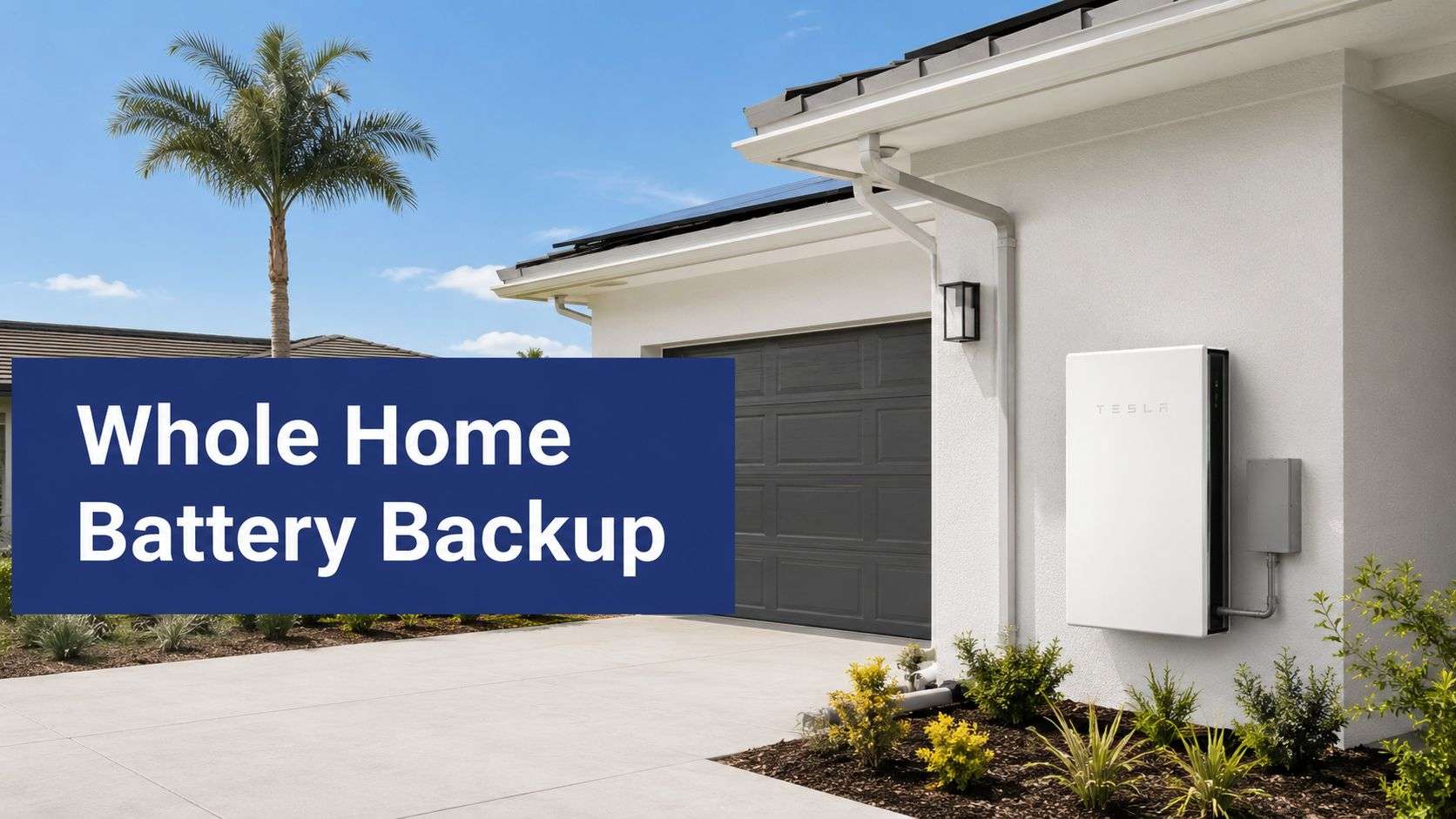
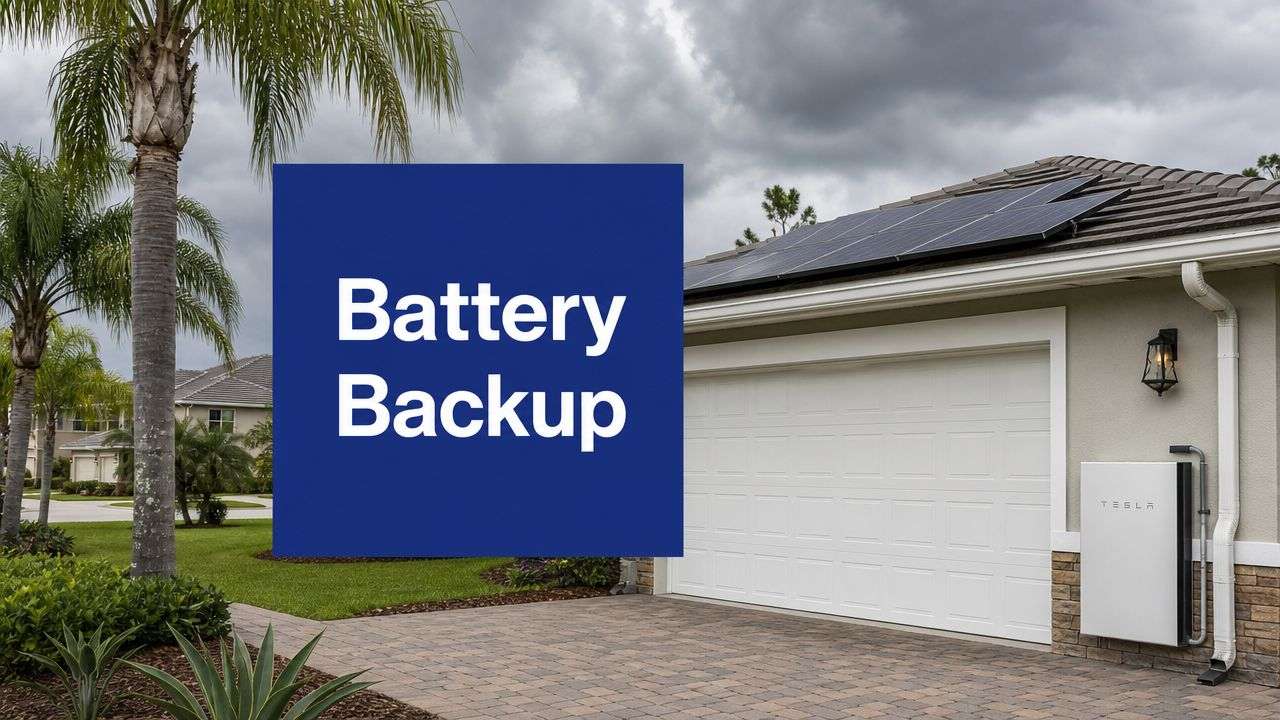
If the main goal is reducing electric costs, solar alone often delivers most of the financial return. Battery storage starts making more sense when the homeowner wants refrigeration, communications, medical devices, garage access, lighting, or a small comfort load to stay online during outages. That design process should begin with critical loads, runtime expectations, and outage history, not with the idea of backing up the whole house.
For a practical breakdown of that process, review how solar battery backup for power outages is sized around must-run circuits, outage duration, and system priorities.
There is a real trade-off here. More battery capacity gives you more coverage and more flexibility. It also raises project cost, and in many homes it lengthens the return period. I often recommend that clients decide what they must keep running first, then price a targeted backup system against a larger whole-home concept. The smaller design is frequently the better fit.
Common Mistakes That Hurt Solar ROI
Poor solar outcomes usually start with planning errors, not bad intentions.
I see the same four mistakes repeatedly:
- Installing before efficiency work is finished: The system ends up covering waste that should have been removed first.
- Comparing quotes on price alone: Lower price does not mean better output, better equipment, or better warranty protection.
- Ignoring load shape: A home that uses most of its power after sunset will value solar differently than one with strong daytime usage.
- Overbuilding backup goals: Trying to power everything through an outage can turn a sensible project into an expensive one.
A good solar plan matches the system to the house, the utility, and the homeowner's real priorities. In Florida, that means looking at savings and storm resilience together, then deciding whether solar only or solar plus storage produces the stronger return for your situation.
Why An Independent Solar Consultant Is Your Key To Success
By the time a homeowner reaches the solar stage, the decision usually looks more complicated than expected. That's normal. You're no longer choosing a single appliance. You're planning an energy asset tied to your roof, your utility bill, your financing, and your backup-power goals.
That's where independent consulting matters.

A Consultant Starts With Your Numbers, Not A Sales Script
An installer's job is to install. A sales process often starts with a product package. An independent solar consultant starts earlier and more neutrally.
The work should begin with your actual consumption profile, your roof characteristics, your utility structure, and your objectives. Are you trying to cut the bill as much as possible? Limit peak dependence? Add battery backup for specific loads? Prepare for long-term occupancy? Those are planning questions before they become equipment questions.
A consultant can also tell you when not to move forward yet. Sometimes the right answer is to fix the envelope, change operations, or replace aging HVAC equipment first, then revisit solar with a lower and cleaner demand baseline.
Good Advice De-Risks The Expensive Mistakes
The average homeowner won't evaluate solar proposals every year. They may do it once. That makes comparison quality important.
What needs to be checked?
- Load assumptions: Are the production and consumption expectations realistic for this house?
- Design alignment: Does the system fit the homeowner's financial and resilience goals?
- Battery scope: Is storage sized around critical loads or inflated expectations?
- Procurement clarity: Are quote differences tied to meaningful design differences or just presentation?
Independent review is valuable. It separates “more equipment” from “better plan.”
The Right Process Looks More Like Asset Planning Than Shopping
When solar is done well, the process resembles capital planning. You evaluate current costs, lower waste where practical, model scenarios, compare outcomes, and only then commit to a system structure.
That's very different from choosing the first quote that promises savings.
One Florida-based option in this category is Solar Energy Management's consultant-led solar planning process, which focuses on feasibility, ROI modeling, battery planning, and design guidance before installation decisions are finalized.
The homeowner who asks better planning questions usually gets a better solar outcome than the homeowner who only asks for a lower price.
Independence Matters Most When Goals Compete
Many Florida homeowners want three things at once: a lower bill, strong ROI, and reliable backup power. Those goals can align, but they don't always align perfectly.
A larger battery may improve resilience while changing the payback profile. A smaller solar system may have a lower upfront cost but leave more utility dependence. A consultant helps sort those trade-offs before money gets committed.
That independent role becomes more valuable when the property is unusual, the bill is high, or the owner wants more than a standard rooftop package. Coastal exposure, storm priorities, roof complexity, future electrification plans, and occupancy patterns all affect system logic. Someone needs to translate those variables into a coherent plan.
That's why I see independent consulting as risk management as much as energy planning. It gives homeowners a framework, not just a quote. And for anyone serious about how to lower electric bill in Florida over the long term, that framework is often what prevents a decent project from becoming an expensive mismatch.
If you want a data-driven plan for lowering utility costs in Florida, Solar Energy Management LLC can help you evaluate efficiency upgrades, solar economics, and battery storage with an independent consultant's perspective. The goal isn't just to add equipment. It's to build the right roadmap for your home, your utility profile, and your long-term financial priorities.