If you're in Florida and a storm cone just shifted toward your county, your solar questions get very practical very fast. You're not thinking about glossy brochures or panel brand slogans. You're thinking about your roof, your insurance, your power bill, and whether the system you're about to buy will stay attached when the wind starts pulling at the corners of the house.
That's the right mindset.
I'll give you the blunt consultant answer: there's no magic category called hurricane proof solar panels. What you can build is a hurricane-resilient solar system. In Florida, that distinction matters because the weak point usually isn't the panel face. It's the attachment pattern, the racking, the roof condition, the edge-zone layout, the hardware, and the electrical equipment that people ignore until after a storm.
A lot of buyers still shop solar the wrong way. They compare panel brands first, ask about backup power second, and barely look at the structural plans. That's backwards. If the array-to-roof interface is poorly designed, the logo on the panel won't save you. If the inverters or disconnects aren't protected, surviving modules won't keep the lights on. If the roof was already compromised, you've added risk, not resilience.
Florida solar can absolutely make sense. It can lower utility dependence and improve post-storm readiness. But only if the system is engineered like Florida means Florida.
Rethinking Solar Power in the Face of Florida Storms
A Florida property owner usually starts in one of two places. Either the utility bill keeps climbing, or hurricane season has made grid outages feel less like an inconvenience and more like a certainty. Often it's both.
That's why the phrase hurricane proof solar panels gets so much attention. It sounds like a simple product choice. Buy the strong panel, install it, and you're covered. I don't agree with that framing, and neither should you.
The primary question isn't whether a panel is tough. The crucial issue is whether the entire solar assembly has been designed for your exact building, your roof type, your location, and Florida wind exposure. A panel can pass a lab test and still end up attached to a system that fails in the field.
What Florida owners should focus on instead
Start with the system, not the sales sheet.
- Your roof structure: A sound array starts with a roof that can accept attachments in the right locations with proper sealing.
- Your mounting method: The attachment hardware and racking design decide whether uplift gets transferred safely into the building.
- Your layout: Corners and edges face harsher suction forces, so placement matters.
- Your electrical resilience: Surviving modules are meaningless if critical equipment fails and the system can't operate after the storm.
Practical rule: Don't ask, “Which panel is hurricane proof?” Ask, “Show me how this exact system stays attached to this exact roof in this exact Florida jurisdiction.”
That's the difference between marketing and risk management.
Understanding Hurricane Ratings and Florida Building Codes
Florida doesn't give you an official badge labeled “hurricane proof.” What you get instead is something better. Code-based engineering requirements that can be checked, documented, permitted, and inspected.
That's how smart buyers should evaluate a system.

What the ratings actually mean
Many homeowners see a wind number on a panel spec sheet and assume that settles it. It doesn't.
Typical commercial modules are commonly rated around 2,400 Pa, which corresponds to roughly 140 mph wind loading, while high-wind markets such as Florida often require 3,300 Pa or higher, and some engineered products are tested to 5,400 Pa according to this wind-load overview for hurricane-prone solar design. That's why I tell Florida clients not to obsess over module branding alone. The governing failure mode is often wind uplift at the array-to-roof interface.
That last part is the whole game. Wind doesn't just push down. It gets under edges, separates around corners, and tries to pull the system up and away.
Why Florida code matters more than a sales claim
Florida code compliance is your filter. If a proposal can't show how it meets local wind requirements, it's not ready for your roof.
For buyers trying to sort out installer claims, this guide to a Florida solar installer evaluation process is useful because it shifts the conversation from “best panel” to design responsibility, approvals, and engineering scope.
Use these questions before you sign anything:
What wind criteria apply to my address?
Coastal exposure, local jurisdiction, and building geometry all affect the required design.Is the racking approved for Florida use in my project conditions?
You want product documentation that aligns with local permitting standards, not generic national brochures.How are roof edges and corners handled?
Those zones deserve more conservative design because uplift loads are harsher there.Who owns the structural calculations?
If nobody can explain attachment spacing, anchorage assumptions, and roof loading, you're looking at a weak proposal.
The Florida reality
In South Florida, scrutiny gets tighter. High-velocity hurricane zone requirements aren't a formality. They're a warning that Florida doesn't tolerate vague engineering.
A compliant solar system isn't “storm proof.” It's documented, site-specific, and designed to survive the loads your jurisdiction expects.
That's the standard you should buy to.
Anatomy of a Hurricane-Resistant Solar Installation
If you want solar that can handle Florida weather, stop staring at panel brochures and start looking at the hardware underneath.
That's where resilient systems separate themselves from risky ones.

A 2024 review of hurricane performance found that panels often failed below code requirements because of clamp failures, racking fractures, buckling, bolt shear, and bolt loosening, problems tied to installation and structural design rather than the panel laminate itself, as detailed in Inside Climate News' review of hurricane-related solar failures. That matches what experienced Florida consultants have been saying for years. Failure usually starts in the system bones.
The parts that deserve your attention
The panel matters. The rest often matters more.
Racking and rails
Racking is the structural backbone of the array. It has to transfer wind forces into the building without twisting, loosening, or overloading the roof assembly.
Ask what material is being used and why. Aluminum is common because it resists corrosion well. Steel may be used in some engineered applications where extra strength is needed. In coastal Florida, corrosion resistance isn't a side note. It's a design requirement.
Attachments and penetrations
Most buyers should slow down at this point and ask harder questions.
A rooftop array only survives if the attachments are tied into the right structural members with the right spacing and the right flashing or sealing method. Penetrations can work well when engineered and sealed correctly. They can also become leak points and failure points when crews rush the job.
If your roof already has age, prior patchwork, or questionable decking, fix that before solar. If you need a sense of what compromised roofing conditions can look like in the field, browse our recent roof repairs to understand why roof condition should be part of the solar decision, not an afterthought.
Layout decisions that affect storm performance
Array geometry matters in Florida. A well-designed system doesn't just maximize module count. It respects pressure zones.
- Keep clear of vulnerable roof zones when possible: Edges and corners experience the harshest suction effects.
- Use attachment patterns that match the engineering: Crews shouldn't “field adjust” spacing because it's faster.
- Avoid mixing components casually: Rails, clamps, fasteners, and module frames should work together as a tested assembly.
For buyers comparing equipment options, this resource on solar panel technology and system components helps frame the difference between product specs and actual field resilience.
Workmanship is a financial issue
People talk about engineering and installation quality as if they're technical details. They're not. They're investment protection.
A poor install creates at least three layers of risk:
| Risk area | What goes wrong | Why it matters |
|---|---|---|
| Roofing | Bad penetrations or weak sealing | You can end up with leaks and interior damage even if the array stays in place |
| Structural | Under-designed attachments or loose hardware | The array can deform, detach, or damage the roof during uplift |
| Insurance and claims | Missing documentation or obvious install defects | Claims become harder to support and repair scope gets messier |
Good Florida solar work is boring on paper. Attachment schedules, sealed penetrations, approved hardware, torque discipline, and clean documentation. That boring stuff is what keeps the array on the building.
Beyond Survival Powering Through Grid Outages
A solar array that survives a hurricane but shuts down during a grid outage is only half a solution.
That surprises a lot of homeowners. They assume panels automatically power the house when the neighborhood goes dark. Standard grid-tied solar usually doesn't work that way. For safety reasons, systems are typically designed to stop exporting power when the grid is down unless they include the right backup architecture.

What turns a tough array into a resilient power system
Battery storage changes the value proposition. It lets you pair physical survivability with usable backup power.
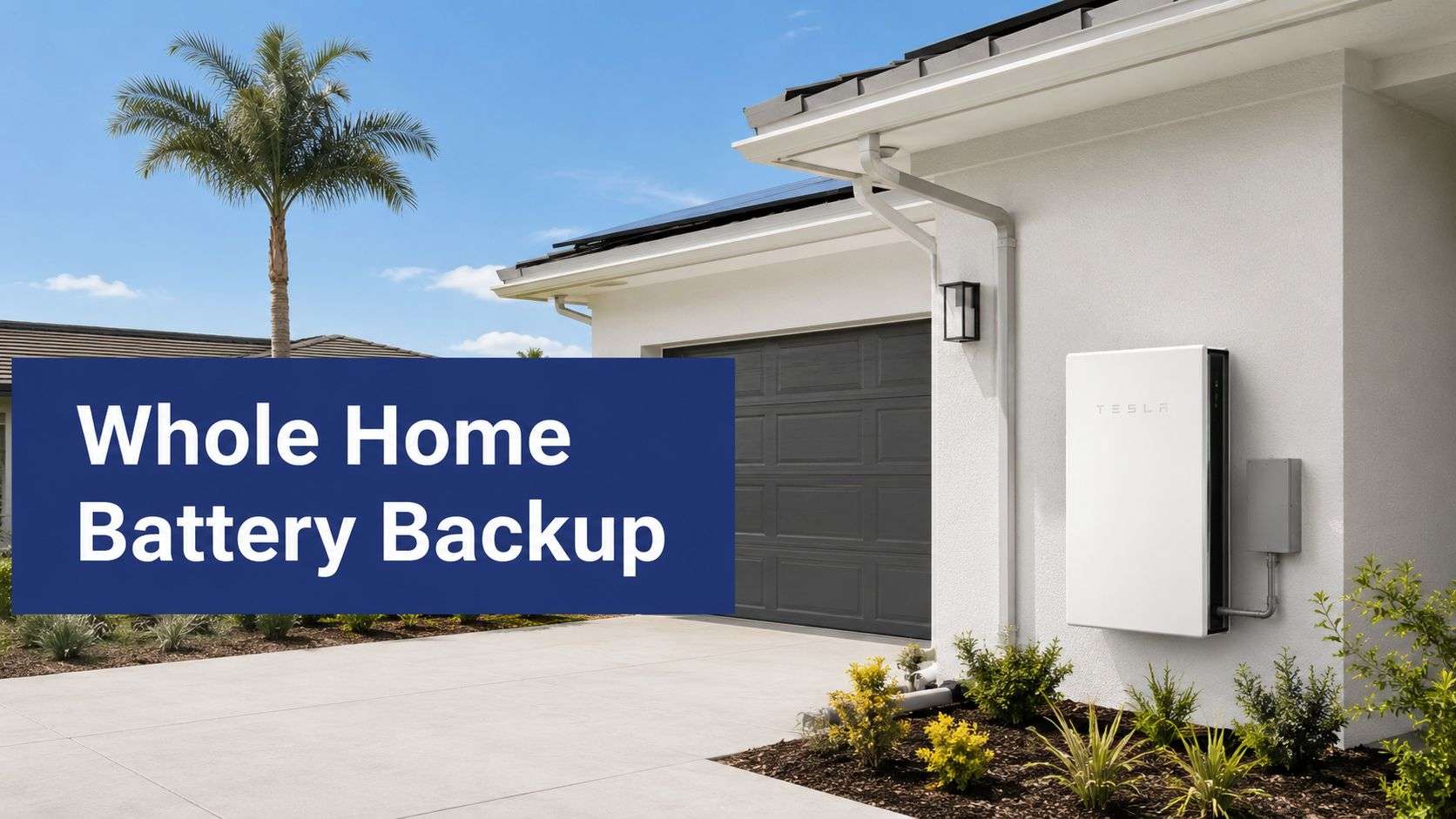
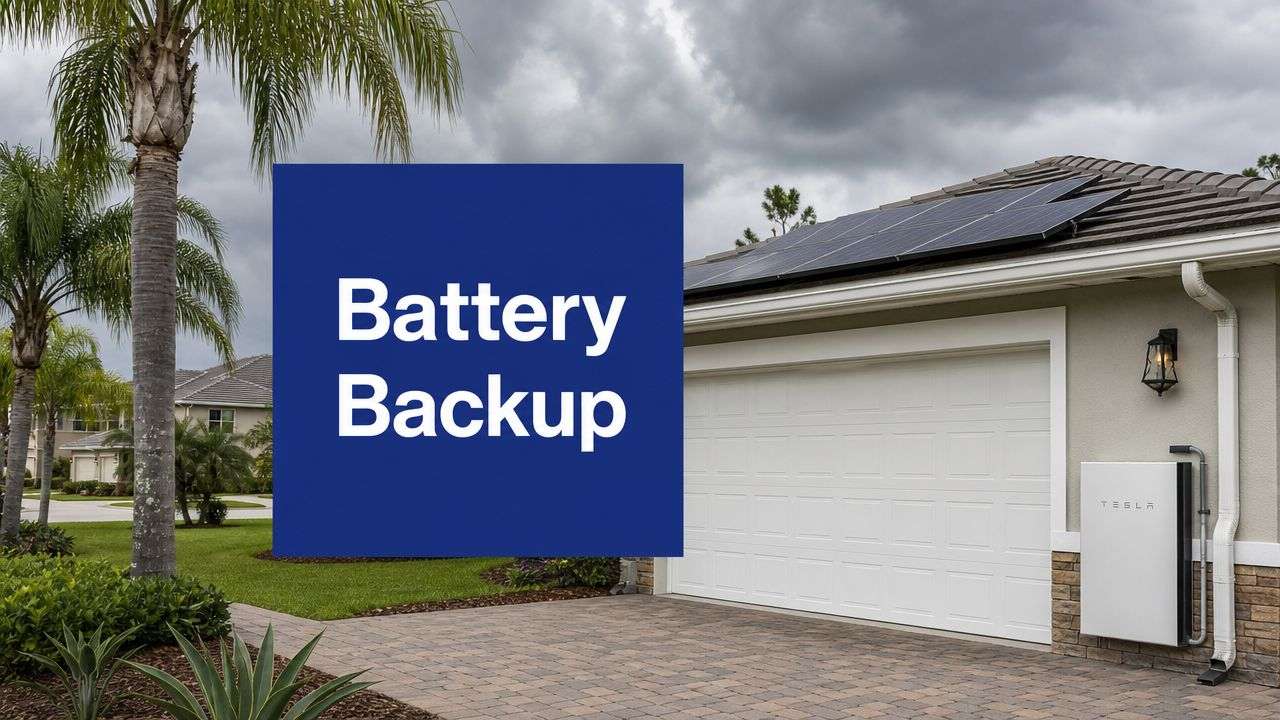
Tesla Powerwall is one familiar example, and there are other battery platforms on the market, but the important issue isn't the brand first. It's whether the battery, inverter strategy, transfer controls, and critical-load planning all work together. If you're comparing that path, this guide to Tesla Powerwall 2 backup planning is a practical starting point.
A resilient Florida system should answer these questions clearly:
- Which loads stay on? Refrigeration, communications, medical devices, lighting, garage access, internet equipment, and selected cooling loads often belong on a critical-load panel.
- What equipment is hardened? Batteries and controls are only useful if the rest of the electrical system is protected.
- How will the system behave after the storm? You want a restart plan that doesn't rely on guesswork.
The overlooked equipment that can still take you down
Many designs disappoint in this regard. The modules may be strong, but the supporting electrical gear gets less attention.
Resilience improves when designers pair high-strength modules with UL 2703-certified mounting hardware, corrosion-resistant fasteners, and protected electronics such as NEMA 4X-rated enclosures in hurricane-prone sites, and if the modules survive but inverters, combiners, or disconnects fail, the system still can't deliver critical-load backup, as explained in this overview of storm-hardened solar system components.
That's the difference between a photo-ready system and a recovery-ready system.
If backup power is part of your goal, design the system around loads and survivability, not around panel count alone.
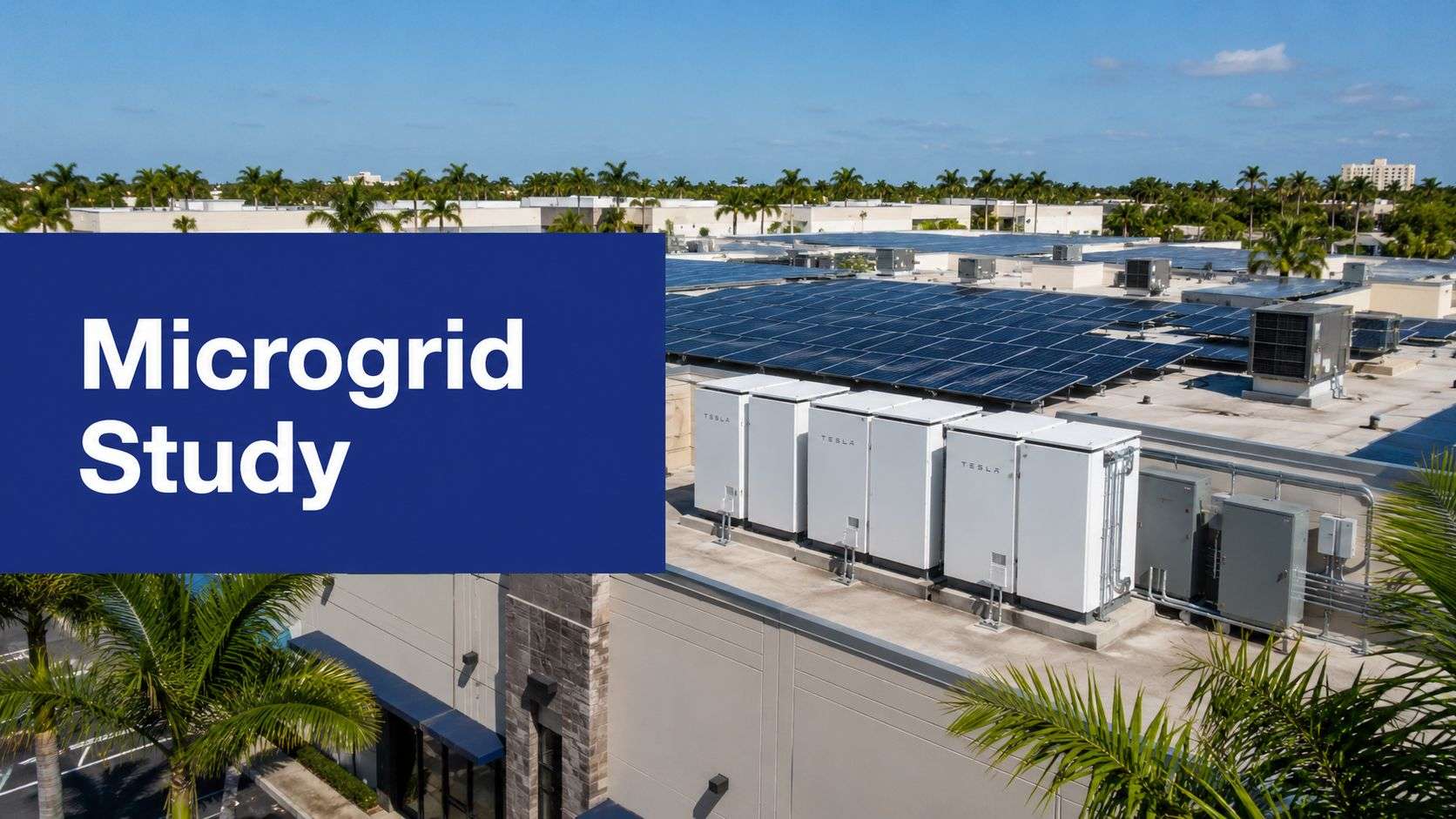
For commercial buildings, schools, and multifamily sites, this can expand into microgrid planning. The idea is the same. Keep critical operations supported, isolate what matters, and protect the equipment chain from roof to controls.
Your Resilience Checklist Permitting Insurance and Maintenance
Most Florida buyers spend too much time comparing module warranties and not enough time building a paper trail. That's a mistake.
Resilience isn't just what's bolted to the roof. It's also what you can prove before and after a storm.

Before installation
Start with the basics that too many projects rush past.
- Get the roof evaluated first: If the roof is near end of life or has unresolved weak spots, fix that before final solar design. If you're worried about warranty questions, review how solar panels can affect roof warranty considerations before procurement.
- Demand permit-ready documentation: You want stamped plans, approved components, structural details, and a clear responsibility chain for design assumptions.
- Read the scope carefully: The contract should identify what happens if roof repairs, decking issues, or structural surprises appear during pre-install inspection.
Before hurricane season
Don't improvise in August.
Modern panels are commonly engineered for wind loads up to about 140 mph, and a notable benchmark is a 645 kW hospital rooftop array in Puerto Rico that reportedly kept operating at full capacity after Hurricane Maria in 2017 despite exposure to around 180 mph winds, which shows that properly engineered systems can perform beyond their base ratings, according to this hurricane durability summary from EnergySage.
That example is useful for one reason. It proves good engineering can work under brutal conditions. It does not give your project a free pass. Your system still needs maintenance, documentation, and planning.
Use a simple pre-storm routine
Photograph the system condition
Take clear photos of modules, rails, attachments you can safely see, conduit runs, shutoff locations, and surrounding roof areas.Save your documents in one place
Keep permit records, equipment specs, warranties, and installer contacts in cloud storage and on a local device.Check for obvious changes
Look for loose hardware, shifting conduit, corrosion, cracked sealant, or anything that wasn't there before.Know your shutdown procedure
Everyone in the home or facility team should know where key disconnects are and when not to touch them.
After a storm
Your first job is safety, not production.
If there's standing water, visible arcing, roof damage, exposed conductors, or impact damage, keep people away and call qualified professionals. Don't try to restart the system because the weather cleared.
Here's the practical sequence I recommend:
- Start from the ground: Look for displaced modules, debris impact, hanging conductors, or roof deformation.
- Document before cleanup: Photos matter for insurance and repair coordination.
- Use specialists when claims get complicated: If damage disputes arise, resources on navigating storm claims with public adjusters can help you understand the insurance side before paperwork spirals.
- Schedule a post-storm inspection: A system can look intact and still have hidden issues in attachments, seals, or electrical equipment.
The best time to organize a solar storm file is before the storm exists. After landfall, everyone is busy, stressed, and short on records.
Making the Right Decision for Your Florida Property
If you're buying solar in Florida, don't buy the phrase hurricane proof solar panels as if it's a product category. Buy a resilient design process.
That means code-driven engineering, roof-specific attachment planning, corrosion-conscious hardware, protected electrical equipment, and a backup strategy that matches how you live or operate the property. It also means saying no to proposals that focus on panel branding and stay vague on structural details.
For homeowners, resilience can protect comfort, food storage, communications, and peace of mind. For commercial and institutional properties, it can support continuity, tenant retention, operational uptime, and better long-term energy planning. Those are financial decisions, not just technical ones.
If you want to sort through those trade-offs objectively, an independent advisory process helps. Firms such as Solar Energy Management's Florida solar power consulting services can help evaluate feasibility, storage strategy, system design, and procurement decisions before you commit to an installer proposal. That's often the smartest first move when the investment is large and the storm risk is real.
The Florida buyers who make the best solar decisions usually do one thing differently. They treat solar as part of the building, part of the resilience plan, and part of the financial model at the same time.
If you want a Florida-specific review of solar, battery backup, system hardening, and ROI before you sign a contract, Solar Energy Management LLC provides independent solar power consulting to help homeowners, businesses, and organizations de-risk major energy investments.