If you own property in Florida, you may already know the frustrating version of “going solar.” The panels look great on paper, your daytime production is solid, and your utility bill drops. Then a run of cloudy weather hits, the sun goes down, or the grid fails during a storm, and you're reminded that one energy source doesn't solve every problem.
That's where hybrid solar wind systems enter the conversation. Not as a novelty, and not as the right answer for every site. They make sense when the property has a real resilience need, enough room for proper equipment placement, and a load profile that benefits from more than rooftop solar alone.
For many Florida homes and businesses, the comparison isn't hybrid versus doing nothing. It's hybrid versus solar plus storage, or hybrid versus staying dependent on a utility connection that may not line up with your risk tolerance. If you're already thinking about backup power, critical loads, or living off-grid in Florida, hybrid design becomes a practical planning question, not a theoretical one.
The market itself is no longer experimental. The global hybrid solar wind systems market was valued at USD 871.29 million in 2022 and was projected to grow at a 7.41% CAGR from 2023 to 2028, with the commercial segment identified as the fastest-growing and Asia Pacific as the largest regional market, according to TechSci Research's hybrid solar wind systems market report. That matters because it tells Florida property owners something simple: this category has moved past niche engineering pilots and into real-world deployment.
Beyond Solar A New Approach to Florida Energy
Florida's solar resource is strong. That's the easy part. The harder part is matching power production to when a home or business needs electricity.
Air conditioning doesn't care whether your array had a good production day. Refrigeration, security systems, medical equipment, data racks, pool pumps, irrigation controls, and tenant loads all keep making demands after sunset and during bad weather. If your goal is lower utility bills, standard solar may be enough. If your goal is power continuity, the conversation changes.
Why A Single Resource Often Falls Short
Standalone solar performs best when site conditions are simple. A clean roof, good orientation, minimal shading, and a utility policy that rewards exported power can make the economics straightforward. But Florida properties rarely stay inside that neat model forever.
A few common pressure points push owners toward hybrid thinking:
- Outage exposure: Storm season changes the value of backup power.
- Nighttime demand: Many buildings use a meaningful share of electricity after solar production fades.
- Critical loads: Some properties can't afford long interruptions, even if annual utility savings look attractive.
- Site complexity: Larger parcels, agricultural uses, and microgrid-ready campuses often need more than one generation source.
Practical rule: Don't evaluate hybrid solar wind systems as if they're only a utility bill product. Evaluate them as a reliability product with an energy savings component.
Florida adds a specific wrinkle. The state has plenty of sunshine, but wind at the property level can be highly uneven. Coastal exposure, open land, tree lines, nearby buildings, local zoning, and storm design requirements all shape whether a turbine adds value or just adds complexity.
Where Hybrid Starts To Make Sense
The strongest hybrid candidates usually aren't the average suburban home with a compact lot and close neighbors. They're properties with room to site equipment correctly and a clear reason to want generation diversity.
That often includes:
- Rural homes and estates with open exposure and a desire for partial or full self-supply.
- Commercial sites with overnight loads, refrigeration, pumping, or resilience requirements.
- Agricultural operations where grid reliability and equipment continuity matter.
- Critical facilities and private microgrids where redundancy is part of the design brief.
The “why” is simple. Solar and wind don't produce on the same schedule. In the right setting, that complement can reduce the dead zones you get from relying on one source alone. In the wrong setting, though, a wind turbine becomes an expensive symbol of energy independence that doesn't deliver enough useful production.
That's the dividing line in Florida. A hybrid system has to fit the property, the load, and the permitting reality.
How Hybrid Solar And Wind Power Work Together
A hybrid system coordinates two variable energy sources so the property has more ways to meet load across the day. In Florida, that matters most on sites where solar output is strong but power needs continue into the evening, overnight, or through cloudy weather.

The Basic Power Flow
The power path is straightforward in concept, even if the equipment details vary by project. Solar panels generate DC electricity. A wind turbine produces electrical output that has to be conditioned before the system can use it alongside solar. Once both sources are converted into a form the system can manage, they feed a shared electrical backbone that serves loads, charges batteries, or interacts with the utility.
That shared backbone is one reason hybrid designs can work well on the right Florida property. Instead of building two separate generation projects, the designer sets up one coordinated system with one operating strategy.
In practical terms, power can go to three places:
- Immediate building loads
- Battery storage
- The grid, if interconnection rules and system settings allow export
What The Controller Does
The controller and inverter package decides, moment by moment, what gets priority. If the building is using power right now, the system serves that load first. If production is higher than demand, surplus energy may charge the battery. If the battery is full and the project is approved for export, the excess can flow to the grid.
When solar production drops, wind may keep contributing if the site has usable wind at that hour. If both resources are low, the battery or utility service fills the gap. For backup-capable projects, the control logic also determines which circuits stay energized during an outage and how aggressively the battery is reserved for those loads.
That is why the electrical design deserves as much attention as the panels or turbine. The quality of the hybrid inverter installation and system integration often determines whether a project performs well in real operating conditions or only looks good in a proposal.
Why Coordination Matters More Than Raw Equipment Count
Adding a turbine to a solar project does not guarantee better performance. I see Florida property owners focus on equipment count when they should be asking about operating sequence, battery charging rules, and outage behavior. Two generation sources only help if the control strategy uses them in a way that matches the property's load profile.
A cold storage site, pump station, or rural home with overnight demand can benefit from that diversity. A tight suburban property with limited wind exposure usually will not. In those cases, solar plus storage is often the cleaner answer.
For larger sites and private resilience projects, the discussion starts to look more like microgrid design. The same principles used in control systems for localized power grids apply here. Priority loads have to be defined, source hierarchy has to be set, and charging and discharge rules need to be clear before equipment is ordered.
One Operating Strategy For A Florida Property
The strongest hybrid systems are built around a specific operating plan. On one property, the priority may be bill reduction with limited battery cycling. On another, it may be storm resilience and fuel savings for a backup generator. Those are different design goals, and the controls need to reflect that.
Before a Florida project moves forward, the owner should get direct answers to questions like these:
- Which source serves the building first under normal conditions?
- When does the battery charge, and is one source prioritized over the other?
- Is export part of the plan, or is the system set up mainly for self-consumption?
- What happens during a grid outage?
- Which loads stay on, and how long can the system support them?
If those answers are vague, the project is still at the concept stage. A working hybrid system depends on clear rules, site-specific controls, and a design that fits how the property uses power.
Key Components And System Design Choices
A Florida hybrid project succeeds or fails at the equipment-selection stage. The question is not whether solar, wind, batteries, and controls can work together. The question is whether they fit your property, your electrical service, and the way you want the system to behave during normal operation and after a storm.

Generation Equipment
Solar is usually the simpler part of the design. It is easier to model, easier to permit, and easier to place on most Florida sites. The main decisions are roof versus ground mount, usable exposure, structural capacity, setback constraints, and whether hurricane-season maintenance or reroofing access needs to stay open.
Wind requires more discipline. A turbine needs clean wind, tower height, and enough clearance from trees and nearby structures to avoid turbulence. I regularly tell Florida owners to treat wind as a site question first and a product question second. On many suburban lots, the wind resource is the limiting factor long before equipment quality becomes the issue.
That is why an early site screen matters. If the property cannot support the right hub height or sits in a turbulent pocket, adding wind usually raises cost and maintenance without adding much dependable production.
The Shared Electrical Backbone
The strongest hybrid designs use one coordinated electrical architecture instead of a collection of separate devices forced to cooperate later. A common approach is to bring solar and wind into a shared DC pathway, convert wind output as needed, and manage charging, battery interaction, and building supply through one properly selected hybrid inverter.
That layout tends to simplify controls, reduce avoidable conversion losses, and make troubleshooting easier.
If you want a practical primer before comparing proposals, this guide to inverter and solar installation planning gives a useful overview of how inverter choice affects backup behavior, battery compatibility, and expansion options.
Storage And Controls
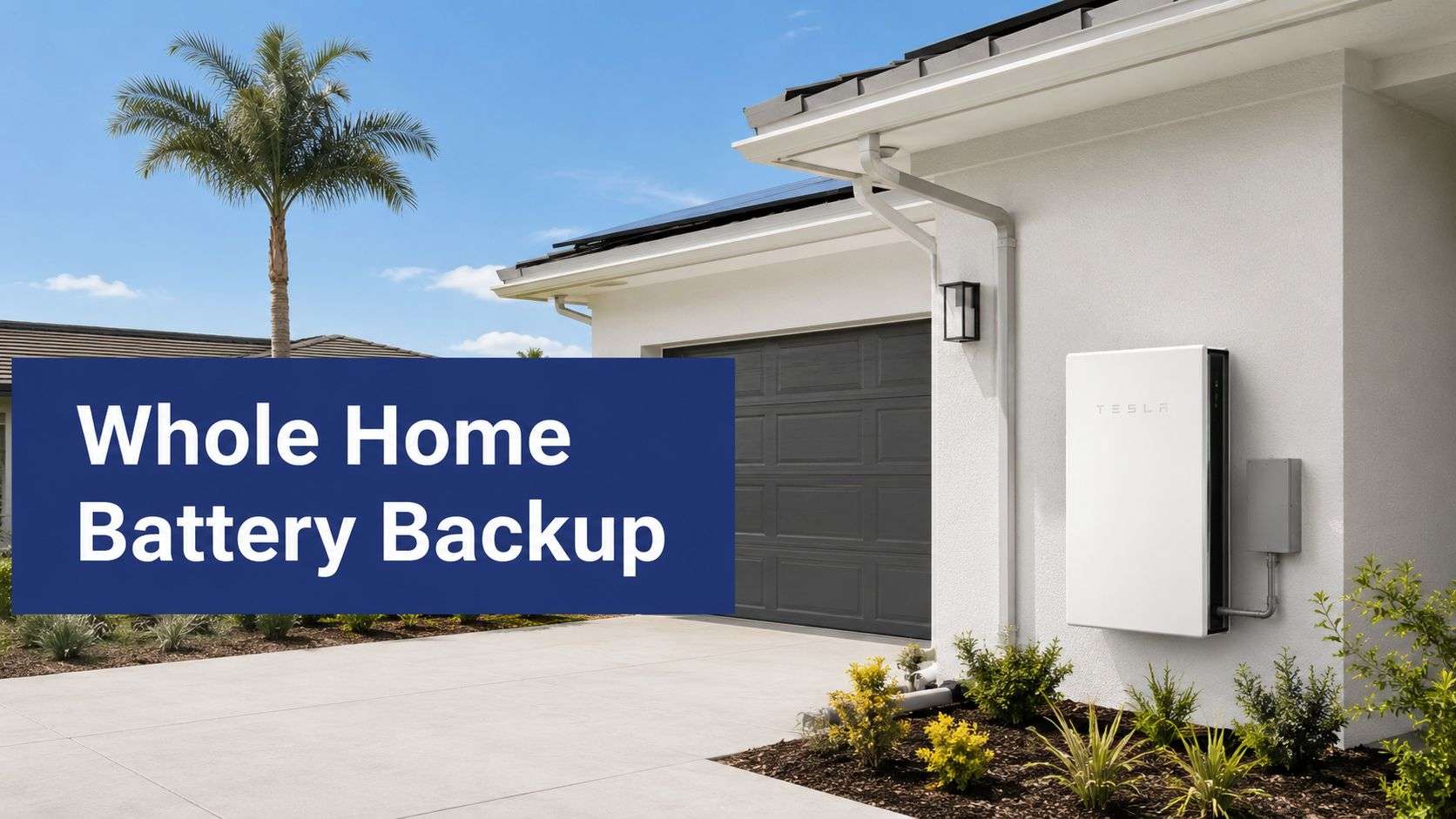
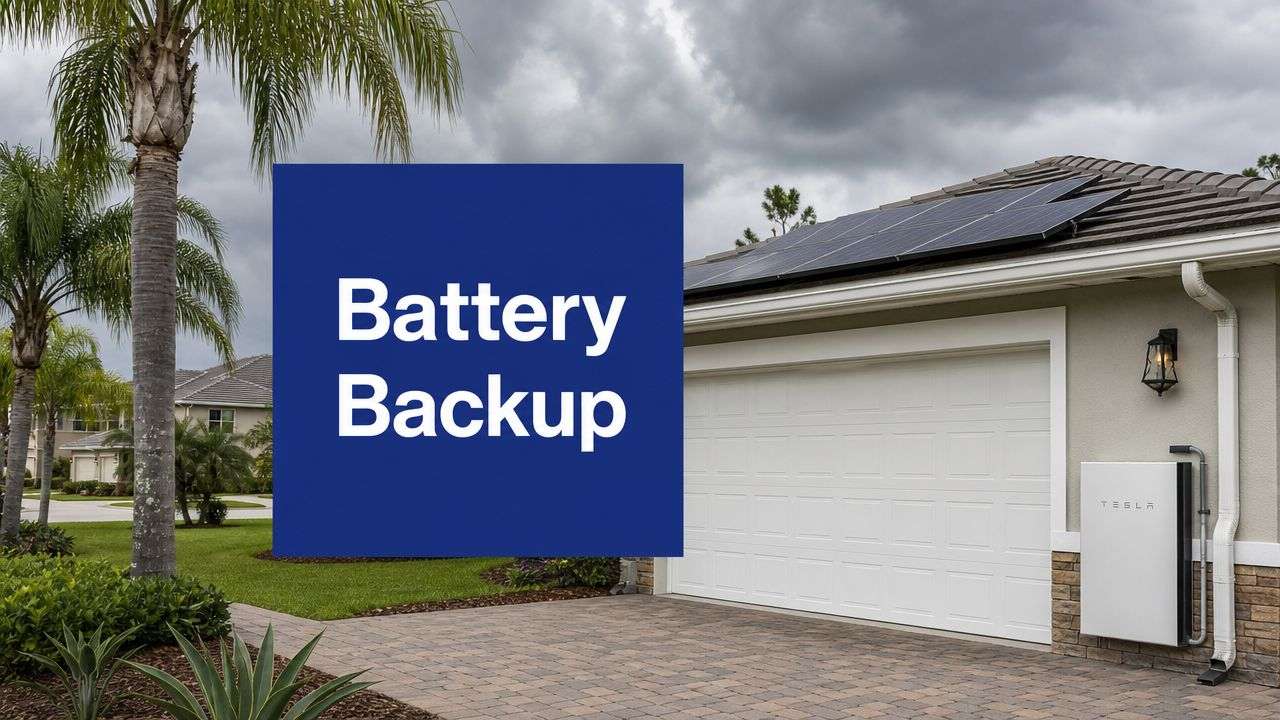
Battery storage shapes how useful the system feels in real life. For a Florida homeowner, that may mean keeping refrigeration, lighting, internet, and a well pump online after an outage. For a business, it may mean carrying critical circuits, reducing generator runtime, or avoiding a shutdown that costs more than the battery itself.
The battery is only part of the answer. Controls decide when solar charges first, when wind charges first, whether the system preserves battery capacity for outage protection, and which loads get served when power is limited.
On larger properties, that starts to overlap with control systems for localized power grids. Once a system is coordinating generation sources, storage, transfer logic, and priority circuits, you are designing site power operations, not just buying hardware.
Field note: The more complex the site, the more value shifts from the panels and turbine themselves to the control strategy that coordinates them.
Safety And Distribution Choices
A lot of underperforming projects fail in the ordinary parts of the system. Disconnects, overcurrent protection, grounding, surge protection, combiner equipment, and properly separated critical-load panels determine whether the installation is serviceable and code-compliant.
Florida adds its own pressure. Salt air, humidity, lightning exposure, flood risk, and wind-loading requirements all affect enclosure selection, mounting details, conductor routing, and equipment placement. A design that looks fine on a generic line diagram can become expensive fast if outdoor gear ends up in the wrong location or if service access was an afterthought.
A practical design review should include:
- Critical load separation so backup power is reserved for the circuits that matter most.
- Service entrance compatibility so the hybrid system integrates cleanly with existing panels and utility requirements.
- Storm hardening details for mounts, exposed wiring, and equipment locations.
- Maintenance access so future service does not turn into a roofing, crane, or shutdown problem.
Good hybrid solar-wind systems are built around site realities, utility rules, and owner priorities. Bad ones are built around whatever equipment happened to be in the sales package.
Maximizing Performance And Power Reliability
The biggest reason to consider a hybrid design in Florida isn't novelty. It's reliability.
A solar-only system has clear strengths, but it also has obvious dead zones. Night is one. Extended cloud cover is another. A battery helps bridge those periods, but storage works best when the charging strategy is solid and the generation mix supports it. A wind resource, in the right location, can make that whole system less fragile.
Reliability Comes From Matching Resources To Loads
The most practical hybrid designs don't chase maximum nameplate capacity. They chase better alignment between generation and actual use.
That's why system sizing matters so much. One published off-grid agro-industrial design, discussed in a David Publishing paper on hybrid sizing architecture, sized a 501.0667 kW hybrid system with 308.0328 kW from PV and the remainder from wind, then distributed it into 100 identical blocks of 6 kW inverter capacity using a 2:3 wind-to-PV ratio. The practical lesson isn't that every Florida property should copy those numbers. It's that block-based sizing can improve resilience by matching converter capacity, storage, and generation mix to the actual load profile and local resource behavior.
That's exactly how serious resilience planning should work. Build around the loads that must stay on, not around a generic package size.
What Works Well In Florida
Florida owners usually benefit most when the hybrid system is designed around critical functions instead of the entire property. That might mean backing up:
- refrigeration and kitchen circuits,
- well pumps or lift stations,
- security and communications,
- server rooms,
- HVAC zones tied to life safety or occupancy,
- medical or accessibility equipment.
This selective approach tends to be more durable than trying to make every receptacle and every nonessential load part of the resilience plan.
A resilient system is rarely the one with the most equipment. It's the one that keeps the right equipment running when the grid fails.
If storm readiness is part of your decision, it also helps to understand the structural side of solar resilience. This overview of hurricane-resistant solar panel considerations in Florida gives useful context for how generation assets should be evaluated in a hurricane-prone environment.
What Usually Doesn't Work
Some hybrid projects underperform for predictable reasons:
- The turbine is placed too low or too close to obstructions.
- The system is oversized for exports but undersized for backup priorities.
- Load expectations are unrealistic, especially for air conditioning and resistance heating.
- Battery strategy is vague, so stored energy is spent on the wrong loads.
- Owners assume more hardware automatically means more resilience.
Those mistakes are expensive because they don't always show up in a sales proposal. They show up later, during the first long outage or the first season of real operation.
The practical takeaway is simple. Hybrid solar wind systems improve reliability only when site conditions support wind, the loads are prioritized correctly, and the control logic is built around actual operating scenarios.
Modeling Costs And ROI For Florida Projects
Hybrid projects live or die on modeling. Not on optimism, and not on a vendor's generic payback claim.
In Florida, the financial case depends on how a system interacts with the property's tariff, load profile, outage risk, and site constraints. A hybrid design can produce better energy coverage than standalone solar, but better coverage doesn't automatically mean better returns. The extra hardware, additional permitting work, and ongoing maintenance have to be justified by actual savings or resilience value.

What A Good Financial Model Includes
A proper Florida ROI model should account for more than equipment pricing. It should test the project against the way the building really uses energy.
That usually means looking at:
- Utility rate structure, including how energy and demand are billed
- Hourly or seasonal consumption patterns
- Critical-load needs during outages
- Battery dispatch strategy
- Expected maintenance complexity
- Interconnection limits
- Opportunity cost of roof or land use
For many properties, the right comparison is not hybrid versus utility power alone. It's hybrid versus solar plus storage, because that's often the more practical resilience option on constrained Florida sites.
What The Research Supports
The technical case for hybrid optimization is strong when the design is done carefully. Academic literature summarized in the Oxford Academic review of hybrid energy systems recognizes that integrating PV-solar and wind with diesel and battery storage can reduce total cost, annualized system cost, energy cost, greenhouse gas emissions, and the likelihood of power-system failure. That same source also notes market forecasts estimating USD 1.26 billion in 2024 with growth to USD 3.42 billion by 2032 at 7.8% CAGR, while another forecast places the market at USD 2.07 billion in 2025, rising to USD 3.42 billion by 2032 at 7.4% CAGR.
Those numbers don't prove every hybrid project has a great ROI. They do show the category has matured around a real value proposition: reliability plus optimization.
Florida-Specific Cost Reality
In practice, hybrid systems in Florida make financial sense under narrower conditions than many people expect.
They tend to pencil out better when a property has one or more of these traits:
- High value for continuity of operations, where outages carry real business or comfort costs.
- An open site with viable wind exposure, so the turbine contributes meaningful production.
- A load profile that extends well beyond solar hours.
- A reason to avoid oversizing batteries alone as the only resilience tool.
For many suburban homes, solar plus battery storage remains the cleaner economic answer. For larger parcels, agricultural properties, and commercial sites with the right load pattern, hybrid may justify its added complexity.
Don't ask for a “payback number” first. Ask for a model that shows which assumptions create the payback.
That's also why generic online calculators can only go so far. They're useful for framing the conversation, but Florida decisions should be tested against your actual bills and operating conditions. A good starting point is a solar panel return on investment calculator for Florida planning, followed by a site-specific model that includes wind viability and storage behavior.
Navigating Florida Permitting And Incentives
The engineering can work and the economics can still fail if permitting gets messy. In Florida, adding wind to a solar project changes the approval path in ways many owners don't expect.
Solar is comparatively familiar to building departments and utilities. Wind isn't. The moment a turbine enters the design, the conversation expands beyond electrical review into local land-use rules, setback issues, height restrictions, structural review, and sometimes noise concerns. Those issues vary by county and municipality, which means a system that looks reasonable in one jurisdiction may be difficult in another.
What Usually Slows A Project Down
The biggest delays often come from local rules, not equipment lead times.
A Florida owner should expect early review of:
- Zoning classification for the parcel
- Tower or structure height limits
- Setback requirements
- Visual or neighborhood compatibility concerns
- Electrical and structural permitting
- Utility interconnection requirements
This is why many properties that seem “perfect” for hybrid on a map never move forward. The wind resource may be decent, but the parcel layout or local ordinance can undermine the design before procurement even starts.
Utility Coordination Matters More Than Most Owners Expect
For grid-connected projects, utilities will want clear documentation on how the system behaves during normal operation and during outages. If storage is included, controls and islanding behavior need to be spelled out carefully.
For Florida customers served by major utilities such as FPL, Duke Energy, or TECO, the practical task is to align the design with interconnection requirements before the project gets too far into equipment selection. If that sequence is reversed, redesign costs go up quickly.
The incentive picture also needs a clear-eyed review. Federal tax treatment may support qualifying project costs, but owners shouldn't assume every hybrid configuration receives the same treatment without project-specific analysis. Florida also offers tax-related advantages in some solar contexts, but incentives alone rarely rescue a weak hybrid design.
A good rule is simple: if the project needs incentives to look viable, the underlying design may not be strong enough yet.
Your Next Steps A Feasibility Study Checklist
Most Florida property owners don't need more marketing language around hybrid systems. They need a way to decide whether the concept belongs on their property at all.
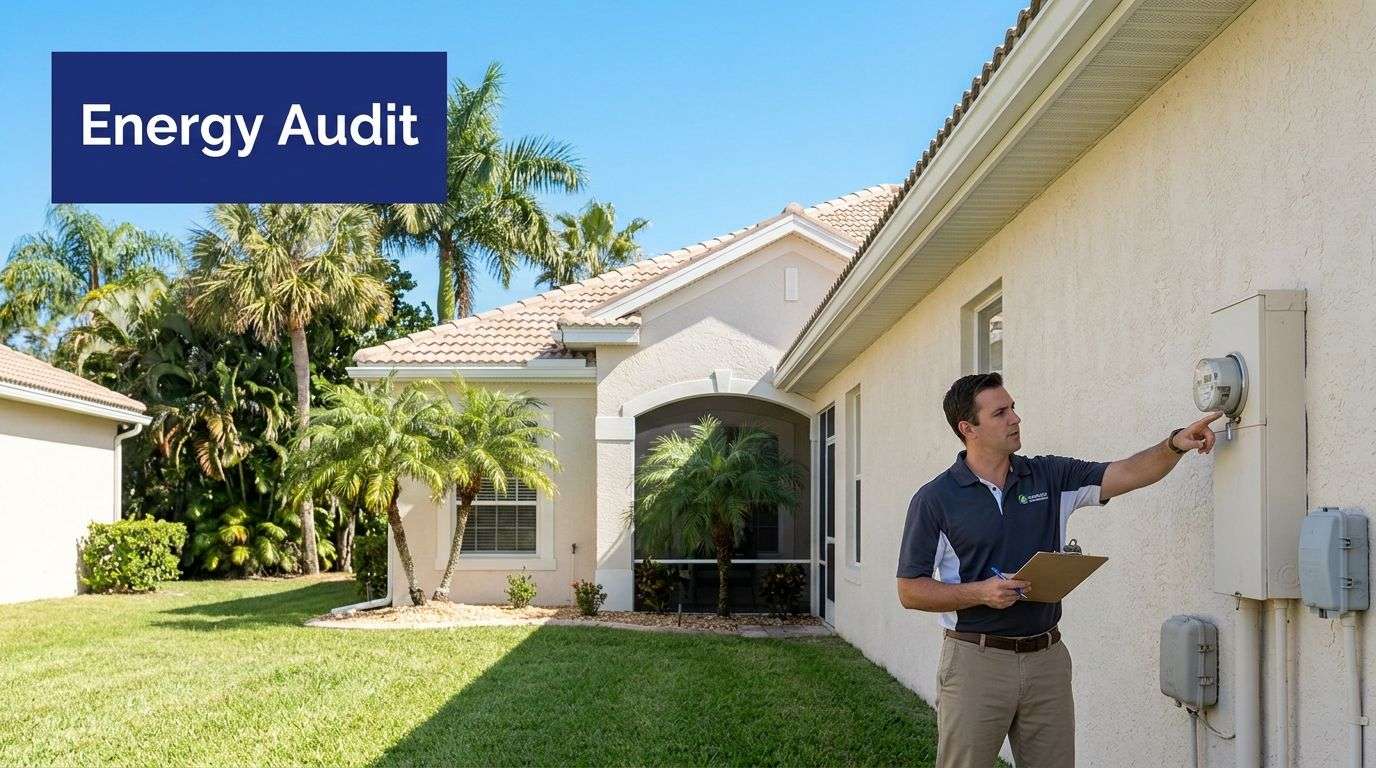
That decision should start with a feasibility screen. Not a product pitch. Not a rough quote. A real assessment of loads, wind exposure, solar production, permitting friction, and financial fit. As highlighted in the PNNL report on resilience, affordability, and site conditions, the key question isn't whether a hybrid system can work. It's under which utility tariff, land-use constraints, and ROI model it outperforms a simpler solar-plus-storage design. That answer requires a site-specific feasibility study.

A Practical Property Checklist
Before you talk with a consultant, gather the basics:
- Utility bills: Pull a full year if possible. Seasonal variation matters in Florida.
- Load priorities: List what must stay on during an outage and what can wait.
- Site conditions: Note roof orientation, open land, tree cover, nearby structures, and obvious wind obstructions.
- Property constraints: Check HOA rules, local zoning posture, and available equipment locations.
- Future changes: Include EV charging, pool equipment, added tenants, new HVAC, or planned expansions.
Then ask a harder question. Are you trying to lower bills, ride through outages, reduce generator dependence, or move toward partial energy independence? Those are different design goals. A hybrid system that serves one well may be a poor fit for another.
Questions Worth Asking In A Feasibility Study
A serious review should answer questions like these:
- Is the wind resource usable at this exact site, or does the property only look windy on paper?
- Would solar plus storage solve the same problem with less permitting and maintenance?
- Which loads belong on critical backup, and which should stay off the resilience panel?
- What operating mode creates the best result: self-consumption, backup-first, export-assisted, or microgrid-ready?
- How will the project perform under my utility tariff, not a generic statewide assumption?
- What parts of the design create the most permitting risk?
- What maintenance obligations come with the turbine, storage system, and control package?
“The right hybrid project usually survives a hard feasibility review. The wrong one gets exposed by it.”
If you want a structured place to begin, review this solar power feasibility study resource for Florida projects. It helps frame the questions that matter before you commit to a design path.
The Decision Standard That Actually Matters
A hybrid project is worth pursuing when it does something a simpler system can't do economically or operationally. That may be better overnight coverage. It may be improved resilience on a large parcel. It may be reduced dependence on generator runtime in a critical application.
If it doesn't create a clear advantage over solar plus storage, it probably isn't the best Florida solution.
That's the practical lens to use. Not whether hybrid solar wind systems sound advanced. Whether they solve your specific property problem better than the alternatives.
If you want an independent, Florida-focused review before committing to equipment, Solar Energy Management LLC can help evaluate site conditions, model ROI, compare hybrid against solar-plus-storage, and map out a feasibility path built around your utility tariff, resilience goals, and property constraints.