You're probably seeing the same pattern most Florida property owners see when they start looking at solar. One company says your roof is perfect. Another says you need a different panel layout. A third pushes battery backup hard, while someone else tells you batteries “don't pencil” and you should keep it simple. The proposals look polished, but they're built to sell a system, not to help you compare options on equal footing.
That's where an independent solar consultant matters. In Florida, solar is rarely just about panels on a roof. It's about utility rate structure, backup priorities during outages, roof condition, insurance implications, electrical constraints, permitting realities, and whether the projected savings hold up when the sales language is stripped away. A good consultant doesn't replace the installer. The consultant protects the buyer before an installer is chosen, while the design is reviewed, and after the work is complete enough to verify that the system is doing what it was supposed to do.
Navigating Florida's Bright but Complex Solar Market
A Florida homeowner in Clearwater gets three solar quotes in the same week. One proposal shows a large rooftop array with no battery. Another includes storage sized for “whole home backup,” but doesn't explain which loads would run during an outage. The third promises strong savings, yet the production assumptions don't match the roof's orientation or the tree cover on the south side.
A commercial owner in Tampa sees the same problem in a different form. One installer emphasizes tax benefits. Another focuses on demand reduction. A third talks about future EV charging. None of those topics are wrong. The problem is that each proposal is framed around what that seller wants to build.
Florida has excellent solar potential, but the buying process can still be messy. The state's sunlight doesn't remove the hard questions. It makes them more important, because a solar project only performs well when the system size, electrical design, interconnection path, and financial assumptions all match the actual property.
That's why advisory work has become more valuable as the industry has expanded. The U.S. solar industry employed 263,883 workers in 2022, a 3.5% increase from 2021, according to industry reporting citing the National Solar Jobs Census, and the broader renewable energy generation industries employed over 546,630 workers overall (U.S. solar workforce growth and clean-energy employment). Growth is good. It also means buyers face more vendors, more equipment choices, and more sales narratives.
Why Florida Buyers Get Stuck
Most people don't need a crash course in how solar panels work. They need help answering practical questions:
- Is the roof viable: Not just sunny, but structurally suitable and worth using for the life of the system.
- Will the design match the utility setup: Metering, tariff structure, and interconnection details matter.
- Should storage be added: That depends on outage priorities, rate exposure, and how critical loads are defined.
- Are the incentives being presented correctly: Buyers need clear modeling, not broad promises.
If you're sorting through those issues now, a consultant helps turn the process from a sales exercise into a decision framework. Florida homeowners looking at tax treatment and related policy details often start by reviewing Florida solar incentive considerations, but incentives are only one piece of the investment case.
The right time to bring in an independent advisor is before you sign anything, not after a contract locks the project assumptions in place.
What an Independent Solar Consultant Really Does
An independent solar consultant isn't there to move a panel brand, close a financing package, or steer you toward a preferred installer. The role is different. Industry descriptions define the consultant as someone who “sits on your side of the table” and does not sell panels or push a specific installer, instead handling site assessment, design review, financial analysis, and procurement oversight. One industry summary also credits consultants with helping businesses deploy over 65 GW of energy production nationwide (independent consultant role and industry impact).

What That Means In Practice
When the consultant works for the buyer, the advice changes in useful ways.
- The analysis starts with the property: Load profile, roof layout, shading, electrical service, and resilience priorities come first.
- The consultant reviews proposals instead of pitching one: That creates room to reject oversizing, poor battery logic, or unrealistic savings assumptions.
- The financial model belongs to the client: It should show how the project works under the client's goals, not under a sales quota.
In Florida, that objectivity matters because many projects are not simple “solar only” decisions. A homeowner may want backup for refrigeration, lighting, internet, and a well pump. A multifamily owner may care more about common-area resilience and operating cost control. A retail site may be focused on keeping critical point-of-sale loads live during an outage. Those are different projects even if the roof area is similar.
A Consultant's Real Job
A solid consultant typically does four things well.
Tests viability early
Before anyone debates module brand or inverter type, the consultant checks whether solar makes sense on that property at all.Translates technical issues into owner decisions
The buyer doesn't need every engineering detail. The buyer needs to know which details change cost, performance, risk, or backup value.Separates marketing from measurable assumptions
If a proposal relies on optimistic production, vague battery claims, or weak contract language, the consultant flags it.Stays with the project long enough to protect outcomes
Good advisory work doesn't stop once bids are collected. It continues through design review, procurement support, and performance verification.
Practical rule: If the person advising you also earns more money when you buy a larger system, treat their guidance as sales input, not independent analysis.
Consultant Versus Installer A Crucial Distinction
An installer and an independent consultant can both be valuable. They just don't do the same job.
The installer's business is to design, sell, and build a system. That's legitimate work. Florida needs competent installers. But the installer is usually presenting a solution their company can deliver with its preferred equipment, internal processes, and margin structure. The consultant's business is to determine whether that proposed solution is the right one for the client before the deal is finalized.

Where The Difference Shows Up
The gap becomes obvious after the first sales meeting. Neutral industry descriptions frame independent consulting as full-cycle due diligence, including feasibility validation, bid comparison, contract review, financial modeling around CAPEX, income, expenses, and debt sizing, plus construction and commissioning oversight (full-cycle solar due diligence).
That's not how most installer conversations are structured. Installers usually focus on:
- system layout
- projected production
- equipment package
- price and financing
- installation timeline
A consultant looks at the same project from a different angle:
- Is the system sized to the load pattern
- Do the production assumptions match roof conditions
- Does the contract allocate risk fairly
- Are the change-order triggers clear
- Will the battery design support the loads the owner cares about
Which One Do You Need
For some Florida projects, working directly with an installer is fine. If the site is straightforward, the owner is comfortable evaluating contracts, and backup power isn't part of the plan, the process may stay manageable.
For other projects, the consultant adds the most value before money is committed.
A sales proposal tells you what one company wants to build. Independent review tells you whether that project deserves to be built at all.
The distinction gets sharper in commercial and multifamily work. Those projects often involve landlord-tenant considerations, insurance review, structural questions, utility coordination, and lender or board oversight. In those cases, hiring only an installer can leave the owner without a true representative during procurement.
Core Services and Project Deliverables
A real consulting engagement should produce tangible work, not just opinions. If the deliverable is a short call and a generic recommendation, the owner still carries most of the project risk. A useful consultant gives you documents, assumptions, design criteria, and decision support you can use.

Industry guidance describes the role as feasibility and due diligence before procurement, including site assessment, production modeling, permitting review, and bid evaluation. That separation between advisory and sales reduces design and construction risk because the consultant validates technical and economic feasibility before the project is committed (commercial solar feasibility and due diligence).
The Deliverables That Matter Most
A Florida buyer should expect some version of the following.
Site and suitability review
This covers roof use, shading exposure, structural concerns, electrical tie-in constraints, and any obvious red flags that could change project viability.Production modeling
The consultant should explain what assumptions drive output, including roof geometry, orientation, shading patterns, and system configuration.Financial modeling
In financial modeling, solar proposals often need the most cleanup. A proper model tests project economics under realistic usage, financing, and utility conditions.Bid normalization
Different installers present different formats, scopes, and assumptions. Normalization makes the bids comparable.Contract and scope review
Owners need to know what is and isn't included before signing. That includes equipment substitutions, schedule language, warranty responsibilities, and acceptance terms.
Beyond Procurement
The strongest consulting work continues after selection.
A consultant may review submittals, answer owner questions during installation, monitor whether the build matches the agreed specification, and verify the system after startup. For buyers who want that kind of support, firms such as Solar Energy Management's renewable energy consulting services offer advisory work focused on feasibility, design guidance, storage planning, and project decision support rather than installation.
Here's what works in the field. The consultant should narrow uncertainty, not add another layer of vague advice. If the owner finishes the process with a clearer scope, cleaner bid comparison, and better-defined operating expectations, the consulting did its job. If the owner still can't tell what they're buying, the process wasn't rigorous enough.
Maximizing Solar ROI and Resilience In Florida

Florida changes the solar conversation because savings and resilience often need to be evaluated together. A roof may be good for solar production, but that doesn't automatically answer whether storage belongs in the design. The right answer depends on outage risk, utility billing structure, critical-load priorities, and how much the owner values continuity when the grid is down.
That's why the old question, “Will solar save money?” isn't enough anymore. Industry reporting notes that the U.S. installed 50 GW of solar capacity in 2024, the largest annual addition in U.S. history, while storage is growing alongside it as grid reliability and bill-management concerns increase. The more useful question is, under which tariff, net-metering, and outage conditions does solar-plus-storage outperform solar-only (solar growth and the shift toward storage analysis).
When Solar Only Makes Sense
For some Florida properties, a solar-only system is still the cleaner investment.
That's often true when the owner's main goal is daytime energy offset, the utility arrangement remains favorable enough to support straightforward bill savings, and outage protection isn't a primary concern. In that scenario, adding storage can complicate the project without clearly improving the owner's outcome.
When Storage Earns Its Place
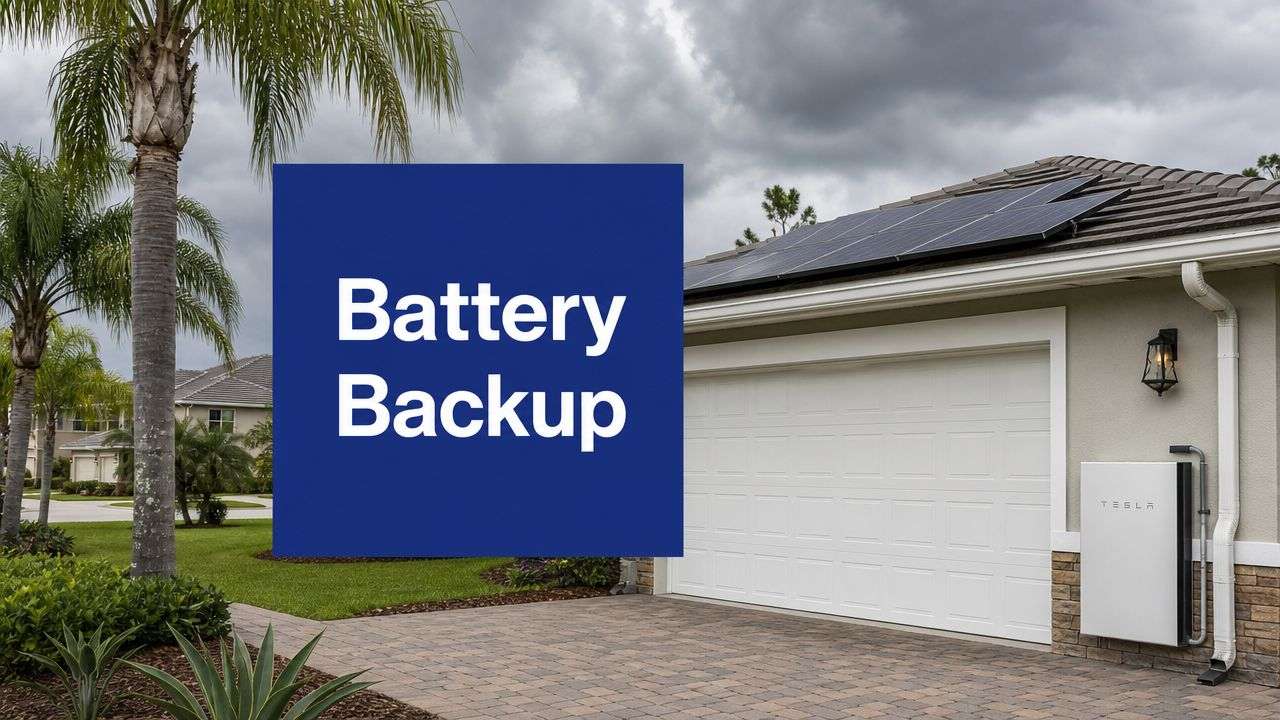
Battery storage becomes more compelling when the owner has a specific resilience need. In Florida, that might mean:
- Critical home backup: refrigeration, internet, lighting, medical devices, security, garage access
- Business continuity: network closets, point-of-sale equipment, emergency lighting, controlled shutdown capability
- Operational stability: support for sites where short outages create spoiled product, tenant disruption, or avoidable downtime
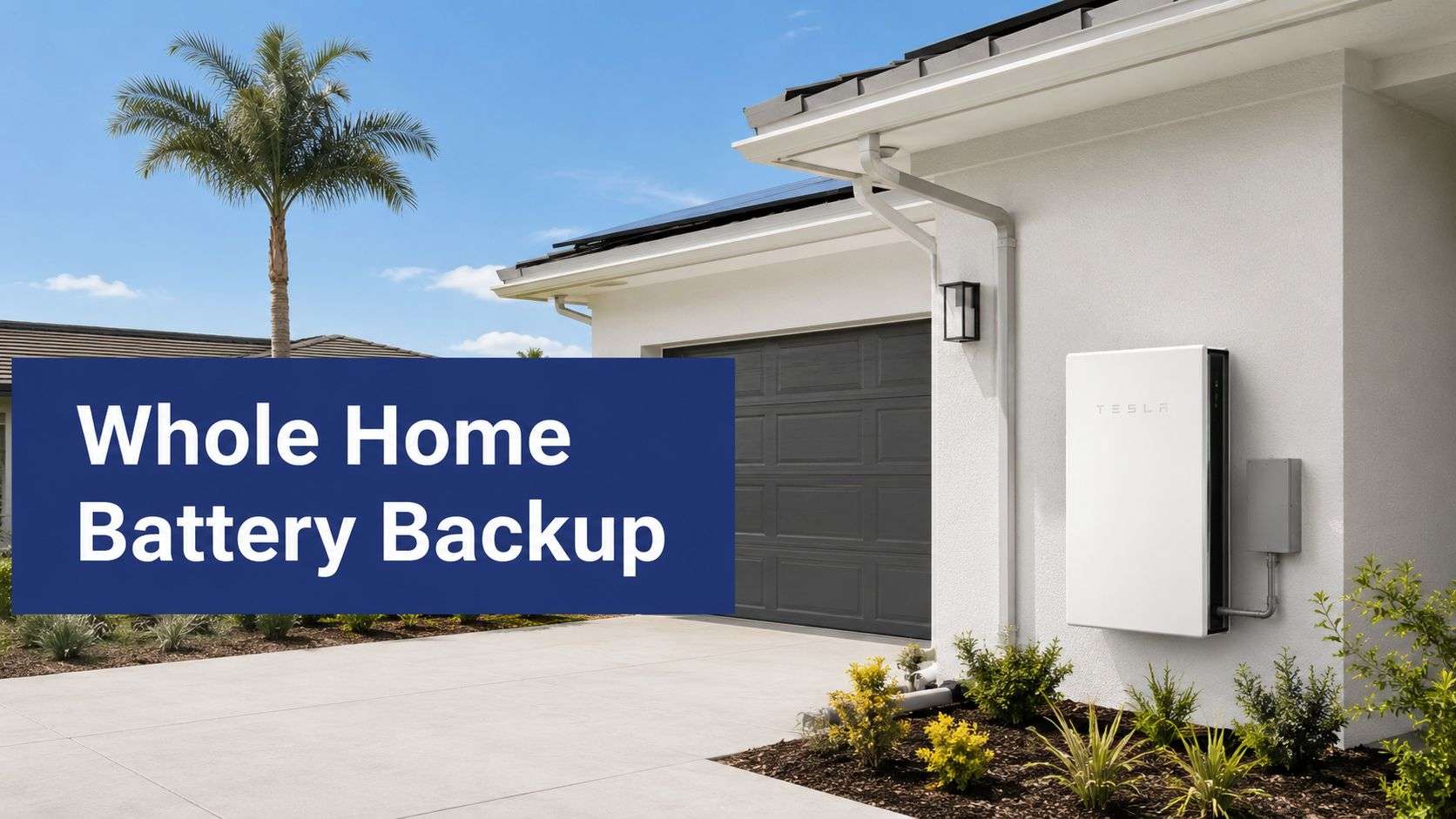
A consultant's role is to model those choices accurately. “Whole home backup” sounds attractive, but many properties don't need it and some service configurations don't support it cleanly. Critical-load design is usually the better starting point because it aligns battery sizing with actual priorities.
The Florida Lens
The best Florida solar advice also ties economics to local realities. Roof age matters more in a storm-prone market. Backup expectations need to be defined before equipment is selected. Utility billing details need to be reviewed before projected savings are accepted. If you're comparing scenarios, tools like a solar panel return on investment calculator can help frame the discussion, but the numbers still need property-specific interpretation.
Buyers often overfocus on panel wattage and underfocus on outage planning. In Florida, that's backwards if resilience is one of the reasons you're going solar.
How to Select and Hire Your Florida Solar Consultant
A Florida solar consultant should make your decision sharper, not more confusing. If the conversation feels like another sales pitch, keep looking.
The first test is independence. Ask directly how the consultant is paid, whether they receive referral fees from installers, whether they favor specific equipment lines, and whether they will review competing proposals line by line. A consultant who can't answer those questions clearly isn't acting like an owner's representative.
Questions Worth Asking
Use the first meeting to pressure-test both competence and fit.
How do you evaluate a Florida roof for solar and storage suitability
Listen for specifics such as structural review, shading, service equipment, and outage priorities.How do you compare competing bids
The answer should include scope normalization, assumption review, and contract scrutiny.Do you help after proposal review
Some consultants only provide front-end advice. Others stay involved through procurement, construction review, and post-install verification.What kinds of Florida properties do you work on
Homes, commercial rooftops, multifamily, and resilience-driven projects all require different judgment.How do you handle battery recommendations
You want a framework tied to critical loads and operational goals, not generic enthusiasm for storage.
Red Flags You Shouldn't Ignore
Some warning signs show up fast.
- “Free consulting” tied to one installer
That's usually sales support, not independent advice. - Guaranteed savings language without transparent assumptions
If the model can't be explained, don't rely on it. - No clear deliverables
You should know whether you're getting a memo, a model, a scope review, or bid analysis. - Pressure to sign before utility and site questions are resolved
That sequence favors the seller, not the buyer.
Fee Structure Matters
Consultants may charge a flat fee, hourly advisory fee, or a project-based fee tied to scope. The important point isn't which format they use. It's whether the compensation is transparent and disconnected from system size or installer selection.
If you're building your interview list, a practical starting point is reviewing these questions to ask a solar company. Even though that checklist is broader than consultant selection alone, it helps expose whether a project is being framed around your needs or around someone else's sales process.
Making a Data-Driven Solar Decision for Your Property
The biggest mistake Florida buyers make isn't choosing the wrong panel. It's choosing a project before they've defined the right objective. Some owners want utility savings. Others want outage resilience. Many want both, but in different proportions. Until those priorities are clear, the proposal with the cleanest graphics can look like the best option even when it isn't.
That's the strategic value of an independent solar consultant. The consultant turns solar from a product purchase into an investment decision. Instead of asking which installer sounds most convincing, you start asking better questions. Is the system sized to the right load? Does the battery plan reflect actual critical loads? Are the assumptions behind savings and backup support realistic for this Florida property?
What Smarter Procurement Looks Like
A disciplined process usually includes these moves:
Define the outcome first
Bill reduction, resilience, operational continuity, or a blend of all three.Model the property, not the marketing
Production and financial assumptions should match roof conditions, usage pattern, and utility setup.Compare proposals on equal terms
A low headline price can hide a weaker scope or less useful design.Review post-install expectations before signing
Acceptance standards, monitoring, and performance verification should be understood early.
For owners who are still refining the basics, it helps to understand how to size a solar system before locking in equipment or storage choices. That sizing conversation shapes almost everything that follows.
A Better Standard For Florida Buyers
The practical goal isn't to make solar more complicated. It's to remove false confidence from the process. Good consulting does that by replacing vague promises with documented assumptions, realistic constraints, and procurement discipline.
If you also want a plain-language refresher on system fundamentals so you can better maximize your solar energy savings, that can help you ask sharper questions when proposals start arriving. The more clearly you understand how the system is supposed to perform, the easier it becomes to spot weak design logic or oversold savings claims.
A Florida solar project should stand up to scrutiny before it reaches installation. If it does, you move forward with confidence. If it doesn't, you've avoided an expensive mistake.
If you want independent guidance before committing to a Florida solar or storage project, Solar Energy Management LLC provides consulting for feasibility, ROI modeling, system design guidance, and procurement support so homeowners and commercial property owners can make data-driven decisions with a clearer view of risk, performance, and resilience.