You're probably looking at a Florida roof that needs replacement anyway, and the Tesla Solar Roof feels like a way to solve two problems at once. You get a new roof and a solar system in one package, with a cleaner look than rack-mounted panels.
That appeal is real. So are the complications.
In Florida, the installation of tesla solar roof isn't just a design choice. It's a roofing, structural, electrical, permitting, insurance, and storm-resilience decision. The clients who do best with it are the ones who treat it like a full project, not a product order. They start with feasibility, pressure-test the numbers, and make sure the roof assembly is built for wind, salt air, and long utility timelines.
Is A Tesla Solar Roof Right For Your Florida Property
The first filter is simple. Do you want roof-integrated solar because it fits the property, or because the marketing looks better than standard panels? Those are not the same thing.
For some Florida homes, a Tesla Solar Roof is a reasonable fit. High-end custom homes, visible rooflines, HOA-sensitive neighborhoods, and full roof replacements are the strongest candidates. If the roof still has useful life left, or if the home has shading, multiple complex roof planes, or marginal structural conditions, the economics get harder fast.

Start With Roof Fit, Not Product Hype
A Florida feasibility review should look at four things before anyone gets excited about production estimates.
- Roof age and replacement timing: If your roof is near end of life, an integrated system deserves a closer look. If it's relatively new, replacing it early can undercut the value proposition.
- Structure and deck condition: Tesla Solar Roof requires a full tear-off and exposes the roof deck. That means hidden deck issues matter more than they would in a basic cosmetic reroof.
- Orientation and shading: Clean south-facing and southwest-facing roof areas usually make the design easier. Heavy tree cover or fragmented roof planes can limit the amount of active tile area.
- Energy profile: A home with meaningful daytime use, battery goals, or outage concerns usually has a stronger case than a home chasing aesthetics alone.
A candid review matters because Tesla Solar Roof hasn't scaled the way many buyers expected. Wood Mackenzie estimated about 3,000 installations nationwide by 2022, far below Tesla's public goal of 1,000 installations per week, and that amounted to less than 0.03% market share according to Wood Mackenzie's Tesla Solar Roof deployment analysis. Tesla publicly disputed that estimate, but it still underscores the same practical point for Florida buyers. Don't assume broad market maturity. Validate your own project.
Practical rule: If the numbers only work when every assumption is optimistic, the project doesn't work yet.
What Florida Owners Should Evaluate Early
A Tesla Solar Roof can make sense, but only after an independent review of the roof assembly, energy use, and backup goals. I'd want answers to questions like these before design moves too far:
- Will the roof deck need reinforcement after tear-off?
- Is there enough unshaded area for active tiles to justify the added complexity?
- Are you trying to offset utility costs, gain backup power, or protect architectural appearance?
- Will the home benefit more from a conventional reroof plus standard solar?
For owners weighing integrated roofing against more conventional options, this overview of solar and roof planning in Florida is a useful starting point because it frames the roof and solar system as one financial decision.
The Cost Question Needs Context
Sticker shock is common with Tesla Solar Roof. The available benchmark in the verified data cites about $55,000 for a 2,000 square foot system after incentives producing about 9.85 kW in the Wood Mackenzie press release above. That doesn't mean your Florida home will match it. It means you should expect a premium product that needs premium due diligence.
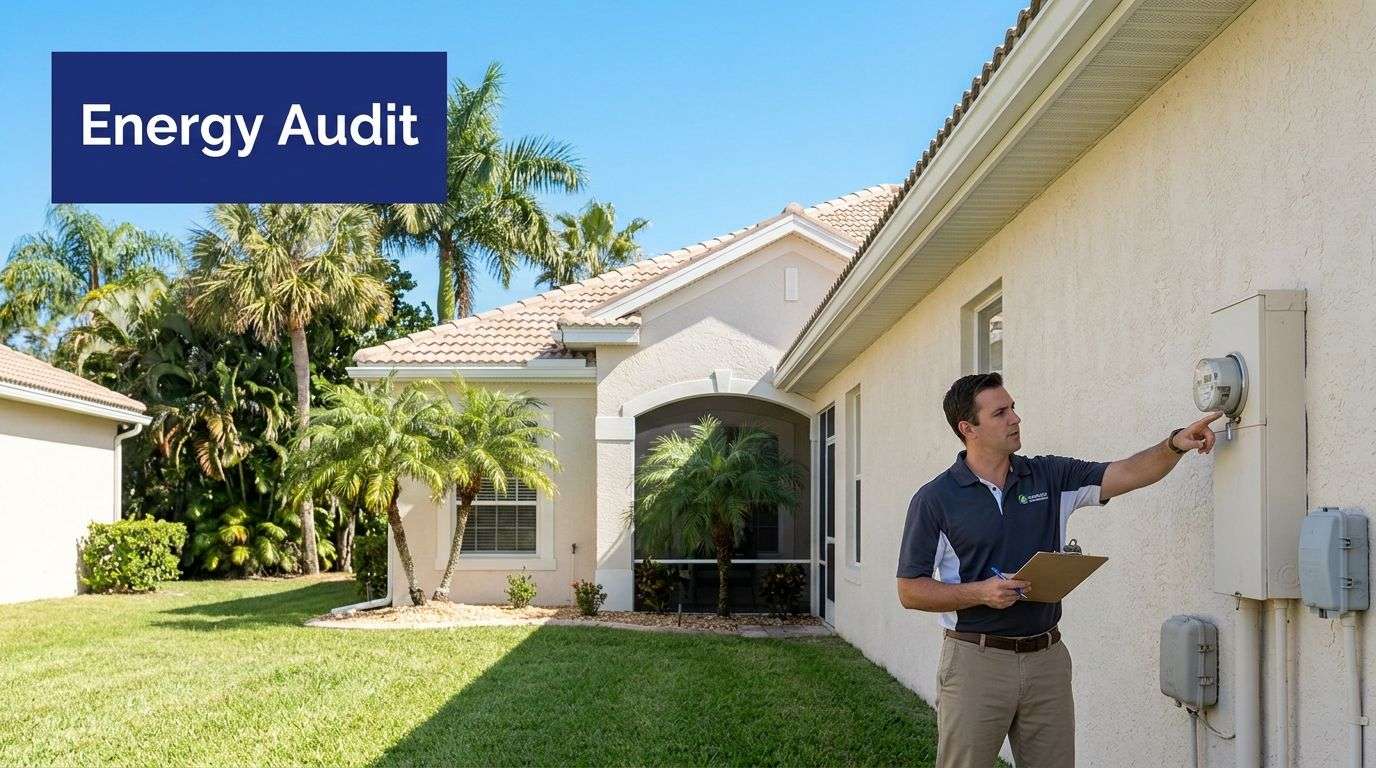
What works in practice is an independent energy audit before contract commitment. That audit should compare integrated solar roofing against a separate reroof plus conventional solar and storage. What doesn't work is relying on aesthetics alone, then discovering late in the process that your roof geometry, deck condition, or shade pattern weakens the return.
Assembling Your Expert Team And Navigating Florida Permits
The hardest part of many Florida solar roof projects isn't the tile installation. It's coordination.
You need alignment between design, structural review, roofing scope, electrical scope, utility interconnection, and local code enforcement. When that chain breaks, delays start stacking. The client usually feels it first in permitting and revisions.
Who Needs To Be At The Table
A smooth project usually has clear roles, even when one company wears more than one hat.
- Manufacturer-side design input: Product-specific layout, approved components, and system compatibility.
- Roofing and installation crew: Tear-off, deck readiness, underlayment, flashing, tile placement.
- Electrical team: Inverter, service equipment coordination, battery integration, commissioning.
- Independent consultant: Feasibility, scope review, bid comparison, ROI modeling, and owner representation.
That independent role matters more in Florida than many buyers realize. The state's coastal exposure and local enforcement culture can turn a routine review into multiple rounds of resubmittals if wind design assumptions aren't documented cleanly.
Why Florida Permits Slow Down Good Projects
The verified data points to a core problem. A 2025 Florida Solar Energy Center report noted that 68% of retrofit failures in Zone 4 winds stem from inadequate mounting, and permitting in Florida can average 45 days versus 20 nationally due to unaddressed FBC 2023 amendments mandating 110% wind load factors, as summarized in Tesla's solar sizing and design support page.
That should change how you approach the preconstruction phase.
In Florida, permit approval often depends less on how attractive the product is and more on how complete the wind-load documentation is.
For homeowners trying to organize contractor paperwork before submittal, an automated code checklist for roofing contractors can help surface missing roof-code items early. It's especially useful when roofing and electrical scopes are being prepared by different parties.
Questions To Push Before Permit Submission
Don't wait for the building department to identify basic gaps. Push these items up front:
- Wind design package: Ask whether the roof assembly has been reviewed specifically for your exposure category and local wind requirements.
- Attachment details: In hurricane-prone counties, generic mounting language isn't enough. Fastener schedules and roof assembly details need to match the submittal.
- Roofing code coordination: A solar roof is still a roof. Flashings, underlayment details, and deck conditions need the same scrutiny as any premium reroof.
- Utility sequence: Clarify who handles interconnection paperwork and who owns corrections if the utility rejects the package.
Property owners can sharpen this process by reviewing a practical list of questions to ask a solar company in Florida. The point isn't to interrogate everyone. It's to find out who has performed the preconstruction thinking.
What works is a document-first approach. What doesn't work is assuming a premium brand will automatically glide through a Florida permit desk.
The Installation Process From Roof Deck To Solar Tiles
A Florida Tesla Solar Roof install succeeds or fails in the roofing phase. By the time the glass tiles start going down, the expensive decisions have already been made at the deck, underlayment, flashing, and attachment points.

The Job Starts With The Roof, Not The Solar
This installation is a reroof with electrical components built into it. Crews remove the existing roof covering, inspect the deck, replace damaged sections, dry in the structure, and only then move into tile placement and electrical integration.
That sequence matters more in Florida than in milder markets. Wind uplift, wind-driven rain, and coastal exposure put pressure on every hidden layer. The Florida Building Code frames roof assemblies around resistance to design pressures, water intrusion, and attachment requirements, not appearance alone, as outlined in the Florida Building Code, Residential, Chapter 9 on roof assemblies.
For owners, the first serious checkpoint is deck condition. If plywood is soft, uneven, or poorly fastened, covering it with premium materials only locks in a problem.
Dry-In Quality Determines Whether The Roof Performs
Homeowners usually watch for the solar tiles. I watch the waterproofing package.
Underlayment, flashings, edge details, valleys, and penetrations decide whether the home stays dry during a summer storm. Florida roofs also see more post-storm scrutiny than roofs in many other states. If your house has prior damage, review a local storm damage roof repair guide before installation so old issues are documented and separated from new work.
Tesla-specific assemblies still have to behave like high-end roofing systems. If a vent curb, sidewall transition, or valley metal is rushed, the owner may not see the consequence until the first heavy rain. At that point, the argument is rarely about solar output. It is about whether the roof was built correctly.
What Happens After Dry-In
Once the roof is weather-protected, the visible work picks up:
- Layout is set by plan. Active and inactive tiles go in specific locations based on roof geometry, production targets, and electrical routing.
- Perimeter and penetration details are built as the field develops. Clean workmanship matters at these points because every transition has to shed water and hold up under wind load.
- Electrical pathways are coordinated with roofing progress. Crews cannot treat the roof and electrical scopes as separate jobs.
- Finish work continues in sections. Parts of the roof may look complete before the whole system is ready for inspection and commissioning.
The National Renewable Energy Laboratory explains in its Building-Integrated Photovoltaics overview that building-integrated systems replace conventional roofing materials while serving as the weathering surface and the generating surface. That dual role is exactly why installation discipline matters here more than it does on a standard rack-mounted solar job.
What Owners Should Watch During Installation
Owners do not need to stand over the crew. They do need to verify that the project is being built in the right order.
Look for these signs of a well-run install:
- Tear-off is followed by an actual deck review. Problems should be photographed, explained, and priced before they are covered.
- Dry-in work looks deliberate. Underlayment should lie flat, transitions should be tight, and penetrations should not look improvised.
- Material staging stays controlled. Glass tiles and roofing components need careful handling, especially in wet conditions.
- Flashing details look consistent across the roof. Good crews do not improvise one chimney, one valley, and one wall tie-in at a time.
- The site stays weather-aware. In Florida, afternoon rain and tropical systems can force schedule changes for good reason.
If you want a useful comparison point, this explanation of how rooftop solar panels are installed in Florida shows how much more involved an integrated solar roof is than a standard panel install.
The practical mistake I see is schedule pressure. Owners get excited once materials arrive and want visible progress fast. A better standard is simple. Do not let anyone rush past deck repairs, dry-in details, or flashing corrections just to make the roof look finished.
Integrating Powerwall For Hurricane Resilience And Backup
A Florida outage usually does not happen on a mild spring afternoon. It happens after a summer storm, during extreme heat, or in the middle of a utility restoration backlog. That is why Powerwall planning deserves the same level of scrutiny as the roof assembly itself.

A Tesla Solar Roof can produce energy. Resilience comes from how the battery, Backup Gateway, inverter, service equipment, and backed-up loads are configured to work together during a grid failure. If that design work is rushed, owners end up with a premium roof and a backup system that does not support the circuits they care about.
Backup Design Starts With Loads, Not Marketing Claims
I advise clients to decide early what must stay on. Refrigeration, internet, lighting, garage access, medical devices, security systems, well pumps, and one smaller air conditioning zone are realistic priorities on many Florida homes. Whole-home backup is possible on some properties, but it depends on load profile, HVAC size, service layout, and battery count. It is not a default setting.
Tesla's support documentation for Powerwall explains that backup performance depends on the site's electrical configuration, supported loads, and system settings during outages, not just the presence of the battery itself. Review Tesla's Powerwall support overview for backup behavior and system operation. That practical distinction matters in Florida because air conditioning demand can spike right when the grid is least reliable.
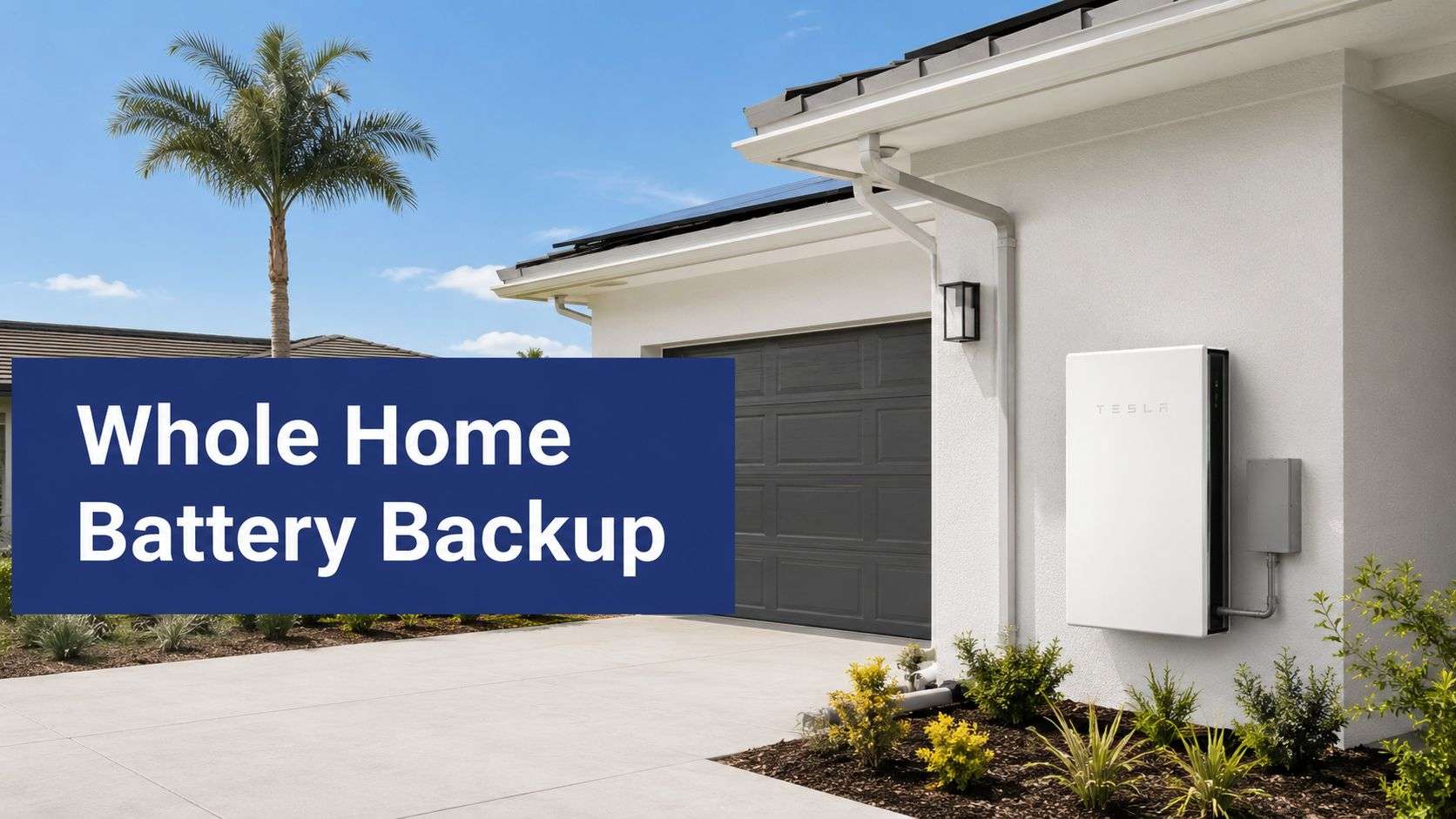
For clients planning battery-first resilience, this overview of Tesla Powerwall installation in Florida gives a useful frame for critical loads, placement, and outage strategy.
Florida Conditions Change Battery Planning
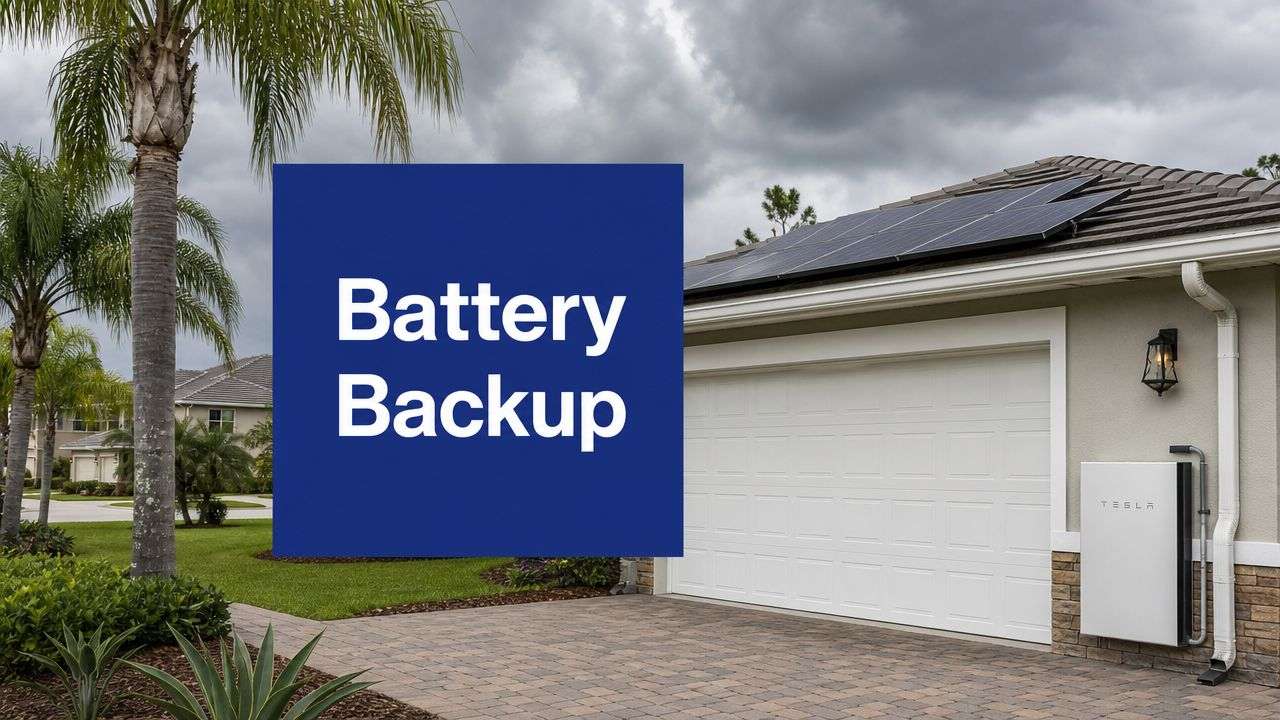
Heat, salt air, wind exposure, and flood risk all affect where equipment should go and how long it will hold up. Tesla's Powerwall 2 documentation states the unit is rated for indoor or outdoor installation and lists environmental operating limits, which is useful but only gets you part of the way to a good Florida design. Read Tesla's Powerwall 2 datasheet and installation parameters with local conditions in mind.
In practice, I look at four things before approving battery placement:
- distance from salt spray and roof runoff
- flood exposure and standing water risk
- service access after a storm
- wall structure and mounting location that will not create future conflicts with repairs or exterior work
Coastal projects need extra discipline here. Equipment can meet a manufacturer rating and still be placed in a spot that ages badly.
Commissioning And Storm Performance
Commissioning is the point where the installed hardware becomes a working backup system. The app setup matters, but the bigger issue is verifying actual operation. The contractor should confirm the battery charges, discharges, islands properly during a simulated outage, and supports the backed-up panel as designed. Owners should ask to see that test.
I also want a written record of what is and is not backed up. That sounds basic, but it prevents a common Florida problem. After the first outage, the owner expects the oven, both condensers, pool equipment, and water heater to run normally. The system was never designed for that load.
Storm Readiness Means Power Planning And Roof Planning
Powerwall helps with continuity of service if the home remains structurally sound and the electrical system stays intact. It does not solve roof damage, water intrusion, or service equipment damage after debris impact. Owners need a plan for both sides of storm recovery.
That is why I recommend reviewing a storm damage roof repair guide before hurricane season. It helps owners document damage, separate emergency stabilization from permanent repair, and protect the paper trail insurers usually request.
The right question is not whether Powerwall provides backup. It does. The right question is whether the system is sized, placed, commissioned, and documented for the kind of outage your Florida property is likely to face.
Decoding Timelines Costs And Financial Returns In Florida
A Florida owner signs a contract in spring, expects power by early summer, then hurricane season arrives before utility approval. That scenario is common enough that I treat schedule risk as a budget item, not a footnote.
Most Tesla Solar Roof delays do not happen on the roof. They happen in design revisions, permit review, inspection corrections, interconnection paperwork, and utility PTO. In Florida, each municipality and utility can add its own pace to the process, and storm season can slow everything further if crews get pulled into emergency work.

Read The Timeline In Phases, Not Promises
Treat the timeline as three separate approval tracks that happen in sequence and sometimes overlap.
Preconstruction usually includes site verification, engineering, permit preparation, insurer questions, and utility interconnection documents. On-site work covers tear-off, deck repairs if needed, dry-in, tile installation, electrical rough-in, and final equipment set. Post-construction includes local inspection, any correction items, meter or tariff coordination where required, and Permission to Operate.
The key point is simple. A roof can be complete and still sit idle while paperwork catches up.
I tell clients to ask for milestone dates, not one completion date. That means a target for permit submission, a target for dry-in, a target for final inspection, and a separate target for PTO. It gives you a cleaner way to spot drift before the project is months behind.
Cost Drivers That Actually Move The Budget
The budget usually changes for reasons buyers cannot see from the curb.
Roof geometry matters because hips, valleys, dormers, and multiple elevation changes increase layout complexity and labor time. Deck condition matters because rotten sheathing, fastening upgrades, and structural corrections show up only after tear-off. Electrical scope matters because service equipment changes, load center work, and battery integration can materially shift the final number. Local code interpretation matters too, especially in coastal Florida jurisdictions that scrutinize wind documentation and fastening details closely.
A Tesla Solar Roof should be priced against the actual alternative, not against a bare solar quote. The fair comparison is usually conventional reroof plus a rack-mounted solar system, and sometimes storage. That side-by-side view often changes the economics in either direction depending on the age of the existing roof and how much backup capacity the owner wants.
For a broader planning baseline, this Florida residential solar energy guide is useful because it frames incentives, energy savings, and resilience as one ownership decision instead of three separate purchases.
How To Evaluate Financial Return Without Fooling Yourself
A payback model in Florida needs to be property-specific or it is not worth much. I want to see annual consumption, seasonal load swings, roof orientation, shading, reroof timing, financing terms if any, and the value the owner assigns to backup power during extended outages.
Federal incentives can improve the math. The U.S. Department of Energy summarizes the current federal Residential Clean Energy Credit and the technologies that may qualify, including solar and battery storage, which gives owners a better starting point for tax planning than a generic sales slide: DOE guidance on home energy tax credits. That still does not answer the Florida question by itself, because utility rates, net metering treatment, insurance costs, and storm risk vary by property.
Insurance should be part of the return analysis before final design approval. A premium roof system in a hurricane-prone state can affect underwriting, replacement assumptions, and documentation requirements. Owners should review those details early with a Florida-specific resource such as Florida All Risk for homeowners.
My practical test is straightforward. If the proposal cannot show your likely production, your avoided utility spend, your reroof offset, and your backup value under Florida outage conditions, it is a concept, not a decision-grade financial model.
Life After Installation Warranty Monitoring And Maintenance
The project isn't finished when the crew leaves. Long-term performance depends on monitoring, service responsiveness, and realistic expectations about support.
That's where many owners need a mindset shift. A Tesla Solar Roof is not a “set it and forget it” Florida asset. It's a roof assembly with electrical hardware attached to utility rules, weather exposure, and service logistics.
Watch The App, But Don't Stop At The App
Once the utility grants Permission to Operate, the Tesla app becomes your first warning system. Owners should watch for sudden production drops, unusual battery behavior, and monitoring gaps after storms or electrical work.
Routine maintenance is mostly observational rather than invasive. In Florida, that means keeping an eye on debris buildup, visible damage after named storms, and any signs that drainage paths are being obstructed. If a tree crew, satellite technician, or other trade touches the roof later, document it immediately.
Owners who monitor monthly tend to catch performance issues sooner than owners who only open the app after a high electric bill.
Warranty Language Matters More Than Most Buyers Expect
The verified data is blunt on this point. Tesla offers a 25-year warranty, but forum analyses show a 22% claim denial rate for issues like minor hail damage in stormy climates like Florida, and replacement part wait times have been known to extend to 4 to 6 weeks for critical repairs, according to the Tesla Solar Roof installation support reference.
That doesn't mean every owner will have a bad service experience. It means resilience planning should assume that repairs may not happen immediately.
The Owners Who Handle This Best Do Three Things
- Document the roof at handoff: Keep photos, commissioning records, permit approvals, and equipment details together.
- Inspect after major weather: Don't wait for a leak or a utility spike to ask questions.
- Treat service lead times as a planning factor: If the home depends on backup power for critical loads, build contingency plans around possible parts delays.
What works is proactive ownership. What doesn't work is assuming the warranty removes all operational risk. In Florida, weather and service timing are part of the investment case.
Key Takeaways For A Successful Florida Installation
A Tesla Solar Roof can be a strong fit in Florida, but only when the project is screened hard before contract execution. Roof condition, structure, shade, backup goals, and utility economics should all be tested before you decide the integrated approach is the right one.
The biggest mistakes are usually made early. Owners skip the feasibility work, underestimate permitting friction, or focus on the tile surface while ignoring wind detailing, underlayment quality, commissioning, and post-storm service realities.
The owners who de-risk this best tend to follow a short checklist:
- Validate the roof first: Make sure the property benefits from an integrated solar roof.
- Pressure-test the permit package: Florida wind and code issues can derail schedules.
- Design backup intentionally: Powerwall should support a defined resilience plan, not a vague expectation.
- Model the return: Compare against a standard reroof plus conventional solar and storage.
- Plan for ownership: Monitoring, warranty documentation, and storm inspections are part of the job.
A good-looking roof isn't enough. In Florida, the successful installation of tesla solar roof is the one that performs under heat, rain, wind, salt, and real service conditions over time.
If you want an independent second look before committing, Solar Energy Management LLC helps Florida property owners evaluate feasibility, model ROI, plan battery backup, and coordinate smarter solar decisions before installation starts.