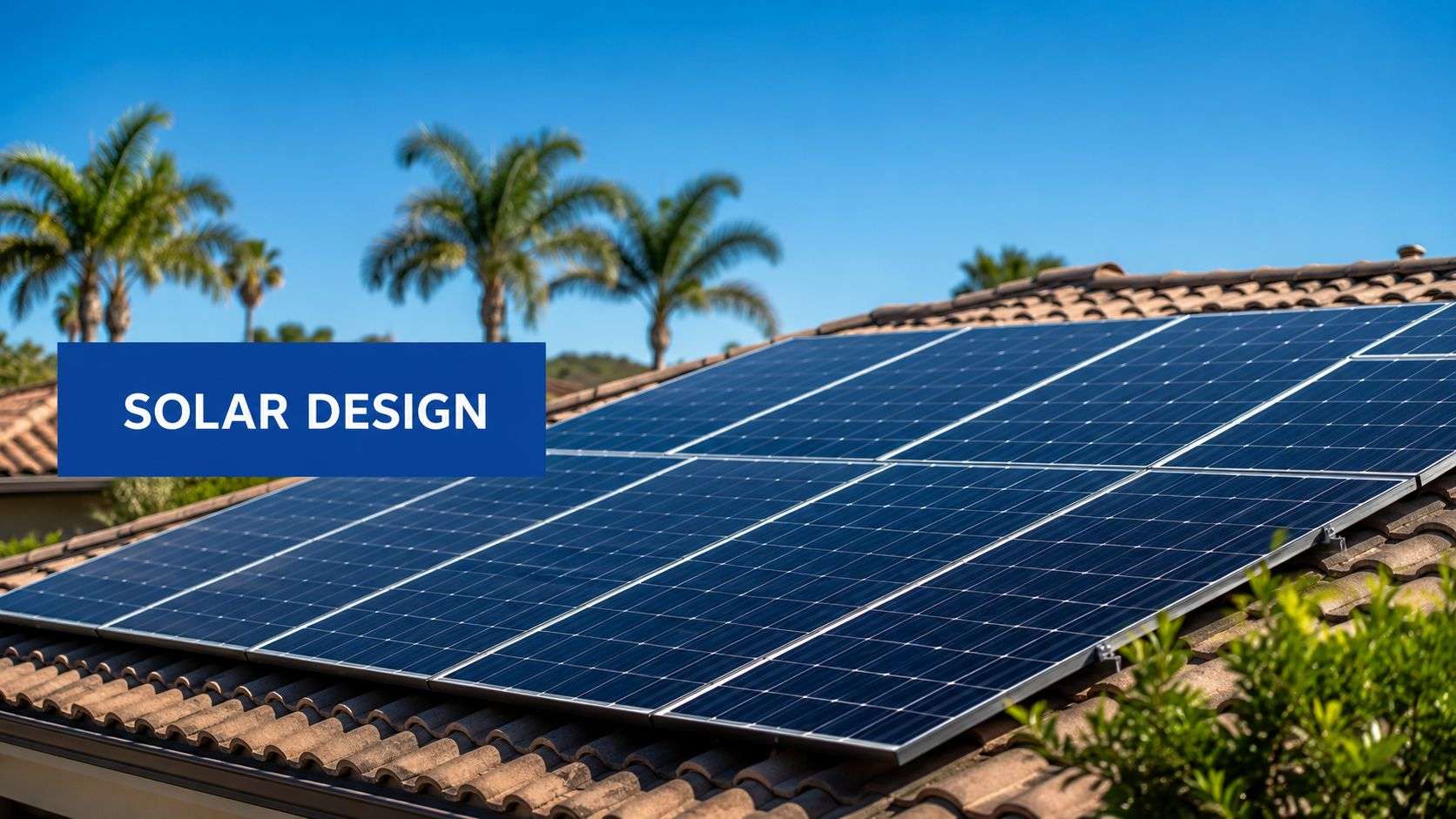
Florida homeowners usually start in the same place. The power bill climbs through long cooling seasons, hurricane season raises the stakes, and every solar quote seems to promise savings without clearly explaining how the system will work on your roof.
That’s where most confusion starts. People shop for panels first, but the smarter move is to understand the inverter and solar installation process as a whole. In Florida, the inverter often determines whether a system handles shade well, pairs cleanly with battery backup, and keeps delivering value over time.
A solar system isn’t just panels on a roof. It’s a coordinated energy system built around three core pieces: panels that generate electricity, batteries that can store it, and an inverter that manages how that power is converted and used. If the inverter is poorly chosen, even good panels can underperform. If the design is rushed, a system that looked cheap upfront can become expensive over its life.
Your Guide to Florida Solar Power
A Florida solar project usually begins with a practical problem, not a technology question. A homeowner in Tampa or St. Petersburg wants lower monthly bills. A business owner wants more predictable operating costs. A family wants backup capability when storms knock out service.
That’s why solar has moved well beyond the early-adopter stage. In the United States, 50.0 GWdc of solar PV capacity was installed in 2024, a 21% year-over-year increase, and 28% of U.S. residential installations in 2024 included energy storage for backup power according to SolarReviews industry statistics. For Florida clients, those numbers matter because they show solar is now a mainstream planning decision, not an experiment.

Why The Inverter Matters So Much In Florida
Panels get most of the attention because they’re visible. The inverter does the harder job behind the scenes. It converts the direct current, or DC, produced by solar panels into alternating current, or AC, that your home or building can use.
In plain language, the inverter is the system’s energy traffic manager. It decides how solar power is converted, where it goes, and how it interacts with the utility grid and battery storage.
That matters more in Florida than many buyers realize because local conditions are rarely “ideal” in the lab sense:
- Trees create intermittent shade: Palm trees, oaks, and neighboring landscaping can affect output at specific hours.
- Roofs are often complex: Hips, valleys, dormers, and mixed orientations change how panels perform together.
- Storm resilience matters: Many owners aren’t just chasing bill savings. They want a system that supports critical loads and battery backup planning.
Solar Is A Planning Decision First
The biggest mistake I see is treating solar as a commodity purchase. It isn’t. Two systems with similar panel counts can produce very different outcomes if one has the wrong inverter type, weak electrical design, or poor installation quality.
Practical rule: In Florida, buy the design logic before you buy the hardware.
A good advisory process starts with your goals. If your main priority is lowering daytime utility use, the design can lean one way. If your priority is outage resilience, the inverter and battery strategy may look very different. If your roof has mixed angles and routine shading, panel-level electronics may create a stronger long-term result.
That’s why understanding the inverter comes first. It affects performance, flexibility, monitoring, and what kind of battery strategy is realistic later.
Choosing the Right Inverter for Your Solar System
Most Florida clients understand panels quickly. Inverters take more explanation because they sit at the intersection of engineering and financial return. The simplest way to think about them is this: the inverter is a translator. Solar panels speak DC electricity. Your property uses AC electricity. The inverter translates between the two.
The right translator depends on the roof, the shade pattern, and whether battery backup is part of the plan.

String Inverters
A string inverter connects multiple panels together so they operate as a group. This can work well on a simple Florida roof with consistent sun exposure and minimal shade.
The tradeoff is straightforward. A string only performs as well as its weakest panel at that moment. If one section gets hit by shade, debris, or a mismatch in orientation, the group can feel it.
String inverters often make sense when:
- The roof is simple: One main plane with consistent sun exposure is ideal.
- Shade is limited: Few trees and little obstruction help the whole string perform uniformly.
- The owner wants a straightforward design: This setup is easier to explain and often simpler to maintain conceptually.
Microinverters
A microinverter sits at each panel. Each panel converts power independently, which is why this option gets attention in Florida neighborhoods with trees and irregular rooflines.
That independence can be valuable. In partially shaded conditions common in tree-lined suburbs, microinverters or power optimizers can boost the output of affected panels by 25-30% compared to a traditional string inverter, according to analysis of shaded and odd-angle roof performance.
Here’s the practical implication. If one panel gets afternoon shade from a palm frond or storm debris, the rest of the array doesn’t have to follow it down.
On a Florida roof with mixed orientations and intermittent shade, panel-level control often matters more than chasing a perfect roof angle.
Microinverters are usually a better fit when:
- The roof has multiple faces: East, south, and west planes on one home create uneven production patterns.
- Trees cast moving shade: Morning and afternoon shading can affect only part of the array.
- You want more detailed monitoring: Panel-level visibility helps identify specific issues later.
If you’ve ever tried to understand power conversion in a mobile setup, this plain-language guide on what an RV inverter is offers a helpful baseline. The application is different from a home solar system, but the core idea of converting stored or generated DC power into usable AC power is the same.
Hybrid Inverters
A hybrid inverter is designed to work with both solar production and battery storage. For Florida clients thinking about resilience, this category often deserves the closest look.
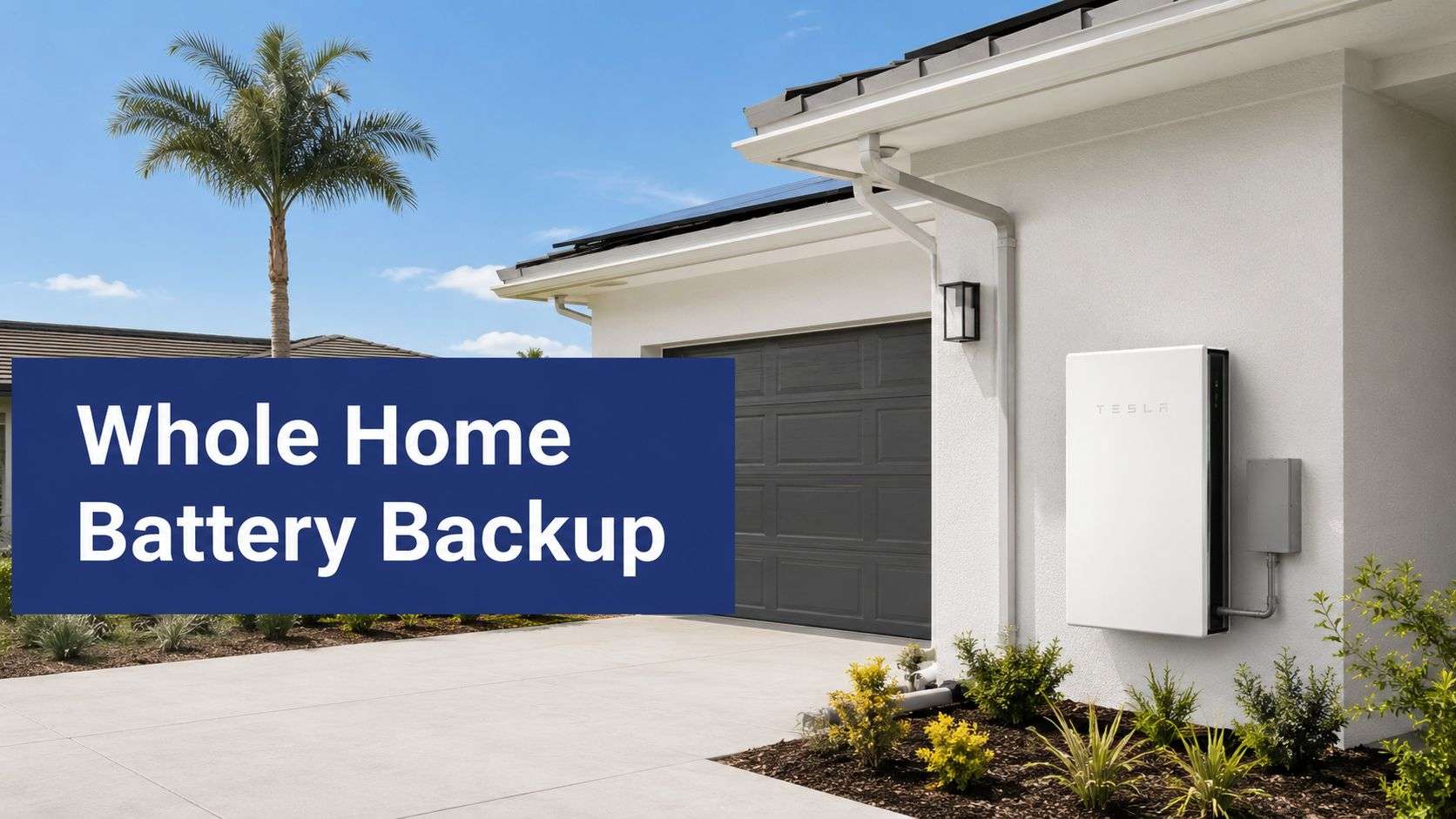
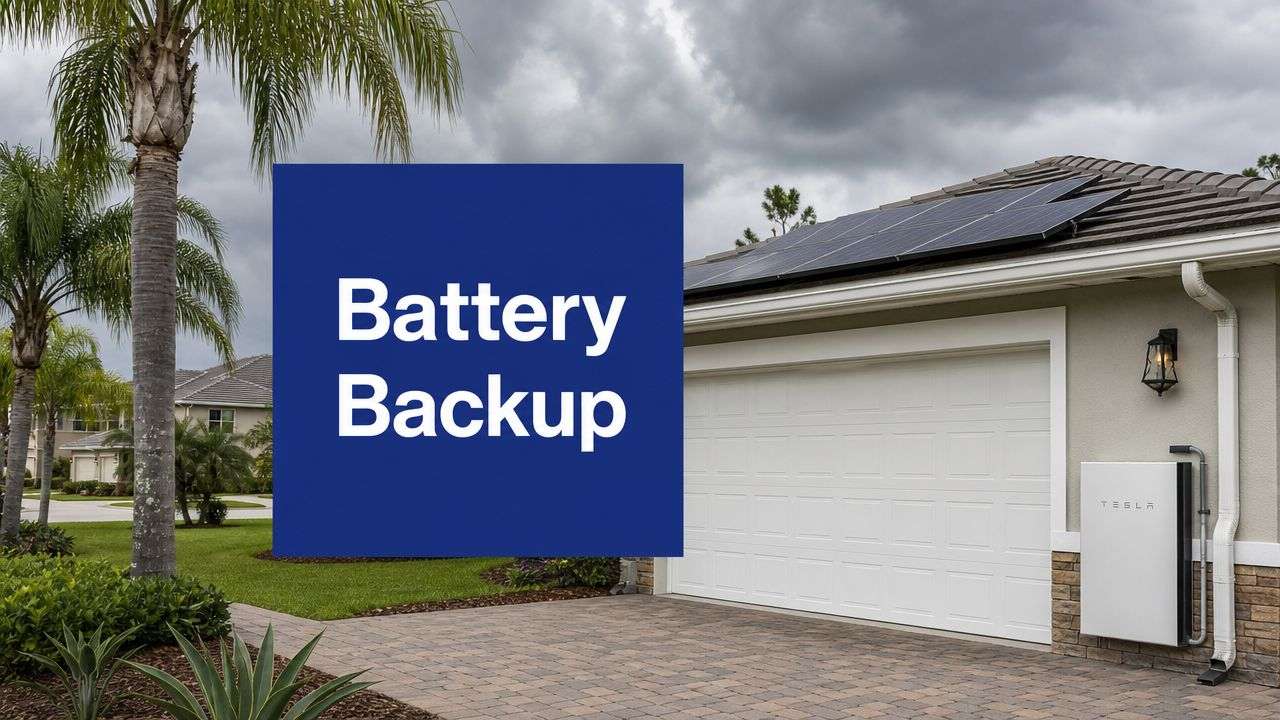
A hybrid inverter can simplify future battery integration or be designed around storage from the start. If backup planning is part of your goal, it helps to understand how systems such as the Tesla Powerwall 2 installation approach are typically evaluated alongside inverter strategy.
Hybrid inverters usually fit best when the owner is asking questions like these:
- What stays on during an outage?
- Can I add storage later without redesigning everything?
- How should solar, battery, and utility interaction be staged?
How To Choose In Florida
You don’t choose an inverter by brand reputation alone. You choose it by site conditions and project priorities.
For a clean, unshaded roof, a string inverter may be enough. For a roof with shade and odd geometry, microinverters often deserve serious consideration. For homes and businesses where backup planning is central, hybrid architecture may be the stronger path.
The key is to decide from the roof outward, not from a sales brochure inward.
System Sizing and Electrical Design
A Florida solar project can look strong in a proposal and still disappoint once it is built. That usually traces back to sizing and electrical design. Panel count, string layout, inverter limits, roof planes, and future battery plans all have to fit together before any permit is filed.

Start With The Inverter’s Operating Range
The inverter sets the rules for the array connected to it. If the solar strings produce too little voltage, the inverter may start late or track poorly in softer morning light. If they produce too much, you create a design problem before the system ever turns on.
Washington State University solar PV guidance notes that typical grid-connected inverter operation falls within a 235V to 600V window, and that DC:AC ratios of 1.0 to 1.3 are often used to balance clipping risk against the gains from modest overpaneling in real-world conditions, according to the Washington State University solar PV guidance.
For a Florida client, that has practical meaning. Heat affects voltage. Roof sections may face different directions. Afternoon cloud patterns, tree shade, and hurricane-driven design constraints can all change how a system performs outside the ideal noon snapshot that sales proposals tend to highlight. Good consulting work checks the full operating range, not just the headline system size.
Design Questions That Protect Your Return
You do not need to calculate string voltage by hand. You do need clear answers before you approve a design.
Ask these questions:
- Does the proposed stringing stay within the inverter’s operating range across hot and mild Florida conditions?
- Are panels on different roof faces being grouped in ways that drag down production?
- Is the design built only for bill offset, or does it leave a clean path for future battery storage?
- Will the main panel, breakers, and inverter capacity allow later expansion without major rework?
Those questions sound technical, but they are financial questions in disguise. A design that limits expansion, performs poorly in mixed roof conditions, or forces an expensive redesign later can erase part of the savings that made solar attractive in the first place.
If you are trying to connect annual usage to a realistic array size, this guide to a 10000 kWh solar system gives a useful planning benchmark.
Sizing Is About Production Over Time
An oversized or undersized system is not just an engineering issue. It changes payback.
A good advisor looks beyond peak output and asks how the system behaves over the full day and full year. Florida owners benefit from that approach because strong sun, high heat, intermittent clouds, and seasonal load patterns can all shift the best sizing choice. Air conditioning demand often peaks when solar production is high, which helps. Shade, roof geometry, and backup goals can still change the right answer.
A helpful way to view it is this. Panel wattage is the engine size. Electrical design is the gear ratio. Two cars can have the same engine, but the one geared correctly performs better on the road you drive. Solar works the same way.
Well-planned sizing protects both output and flexibility. It reduces the odds of buying a system that looks efficient on paper but produces less value over its life.
The Florida Solar Installation Process
The physical installation is only one part of the project. From a client’s perspective, the process works better when you treat it as a managed sequence with checkpoints, not a single construction event.
Phase One And Two
The first phase is consultation and system design. In this phase, roof conditions, electrical service, production goals, and backup priorities are translated into a coherent plan. An advisor can pressure-test assumptions before equipment is ordered, especially when an installer’s proposal seems driven more by sales packaging than site-specific logic.
The second phase is permitting and utility coordination. In Florida, this matters because municipalities, utilities, and wind-load requirements can shape both timing and design details. Documentation quality here can affect schedule, revisions, and whether the installation team arrives with the right scope.
Phase Three On The Roof And Wall
The third phase is the actual installation. During this phase, details that looked minor on a proposal become important in the field.
Verified installation guidance shows that manufacturer torque specs and grounding protocols directly affect durability and safety. For example, microinverter T-bolts are typically tightened to 10-15 Nm, and poor execution can contribute to premature failure in 10-20% of improperly installed systems, based on the solar inverter installation guide from Beny.
That’s why independent oversight adds value. The owner needs someone asking whether the crew is following the approved design, whether wire management is clean, whether waterproofing details are being protected, and whether the mounting approach matches roof conditions. If your project involves roofing questions as well as solar scope, it helps to review the interaction between solar and roof planning before construction begins.
Phase Four Inspection And Interconnection
The last phase is inspection and interconnection approval. The local authority reviews code compliance. The utility reviews grid interconnection requirements. Only after those approvals is the system fully cleared to operate as intended.
A clean process usually includes these client checkpoints:
- Design approval: You’ve reviewed equipment, layout, and production assumptions.
- Permit confirmation: Plans are submitted and accepted by the relevant jurisdiction.
- Installation verification: The built system matches the approved plan.
- Final authorization: Inspection and utility permissions are complete.
The safest time to catch a problem is before equipment is purchased. The second safest time is before the inspector arrives.
Where A Consultant Fits
An installer builds. A consultant advises, reviews, and helps the owner make better choices before and during that build sequence.
That distinction matters in Florida. If the project includes storage, critical-load backup, a complex roof, or commercial demand concerns, independent review can reduce the risk of selecting an attractive quote that doesn’t align with your real operating goals.
Navigating Florida Incentives and Regulations
Financial return in Florida doesn’t depend only on equipment. It also depends on how the project is structured around incentives, code requirements, and utility rules.

Incentives Need To Be Understood Before Procurement
Florida buyers often hear about incentives late in the sales process, after equipment recommendations are already framed. That’s backwards. Incentives affect ownership structure, financing, and the timing of project decisions.
For homeowners, the core questions usually include whether the system will be owned directly, how battery storage fits into the tax picture, and how local utility billing interacts with system size. For commercial owners, the analysis can become more layered because depreciation treatment, cash flow goals, and procurement strategy can change the preferred structure.
If you want a Florida-specific starting point, this overview of the Florida solar incentive landscape helps frame the main issues before you compare proposals.
Florida Regulation Is Also A Resilience Issue
Regulation isn’t just about paperwork. In Florida, building code and permitting standards are part of storm risk management.
A sound planning process should account for:
- Wind exposure requirements: Mounting design has to align with local code and site conditions.
- Utility interconnection rules: These affect approval flow and operational setup.
- Roof condition and attachment strategy: The system has to work with the building envelope, not against it.
- Battery and backup configuration: Equipment selection has to match the intended outage strategy.
This is one reason advisory work matters. The same solar array can be proposed in two very different ways. One may technically pass permit review. The other may be better aligned with your insurance concerns, long-term maintenance, and resilience priorities.
What Owners Often Miss
Many buyers focus on the visible components and the quoted savings but miss the regulatory assumptions built into the proposal. They don’t ask how the attachment method was chosen, whether the wind design is conservative enough for the site, or how a future battery addition would affect permitting and electrical scope.
A Florida solar project should be evaluated as both an energy asset and a code-compliant building improvement.
That perspective changes the conversation. Instead of asking only, “How many panels fit?” you start asking, “Will this design still look smart after a storm, a utility policy change, or a future storage upgrade?” Those are the questions that protect the investment.
Understanding Solar Costs and Return on Investment
The right way to evaluate solar isn’t “What’s the cheapest quote?” It’s “Which design gives me the strongest long-term outcome with acceptable risk?”
That’s a different conversation. It shifts attention from panel count and headline price to production reliability, outage planning, equipment compatibility, and how well the project matches your actual utility profile.
What You’re Really Paying For
A Florida solar proposal usually combines several layers of cost:
- Equipment: Panels, inverter equipment, racking, monitoring hardware, and possibly batteries
- Construction scope: Labor, roof attachments, electrical work, and commissioning
- Project soft costs: Design, permitting, interconnection paperwork, and administration
- Risk transfer: Warranties, workmanship standards, and the quality of procurement decisions
A low quote can still be expensive if it uses the wrong inverter architecture for your roof. A higher quote may be justified if it avoids predictable underperformance, simplifies future storage, or reduces the chance of rework.
How To Think About Return
Return on investment in Florida comes from a few basic levers. You reduce purchased electricity, improve predictability of future energy costs, and in some cases increase the property’s practical appeal because the building is less exposed to utility volatility.
That’s why a consultant models more than production. The better question set is:
- How much utility consumption is realistically offset?
- How does shading affect actual output, not brochure output?
- Will the owner likely add storage later?
- Which system design creates the least regret over time?
If you want to understand the sales dynamics behind many proposals, this article on selling solar panels is useful context. It won’t design your system, but it can help you recognize where incentives in the sales process may not fully align with your long-term interests.
A Better Financial Mindset
Good solar planning treats the project as an infrastructure investment. That means comparing scenarios, not just vendors.
For one owner, the right answer may be a straightforward grid-tied system designed for bill reduction. For another, it may be a battery-ready architecture with a higher upfront cost but a stronger resilience case. For a commercial site, the analysis may center on load shape, operating continuity, and the value of reducing exposure to future electricity price changes.
The point isn’t to force every project into the same model. It’s to make sure the system’s financial logic matches the property’s real needs.
Your Pre-Installation Checklist and Key Decisions
Before you sign anything, get clear on roles. A consultant helps evaluate feasibility, design logic, ROI assumptions, battery strategy, and procurement risk. An installer or EPC handles construction, equipment deployment, and field execution. Some firms try to do both. That can work, but it also means the same party is advising on what to buy and profiting from what gets sold.
Questions Every Florida Owner Should Ask
For homeowners:
- Define the goal first: Are you trying to cut bills, add backup power, or both?
- Review your electrical panel: Older equipment can affect solar readiness. If there are concerns about obsolete service gear, issues like Zinsco panel problems should be reviewed before solar is finalized.
- Ask how shade was analyzed: Don’t accept a generic production estimate without a site-specific explanation.
- Clarify battery intent: Backup for a few key circuits is different from whole-home expectations.
For commercial owners and facility managers:
- Match the design to operations: Identify which loads matter most during outages or peak utility periods.
- Stress-test the ROI model: Ask what assumptions drive the projection and which ones are most sensitive.
- Review expansion options: Make sure future phases, EV charging, or storage additions won’t require a major redesign.
- Vet the build team carefully: General contractor selection discipline still applies. This guide on how to hire contractors is a useful reminder that process, references, and scope clarity matter before work starts.
The best time to protect your solar investment is before the contract turns into equipment orders.
The strongest Florida projects don’t start with a hard sell. They start with clear goals, an honest site assessment, and a design that fits the property you own.
If you want an independent review before committing to equipment or an installer, Solar Energy Management LLC provides Florida-focused solar consulting for system planning, inverter selection, battery strategy, ROI modeling, and project coordination. That gives you a way to compare options, identify design risks early, and move into procurement with a plan built around your property rather than a generic sales package.