A lot of Florida property owners start in the same place. The power bill arrives, summer cooling loads are still punishing, and the idea of using all that sunshine for something productive starts to feel less like a trend and more like a business decision.
That’s the right lens for this topic. The question isn’t whether solar sounds good in theory. It’s whether the pros and cons of solar panels in florida work in your favor on your roof, with your utility bill, your insurance situation, your outage risk, and your timeline for owning the property.
A good solar decision in Florida is rarely about enthusiasm alone. It’s about matching system design, financing, and resilience planning to the property in front of you.
Is Solar Power the Right Move for Your Florida Property
A homeowner in Clearwater and a warehouse operator in Tampa may both want lower electric bills, but they’re not solving the same problem. One may be trying to control household expenses and keep a few circuits running during outages. The other may care more about daytime load reduction, tenant expectations, or backup power for critical equipment.
That’s why a Florida solar decision should be treated as an asset-planning exercise, not a commodity purchase. The state gives you real solar potential, but the outcome still depends on roof condition, shade, electrical infrastructure, storm exposure, ownership horizon, and how the utility savings pencil out over time.

For most clients, the turning point comes when they stop asking, “Should I get solar?” and start asking, “What system size, structure, and backup strategy fit this property?” That’s a much better question. It forces a review of consumption patterns, roof life, critical loads, and whether a battery belongs in the plan from day one.
A practical starting point is understanding how different solar power systems in Florida are configured and how each option changes the economics and resilience outcome.
What usually makes a property a strong candidate
Some properties are naturally easier to justify than others.
- High electric usage: Solar tends to make more sense when the property consumes enough power for onsite generation to offset meaningful utility costs.
- Good roof conditions: A newer roof with favorable orientation and limited shading usually keeps project complexity down.
- Long ownership horizon: Owners who expect to stay put longer usually have more time to capture the system’s value.
- Interest in resilience: If outages are a serious concern, solar paired with storage can serve a broader purpose than bill reduction alone.
The best Florida solar projects solve two problems at once. Utility cost exposure and outage exposure.
The Bright Side Major Advantages of Florida Solar
Florida has one clear advantage that shapes almost every solar conversation. Sunlight is abundant. According to Solar.com’s Florida solar analysis, the state averages 4.75 peak sun hours per day statewide, which allows systems to produce more electricity with fewer panels than many northern markets.
That matters because production density influences the entire project. If a property can generate strong output from a smaller footprint, system layout gets easier and the roof can carry more value per panel installed.
Production works in Florida’s favor
Florida’s climate doesn’t remove every design challenge, but it does support strong solar performance. The same Solar.com analysis notes around 230 sunny days annually, which helps explain why solar can be an efficient use of roof space in this state.
For homeowners, that often means a realistic path to offsetting a meaningful share of household consumption without needing an unusually large array. For commercial sites, it can make daytime production line up well with daytime usage, which is where solar is often most useful.
The savings case is real
The strongest pro isn’t abstract sustainability. It’s long-term energy cost control.
Solar.com reports that Florida homeowners can see average savings of $40,676 over 25 years, and it notes solar electricity at 5 cents per kWh compared with grid rates of 15.3 cents per kWh in Tampa-St. Petersburg-Clearwater and 16.2 cents per kWh in Miami-Fort Lauderdale-West Palm Beach. The same analysis cites savings of $1,139 per year in the Tampa-St. Petersburg-Clearwater area and $829 per year less than grid in the Miami-Fort Lauderdale-West Palm Beach area.
That gap between self-generated power and utility pricing is the economic engine behind many Florida projects.
Practical rule: If a property already has a high monthly electric bill, the question usually isn’t whether solar can create value. It’s whether the system should be sized for savings, resilience, or both.
Incentives and policy still improve the equation
The federal credit remains one of the biggest drivers of affordability. Solar.com states that the 30% federal Investment Tax Credit can reduce an average Florida system cost from $34,960 for an 11.5 kW system to $24,472.
Florida also gives owners an important tax advantage that gets overlooked in casual conversations. The state’s property tax exemption means the added home value from the solar system doesn’t create added property taxes, according to the same source. For owners thinking beyond monthly savings, that makes the asset more attractive.
A few other market signals also matter. Solar.com reports that Florida reached 14,303 MW of installed capacity by Q2 2025, ranking 3rd nationally, and that nearly 30,000 new residential installations in 2024 pushed the state to more than 253,000 systems. That kind of scale tells you solar in Florida is no longer experimental. It’s an established market with proven demand.
Why these pros matter strategically
The best advantage of solar in Florida isn’t any single line item. It’s the combination.
- Strong sunlight: Better production potential from a given roof area.
- Utility bill pressure: A clearer path to long-term savings.
- Federal tax support: Lower effective project cost.
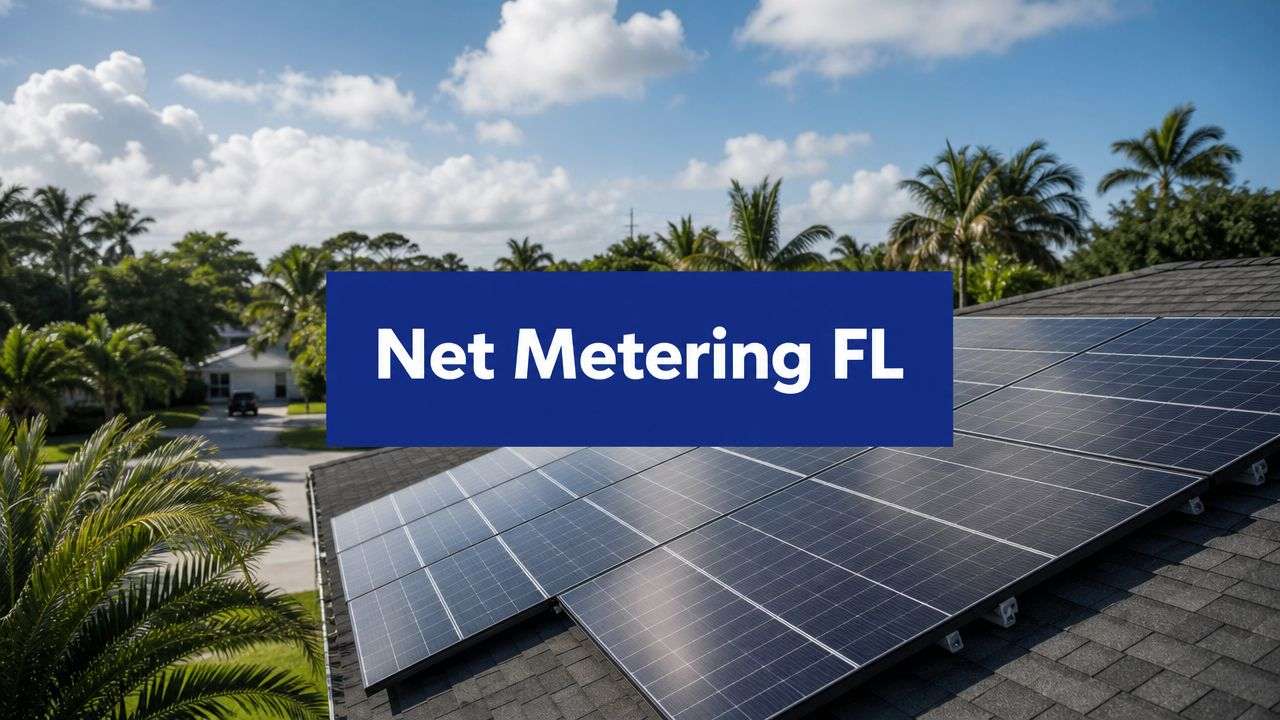
- Net metering: Ongoing value from excess production.
- Property tax treatment: Better resale positioning without a tax penalty.
For the right property, those advantages make solar less of a lifestyle purchase and more of a hedge against future electric costs.
The Storm Clouds Potential Downsides of Florida Solar
The main cons in Florida are not hidden. They’re just often underexplained. Cost, storm risk, roof constraints, and financing structure can all turn a promising project into a weaker one if nobody models them carefully.
The first issue is upfront cost. A system can save money over time and still be a poor fit if the owner’s cash flow, ownership timeline, or financing terms don’t line up with the project.
Weather risk is real, not theoretical
Florida’s weather creates a design burden that calmer markets don’t carry. According to Florida Power Services’ discussion of solar in Florida, frequent hurricanes expose PV systems to 150+ mph winds, and some data suggests failure rates can spike 20-30% post-storm without proper installation.
That’s why hardware selection and attachment details matter so much here. The same source notes the need for UL 61730-certified panels and ASCE 7-22 hurricane-rated mounts. In practice, that means buyers shouldn’t treat all equipment packages as equivalent just because the panel wattage looks similar on paper.

Maintenance can be more demanding than people expect
The same Florida Power Services source also raises a point that matters over the long term. Post-event inspections can reveal micro-cracks in 10-15% of modules from hail or debris, and humid conditions can accelerate performance issues. It also notes that annual IV curve testing and electroluminescence scans can cost $0.05-0.10 per watt, while recommended O&M budgeting can reach 1-2% of CAPEX per year.
Those are not reasons to avoid solar. They are reasons to stop thinking of the system as “install it and forget it,” especially on larger properties or sites with resilience goals.
Financing can dilute the upside
Another major downside in Florida is that the state lacks its own solar tax credit or rebate stack. Owners are leaning heavily on the federal incentive. Financing is available, but financed projects usually don’t perform the same way as cash purchases.
That difference matters because many proposals emphasize monthly payment comparisons while softening the total-cost picture. A project can still be sensible with a loan, lease, or PPA, but the net savings profile changes. For owners who may move sooner, refinance, or sell, those contract details become as important as panel output.
Questions that expose weak proposals
When reviewing the pros and cons of solar panels in florida, these questions usually reveal whether a proposal is strong or fragile:
- Wind design: Is the racking and attachment package clearly specified for Florida hurricane exposure?
- Insurance impact: Has the owner confirmed how the carrier treats rooftop solar and whether documentation is needed?
- Roof timing: Will the roof outlast the solar plan, or are you setting up a removal and reinstall issue?
- Maintenance planning: Who handles post-storm inspection, diagnostics, and warranty administration?
- Exit strategy: What happens if the property is sold before the system has delivered its intended value?
A weak Florida solar project usually doesn’t fail because solar is bad. It fails because nobody priced the risk honestly.
Modeling the Financial Reality of Your Solar Investment
Most bad solar decisions happen in the spreadsheet, not on the roof. The proposal may show attractive savings, but if the assumptions are loose, the result can be misleading.
The baseline numbers matter. According to EcoWatch’s Florida solar cost review, solar in Florida averages $3.04 per watt, or about $34,960 for a typical 11.5 kW system before the 30% federal tax credit. The same source notes that Florida lacks state-specific rebates and that a cash purchase often falls within a 7-10 year payback period.

A proper financial model starts there, then adjusts for your actual site, utility bill, tax position, and financing structure. If you’re reviewing incentives, it helps to understand how the Florida solar incentive landscape affects the economics before you compare proposals.
The five inputs that matter most
Every Florida property should be modeled with at least these variables:
Current electric usage
Annual and seasonal consumption should drive system sizing. A property with heavy daytime demand behaves differently from one with high nighttime usage.Installed cost
Cost per watt is a useful benchmark, but it shouldn’t be the only one. Battery inclusion, electrical upgrades, roof type, and attachment complexity all change the actual project cost.Tax treatment
The federal credit changes the net cost. For businesses, depreciation treatment may also matter, but the value depends on the entity’s tax situation and should be reviewed with a qualified tax advisor.Utility rate exposure
The more expensive grid electricity is for the property, the more valuable onsite generation becomes.Ownership and financing plan
Cash, loan, lease, and PPA structures do not create the same outcome.
How to read a proposal like an owner, not a buyer
A useful solar model answers practical questions.
- What does the system cost before incentives?
- What is the net cost after the federal credit, if the owner can use it?
- How long until cumulative savings recover the investment?
- What assumptions drive that payback?
- What happens if production is lower than expected or the owner sells early?
Those questions force clarity. They also keep the conversation focused on economic reality instead of marketing language.
If the proposal makes the monthly payment look simple but makes the total project economics hard to find, slow down.
Cash versus financed solar
Cash purchases usually produce the cleanest return profile because there’s no lender margin or third-party ownership structure reducing the upside. EcoWatch notes that the payback period for a cash purchase often falls within 7-10 years in Florida.
Financing can still work, but the benchmark changes. You’re no longer asking only whether the system saves money over time. You’re asking whether the contract terms preserve enough value to justify the complexity. That includes transferability, prepayment terms, escalators if applicable, and whether the owner receives the tax credit directly.
A simple decision framework
Use this checklist before treating any proposal as bankable:
- Bill-first sizing: Does the proposed system align with usage history?
- Tax-credit realism: Can the owner use the federal credit as modeled?
- Payback integrity: Is the timeline based on realistic consumption and pricing assumptions?
- Financing transparency: Are fees, ownership terms, and transfer conditions easy to understand?
- Sensitivity testing: Does the model still make sense if the owner’s usage pattern changes?
For commercial owners, I also advise separating “good project” from “good capital deployment.” A project may have sound solar economics and still be a poor fit for the company’s current cash priorities. That’s not a failure of solar. It’s disciplined planning.
Building for Resilience Batteries Permitting and Insurance
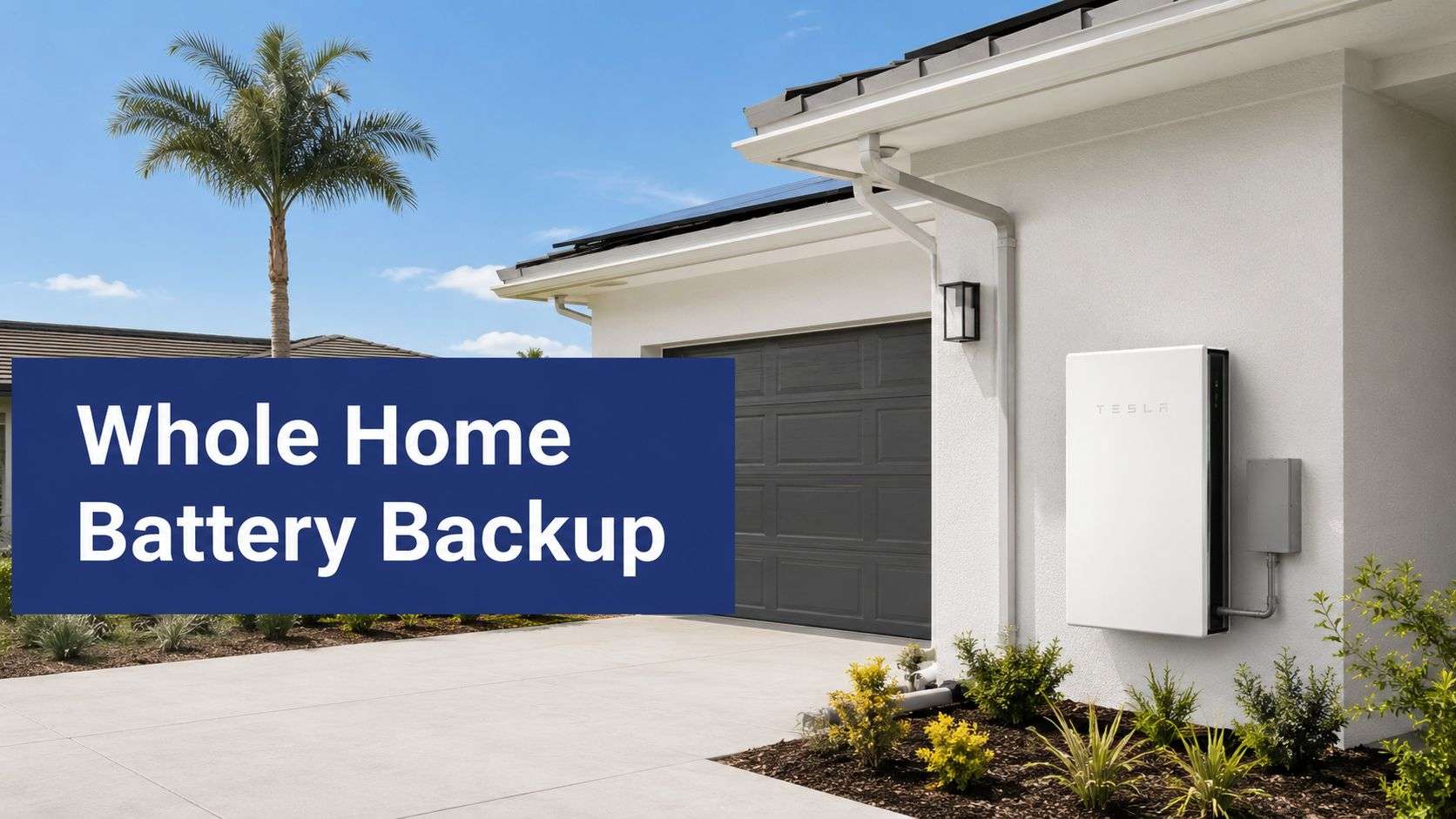
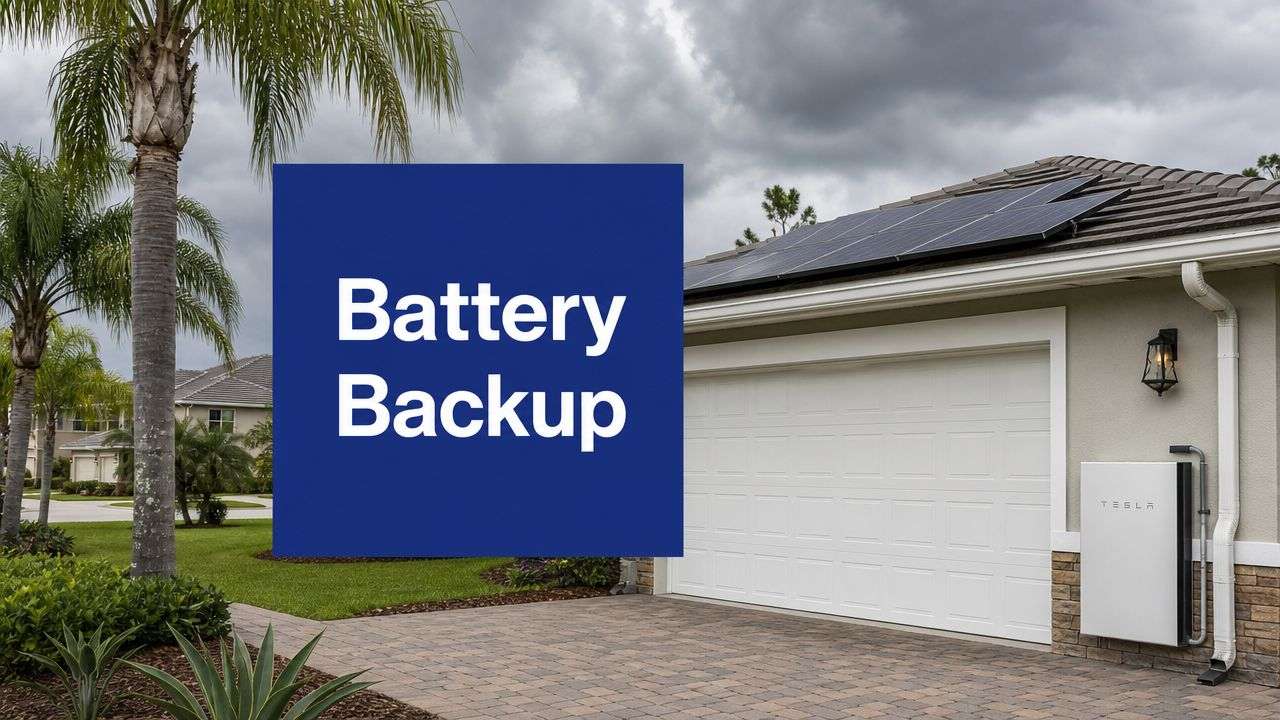
In Florida, resilience planning changes the whole conversation. A solar-only system lowers utility dependence, but it doesn’t automatically keep the lights on when the grid fails. If outage continuity matters, battery storage has to be evaluated as part of the system architecture, not as an afterthought.
For many properties, batteries are less about convenience and more about selective survivability. The owner needs to decide which loads matter most. Refrigeration, medical devices, network equipment, security systems, lighting, HVAC zones, pumps, or business-critical circuits all deserve different priority.
Batteries work best when the load plan is disciplined
A battery system performs well when the critical-load panel is intentional. That usually means choosing what must stay energized and what can wait. Oversizing backup expectations is one of the fastest ways to create disappointment.
Property owners comparing options often start by reviewing Tesla Powerwall planning in Florida because it helps frame how battery backup ties into solar production, outage duration, and critical-circuit selection.
Backup power planning is really load planning. The battery only does what the electrical design allows it to do.
Permitting and electrical prep are part of the project, not paperwork
Permitting delays and electrical limitations can affect schedule, cost, and system design. Older service equipment, limited busbar capacity, or awkward panel layouts can force changes before the solar design is fully ready.
That’s why electrical readiness should be checked early. In some cases, the project needs service or panel work before solar and storage can be installed properly. For owners evaluating that side of the scope, Al-Air Corporation's electrical upgrades offer a useful example of the kind of panel modernization work that can become necessary before integrating solar and battery equipment.
Insurance and HOA issues need early conversations
Insurance should never be handled at the end. Owners should ask carriers how rooftop solar is documented, whether the system changes replacement-cost assumptions, and what wind-related documentation matters. The aim is to avoid surprises, not to chase the cheapest quote.
HOA review also needs practical handling. The key is to submit a clear package with equipment layout, attachment details, and appearance information that reduces uncertainty. Projects move better when the owner treats HOA communication like permit support, not a casual request.
A workable sequence usually looks like this:
- Property review first: Confirm roof condition, electrical capacity, and backup goals.
- Design second: Match battery strategy to actual critical loads.
- Permitting third: Resolve local documentation requirements before procurement locks in.
- Insurance confirmation lastingly documented: Get carrier feedback in writing where possible.
Lifecycle and Long-Term Maintenance Considerations
A Florida solar system should be treated like a long-duration building asset. It lives on the roof through heat, humidity, salt exposure in coastal areas, and storm seasons. That doesn’t make it fragile, but it does mean long-term ownership should be planned with the same discipline used for roofing, HVAC, or building envelope work.
One of the biggest mistakes is focusing only on install-day decisions. The better approach is to ask what the system will need over its operating life, who will inspect it after severe weather, and how component issues will be documented if warranty support is needed.
What long-term ownership actually looks like
Routine ownership usually includes periodic visual inspection, performance monitoring, and targeted service when output drops or storm exposure creates concern. On larger sites, formal maintenance documentation becomes more important because it helps distinguish equipment issues from weather events or shading changes.
Roof coordination also matters. Before installation, owners should understand how penetrations, attachment methods, and contractor responsibilities intersect with roofing terms. This becomes much easier when the roof warranty question is reviewed in advance, especially for owners asking whether solar panels can affect a roof warranty.
The maintenance mindset that works in Florida
The most durable projects usually share the same habits:
- Track performance: Use monitoring tools and pay attention to unexplained drops in output.
- Inspect after major weather: Don’t assume the array is fine because damage isn’t visible from the ground.
- Document service events: Photos, reports, and timestamps help with warranty and insurance discussions.
- Coordinate roof and solar work: If roofing work is needed later, plan solar removal and reinstallation carefully.
Long-term solar ownership is less about constant maintenance and more about timely maintenance.
Good maintenance planning also protects the financial model. A system that performs consistently, remains insurable, and stays compatible with roof upkeep is easier to justify over the full ownership period.
Your Next Steps A Strategic Approach to Solar Planning
Most Florida owners don’t need a faster quote. They need a better decision process.
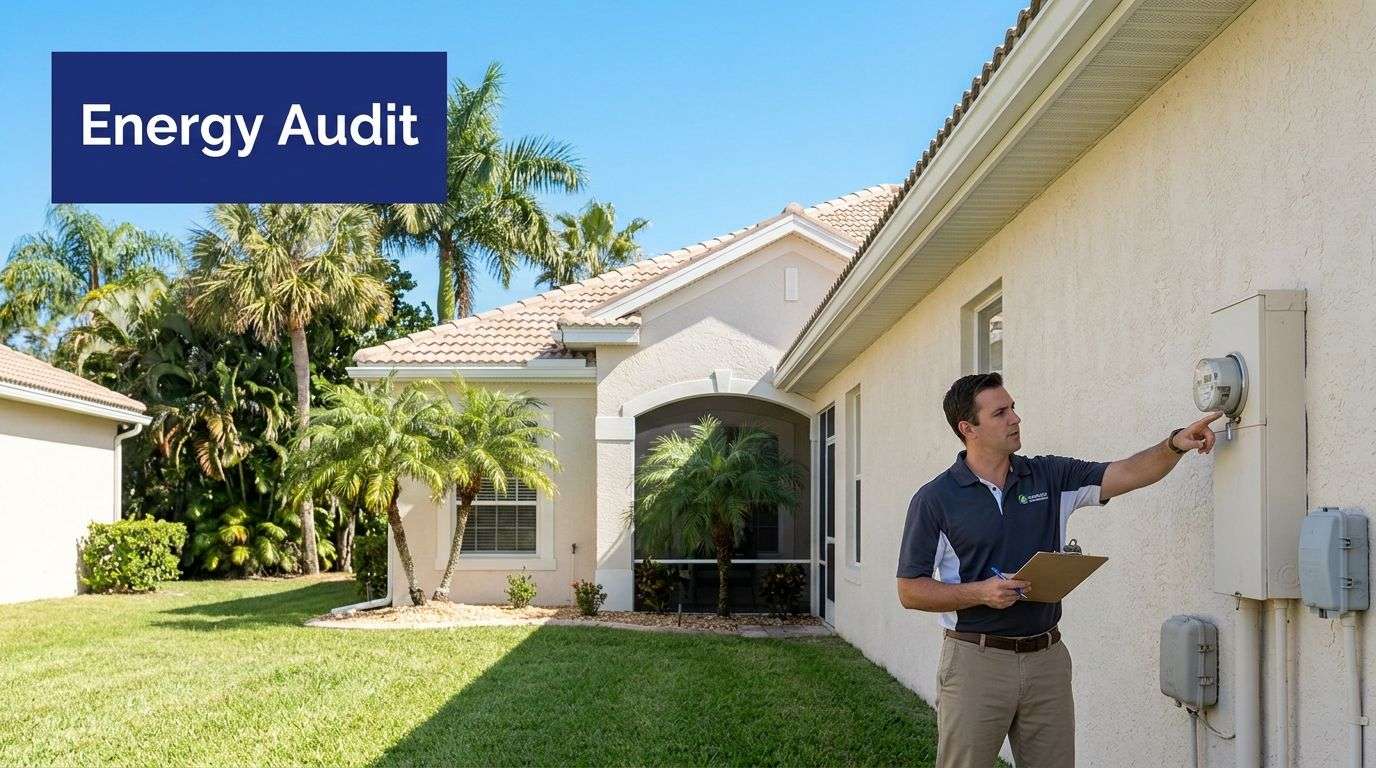
If you’re weighing the pros and cons of solar panels in florida, start with the property itself. Pull utility data, confirm roof age and condition, review service equipment, and decide whether the project is mainly about savings, backup power, or both. Those choices shape everything that follows.
The smartest first move is analysis
A serious solar plan should answer a few fundamental questions before anyone talks about equipment preferences.
- Does the property support strong production?
- Is the roof ready for a long-term asset?
- What financing structure fits the owner’s timeline and tax position?
- Would battery storage solve a real resilience problem or just add cost?
- What project risks need to be priced in upfront?
Those questions are where value gets protected. They also help owners avoid the common trap of comparing proposals that use different assumptions and pretending they’re interchangeable.

What to do before signing anything
A disciplined next-step process usually looks like this:
- Gather bill history so the system can be sized to actual usage, not estimates.
- Review the roof and electrical infrastructure before committing to layout assumptions.
- Model cash and financed scenarios separately so the specific trade-offs are visible.
- Define resilience goals clearly if outages are part of the reason for going solar.
- Vet the proposal with better questions before you accept optimistic assumptions.
For owners who want a clean shortlist of those questions, this guide to questions to ask a solar company is a practical place to start.
The right outcome isn’t “buy solar.” The right outcome is knowing whether solar is a strong strategic fit for your Florida property, and if it is, how to structure it so the upside survives contact with real-world conditions.
If you want an independent, Florida-specific evaluation before committing to a project, Solar Energy Management LLC helps homeowners, businesses, and organizations assess feasibility, model ROI, plan battery storage, and reduce procurement risk so solar decisions are driven by numbers, not pressure.