Your Blueprint for Choosing the Right Florida Solar Partner
In Florida, solar can be a smart financial move for homeowners, businesses, and property owners who want lower utility costs and stronger outage resilience. But the gap between a good solar project and a bad one is rarely the panels. It’s the company you choose, the assumptions built into the proposal, and the details buried in the process.
That’s where most buyers get exposed. A polished sales pitch can hide weak production modeling, vague warranty support, thin local experience, and poor battery design for hurricane season. If you sign before testing those points, you’re not making an energy decision. You’re taking contractor risk, financing risk, and performance risk all at once.
Florida adds another layer. High humidity, salt air near the coast, hurricane exposure, utility-specific interconnection rules, and county-by-county permitting all affect design, timeline, and long-term system value. Industry guidance also notes that full project timelines often span about 2 months from contract to activation, and that variation alone should push you to ask sharper questions before you commit.
Use the following questions to ask a solar company in Florida before you sign anything. Don’t treat them as small talk. Treat them as a due diligence framework. A serious firm will answer directly, show documentation, explain assumptions, and welcome scrutiny. A weak one will dodge specifics, push urgency, or shift the conversation back to a monthly payment.
1. What Is Your Experience With Florida's Specific Solar Conditions And Permitting Requirements?
A Florida solar project can look profitable on paper and still turn into a costly mess once permitting, utility review, and storm-zone engineering hit the file. The first question is simple. Has this company already handled projects like yours, in your county, under your utility, with your weather exposure? If the answer is vague, stop there.
General solar experience is not enough in Florida. A company needs working knowledge of high-wind design, coastal corrosion exposure, county inspection habits, HOA review issues, and utility interconnection rules that change by service territory. Those details affect timeline, change orders, and whether your system gets built correctly the first time. They also affect the financial outcome, because delays and redesigns push out savings and create avoidable costs. If you want a better framework for judging whether those delays meaningfully hurt project payback, review this guide to solar ROI and investment returns.

What A Strong Answer Sounds Like
A qualified Florida installer should answer with specifics, not broad claims about being licensed statewide.
- County-level permitting experience: Ask which jurisdictions they work in regularly and what those departments usually require for revisions, inspections, and approvals.
- Utility-specific interconnection knowledge: They should explain the process for your utility clearly, including who submits documents, who tracks approval status, and where delays usually happen.
- Florida design judgment: They should be able to explain how they handle wind loading, attachment strategy, roof condition concerns, and corrosion-resistant component choices for inland versus coastal properties.
- Relevant local examples: Ask for recent installs in conditions similar to yours. A beachfront home, a tile roof in South Florida, and a shaded suburban roof in Central Florida are not the same job.
If you live in Miami-Dade, Broward, Tampa Bay, Clearwater, St. Petersburg, or another storm-exposed area, demand project examples from comparable locations. Do not accept a portfolio full of installs from easier markets.
A proposal without local operating experience shifts execution risk to you. You pay when permits stall, engineering changes late, or the installer misreads local requirements.
Red Flags To Watch
Some responses should end the conversation fast.
- “Solar is basically the same everywhere.” That answer signals weak local judgment.
- “Permitting gets handled after you sign.” Permitting should already be part of the sales and design discussion.
- “We don’t have references in your area yet.” Then you are helping them learn on your project.
- “Our subcontractor takes care of all that.” Ask who holds responsibility when plans fail review or inspections get kicked back.
Ask for local references and call them. Ask whether the company hit the promised timeline, handled utility paperwork cleanly, fixed inspection issues fast, and stayed responsive when the project got complicated. That is how you identify a company that can execute in Florida instead of just sell in Florida.
2. Can You Provide A Detailed ROI Analysis And Financial Modeling For My Specific Situation?
A Florida homeowner signs a 25-year solar contract because the payment looks lower than the current utility bill. Two years later, the savings are thinner than promised, the assumptions were buried, and the proposal never modeled the home’s actual usage pattern. That is a preventable mistake.
Ask for a financial model built around your property, your bills, and your risk tolerance. If a company cannot show the math clearly, do not trust the projected savings. Solar in Florida is a capital decision. Treat it like one.
A credible model starts with 12 months of utility data, your current rate structure, and the way you consume power across the day. It should also show how projected production was calculated, what loss factors were applied, and how the installer handled issues like shade, heat, panel orientation, and normal system inefficiencies. If those assumptions are hidden, the payback estimate is marketing, not analysis.

What To Demand In The Model
Require a proposal that shows every major input in plain English.
- Production methodology: Ask which software they used, what weather data informed the forecast, and which system losses were included.
- Rate assumptions: Ask how they modeled your utility tariff, including fixed charges, tier structure, and any time-based pricing that affects bill savings.
- Escalation assumptions: Ask what annual utility inflation rate they used and why. Aggressive escalation assumptions can make weak projects look strong.
- Cash purchase and financed scenarios: Request both. You need to see total project cost, interest cost, tax credit timing, and payback under each path.
- Sensitivity cases: Ask for downside, base case, and upside scenarios. A serious company should be willing to show what happens if production underperforms or rates rise more slowly than expected.
Reviewing proposals against an independent list of the best solar companies in Florida can help you screen providers, but the ultimate test is whether each company can defend its assumptions on your project.
Practical rule: If they cannot explain how they got to the savings number, you should assume the savings number is inflated.
Florida-Specific Financial Risk
Florida adds complications that weak proposals gloss over. Utility billing structures vary by territory. Weather patterns shift by region. Coastal humidity, heat, and seasonal cloud cover can affect output and maintenance assumptions. A model built on statewide averages is lazy and exposes you to forecast risk.
Ask one more hard question. “Show me how this project performs if production comes in lower than expected or if utility rates do not rise as fast as you projected.” That answer tells you whether the company is selling an outcome or stress-testing an investment.
For commercial properties, push further. Require break-even analysis, cash-flow timing, and scenario modeling tied to your operating budget. If you want a stronger benchmark before comparing proposals, review this solar ROI analysis framework.
Red flags are easy to spot here. “Your savings should be around this range” means they did not model your account carefully. “We use the same assumptions for every customer” means the analysis is generic. “Focus on the monthly payment” means they want to hide total cost, financing drag, or a weak return.
3. What Certifications, Licenses, And Insurance Coverage Does Your Company Maintain?
A Florida homeowner signs a solar contract, the crew shows up, and a week later the county inspector fails the job. Then the roof starts leaking after the first hard storm, and the installer says the subcontractor handled that part. At that point, your “solar savings” problem becomes a legal and insurance problem.
Ask this question early because credentials tell you who is accountable when something goes wrong.
Solar touches electrical work, roof penetrations, structural loading, permitting, and utility interconnection. In Florida, that also means hurricane exposure, wind-load requirements, moisture intrusion risk, and stricter scrutiny on workmanship. If the company cannot prove it is properly licensed and insured for the exact work it is selling, remove it from consideration.
What You Need To Verify
Do not settle for vague assurances. Get documents and verify them yourself.
- Florida licensing: Ask for the exact license number tied to the entity contracting with you and confirm it matches the scope of work.
- General liability coverage: Require proof of active coverage that would respond to property damage during installation.
- Workers’ compensation coverage: Confirm coverage for everyone who will be on your property, including subcontractors.
- Technical certifications: If they mention NABCEP or other credentials, ask who holds them, whether that person is an employee, and whether that person is involved in design or oversight.
- Subcontractor disclosure: Ask which parts of the project are self-performed and which are outsourced.
A useful screening tool is this list of the best solar companies in Florida, but screening is not verification. You still need the license, the certificate of insurance, and the legal business name that will stand behind the contract.
What These Credentials Actually Tell You
Licenses and insurance are not paperwork for a file folder. They are your first test of operational discipline.
A contractor that hesitates to provide documentation usually has one of three problems. The license does not match the work. The insurance is thin or expired. The salesperson is selling under one company name while another entity will perform the installation. Each one creates risk for you, especially if there is roof damage, an electrical defect, or a warranty dispute.
Florida homeowners should also ask a roof-related question at the same time: “If my roof needs work before installation, who identifies that and who takes responsibility for damage after the system is mounted?” If your roof is older, review this guide for solar panel roof installation before signing anything.
Why Staying Power Matters
The better question is not just whether a company is qualified today. It is whether it will still be around when you need service, warranty support, inverter replacement, or battery troubleshooting years from now.
Ask how long the company has operated under its current business name in Florida. Ask whether service is handled in-house or outsourced. Ask who honors workmanship obligations if the original installation crew is gone. Those answers matter more than polished branding.
If a company can install the system but cannot clearly own the risk after installation, you are taking on liabilities you should never accept.
End with one direct question: “Who is responsible if a subcontractor causes damage, misses code, or creates a roof issue?” The right answer is simple. The company you hire is fully responsible, and the contract should say so in plain language.
4. How Do You Assess My Home Or Property's Solar Potential And System Design?
A Florida property can look perfect for solar on paper and still be a bad install in real life. I see this constantly. A sales rep pulls satellite imagery, drops panels wherever they fit, and calls it a design. Then the owner learns too late that the roof is near replacement age, the main panel needs upgrades, drainage paths were ignored, or the layout sacrifices output for sales volume.
Ask one blunt question early: “What did you evaluate on my property before you designed this system?” If the answer is vague, generic, or built around software screenshots alone, stop there.
A real assessment should explain why this system belongs on your specific building, under Florida conditions, with your usage pattern and future plans in mind. That includes heat, salt exposure near the coast, wind-loading concerns, roof age, attic conditions, equipment access, and whether your electrical service can support the design without expensive change orders later.
What A Proper Assessment Should Include
A serious company should inspect the property, not just model it.
- Roof condition and timing: Ask who checks roof age, remaining life, penetrations, drainage, and whether re-roofing should happen before installation. A bad answer here can wipe out project economics.
- Shade and production modeling: Ask how they measure shading across seasons and how nearby trees, chimneys, or neighboring structures affect production.
- Structural review: Ask who verifies roof loading, attachment points, and wind-resistance requirements for your structure and location.
- Electrical review: Ask whether they inspected your main service panel, breaker capacity, grounding, and interconnection constraints before finalizing design.
- Future load planning: Ask whether the design accounts for an EV, pool pump, electrification upgrades, business equipment, or battery storage later.
If your roof is aging, review a practical guide for solar panel roof installation before you approve any layout.
The design should also match your financial objective. If your project may involve third-party ownership, the system size, production assumptions, and contract structure need to line up. Review how a solar power purchase agreement works so you can spot designs that are built to sell a financing product instead of serving your property.
Design Questions That Expose Weak Proposals
Use questions that force the company to defend its choices.
- Why did you choose this panel layout and inverter strategy for my roof?
- What production losses should I expect from heat, shade, orientation, and system spacing?
- Which assumptions in your model create the biggest risk of underperformance?
- What changes if I replace the roof, add battery storage, or increase electric usage later?
- What is the reason for every major equipment choice in this design?
Good firms can answer those without hiding behind brand names or “standard packages.”
Watch for red flags. A proposal built before an on-site review. A layout with no explanation of tradeoffs. A company that cannot tell you why panels are going on one roof plane instead of another. A designer who ignores future electrical loads. Those are signs of a templated sale, not project planning.
For commercial buyers, financing pressure can distort design decisions even more. If the installer starts talking about payment before system fit, pause and compare that conversation to broader guidance on choosing the best small business loan. The principle is the same. Structure follows the objective, not the salesperson’s preferred product.
Your property is not standard. Your solar design should prove that the company understands that.
5. What Financing Options Do You Offer And How Do They Align With My Cash-Flow Goals?
The wrong financing structure can turn a solid solar project into a bad financial decision. Many Florida buyers get trapped in this specific area. They focus on whether the monthly payment looks manageable and ignore tax treatment, ownership rights, transfer issues, and end-of-term outcomes.
Ask the company to walk you through cash purchase, loan structures, leases, PPAs, and any property-based financing options that apply to your situation. Then ask a harder question: “Which option produces the best outcome for my goals, and why?” If they always push one product, you’re listening to a sales channel, not an advisor.
Match The Financing To The Objective
Different buyers need different structures.
- Homeowners focused on ownership: Cash or a well-structured loan may preserve more long-term value and control.
- Businesses focused on cash flow: A PPA or other third-party structure may reduce upfront burden while preserving operating flexibility.
- Property owners planning a sale or refinance: Transferability and payoff terms become critical.
If you’re evaluating third-party ownership, review how a solar power purchase agreement works before you accept a proposal.
Questions That Reveal The Real Cost
Use a short list and insist on direct answers:
- What happens if I prepay early?
- Who receives available tax benefits under this structure?
- What happens if I sell the property before the contract ends?
- What are the total obligations over the life of the agreement?
For commercial clients comparing broader capital options, this article on choosing the best small business loan can help frame the cash-flow tradeoffs around debt term and payment structure.
Florida buyers also need to be disciplined about incentive assumptions. Don’t let the financing conversation get reduced to “solar replaces your electric bill.” It doesn’t. It changes your cost structure, your ownership position, and your future flexibility. Those details matter more than a slick payment comparison.
6. What Performance Guarantees, Warranties, And Monitoring Do You Provide?
A Florida solar system can look great on install day and still become a service headache two summers later. Heat, humidity, salt air, heavy rain, and storm exposure test equipment and installation quality fast. If the company gets vague here, treat that as a pricing problem in disguise. You are being asked to accept future repair risk without a clear service plan.
Get every warranty document before you sign. Read who backs it, what triggers a claim, what labor is included, and who pays shipping, diagnostics, roof work, or replacement visits. A manufacturer warranty protects the equipment. A workmanship warranty covers installation errors such as leaks, conduit problems, or bad connections. A performance guarantee is different again. It should define what happens if the system underproduces against the company’s own design assumptions.
What Good Coverage Looks Like
Good companies explain warranty coverage in plain language and in layers:
- Panel warranty: Separate product coverage and output warranty, with clear terms for defects and degradation.
- Inverter and battery warranty: Exact coverage period, throughput limits where applicable, and the replacement process.
- Workmanship warranty: Written coverage for roof penetrations, wiring, attachments, and install-related failures.
- Monitoring platform: Live system visibility, fault alerts, and a service team that reviews problems instead of waiting for you to complain.
If the proposal includes storage, ask the company to show you the battery warranty and monitoring interface for the exact equipment being quoted. A good reference point is seeing how a contractor explains Tesla Powerwall 2 installation and system integration before you agree to any storage add-on.
Questions That Expose Real Service Quality
Ask these in writing and keep the answers with your contract:
- Who handles warranty claims with the manufacturer?
- What response time do you commit to for a system fault or monitoring alert?
- What labor costs are excluded after year one, five, or ten?
- Is roof leak remediation covered if the issue is tied to your installation?
- Does the warranty transfer if I sell the property?
- Who is watching the monitoring portal, your team or only me?
Monitoring matters because production losses are often silent. A failed inverter, tripped breaker, disconnected gateway, or battery communication fault can sit for weeks if nobody is watching. By the time the utility bill exposes the problem, you have already lost savings.
A warranty has value only if the installer has a written claims process, a real service department, and a record of honoring labor obligations.
Push on one point that salespeople often gloss over. Ask what happens if the installer goes out of business. In Florida, that is not a theoretical risk. If the answer is limited to “the manufacturer will take care of you,” assume you may be left coordinating diagnostics, labor, and reinstallation yourself. That is why workmanship coverage, service capacity, and monitoring discipline matter just as much as the brand names on the proposal.
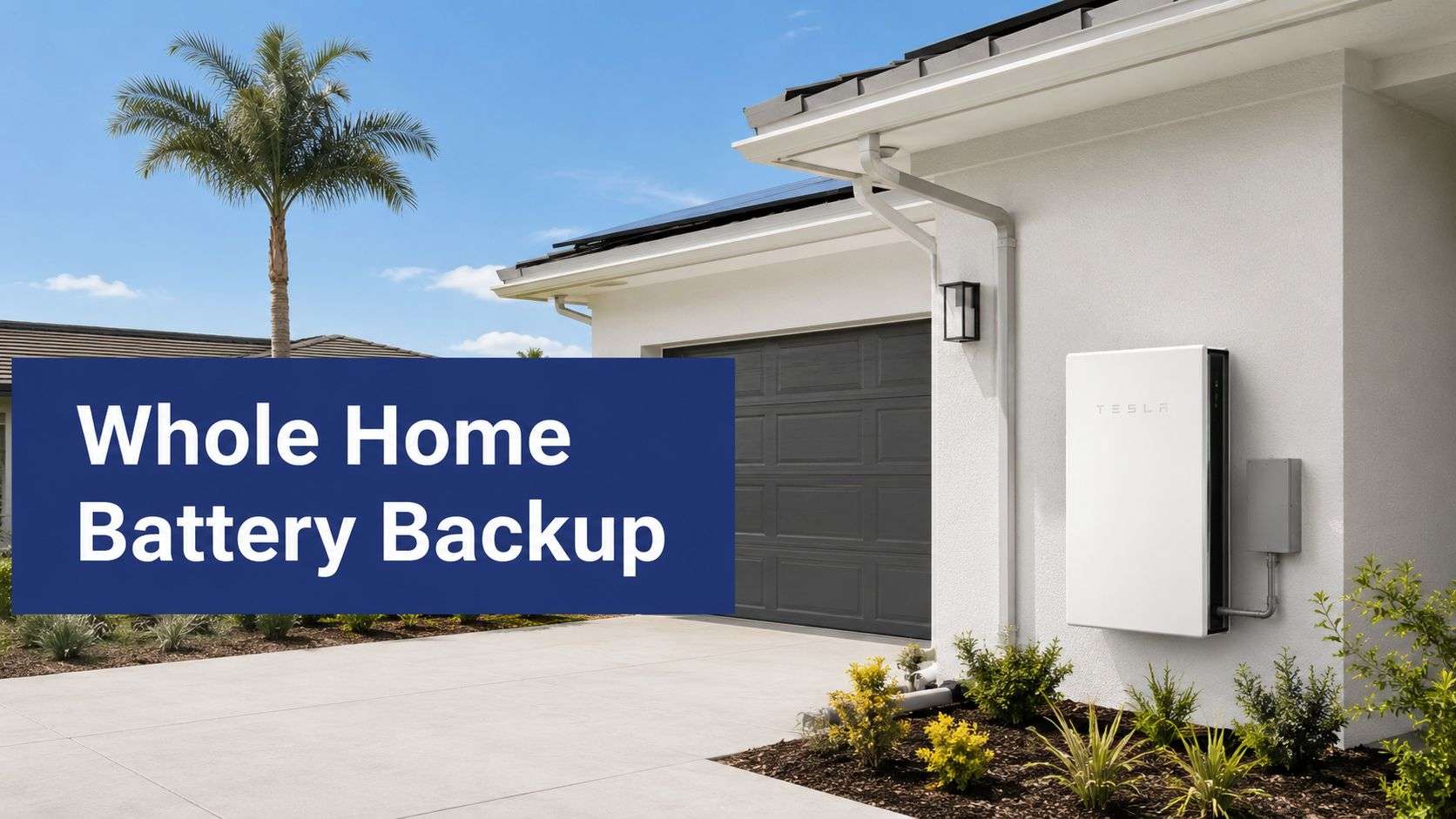
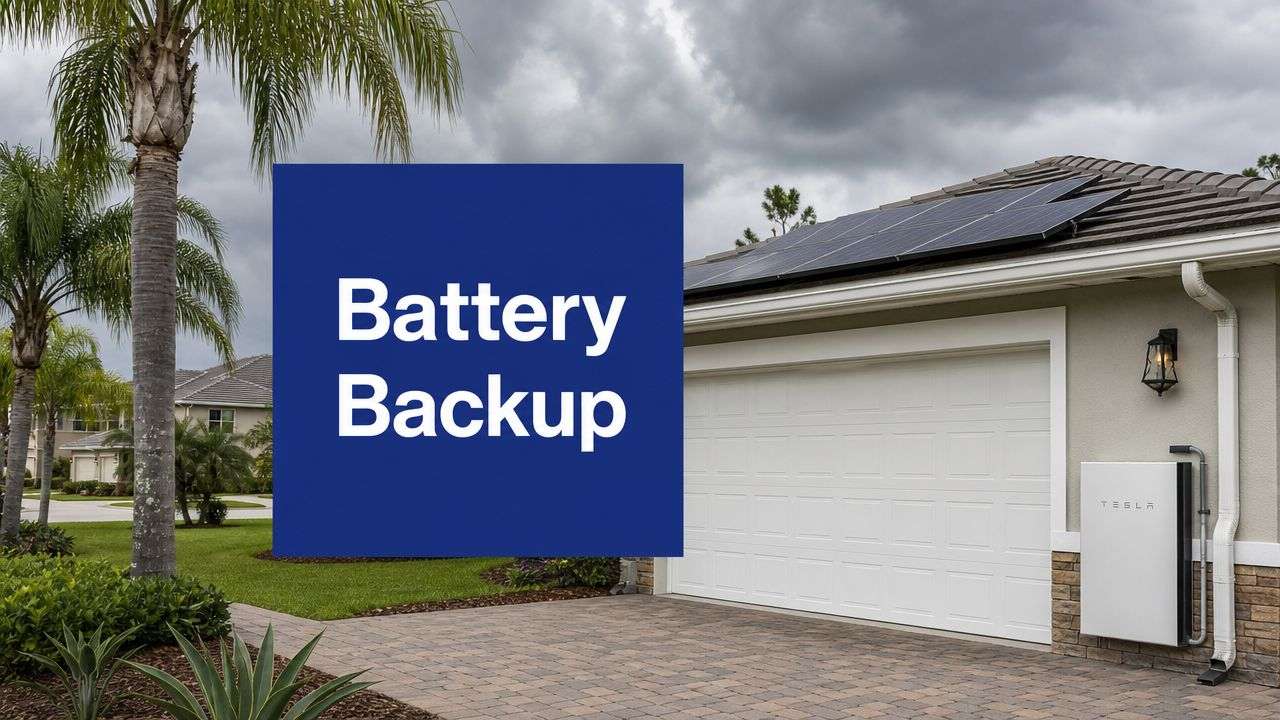
7. Can You Design A Solar Plus Battery Storage System That Meets My Backup Power Needs?
A Florida outage exposes bad battery design fast. The lights go out, the AC stops, the fridge warms up, the well pump fails, and the installer’s promise of “whole-home backup” suddenly means almost nothing. Ask this question early because battery storage is not a cosmetic upgrade. It is a resilience plan.
A good company should start with your outage priorities, then build the system around them. I want to see a clear load plan that shows which circuits stay on, how long they can run, what happens at night, and how the system behaves after several cloudy days. If the answer starts and ends with battery brand or battery size, the design work is weak.
Ask for a one-line diagram and a written critical-load schedule. You need to know whether the system will back up refrigeration, internet, lighting, security, medical devices, garage access, pool equipment, well pumps, and any portion of your HVAC. In Florida, that last point matters. Many buyers assume a battery will carry air conditioning. Often it will not, or it will only support a smaller dedicated unit for a limited period.

The Florida Resilience Test
Hurricane backup planning separates serious installers from sales-first companies. Ask how the design keeps critical loads powered during a multi-day outage, including 72+ hours off-grid, and what controls manage islanding, recharging, and load shedding.
That question forces a real engineering conversation. The company has to explain inverter limits, starting surge capacity, battery reserve settings, daytime solar recharge, and whether the system can automatically drop noncritical loads to preserve runtime. Those are the details that determine whether your battery protects the home or just powers a few outlets for a short window.
If you are evaluating storage options, review the planning and installation details for a Tesla Powerwall 2 installation in Florida during your due diligence.
Questions That Reveal Whether The Battery Design Is Real
Ask these before you approve the storage proposal:
- Which exact circuits are on the backup panel?
- What runtime are you projecting for those loads during day and night conditions?
- Can the system start large motor loads such as a well pump or selected HVAC equipment?
- How much solar production can recharge the battery during an outage, and what assumptions are you using?
- What automatic load-shedding or reserve settings will be programmed?
- Can I expand battery capacity later without replacing the inverter or reworking the system design?
Watch for red flags. “Whole-home backup” without a circuit list is a sales phrase. Runtime estimates with no load assumptions are useless. A proposal that ignores air conditioning, pump loads, or surge demand is incomplete.
In Florida, battery storage should be designed for storm outages first and daily bill management second. That order protects your money and your expectations.
8. How Do You Coordinate With Permitting, Utilities, And Contractors Throughout The Project?
A solar project fails in slow motion when no one owns coordination. Designs sit in revision. Permits stall. Utility paperwork lags. Inspectors flag missing details. Roofers and electricians blame each other. Meanwhile, you’re left chasing updates across multiple parties.
You want one accountable project lead and a written process. Ask who manages permitting, utility submissions, inspection scheduling, change orders, and communication. Then ask how often you’ll get updates and what happens when the timeline slips.
What Good Coordination Looks Like
A well-run Florida project should have a clear chain of responsibility.
- Single point of contact: One person should own communication and escalation.
- Defined phase milestones: Design, permitting, installation, inspection, and activation should all have target dates.
- Utility management: The company should handle the interconnection process directly, not hand it back to you.
- Document turnover: You should receive permit records, inspection signoffs, and interconnection paperwork at the end.
This isn’t administrative trivia. It’s project risk management.
Where Delays Usually Start
The weak spots are predictable:
- Permit revisions due to incomplete plans
- Utility queue issues or missing forms
- Late discovery of roof or electrical conflicts
- Poor handoff between subcontractors
Industry guidance notes that project timelines often span around two months from contract to activation in standard situations, but that only happens when the workflow is managed tightly and local approvals move cleanly. In Florida, county and utility variation can stretch that timeline fast when the company lacks local process discipline.
Ask one more direct question: “If the permit is rejected or the utility requires design changes, who absorbs the extra coordination and how is that communicated?” A serious company already has that answer.
9. What Happens After Installation How Do You Support Ongoing System Operation And Maintenance?
The installation is the start of the relationship, not the finish line. If the company disappears after permission to operate, you’re left holding a long-term asset without a service structure. That’s a bad position in any state. In Florida, it’s worse because environmental conditions can accelerate maintenance needs and outage events can expose weak support fast.
Ask what support exists after commissioning. Not the marketing version. The operational version. Who answers service calls, who monitors the system, what response process they follow, and what maintenance is included versus billed separately.
Post-Install Support Should Be Specific
The company should be able to explain:
- Monitoring responsibility: Do they actively watch for faults or only respond when you report an issue?
- Service response: What happens after a fault alert or outage-related problem?
- Cleaning and inspection guidance: What do they recommend for Florida pollen, salt spray, and debris exposure?
- Upgrade support: Can they help if you later add storage, EV charging, or more solar?
Ask whether they can connect you with long-term customers, not just recent installs. A company that’s easy to reach in the first few months can become hard to find once the sales cycle ends.
The real test of a solar company starts the first time something underperforms and you need them to act.
Why Company Stability Matters After The Sale
Long-term support depends on business durability. Industry guidance notes that the solar market is volatile and recommends choosing firms with an established operating history because those firms are more likely to remain available to support systems and honor long-term commitments.
You should also ask how they handle parts availability, software updates, inverter replacement planning, and battery service if the original product line changes. Those questions tell you whether they think like operators or only like installers.
If they can’t describe a service process clearly, don’t expect one to appear later.
10. How Do You Stay Current With Changing Incentives, Tax Credits, And Renewable Energy Programs?
Incentives affect returns. Poor incentive guidance distorts decision-making from day one. In Florida, you need a company that understands what applies to your ownership structure, tax position, and project type, then explains it clearly without overstating anything.
Ask for an itemized list of the incentives, tax benefits, and program considerations that apply to your project. Then ask which ones are available now, which ones depend on eligibility conditions, and which ones the company is merely assuming in the proposal. That distinction matters.
For a Florida-specific starting point, review the current state of Florida solar incentives and compare it to what the company presents in writing.
The Questions That Keep Financial Projections Honest
A strong advisor should be able to answer:
- Which incentives apply to my ownership structure?
- Which benefits require tax appetite or specialized filing?
- What documentation will I need to preserve eligibility?
- How do policy changes affect the timing of my project?
For commercial clients, also ask whether the company understands depreciation strategy and how the financing structure interacts with it. If they can’t explain that in plain language, bring in independent advisory support before signing.
Don’t Let Incentives Replace Analysis
The federal incentive remains a major factor in project economics, and current industry discussion also points to the importance of modeling policy and utility-rate uncertainty instead of relying on static payback claims. That’s especially relevant in Florida, where storm-related utility cost changes and resilience planning can alter the economics of solar and storage over time.
The right company won’t pitch incentives as a shortcut. They’ll treat them as one input inside a broader financial model. That’s the standard you want.
10 Key Questions to Compare Solar Companies
| Item | Implementation complexity | Resource requirements | Expected outcomes | Ideal use cases | Key advantages |
|---|---|---|---|---|---|
| What is your experience with Florida's specific solar conditions and permitting requirements? | High, local codes, wind and corrosion standards | County permitting expertise, hurricane-rated hardware, utility contacts | Faster permitting, code-compliant installations, optimized local performance | Coastal homes, hurricane-prone areas, multi-county projects in Florida | Reduces delays/rework, leverages state incentives and local knowledge |
| Can you provide a detailed ROI analysis and financial modeling for my specific situation? | Moderate, data collection and scenario modeling | Historical bills, financial tools, incentive databases, modeling assumptions | Clear payback, lifetime savings, financing comparisons | Pre-purchase evaluations, commercial investment cases, nonprofits | Quantifiable ROI, side-by-side financing scenarios, better decision making |
| What certifications, licenses, and insurance coverage does your company maintain? | Low to moderate, verification required by customer | Florida contractor licenses, NABCEP, liability and workers' comp, roof warranties | Liability protection, code compliance, valid manufacturer warranties | All installations, high-value or commercial projects | Reduces legal/financial risk, ensures inspection and warranty compliance |
| How do you assess my home or property's solar potential and system design? | High, site surveys and engineering analysis | Drone/aerial surveys, shade modeling, structural review, electrical audit | Accurate system sizing, feasibility determination, optimized production | Shaded roofs, complex sites, large commercial rooftops | Prevents undersized/oversized systems, improves long-term performance |
| What financing options do you offer and how do they align with my cash-flow goals? | Moderate, multiple products and tax implications | Lenders, PACE programs, loan documents, financing calculators | Financing matched to cash flow, tax benefit optimization | Buyers with capital constraints, commercial projects, nonprofits | Flexible payment options, maximizes tax incentives and cash-flow fit |
| What performance guarantees, warranties, and monitoring do you provide? | Moderate, contractual terms and monitoring setup | Warranty contracts, monitoring platforms, maintenance plans | Protected investment, real-time alerts, verified production | Long-term owners, commercial assets, coastal installations | Early fault detection, warranty-backed protection, performance validation |
| Can you design a solar + battery storage system that meets my backup power needs? | Very high, complex integration and sizing | Batteries, hybrid inverters, transfer equipment, thermal management, engineering | Backup during outages, demand charge reduction, resilience | Hurricane-prone homes, critical facilities, commercial peak management | Provides resilience, peak shaving, and grid independence options |
| How do you coordinate with permitting, utilities, and contractors throughout the project? | High, multi-stakeholder project management | Dedicated PM, permit submissions, utility liaison, scheduling tools | Shorter timelines, fewer delays, single point of contact | Large installations, multi-trade retrofits, regulated counties | Reduces administrative burden, improves schedule predictability |
| What happens after installation? How do you support ongoing system operation and maintenance? | Moderate, ongoing service and monitoring | Service plans, cleaning crews, remote diagnostics, emergency response | Sustained efficiency, extended equipment life, documented reporting | Coastal systems, battery owners, long-term asset owners | Preventive care, quick fault response, maintained energy yields |
| How do you stay current with changing incentives, tax credits, and renewable energy programs? | Moderate, continuous tracking and tax coordination | Incentive databases, tax expertise, program monitoring tools | Maximized incentive capture, timely applications, improved ROI | Projects near incentive phase-outs, commercial tax planning | Increases financial returns, ensures program compliance and timing |
From Questions to Confidence Making Your Solar Investment Count
These questions to ask a solar company do more than improve a sales conversation. They change your position in the transaction. Instead of reacting to a proposal, you begin controlling the evaluation. That shift matters because a Florida solar project isn’t just an equipment purchase. It’s a long-term financial commitment tied to your property, your utility costs, your resilience planning, and your risk tolerance.
That’s why the strongest buyers don’t focus first on panel brands or headline savings. They focus on process, assumptions, accountability, and fit. They ask how production was modeled. They ask who handles permits. They ask how battery backup works during a storm outage. They ask who will still answer the phone years from now when an inverter fault appears or when the property changes hands.
Florida demands that level of scrutiny. The state offers strong solar potential, but the market is complex. Humidity, salt air, wind exposure, utility-specific interconnection, and local permitting all create project variables that a generic national sales script won’t solve. If your provider can’t speak fluently about those details, they haven’t earned your trust.
The good news is that quality companies won’t be threatened by serious due diligence. They’ll welcome it. They’ll show their methodology, explain tradeoffs, provide references, clarify financing, and document the support process after installation. That’s what competence looks like. Transparency is not a bonus feature. It’s evidence that the company can manage risk instead of hiding it.
You should also recognize when a proposal crosses the line from incomplete to dangerous. Vague savings projections, rushed contract pressure, weak local references, unclear subcontractor responsibility, and shallow battery answers are all signals to stop. Don’t negotiate around those issues. Replace the provider. Solar projects go wrong when buyers rationalize weak answers because the payment looks attractive.
An independent review can save you from that mistake. When a third party evaluates the design, ROI assumptions, storage strategy, financing structure, and implementation plan, you get a cleaner decision process. That doesn’t just protect you from bad vendors. It improves your odds of building a system that performs as promised and supports your actual goals, whether those goals are lower operating costs, stronger hurricane resilience, or long-term energy price control.
Solar should produce confidence, not confusion. If the company you’re interviewing can’t answer these ten questions clearly and specifically, keep looking. The right Florida solar partner will treat scrutiny as normal, because they know the project has to work not just at signing, but over the life of the system.
For buyers who want a higher level of rigor, independent guidance from Solar Energy Management LLC can make that process far more disciplined. As advisors, not salespeople, they help Florida clients evaluate feasibility, pressure-test ROI, compare financing paths, plan battery and microgrid strategy, and coordinate with qualified implementation partners. That kind of support keeps the decision grounded in your interests, not the installer’s close rate.
If you want an expert second opinion before committing to a solar proposal, Solar Energy Management LLC can help you evaluate system design, ROI assumptions, battery backup strategy, financing structure, and vendor credibility anywhere in Florida. Their independent consulting approach gives homeowners, businesses, and property owners a clear path to lower utility costs and stronger resilience without the pressure of an installation sales pitch.