Which questions separate a smart Florida solar purchase from a 25-year mistake?
Start there, because glossy proposals rarely fail on appearance. They fail in the assumptions. A sales sheet can make almost any system look attractive if it glosses over utility tariffs, export credit rules, fixed charges, roof condition, financing costs, and what happens when the system underperforms.
Florida homeowners should evaluate solar like a long-term infrastructure investment, not a feel-good home upgrade. The right way to do that is to pressure-test every proposal with a consistent set of questions. If a company cannot explain its math, its equipment choices, its warranty responsibility, and its service process in plain language, do not sign.
This guide is built for that job. Each question is a decision filter for the Florida market. You will see why the question matters, what a credible answer sounds like, which red flags should stop the sale, and what to ask next to get a straight answer. If you want a stronger baseline for the financial side before reviewing bids, start with this breakdown of solar power ROI and payback factors.
The goal is simple. Compare vendors the way an independent solar consultant would, not the way an installer wants you to.
1. How Will You Calculate My Expected Savings and ROI?
Start here because every other decision depends on this one. If a vendor can't explain your savings model in plain English, stop the conversation. A Florida solar proposal should tie projected savings to your actual usage pattern, your utility tariff, your roof layout, shade conditions, and the way the system will export or offset power over time.
A weak answer sounds like this: “Your bill should go down a lot.” A credible answer shows assumptions. It identifies which electric rate the model uses, how it treats seasonal usage swings, and whether the design offsets daytime loads, evening loads, or both.

What A Good Answer Looks Like
The best financial models don't focus only on panel output. They address tariff risk. That matters because solar economics increasingly depend on rate design, not just energy production, as discussed in this guide to solar feasibility questions and tariff assumptions.
For a Florida homeowner, that means the vendor should tell you exactly how they handled these variables:
- Utility Rate Structure: Which current tariff did they use, and what happens if the utility changes export compensation or fixed charges?
- Load Shape: Do you use most of your electricity during solar production hours, or after sunset when self-consumption falls?
- Escalation Assumptions: What future utility-price assumptions are built into the model, and are they conservative?
- Storm Resilience Value: If outages matter to you, is backup power included in the analysis or ignored?
A commercial example is even more revealing. If a warehouse has heavy daytime HVAC and process loads, solar may align well. If a multifamily property peaks later in the day, battery strategy may matter more than array size.
Practical rule: Ask the vendor to show you the inputs first, not the savings total first.
You can compare estimates against an independent solar ROI modeling process for Florida properties.
Red Flags And Follow-Up Questions
Watch for one-page proposals with glossy charts and no assumptions page. Watch for savings claims that ignore time-of-use exposure, demand charges, or changes in utility compensation rules.
Ask these follow-ups:
- Show My Utility Bill Mapping: Which months and rate components did you use?
- Run A Sensitivity Case: What happens if export value drops or fixed charges rise?
- Separate Energy Value From Resilience Value: How much of the projected benefit depends on battery backup rather than solar alone?
2. What Are My Financing Options, And Which Is Best For Me?
What looks cheaper on day one but costs you more over 20 years? In solar, that answer is often the financing contract.
Florida buyers get pushed toward monthly payment comparisons because they are easy to sell. That is the wrong frame. You need to judge financing by five factors: total lifetime cost, control of the system, access to tax benefits, transfer terms if you sell the property, and your ability to add storage or modify the system later. A low payment can hide a weak deal.

Start With The Ownership Question
For most Florida homeowners and many commercial property owners, ownership is the strongest option if cash flow and tax position support it. Cash gives you the clearest economics. Loans can still work well if dealer fees, interest rate, prepayment terms, and lien details are reasonable. Leases and power purchase agreements reduce upfront cost, but they also hand part of the project value to a third party.
That tradeoff matters. If you do not own the system, you may also give up tax incentives, limit resale flexibility, and face contract friction when refinancing or replacing the roof.
Use a detailed Florida solar financing guide to compare structures before you approve a proposal. If you also need help understanding the hardware choices tied to financing packages, review this breakdown of solar panel and inverter technology options.
What A Good Vendor Answer Sounds Like
A credible vendor should recommend a financing structure based on your property, taxes, and exit plans. They should explain why that option fits you better than the alternatives. If they cannot explain the tradeoffs clearly, they do not understand the deal well enough, or they assume you will not read the contract.
A good answer covers:
- Who owns the equipment: You or a third party, stated plainly.
- Who gets tax credits and depreciation benefits: This can change the economics significantly.
- How dealer fees affect the loan: A low headline rate often comes with a large upfront fee built into system cost.
- What happens if you sell, refinance, or inherit the property: Transfer rules need to be simple and documented.
- Whether payments change over time: Escalators, balloons, and teaser terms need to be disclosed in writing.
- What happens if you want batteries later: Some financing contracts make system changes harder than buyers expect.
Red Flags You Should Treat Seriously
If the salesperson keeps returning to monthly payment, stop them and ask for total project cost. Monthly payment is a sales tool. It is not a financial analysis.
Other red flags include:
- Loan proposals that do not disclose dealer fees
- Leases with annual escalators that outpace expected utility savings
- Claims that tax credits “make it free”
- No written explanation of transfer terms
- Pressure to sign before you review the full contract
- Financing bundled with equipment choices that are never justified
If the presentation is built around “what can you afford per month,” you are being sold financing first and solar second.
Follow-Up Questions That Expose Weak Proposals
Ask these before you sign anything:
- Show me the cash price and the financed price side by side.
- What dealer fee is built into this loan, and how much does it add to system cost?
- Who receives the tax benefits, and what happens if I cannot use them fully this year?
- Can I prepay the loan without penalty?
- What exactly must happen if I sell the house in five years?
- Can this contract accommodate a future battery, roof work, or system expansion?
A retired homeowner with taxable income and no plan to move soon will often do best with cash or a simple loan and a clear payoff schedule. A nonprofit or cash-constrained business may need a third-party structure because tax appetite and capital budgeting work differently. The right answer is the one that holds up under contract review, not the one with the lowest advertised payment.
3. What Equipment Are You Recommending And Why?
This question exposes whether the proposal was engineered for your property or assembled from whatever the vendor had available. In Florida, equipment selection has to reflect heat, humidity, salt air in coastal areas, and the wind demands that come with storm exposure.
Don't accept “these are our standard panels” as an answer. Ask why this panel, why this inverter architecture, why this mounting system, and why this combination suits your building.

Focus On System Architecture, Not Brand Hype
Globally, PV systems dominate the solar market, contributing approximately 80% of total market share in 2024 according to Precedence Research's solar energy market analysis. That matters because most Florida buyers should be evaluating practical PV design details, not exotic alternatives.
A solid equipment explanation should cover:
- Panel Selection: Efficiency, expected degradation, warranty terms, and how the module handles heat.
- Inverter Strategy: String inverter, optimizers, or microinverters, based on shade complexity and serviceability.
- Racking And Attachment: How the mounting system addresses wind uplift and roof compatibility.
- Battery Integration Path: Whether the design can support storage later without a redesign.
Florida example: a simple south-facing commercial metal roof may suit a different inverter strategy than a shaded residential roof with multiple roof planes and vent obstructions.
Reviewing a technical solar panel technology guide can help you challenge vague equipment claims.
Red Flags You Shouldn't Ignore
If the vendor can't explain tradeoffs, they probably didn't make a careful equipment choice. If they lean heavily on one brand name but avoid discussing inverter replacement, parts availability, or service process, you're not getting the full picture.
Ask:
- What specific conditions on my property drove this design choice?
- How will this equipment perform in prolonged Florida heat and storm conditions?
- If one component fails, how easy is it to diagnose and replace?
Good equipment is only half the answer. Good equipment that fits the site is the answer.
4. What Warranties Cover The System, And Who Services Them?
Most buyers hear “25-year warranty” and assume they're protected. That's not enough. Solar systems come with multiple layers of warranty coverage, and the practical issue isn't just what the documents say. It's who will coordinate service when something goes wrong on a Florida roof.
Ask for every warranty in writing. Then ask who owns the service obligation, who diagnoses failures, who pays for labor if a manufacturer approves a replacement, and how roof-related claims are handled after installation.
Separate The Promises
A good vendor will break warranty coverage into clear categories:
- Panel Product Warranty: Defects in the module itself.
- Panel Performance Warranty: Long-term output commitment.
- Inverter Warranty: Terms, exclusions, and replacement process.
- Workmanship Warranty: Installation-related issues, including penetrations and flashing.
- Roof Interface Responsibility: Who responds if a leak appears after the system is installed.
This matters in Florida because roof condition and roof detail work are inseparable from long-term solar performance. Before you sign, review how solar and roofing responsibilities intersect in this guide on whether solar affects a roof warranty.
What A Reliable Service Answer Sounds Like
You want a direct response such as: “If monitoring shows a fault, call this service team. We verify the issue, determine whether it's workmanship or manufacturer related, and manage the claim path.” You do not want to hear, “That would go through the manufacturer somehow.”
Consider a common Florida scenario. A homeowner notices production has dropped after storm season. If the provider blames the manufacturer, the manufacturer blames the installer, and nobody takes ownership of diagnosis, your warranty has little practical value.
Critical distinction: A long warranty term is useful only if someone has a clear service process behind it.
Ask these follow-ups:
- Who files claims with the manufacturer?
- Who pays labor for approved replacements?
- If your company changes structure later, who still services the workmanship warranty?
5. Should I Add Battery Storage, And What Are The True Costs And Benefits?
Do you want lower electric bills, outage protection, or both? Start there, because battery storage only makes financial sense when the battery is matched to a specific job.
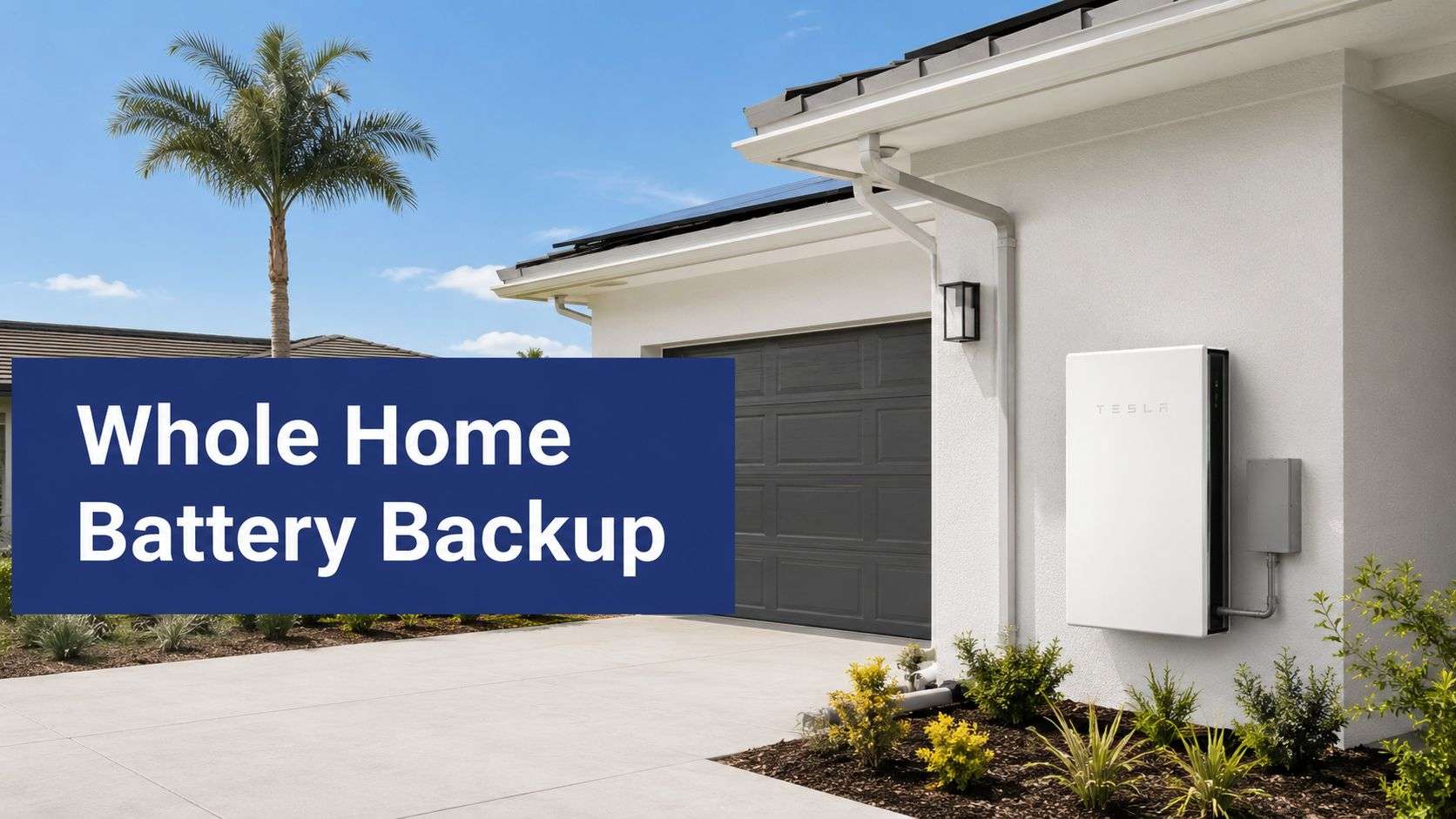
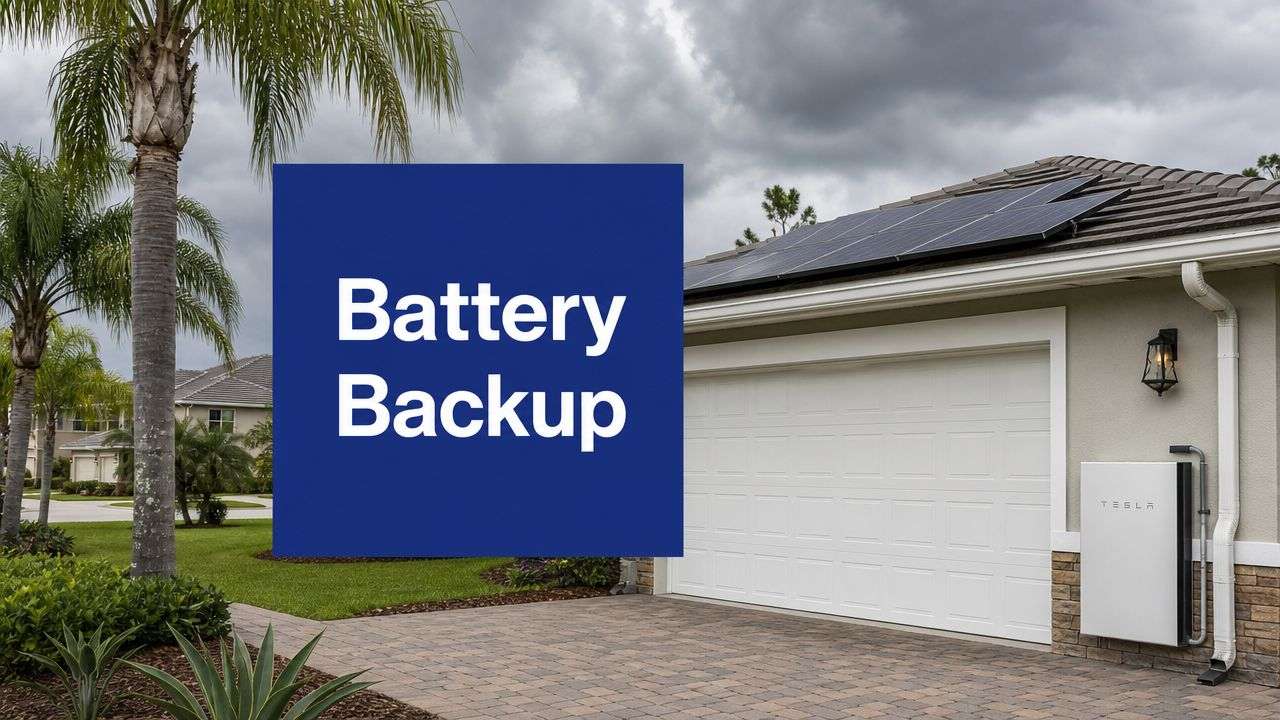
In Florida, the strongest case for storage is backup power during grid outages. The weakest case is buying a battery because a sales presentation made whole-home backup sound standard. It is not standard. It is expensive, and many homeowners overspend on capacity they will rarely use.
Start by defining the loads you refuse to lose. For a home, that usually includes refrigeration, internet, phone charging, some lighting, garage door access, medical equipment, and limited cooling. For a business, it may include point-of-sale systems, alarms, routers, servers, refrigeration, or access control. If the vendor cannot name those loads and size the battery around them, the proposal is incomplete.
A practical planning process should answer four things:
- What are you backing up? Whole home, one air conditioner, or a critical-load panel?
- How long do you need it to last? Brief outages, overnight coverage, or storm-related interruptions.
- Is the battery for resilience only, or bill strategy too? Some buyers want backup. Others also want to shift solar production into evening use.
- Do you need storage now? In some cases, it is smarter to install solar now and prepare the system for a battery later.
If you want a clearer framework before you review proposals, this battery storage planning guide for solar owners is a useful reference.
Why This Question Matters
Battery storage changes more than the equipment list. It affects inverter choice, electrical design, backup panel configuration, permitting scope, and total project cost. It can also change your financing terms.
In Florida, storm season makes this decision more practical than theoretical. A battery has real value if it keeps food cold, powers communications, supports medical needs, or lets a business stay partially operational during an outage. That value is concrete. Peace of mind matters, but you should still force the vendor to translate that value into a defined backup plan.
What A Good Vendor Answer Sounds Like
A credible answer is specific: “We reviewed your critical loads, estimated runtime, identified which circuits go on backup, and explained what the battery will and will not run.”
That answer should also address limitations. If you want central air conditioning, pool equipment, electric water heating, and full-appliance use during an outage, the provider should tell you that this requires more battery capacity, more cost, and possibly a different system design. If they skip that discussion, expect disappointment later.
Red Flags
Watch for these warning signs:
- They promise whole-home backup without reviewing your panel and major loads.
- They focus on tax credits and ignore runtime, surge loads, and outage priorities.
- They present one battery package to every customer.
- They avoid discussing what happens on cloudy days during an extended outage.
- They cannot explain whether the battery supports bill savings, backup power, or both.
A battery is not automatically a savings tool. In some Florida utility setups, the financial return is secondary to resilience. That does not make storage a bad choice. It means you should buy it for the right reason.
Follow-Up Questions To Ask
Use these questions to pressure-test the proposal:
- Which exact circuits will be backed up?
- What is the estimated runtime for those loads?
- Can the battery start large motors or air conditioning equipment on my property?
- What happens after one cloudy day or several cloudy days?
- Can this system be expanded later if my backup goals change?
- If I skip the battery now, what should be installed today to keep that option open later?
One Florida example is enough to make the point. A coastal homeowner may only need refrigeration, communications, lights, and a bedroom mini-split after a storm. That is a rational battery strategy. Paying for whole-home backup when basic livability is the goal is how budgets get wasted.
Ask the vendor to show you the tradeoff in plain language. More backup requires more battery. More battery raises cost. If they cannot explain that clearly, keep shopping.
6. How Do You Assess My Roof's Condition And Suitability?
A roof isn't just the place where panels sit. It's the structural and waterproofing platform that determines whether the project should happen at all. In Florida, a weak roof assessment creates expensive problems later because heat, heavy rain, wind exposure, and roof aging don't forgive sloppy site work.
If the provider relies mostly on satellite imagery, you don't have a real roof evaluation. You have a sales estimate.
What A Proper Roof Review Should Include
A serious assessment should address material type, age, drainage patterns, structural condition, attachment strategy, penetrations, shading, roof obstructions, and safe service access. The vendor should also ask whether reroofing is likely during the practical life of the solar system.
For a tile roof in Florida, attachment and waterproofing detail matter. For shingle roofs, remaining useful life matters. For flat commercial roofs, ballast, membrane condition, drainage pathways, and future rooftop equipment conflicts all matter.
A good answer should include:
- Roof Life Review: Is the roof likely to remain serviceable long enough to justify solar?
- Attachment Method: How will the system be mounted on this exact roof type?
- Shading Reality: Trees, neighboring buildings, vent stacks, and mechanical equipment.
- Future Access: Can roofers and HVAC crews still work safely after the array is installed?
Red Flags That Should Stop The Project
If a provider says “solar will fit” before anyone inspects the roof closely, slow down. If they dismiss old roof concerns because “the panels protect the roof,” slow down even more.
A Florida example is common. A homeowner wants solar on an aging shingle roof because utility bills are high. The wrong move is installing now and paying for removal and reinstallation later. The right move may be reroof first, then solar with a coordinated plan.
Ask:
- What roof issues would make you recommend delaying the project?
- How will you document pre-existing roof conditions?
- If a future roof repair is needed, what's the removal and reset process?
7. What Is The Full Timeline From Signing To Operation?
Most delays in Florida solar don't come from panel installation itself. They come from design revisions, permitting, procurement, inspections, and utility interconnection. Ask for the entire project path, not just “install day.”
A useful answer breaks the process into stages with responsibilities assigned. You should know what the vendor controls directly, what the utility controls, what the jurisdiction controls, and what could delay progress.
Demand A Stage-By-Stage Schedule
In 2025, the U.S. solar industry installed 43.2 gigawatts direct current of capacity, representing a 14% decrease from 2024, while SEIA says utility-scale solar remains the dominant segment for new capacity growth in a market with a large future pipeline, according to SEIA's Solar Market Insight 2025 Year in Review. For Florida buyers, the takeaway isn't abstract market movement. It's that project timing depends on process discipline in a large, active market.
A realistic timeline should separate:
- Site Validation And Final Design
- Permit Submission And Approval
- Equipment Ordering
- Installation Window
- Inspection And Corrections
- Utility Interconnection Or Permission To Operate
For a homeowner, a good vendor explains what documents you'll need and when. For a commercial owner, they should explain utility coordination, landlord or tenant approvals, and any engineering review steps.
How To Test Whether The Timeline Is Real
Ask what commonly causes delay in your county and utility territory. Ask who updates you, how often, and what happens if a permit revision is requested. Ask whether your equipment is already allocated or still subject to procurement changes.
A Florida example: a business owner times a solar project around a facility schedule, only to learn late that interconnection approval is the bottleneck. That's avoidable if the vendor explains the critical path clearly from day one.
A short promised timeline is not a sign of competence. A transparent timeline is.
8. How Will I Monitor System Performance And Who Do I Call For Service?
A solar system that isn't monitored becomes a guessing game. In Florida, that's a risk because storm season, salt exposure, heat stress, and inverter issues can reduce performance without any obvious visual sign from the ground.
Ask for a live demonstration of the monitoring platform. Don't settle for screenshots. You want to know what data you'll see, how alerts work, and whether the service team uses the same platform to diagnose faults.
The Monitoring Platform Should Help You Act
A good monitoring setup lets you see production trends clearly and identify whether the system is underperforming. For a homeowner, that may mean a mobile app with understandable daily and monthly performance views. For a commercial facility manager, it may mean portfolio-level dashboards, alert escalation, and service records.
Ask these direct questions:
- What exactly can I see in the app or dashboard?
- Will I get fault alerts automatically?
- Who receives the alert first, me or your service team?
- What is your escalation path if production drops?
If you want a practical view of maintenance expectations, these safe techniques for solar panel cleaning show why routine care should be handled methodically, not casually.
Service Responsibility Must Be Obvious
Monitoring without service is incomplete. A strong answer includes contact methods, response steps, and the division between remote troubleshooting and on-site service. A weak answer puts the burden on you to prove something is wrong.
Florida example: after a storm, the app shows a production decline. A good provider checks inverter status, string performance, and communications health before sending a technician. A poor provider tells you to “watch it for a few weeks.”
If nobody is clearly responsible for watching performance, underperformance can sit unnoticed for months.
9. Can You Provide References From Recent Customers In My Area?
Ask for references before you trust the proposal.
A polished sales presentation tells you what the company wants to say. A recent local customer tells you how the company performs in practice once permits stall, weather interferes, roof details get complicated, or service is needed after commissioning. In Florida, local context matters. Coastal exposure, HOA friction, utility processes, tile roofs, older electrical panels, and storm-related scheduling issues can change the experience fast.
Ask for at least two or three recent customers in your area with projects that match yours as closely as possible. If you own a tile-roof home in a coastal ZIP code, ask for tile-roof coastal references. If you run a commercial property, ask for a reference with a similar roof type, operating schedule, and demand profile. A mismatched reference is weak evidence.
What A Good Vendor Response Looks Like
A credible installer should have a simple process for this. They should offer recent customers, describe the project type, and explain why those references are relevant to your situation. If privacy limits direct introductions, they should still provide permission-based contacts, anonymized local project summaries, or recent verified reviews with enough detail to examine the outcome.
Anything less deserves scrutiny.
What To Ask The Reference
Keep the call short. Make it specific. You are not asking whether they “liked” the company. You are verifying whether the installer did what they promised and handled problems professionally.
Use questions like these:
- Did the final system and contract match the original proposal?
- Were there added costs, exclusions, or change orders that showed up late?
- How did the company handle permitting, inspections, or utility delays?
- Did installation crews show up on time and leave the property in good condition?
- After the system went live, how easy was it to get answers or service?
- Would you hire the same company again? Why or why not?
Listen for specifics. Strong references can describe what happened, how the company responded, and whether the result matched expectations. Weak references stay vague, sound coached, or only praise the salesperson.
Red Flags You Should Treat Seriously
Refusal is not the only warning sign. Watch for companies that only offer old references, references from different markets, or references that do not match your project type. Also be cautious if every reference sounds focused on price but says little about communication, scheduling, punch-list work, or post-install support.
A good company expects this question. An established Florida provider should be able to show recent local proof of execution without making you chase it.
References are not a courtesy. They are a field check on whether the company's sales claims hold up under real project conditions.
If the company sidesteps the request, move on.
9-Point Solar Questions Comparison
Which proposal holds up once you strip out the sales pitch and compare the decision points side by side? Use this table as a screening tool. A strong Florida solar bid should answer each question with clear assumptions, documented scope, and a defensible recommendation, not vague promises.
| Item | What You're Testing | What a Good Answer Looks Like | Red Flags | Smart Follow-Up |
|---|---|---|---|---|
| How Will You Calculate My Expected Savings and ROI? | Whether the company is modeling your actual usage, rate structure, roof conditions, and utility rules | A written model based on recent utility bills, site conditions, production assumptions, and a clear payback and long-term savings estimate | Generic savings ranges, inflated production, missing utility assumptions, or no explanation of how ROI was built | Which electric rate are you using, what offset are you targeting, and how sensitive is this model to future rate changes? |
| What Are My Financing Options, And Which Is Best For Me? | Whether the recommendation fits your tax position, cash flow, and ownership goals | Side-by-side cash, loan, and third-party financing comparisons with total cost, monthly impact, incentives, and tradeoffs spelled out | Steering you to one product without comparison, unclear dealer fees, or monthly payment talk without total lifetime cost | What is the all-in cost under each option, who gets the tax credit, and is there any prepayment penalty or escalator? |
| What Equipment Are You Recommending And Why? | Whether the equipment choice matches Florida heat, humidity, wind exposure, shade, and serviceability needs | Specific panel, inverter, and racking choices with reasons tied to your roof, weather exposure, and production goals | Brand names with no technical rationale, substitute language in the contract, or no discussion of wind ratings and service history | Why this inverter architecture, what are the wind-load specs, and what approved substitutions can appear after signing? |
| What Warranties Cover The System, And Who Services Them? | Whether you know exactly what is covered and who is responsible when something fails | A clear breakdown of manufacturer warranties, workmanship coverage, response process, and the actual service party | Long warranty claims with no labor coverage, unclear exclusions, or finger-pointing between installer and manufacturer | Who handles diagnosis, who pays labor and shipping, and what happens if your installer stops operating? |
| Should I Add Battery Storage, And What Are The True Costs And Benefits? | Whether storage is being evaluated as a practical backup and rate-management tool, not an emotional upsell | A load-based analysis showing what circuits or loads you can back up, for how long, at what installed cost, and with what maintenance expectations | Selling “energy independence” without backup planning, no load calculation, or no distinction between whole-home backup and partial backup | What will the battery run during an outage, for how many hours, and what is the total installed cost after incentives? |
| How Do You Assess My Roof's Condition And Suitability? | Whether the installer is checking remaining roof life, structure, mounting method, and reroof timing before locking in design | Documented roof review with age, condition, structural notes, attachment plan, and any recommendation to repair or replace first | Satellite-only review, no attic or structural consideration when needed, or pressure to install on a roof near end of life | How many years of roof life do you require, who signs off on structure, and what happens if roof issues appear after install starts? |
| What Is The Full Timeline From Signing To Operation? | Whether the company can manage design, permitting, procurement, inspections, and interconnection with realistic scheduling | A milestone-based timeline with who owns each step and what can delay approval, installation, or utility sign-off | “Fast install” claims with no permit timeline, no utility interconnection detail, or no accountability for delays | What is the expected permit timeline in my jurisdiction, when is equipment ordered, and what milestone triggers final payment? |
| How Will I Monitor System Performance And Who Do I Call For Service? | Whether post-install support is set up before problems happen | A monitoring platform demo, named support contacts, response expectations, and a service process for inverter or production issues | App access with no training, outsourced support with no clear handoff, or no explanation of fault alerts and ticketing | Who monitors underperformance, how quickly are issues escalated, and do I call the installer, manufacturer, or both? |
| Can You Provide References From Recent Customers In My Area? | Whether the company has current local proof of execution for projects like yours | Recent references from nearby customers with similar roof types, utility conditions, or battery scope | Old references, references from other markets, or reluctance to share contacts with permission | Can I speak to customers whose systems went live recently and whose project scope matches mine? |
Use the comparison to score proposals, not just read them. If two companies look similar on price, the better choice is the one that explains assumptions, limits, service responsibility, and project risk in plain language.
If you want a useful contrast in how solar guidance changes by market, this Fort Worth solar panel guide shows why local conditions, utility structures, and roofing factors should shape the questions you ask before signing.
From Questions To Confidence Your Next Steps
What separates a smart solar purchase from an expensive mistake in Florida? The quality of the answers you get before you sign.
Use the nine questions in this guide as a screening tool, not a checklist you rush through. A strong proposal shows its math, explains its assumptions, defines service responsibility, and addresses Florida-specific risks such as utility rate structure, storm exposure, roof condition, permitting delays, and outage priorities. A weak proposal relies on broad savings claims, vague equipment language, and pressure to commit before the details are clear.
Solar is no longer a novelty purchase. For Florida property owners, the decision is whether a specific system on a specific property produces acceptable returns, fits the roof, matches your financing goals, and holds up under actual operating conditions. Battery storage belongs in that same analysis. If outages matter to you, backup strategy, load selection, transfer equipment, and battery cycling assumptions should be reviewed before contract stage, not after.
Here is the standard I recommend. Choose the company that explains limits as clearly as benefits. Choose the proposal that names who handles warranty claims, monitoring issues, permit corrections, and post-install service. Choose the team that can defend its production model and financing recommendation with documents, not sales talk.
An independent consultant helps because the job is decision review, not equipment sales. That means checking feasibility, reviewing production assumptions, comparing cash and financed returns, testing battery economics, and identifying installer risk before procurement. For homeowners, that usually means pressure-testing roof readiness, payback assumptions, and outage planning. For commercial and industrial clients, it often means examining interval data, demand patterns, phased deployment, and whether storage improves economics or merely adds cost.
Solar Energy Management LLC is one Florida-based option for that advisory role. The firm operates as an independent solar power consultancy rather than an installer, helping clients evaluate feasibility, model ROI, review design recommendations, and coordinate with licensed implementation partners when needed.
If you take one lesson from this guide, make it this. Slow the process down until the proposal is clear. Ask for documented answers. Score each bid against the same criteria. If a vendor avoids specifics, treats follow-up questions as friction, or cannot explain the downside cases, remove them from consideration.
Confidence comes from verification. When the financial model, roof assessment, equipment selection, warranty coverage, battery strategy, timeline, and service plan all hold up under scrutiny, solar becomes a disciplined investment for your Florida property.
If you want an independent review of a Florida solar proposal, Solar Energy Management LLC can help you evaluate feasibility, model ROI, assess battery storage options, and vet installer recommendations before you commit.