Your electric bill climbs every summer, the air conditioner runs nonstop, and every storm season brings the same question. If the grid goes down, what keeps the house livable? For a lot of Florida homeowners, that's the moment solar stops feeling like a vague green upgrade and starts looking like a practical home decision.
That shift matters. Residential solar isn't fringe anymore. It's part of a large and growing U.S. market, with 6.8 gigawatts of residential solar installed in 2023, and the residential segment represents 67% of all small-scale solar capacity according to U.S. residential solar market data summarized by Statista. In Florida, where long cooling seasons and outage concerns shape energy decisions, that trend feels very real on the ground.
Still, most homeowners hit the same problem. They don't just need panels. They need a plan. They need to know whether their roof works, whether a battery makes sense, how much backup they need, and whether the proposal in front of them is designed for their house or for someone else's sales quota.
Navigating Your Solar Journey in Florida
A typical Florida solar conversation starts with a high bill.
Maybe it's August in St. Petersburg or Tampa. The AC has been running day and night, your usage spikes, and you open the utility app with that mix of dread and curiosity. Then a tropical storm forms offshore, and suddenly the question changes from “How do I lower my bill?” to “What happens if the power goes out for two days?”
That's where residential solar energy solutions become more than a simple equipment purchase. They can help with energy costs, but in Florida they also connect to predictability, backup planning, and household comfort during rough weather.
What Florida Homeowners Are Really Deciding
Consumers often believe they're choosing solar panels. They're not.
They're deciding how much control they want over three things:
- Monthly power costs that rise when cooling demand rises
- Outage resilience during storms and grid interruptions
- Long-term home energy strategy instead of reacting bill by bill
A lot of online advice jumps straight to brands, rebates, or panel count. That skips the hard part. Before you compare products, you need to understand your goals, your roof, and your risk tolerance.
A solar system that looks good on paper can still be a poor fit if it doesn't match how your household uses power during Florida's hottest days and stormiest weeks.
That's one reason many homeowners start by reviewing educational guidance from a Florida solar installer resource, then compare that with independent planning advice before talking to any installation company.
Why This Market Looks Different Now
Solar has reached a scale where homeowners are a major part of the market, not a side category. The U.S. residential segment drove a large share of small-scale adoption in the latest market snapshot cited above, which helps explain why so many Florida neighborhoods now have visible rooftop systems.
But visibility can be misleading. Two homes on the same street can have very different outcomes from solar. One system may be designed for maximum bill offset. Another may be built around battery backup for storms. A third may underperform because of shading, poor equipment matching, or unrealistic financial assumptions.
That's why a careful solar journey in Florida starts with questions, not products.
Choosing Your Ideal Solar System Type
The first major decision isn't panel brand. It's system architecture.
If you strip away the jargon, most Florida homeowners are choosing between three broad paths: grid-tied, hybrid, and off-grid. Each one solves a different problem.

Grid-Tied Systems
A grid-tied system is the simplest setup for most Florida homes. Your panels produce electricity during the day, your home uses what it needs, and the utility remains your backup source when solar production isn't enough.
The easiest analogy is a checking account connected to a larger bank network. Your solar helps reduce how much power you pull from the utility, but you still rely on the grid as part of daily life.
Grid-tied systems often appeal to homeowners who care most about lowering utility bills and who don't want the added complexity of battery storage. But there's one common misunderstanding: if the grid goes down, a standard grid-tied system usually doesn't keep your home running on its own.
Hybrid Systems
A hybrid system combines solar with battery storage while still staying connected to the utility.
This setup is closer to having both a checking account and an emergency fund. Your solar works during the day, the battery stores energy for later use, and the utility remains available when needed. In Florida, this is the system type that usually makes the most sense for homeowners who want both savings and some level of outage protection.
Hybrid design gets technical fast. Battery sizing, backup circuits, and how the system responds during an outage all need to be planned carefully. If you want to understand the equipment side better, this guide to solar panel technology and system components is a useful next step.
Practical rule: If outage protection matters to you, don't assume “solar” automatically means “backup power.” Ask specifically how the system behaves when the grid fails.
Off-Grid Systems
An off-grid system means your home operates independently from the utility. You produce, store, and manage your own electricity without depending on a grid connection.
That's like living on your own private energy island. It can work in the right setting, but for most homes in established Florida neighborhoods, it's not the first place I'd look. Off-grid living requires far more storage planning, tighter load control, and a willingness to manage your energy use much more actively.
How To Match The Type To Your Goal
If you're deciding which category fits your household, think in terms of priority.
Lowest complexity
Grid-tied is often the cleanest fit if your main goal is offsetting utility usage.Storm-minded resilience
Hybrid is usually the strongest option if you want solar to support essential loads during outages.Full independence
Off-grid makes sense only when utility access is limited or you have a specific reason to operate separately.
Homeowners also mix up solar electric systems with solar thermal products. If you're also reviewing whole-home efficiency upgrades, it can help to compare solar hot water systems for homes so you don't confuse water-heating technologies with photovoltaic power systems.
Planning For Power Outages With Battery Backup
In Florida, battery conversations get serious fast.
Once someone has sat through a storm outage with a warm refrigerator, dead outlets, and a portable fan fighting a losing battle, they stop asking whether backup power matters. They start asking what a battery can realistically run, and for how long.
The U.S. Department of Energy highlights that solar plus storage can provide reliability and resilience, including support for critical loads during outages, in its overview of community solar, reliability, and resilience benefits. That doesn't mean every battery setup powers an entire house. It means a well-designed system can keep the right things alive when the grid is down.

Whole-Home Backup Versus Critical Loads
Many homeowners often get confused here.
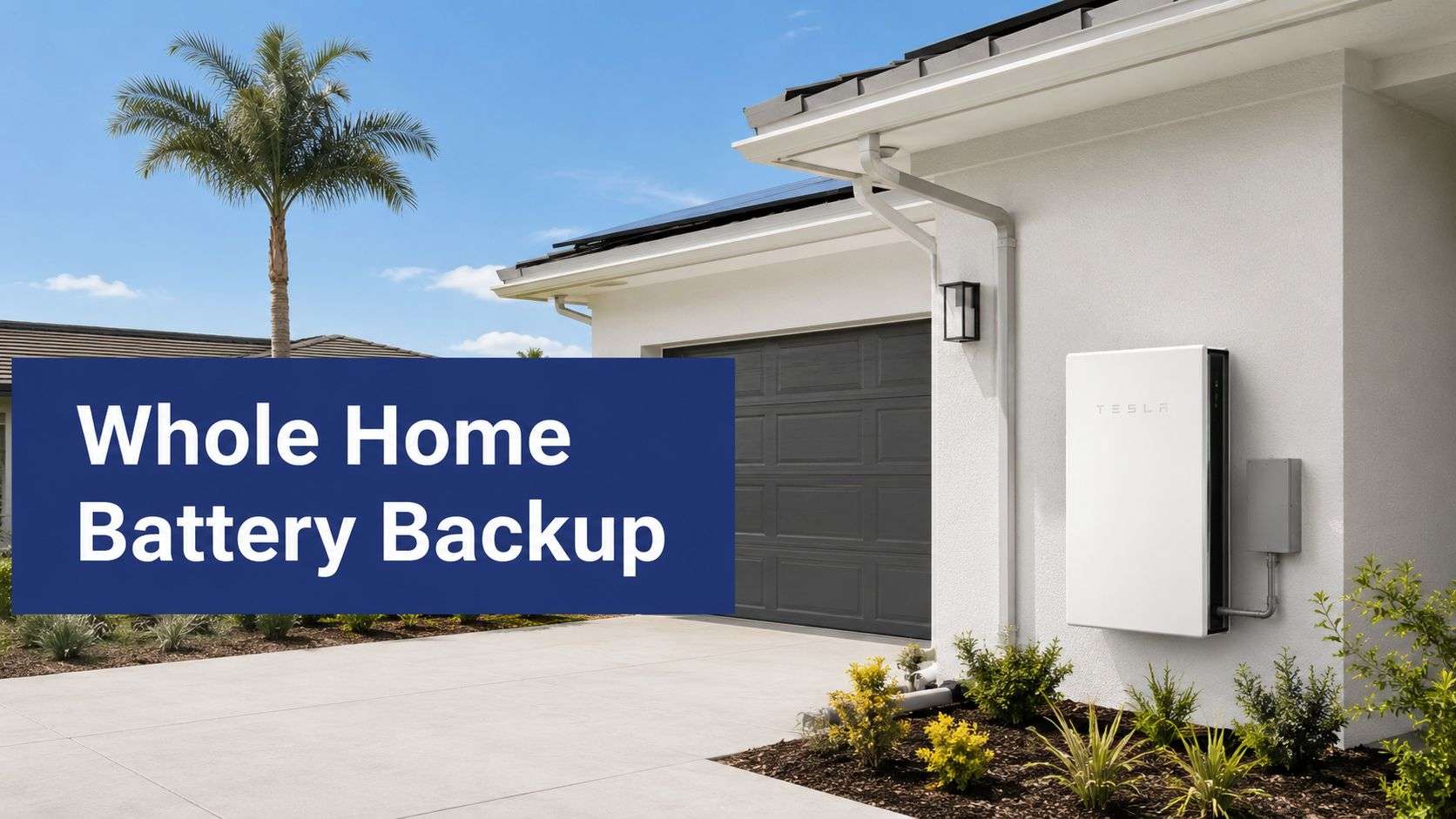
Whole-home backup aims to keep nearly everything running. That can include central AC, kitchen circuits, lighting, appliances, and other major loads. It's the most integrated experience, but it usually requires more battery capacity and more careful load planning.
Critical-load backup is narrower and often smarter. It focuses on the essentials, such as:
- Food protection through refrigerator power
- Health needs for medical devices or mobility equipment charging
- Basic comfort through selected lighting, internet, and a smaller cooling setup
- Communication so phones, modems, and work devices stay online
For many Florida households, the second path delivers better value because it targets what matters most during an outage instead of trying to run everything at once.
A Hurricane Example That Makes This Real
Say a homeowner wants backup for three things after a storm: the refrigerator, a bedroom mini-split or small AC zone, and a medical device.
That sounds straightforward, but the design details matter. The system needs to know which circuits get priority. The battery has to be sized for nighttime and cloudy periods. The inverter has to support the load profile. And if solar production is limited by weather after the storm, the household may need to ration nonessential usage.
This is why I tell homeowners to stop asking, “Can a battery power my house?” and start asking, “Which circuits do I want protected first?”
Questions To Ask Before You Buy Storage
Not every battery proposal answers the right questions. These are the ones that matter:
Which circuits are backed up
Ask for a written list, not a vague promise.How does the automatic transfer work
You want clarity on what happens the moment utility power fails.Can the solar array recharge the battery during an outage
This is a major operational detail, especially after storms.What is the cooling strategy
In Florida, backup planning often rises or falls on whether the design supports realistic comfort needs.
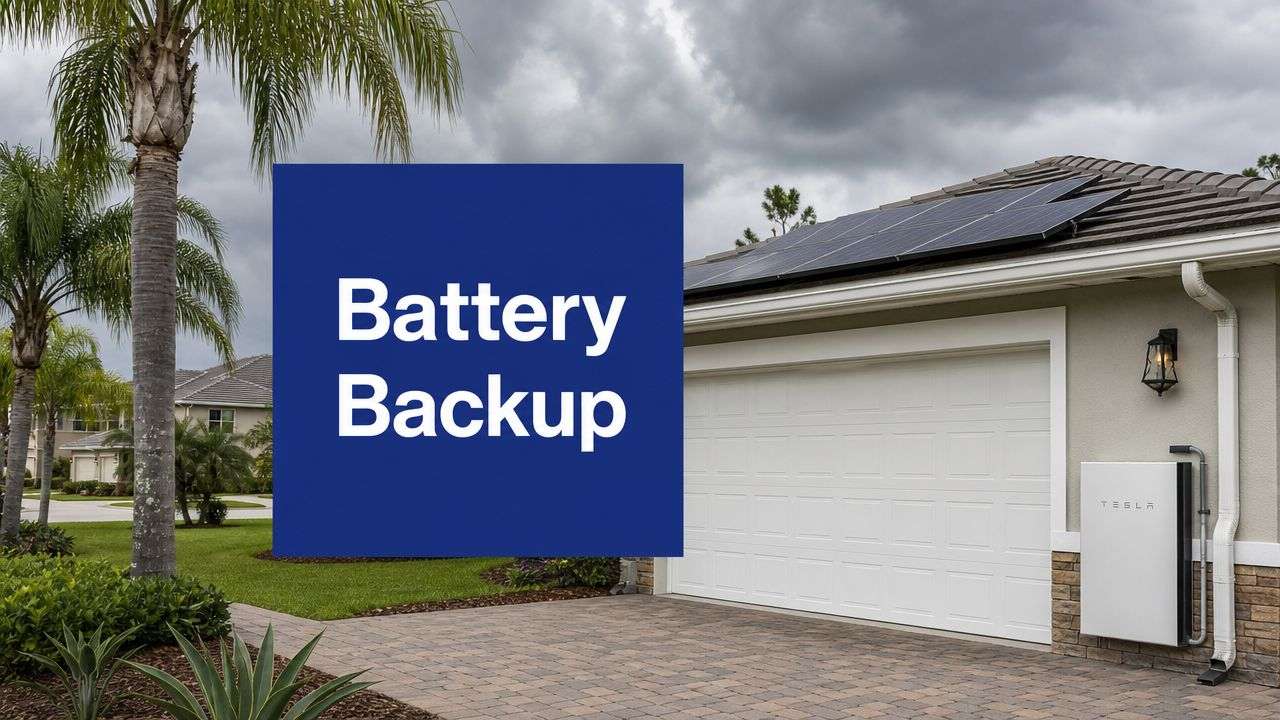
A dedicated guide to solar battery backup for power outages can help you think through these details before reviewing proposals.
During an outage, the best battery system isn't the one with the most marketing hype. It's the one that keeps your most important circuits running for the conditions you actually expect to face.
Sizing Your System For Florida's Sunshine
A Florida homeowner gets two quotes for the same house. One installer recommends as many panels as can fit on the roof. Another recommends fewer panels on cleaner roof planes with different inverter equipment. Both proposals promise savings. Only one may be sized around how the house uses power and how the roof performs.
That is the gap many sales conversations skip.
Sizing a solar system is part math, part site analysis, and part judgment. Your last 12 months of electric use set the starting point. After that, roof direction, shade at different times of day, panel placement, and equipment choices shape how much of that usage solar can realistically cover. An independent consultant helps sort this out before you compare installer quotes, so you are judging production assumptions instead of reacting to panel count.

Roof Direction And Tilt
South-facing roof space usually produces strong year-round output, but Florida roofs are rarely that simple. Hip roofs, valleys, vents, plumbing stacks, and aesthetic restrictions often break the usable area into smaller sections.
The National Renewable Energy Laboratory explains that solar output depends heavily on orientation, tilt, and shading in its homeowner resource on planning a home solar electric system. The practical takeaway is simple. A good layout uses the best available roof planes. It does not force a perfect textbook design onto an imperfect real roof.
In Florida, east and west roof planes can still be useful. They just produce differently across the day. That matters if your household uses more power in the morning, in the late afternoon, or during air-conditioning-heavy evening hours.
Shading Can Shrink Real Output Fast
Shade is where many estimates drift away from reality.
A few branches crossing one section of the array for part of the afternoon may not look serious from the ground. On a production model, that same shade can cut into the output of specific panels every day. The U.S. Department of Energy notes in its homeowner's guide to going solar that shading has a direct effect on system performance and should be evaluated before final design.
Florida neighborhoods make this especially important. Mature oaks, palms, second-story rooflines, chimneys, and nearby homes can all create irregular shade patterns that change by season.
That is why a site review should answer a very plain question. Which parts of the roof stay clean and sunny during the hours that matter most?
Why Inverter Choice Affects Sizing
Inverter choice changes how the system handles real-world roof conditions.
A string inverter connects panels in groups. That setup often works well on open roof planes with the same orientation and minimal shading. Microinverters and power optimizers manage panel-level performance, which can be useful when one section of the roof gets partial shade or when panels face different directions. SolarEdge explains these differences clearly in its overview of string inverters, power optimizers, and microinverters.
Here is the plain-language version:
Open roof with consistent sun
A string-based design may be perfectly reasonable.Roof with mixed orientation or partial shade
Panel-level electronics often fit the site better.Several small usable roof sections
Equipment selection matters as much as total panel count.
A solar proposal should match the roof you have, not the roof the salesperson wishes you had.
Size The System Around The House, Not The Sales Target
Some households want to offset most of their annual bill. Others know they plan to buy an electric vehicle, replace a gas water heater, or add a pool pump later. Those future loads should be discussed before system size is locked in.
Efficiency upgrades belong in the same conversation. If you reduce cooling demand first, you may need fewer panels. In Florida, changes like duct sealing, insulation improvements, and drapery, shades, and shutters for efficiency can lower daytime air-conditioning use enough to affect system sizing.
This part is easy to miss. The cheapest kilowatt-hour is often the one you never have to produce.
What A Good Site Review Should Include
Before anyone recommends panel count, ask for a site-based explanation of these items:
- Twelve months of utility usage, so the design starts with actual demand
- Roof plane analysis, including orientation, tilt, and usable space
- Shading review, based on trees, obstructions, and neighboring structures
- Equipment rationale, so you know why a string inverter, microinverter, or optimizer setup was chosen
- Future load planning, such as EV charging, pool equipment, or electrification upgrades
If you want a fuller picture of pricing after the size is defined, this breakdown of Florida solar power costs and system pricing helps connect system design to the numbers on a proposal.
A well-sized system is not the one with the highest wattage on paper. It is the one built around your roof, your usage pattern, and realistic production assumptions you can verify before you sign.
Understanding Solar Costs And Financial Returns
Most homeowners eventually get to the blunt question. What does this cost, and does it pencil out?
The cleanest way to think about solar economics is to separate price, production, and time. Price is what you pay for the system. Production is what the system is expected to deliver over its life. Time is how long you plan to stay in the home and how patient you are about recovery of that investment.
The broad cost picture is documented well enough to anchor expectations. One industry summary cited by the Energy Center notes an average installed cost of about $3.36 per watt, putting a 7-kW system near $23,500 before incentives, and it also notes typical panel efficiency of 15% to 23% with degradation around 0.5% per year over a long operating life in its homeowner solar overview at Energy Center.

What Makes Up The Price
A residential solar proposal usually includes several cost layers, even if the quote shows one final number.
Solar equipment
Panels, inverter equipment, racking, electrical balance-of-system parts, and possibly batteriesLabor and installation work
Mounting, wiring, electrical integration, and commissioningSoft costs
Design, permitting, interconnection paperwork, project management, and procurement overhead
That's why two proposals with similar wattage can still be very different in value. One may include stronger equipment, better outage planning, or a more realistic design for the roof.
How To Think About Return
I prefer a simple framework.
First, ask how much of your current utility use the system is expected to offset. Then ask how stable those assumptions are. A proposal that relies on perfect conditions, aggressive production forecasts, or unclear utility treatment is harder to trust.
Second, think about the system as a long-life asset. If panels degrade gradually rather than suddenly, that makes long-term modeling more predictable. The degradation figure above is useful because it reminds homeowners that output changes over time, but in a manageable, expected way.
Third, decide whether resilience belongs in your financial picture. In Florida, backup value isn't just theoretical. If a battery keeps refrigeration, communications, or medical loads running during outages, that benefit may matter even if it doesn't show up neatly as a monthly bill line item.
Florida-Specific Cost Questions To Raise
Florida homeowners should press on local details when reviewing proposals.
How is utility bill offset being modeled
You want plain-language assumptions, not a black-box estimate.What happens if your usage changes
A household with a future EV, home office, pool equipment, or new AC pattern may need a different system strategy.How do efficiency upgrades compare with adding more solar
Sometimes reducing waste first improves the economics. For example, better window performance can lower cooling demand. If you're exploring the non-solar side too, this guide to drapery, shades, and shutters for efficiency is a useful complement to solar planning.
A more detailed local breakdown of Florida solar power cost considerations can help you evaluate proposals with the right lens.
Bottom line: Don't judge a proposal by price alone. Judge it by whether the production assumptions, equipment choices, and backup strategy match your house and your priorities.
Financing Your Residential Solar Project
Once the design makes sense, the next question is how to pay for it.
The big divide is simple. Cash and loans mean you own the asset. Leases and similar arrangements mean you're paying for access to the system without owning it in the same way. That difference affects control, long-term savings, and what happens if you sell the home.
Cash Purchase
Paying cash is the most direct path.
You own the system from day one. That usually means the cleanest long-term economics because there's no lender cost layered into the project. It also keeps decision-making simpler. If your priority is long-term household financial efficiency and you have the funds available, cash often gives you the clearest path.
The downside is obvious. You're tying up capital that might otherwise stay invested, reserved for renovations, or held as emergency liquidity.
Solar Loan
A loan spreads the project cost over time while still preserving ownership.
For many Florida homeowners, this creates the middle path. You can move forward without a large upfront payment, but you still evaluate the solar system as something you own rather than rent. The key is to review the total repayment picture carefully, including how the loan structure affects monthly cash flow and how quickly savings materialize.
Buyers need discipline. A low monthly payment can make a proposal look attractive even if the total financing cost is less favorable over time.
Lease Or Similar Third-Party Model
A lease can reduce upfront friction, but it changes the economics.
You may get easier entry into solar, yet the long-term value usually works differently because you're not owning the equipment in the same way. That can affect flexibility later, especially if you move, refinance, or want to modify the system.
For some households, that tradeoff is acceptable. For others, it creates too much complexity. The right answer depends on how long you expect to stay in the home and whether your goal is short-term payment management or long-term asset ownership.
A Simple Ownership Test
Ask yourself three questions:
- Do I want the energy asset on my side of the ledger
- Do I expect to stay in this home long enough for the structure to matter
- Do I value simplicity at sale or refinance time
If you're comparing paths in more detail, this guide on how to finance solar panels is a good practical resource.
For most homeowners who want solar to function as a long-term home investment, ownership tends to be the cleaner framework. For homeowners focused only on immediate payment reduction, a rental-style structure may still be worth reviewing carefully.
De-Risking Your Investment With An Independent Consultant
A common Florida solar story goes like this. A homeowner collects three proposals, sees three different system sizes, two battery recommendations, and financing numbers that do not line up. Everyone says their design is right. Few explain the assumptions clearly enough for you to test them.
That is why an independent consultant can be so useful before you sign anything.
By this point, you have already seen that home solar is not one choice. It is a sequence of linked choices about roof fit, production, backup priorities, equipment, installer quality, and contract terms. If one assumption is off early, the rest of the proposal can drift off course with it. A consultant works like an owner's representative. The job is to examine the plan from your side of the table, not from a sales quota.
That matters even more in Florida, where homes often have shade, complex roof lines, HOA limits, insurance questions, or storm-resilience goals that do not fit a standard template.
What An Independent Consultant Actually Does
A good consultant starts with feasibility, not equipment.
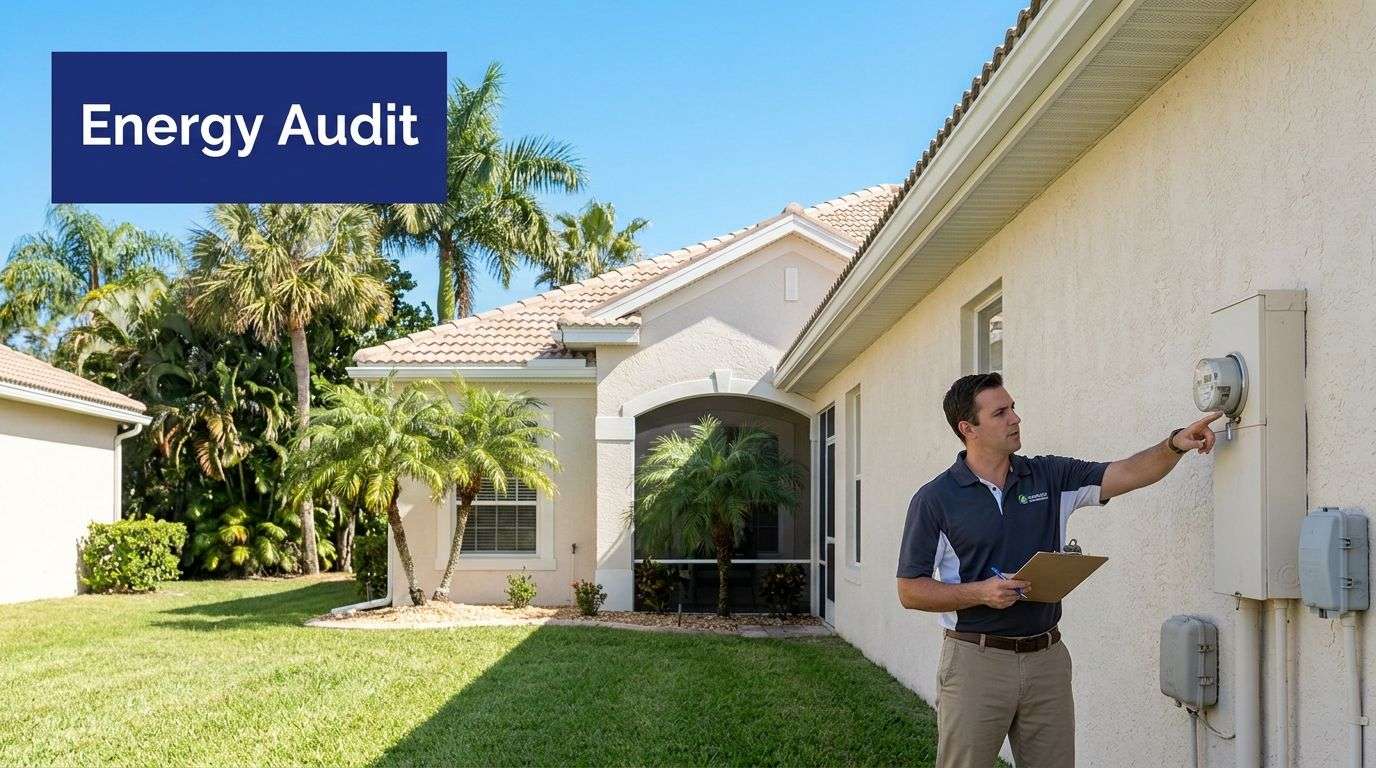
First, they check whether solar makes sense on the property at all. That includes roof orientation, usable space, shading, service panel considerations, and whether your goals are realistic for the site. If the house is a poor solar candidate, you should hear that early.
Then they help translate your goal into a system plan. That sounds simple, but many homeowners use the same word, savings, to mean very different things. One family wants to offset as much of the electric bill as possible. Another wants the refrigerator, internet, and a small AC circuit to stay on during outages. Another wants a long-term home investment with clean ownership and predictable returns. Those are different projects.
A consultant can also review proposals line by line:
Feasibility screening
Does the roof, electrical setup, and site condition support a practical solar project?System design guidance
Does the proposed setup match your actual goal, whether that is bill reduction, critical-load backup, or a broader resilience plan?Proposal review
Are production estimates, battery assumptions, and financial projections reasonable?Installer vetting
Does the installer have the licensing, experience, and project approach that fit the job?
Solar Energy Management LLC is one Florida example of a consultancy that provides feasibility studies, ROI modeling, battery planning, and design guidance before a homeowner commits to installation.
Why That Matters Financially
Most costly solar mistakes do not look dramatic on signing day.
They show up later, when a battery is larger than your outage plan requires, when a roof layout underperforms, or when a financing structure limits flexibility years down the road. A consultant reduces that risk by checking the math, pressure-testing the assumptions, and asking questions a sales process may skip.
The comparison is simple. An installer is usually paid to sell and build a system. An independent consultant is paid to help you choose wisely before you buy one. That difference in incentives can save a homeowner from spending tens of thousands of dollars on the wrong design, or from buying solar on a house that should not have rooftop solar in the first place.
Accountability also matters. If you are hiring an advisor for a high-value home decision, it is reasonable to understand how professional consultants think about errors, documentation, and liability. For that perspective, PIA's insights on consultant liability coverage offer a useful look at the professional side of advisory work.
The best time to catch a bad solar assumption is before equipment is ordered, not after it is on your roof.
The Primary Value Of Independent Planning
Independent planning makes the decision clearer.
If your roof is excellent for solar, a consultant should confirm that and help you compare options efficiently. If the roof is marginal, they should say so plainly. If your household would benefit more from a smaller solar array paired with battery-backed critical loads, that should shape the design. If rooftop solar is a weak fit, you deserve that answer before permits, contracts, and deposits start locking you in.
That is what de-risking looks like in practice. Fewer assumptions. Better questions. Smarter procurement.
If you want a data-driven review before you commit to a system, Solar Energy Management LLC helps Florida homeowners evaluate feasibility, compare residential solar energy solutions, model financial return, and plan battery backup around real household priorities.