A residential solar battery in Florida typically costs $9,000 to $18,000 before incentives, and many homeowners land around $6,000 to $12,000 after the 30% federal tax credit. If you're pricing battery backup for hurricane season or trying to cut expensive evening power use, that's the actual starting point, not the fantasy pricing you see in ads.
Those looking into battery storage in Florida are typically in one of two situations. They either just sat through another outage warning and decided they're done gambling with the grid, or they opened a summer utility bill and realized they want more control over when they buy electricity. Both are valid reasons. Neither should push you into buying a battery blindly.
My advice is simple. Treat battery storage like a financial and resilience decision, not a gadget purchase. The right system can protect critical loads, reduce dependence on utility pricing, and make a solar investment more useful. The wrong system can leave you with a large invoice, a backup setup that doesn't cover what you assumed, and a payback story built on contractor optimism instead of actual planning.
Why Florida Homeowners and Businesses Consider Battery Storage
A common Florida scenario is simple. A storm warning goes out, the grocery stores empty, and the next question is not whether the lights flicker. It is which loads you can keep running, for how many hours, and what that capability will cost you over the life of the system.
That is why battery storage keeps coming up in real client conversations. In Florida, the decision usually comes down to two financial risks. One is outage risk during hurricane season. The other is paying high utility bills at the wrong times of day, especially when air conditioning demand stays high into the evening.
For homeowners, battery storage can keep refrigeration, lighting, internet, garage access, medical devices, and a few selected circuits available when the grid fails. For businesses, the consequences are significant and easier to measure. Lost sales, spoiled product, security issues, tenant disruption, and idle staff all have a dollar value. Installers often stop at backup capacity. Smart buyers look at avoided losses, operating limits, replacement timing, and whether the system matches the property's risk profile.
Start with the job the battery needs to do.
- Critical load backup: Keep specific circuits running during outages.
- Energy shifting: Store solar production and use it later when grid power is less attractive.
- Business continuity: Support operations for offices, retail, multifamily, and other properties where downtime gets expensive fast.
Those are three different design targets. They should not produce the same proposal.
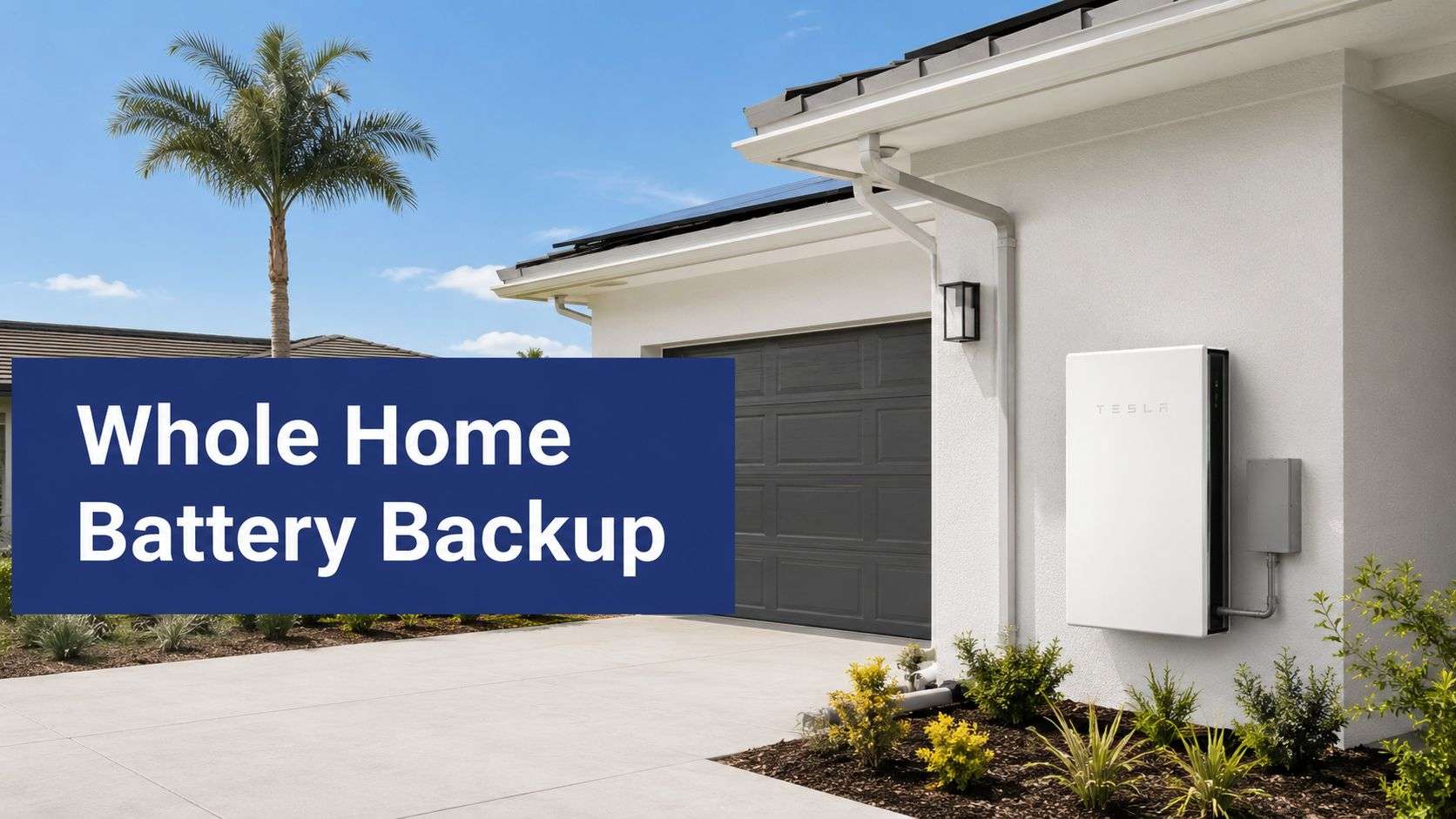
A small battery for a refrigerator, Wi-Fi, and a few lights is one budget. A whole-home system that tries to support large HVAC loads through extended outages is another. A commercial setup that needs refrigeration, POS systems, alarms, internet, and limited lighting during a grid event requires a more detailed electrical review, tighter load planning, and a harder look at total ownership cost.
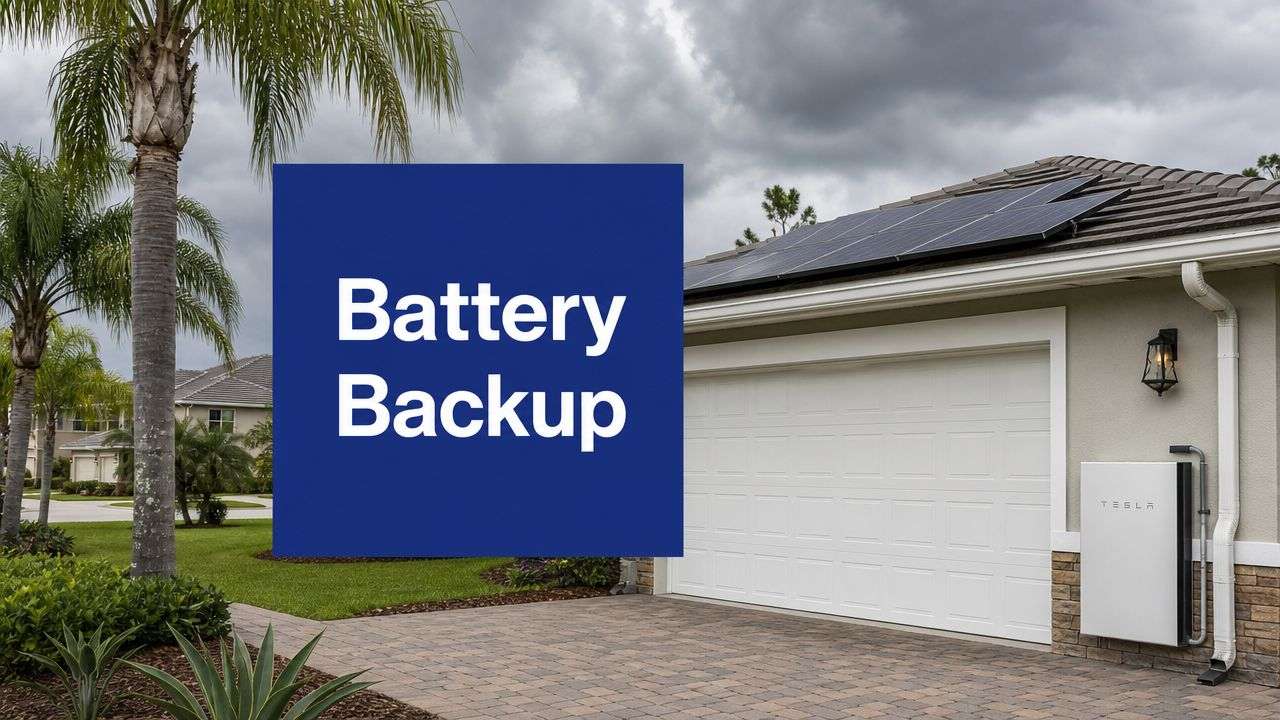
If outage planning is your main priority, review how battery backup for Florida power outages is usually set up before you compare brands. That will help you ask better questions about protected loads, runtime, storm operation, and transfer equipment.
Here is the question I ask first: what must stay on, and for how long?
That answer drives everything. It affects battery size, inverter configuration, whether you need partial-home or whole-building backup, and whether the project makes financial sense at all. In Florida, that planning matters more because weather risk is real, outage duration is unpredictable, and utility rules do not always reward exported solar power in a way that justifies a battery on savings alone.
The buyers who make good decisions are the ones who treat storage as infrastructure, not a gadget. They define the loads, assign a dollar value to downtime, and build around that. The ones who skip that step usually end up with a system that is too small for storm use, too expensive for the savings it delivers, or both.
Deconstructing The Total Cost Of A Solar Battery System
The battery itself is only one piece of the bill. That's where a lot of buyers get misled. They see battery cell pricing in the news and expect installed pricing to follow. It doesn't work that way.

Equipment Costs
The obvious line item is the battery unit, but the project rarely stops there. A complete Florida backup system often includes the battery, an inverter or inverter integration, monitoring hardware, disconnects, wiring, and a backup gateway or similar control equipment.
That gateway matters. It's what allows the system to separate from the grid safely during an outage and power designated loads. Without the right control hardware, you don't have a real backup system. You have expensive storage with limited practical use when the grid goes down.
Installation Costs
Labor is where many quotes spread out. One house may need a straightforward wall-mounted setup next to the main service equipment. Another may require long conduit runs, panel reconfiguration, added electrical work, or structural accommodations.
In Florida, installation complexity often rises when buyers want cleaner aesthetics, tighter equipment placement, or stronger backup architecture. Homes with older electrical infrastructure can also trigger extra work that wasn't obvious at the start.
If you're still comparing solar-plus-storage economics at the project level, this broader guide on Florida solar power cost helps frame where storage fits into the full investment.
Soft Costs And The Hidden Budget Killers
The least glamorous costs are often the ones buyers overlook:
- Permitting: Local approval fees and review requirements
- Design work: Electrical planning, load analysis, and backup configuration
- Interconnection: Utility paperwork and approval coordination
- Freight and logistics: Moving heavy equipment safely
- Warranty add-ons: Optional coverage that may or may not be worth buying
Practical rule: If a quote doesn't separate hardware, labor, and soft costs, you're not seeing the real project.
Here's the bigger market lesson. Battery prices have fallen hard over time. Our World in Data's review of battery price decline reports lithium-ion battery prices dropped from about $9,200 per kWh in 1991 to $78 per kWh in 2024, a decline of more than 99%. The same analysis says that since 1998, every doubling of global cumulative battery production reduced prices by roughly 19%.
That history matters, but it doesn't mean your installed project should be dirt cheap. It means the battery cell became far more affordable. The installed system still depends on equipment integration, electrical work, code compliance, and project execution.
Residential Solar Battery Pricing Scenarios In Florida
Florida homeowners usually overestimate what one battery can do and underestimate how much backup expectations shape the final bill. The cleanest way to compare options is by looking at installed cost on a $/kWh basis, then matching that to your actual backup goals.

What The Residential Benchmarks Show
For U.S. residential systems, installed pricing is often evaluated on usable storage capacity. EnergySage's residential battery pricing data reports average installed costs of $1,018/kWh for Tesla, $706/kWh for PointGuard Energy, and $1,437/kWh for Schneider Electric in the second half of 2025. The same source says a typical 13.5 kWh home battery costs about $15,228 before incentives.
That's the kind of benchmark Florida buyers should use. Not “How much is the battery online?” but “What's the installed cost per usable kWh for the backup outcome I want?”
If you're evaluating a Tesla-based setup specifically, this overview of Tesla Powerwall installation planning gives useful context for scoping and integration questions.
Critical Loads Versus Whole Home
It is at this point buyers either save money or waste it.
A critical loads design usually focuses on the circuits that matter most. Think refrigeration, internet, select lighting, garage door access, some outlets, and possibly a limited HVAC strategy if the electrical design supports it. That approach is usually the financially disciplined choice because it aligns battery capacity with the loads you need during outages.
A whole-home backup mindset sounds great until you price it properly. Once you want to support broad HVAC operation, kitchen loads, larger motor loads, and less selective use patterns, storage requirements rise fast. That usually means more battery capacity, more supporting equipment, and a much larger check.
How I Recommend Florida Homeowners Budget
Use this framework when reviewing quotes:
- If outage protection is the main goal: Prioritize critical circuits and realistic runtime.
- If bill management matters too: Pair storage planning with your actual evening usage pattern.
- If you want whole-home backup: Expect a premium and verify exactly what “whole-home” means in writing.
- If one quote looks much cheaper: Check whether it excludes gateway equipment, panel work, or permit-related items.
Buy enough battery to cover your real priorities. Don't buy a fantasy version of your house that only exists during a sales presentation.
Analyzing Commercial And Industrial Storage Costs
Commercial storage in Florida is a different conversation. Residential buyers usually focus on outage protection and self-consumption. Business owners care about those too, but they also have to think about operations, tenant obligations, refrigeration, equipment continuity, and demand-related utility costs.
The Installed Cost Spread Is Wide For A Reason
Commercial battery pricing varies much more than residential pricing because the project itself carries more variables. One 2025 commercial storage benchmark cites installed lithium system costs of $280 to $580 per kWh, falling to $180 to $300 per kWh for larger containerized deployments. The same source notes that a 100 kWh system can cost $25,000 to $50,000 depending on project complexity.
Those numbers tell you two important things.
First, there is no honest “one-size-fits-all” commercial battery quote. Second, scale matters. Larger systems often carry a much lower unit cost because fixed engineering, controls, and interconnection costs get spread across more capacity.
What Florida Businesses Should Actually Optimize For
Too many businesses start with outage fear and stop there. Backup matters, especially in Florida, but a battery should be sized around the value it creates, not just the panic it calms.
For commercial sites, I recommend evaluating storage against these decision points:
- Load profile: When does the facility use the most electricity?
- Critical process protection: Which operations cannot go down?
- Peak demand exposure: Where do the biggest utility cost spikes occur?
- Runtime needs: How long does the business need support during an outage?
- Future expansion: Will EV charging, refrigeration, or tenant needs increase?
The right project might be a modest system protecting key circuits. It might also be a larger containerized setup integrated into a broader energy strategy. The point is to size around business value, not brochure language.
If you're working through this at the property or portfolio level, a dedicated review of commercial solar battery storage options in Florida is the right next step.
My Advice For Commercial Buyers
Don't ask vendors for a battery price first. Ask for a load-driven storage strategy. If they can't tie system size to your building's demand pattern, outage priorities, and utility structure, they're selling equipment, not solving a problem.
For commercial projects, cheaper per kWh isn't automatically better. A poorly scoped battery can be an expensive box on the wall that doesn't hit the economic target you needed.
Key Factors That Drive Your Final Price
Two battery quotes can look similar on paper and produce very different real-world value. That's because the final solar battery storage cost is driven by a mix of chemistry, system architecture, electrical constraints, and installation complexity.

Technology Choices Matter
Battery chemistry affects safety profile, packaging, and product positioning. Buyers often compare Lithium Iron Phosphate and Nickel Manganese Cobalt options, but they don't always compare them in the context of backup goals, available space, and integration requirements.
Inverter design matters too. A battery paired cleanly with the right inverter architecture is usually easier to deploy and easier to manage. A retrofit into an older or more complicated electrical setup can drive up labor and supporting hardware costs fast.
The Market Trend People Misread
This is the biggest pricing mistake I see. People read about battery prices dropping and assume installed systems should now be cheap. The battery pack is getting cheaper. The project around it isn't falling at the same pace.
Nrg Clean Power's discussion of solar battery cost drivers notes that battery pack costs continue to fall 8% to 12% year over year, but the final installed price is still dominated by labor, permitting, and backup gateways. That's exactly why end-user pricing remains sticky even while manufacturing trends improve.
The Four Drivers I Tell Clients To Watch
- System capacity: More storage raises total cost, but larger systems can lower effective unit pricing.
- Brand and ecosystem: Some products carry a premium because of software, compatibility, or market positioning.
- Installation complexity: Panel upgrades, conduit runs, location constraints, and backup panel work can move the quote a lot.
- Scope creep: Adding whole-home expectations late in the process is one of the fastest ways to blow up a budget.
For Florida buyers, storm-readiness requirements also shape design choices. Some households can live comfortably with selective backup. Others insist on broader coverage because they've already experienced long outages. That difference matters more than brand loyalty.
What To Do With Conflicting Quotes
When quotes are all over the map, strip them down to comparable pieces:
- Check usable storage capacity
- Confirm what loads are backed up
- Identify included control hardware
- Ask whether panel work is included
- Review warranty terms and exclusions
If you need an independent planning layer before you commit, Solar Energy Management LLC provides feasibility work, ROI modeling, storage planning, and design guidance for Florida clients who want the numbers reviewed before moving into procurement.
Florida Incentives And Calculating Your Financial Return
A Florida homeowner spends money on a battery for one of two reasons. They want lower power costs, or they want the house to keep working after the grid fails. Sometimes they want both. The mistake is forcing both goals into the same payback story.
What The Federal Tax Credit Changes
The federal tax credit cuts net installed cost. Good. It does not fix a weak project.
If your system qualifies, use the post-credit number in every return calculation. That is your real out-of-pocket starting point. Then pressure-test the purchase against Florida reality, especially hurricane outages, utility billing structure, and how often the battery will cycle for savings instead of sitting idle.
If you want the state-specific rules, exemptions, and planning considerations in one place, review the current Florida solar incentive landscape before you build a spreadsheet.
How I Calculate Return In Practice
I model battery return in layers, not with one oversimplified payback number.
Start with net installed cost after incentives. Then separate value into three buckets. Bill reduction. Outage protection. Operational continuity.
That separation matters. A battery that saves modestly on utility costs can still be a smart buy in Florida if it protects refrigeration, medical loads, internet, security systems, or business operations during a multi-day outage. But call that what it is. Resilience has value, and it should be priced as resilience, not disguised as utility savings.
For businesses, funding method changes the economics fast. Cash purchase, equipment financing, and sustainability-focused lending all produce different cash flow results. If you are comparing capital options, green business loans can help frame how financing may fit a storage project.
The Mistake That Distorts Payback
Buyers often assume every stored kWh has the same value. In Florida, that is wrong.
The value depends on when the battery discharges, what loads it protects, how your utility bills you, and whether the system is programmed for backup, self-consumption, or peak demand control. A storm backup battery has a different financial profile from a battery that cycles daily to reduce grid purchases.
Your payback depends on how often you use stored energy in a way that avoids costs or prevents disruption.
Commercial buyers should go one step further and model depreciation, downtime exposure, and financing treatment alongside energy savings. That is the total cost of ownership view installers often skip. The right question is not just payback period. The right question is what this asset does to cash flow, outage risk, and operating cost over its full service life.
A Practical Checklist For Florida Battery Buyers
Most battery mistakes happen before installation. They happen when buyers skip planning, trust vague promises, or compare quotes that aren't comparable.

What To Gather Before You Ask For Quotes
Bring real information to the table. At minimum, have these ready:
- Utility history: Gather a full year of electric bills so seasonal usage is visible.
- Critical load list: Write down what must stay on during an outage.
- Backup expectations: Decide whether you want selective backup or a broader whole-home approach.
- Property constraints: Note panel location, existing solar equipment, and available wall or pad space.
- Future changes: Include EV charging plans, renovations, or new large loads.
If you skip this step, vendors will fill in the blanks for you. That usually benefits them more than you.
Questions Every Florida Buyer Should Ask
Use direct questions. Don't let the conversation drift into product hype.
- What exactly will this system back up during a grid outage?
- How is the backup configuration being handled?
- Is all required control equipment included in the quote?
- Does the proposal include electrical upgrades if needed?
- What assumptions are being used for financial savings?
- What is excluded from this price?
- How would this design perform during an extended outage scenario in Florida?
The Buying Standard I Recommend
Here's the standard I use. Don't buy a battery until you can clearly explain three things in one sentence each:
- Why you want it
- What it will power
- How the economics work for your household or business
If you can't do that yet, you're not ready to sign.
The strongest buyers get multiple quotes, compare backup scope instead of just sticker price, and insist on a planning document that matches battery size to actual need. That's how you avoid overbuying, underbuying, or misunderstanding the system you're paying for.
If you want an independent second look before committing to a battery proposal, Solar Energy Management LLC helps Florida homeowners and businesses evaluate solar and storage projects with feasibility analysis, financial modeling, battery planning, and procurement guidance so you can make a clear decision before signing with an installer.