Finding your solar partner in the Sunshine State starts with a problem most Tampa property owners already feel. You know Florida sun can offset utility bills, support backup power, and make a roof or parking area work harder. But once you start comparing solar companies in Tampa Florida, the process gets messy fast. Every company promises quality. Every proposal looks different. Every financing option seems designed to make side by side comparison harder than it should be.
That confusion is exactly why the smartest buyers separate planning from selling. A solar installer builds systems. An independent consultant helps you decide whether the system, the storage plan, the financing structure, and the installer fit your property and your goals. That difference matters if you're trying to protect cash flow, avoid underbuilt backup systems, and make a long term decision with confidence.
Tampa also sits in a market with real momentum. Tampa Electric says that by the end of 2026 it expects to have deployed more than 1,600 MW of solar capacity, enough clean energy to power about 260,000 homes, with solar projected to represent 17 percent of its total energy portfolio, the highest share among electric companies operating in Florida, according to Tampa Bay Business and Wealth's report on Tampa Bay energy investments. For local businesses trying to stand out in a crowded market, visibility still matters too, which is why this companion guide to local SEO for home service companies is useful if you're evaluating how solar firms present themselves online.
1. Solar Energy Management LLC

You get three solar proposals, and none of them match. One promises the fastest payback. One pushes a battery you may not need. One prices low but leaves out the details that matter later. That is the moment to bring in an independent advisor before you sign anything.
Solar Energy Management LLC earns the first spot for that reason. The firm works as an independent solar power consultant rather than a sales-driven installer, which changes the entire decision process. If you own a home and want a clean quote comparison, or you run a commercial property and need solar plus storage to pencil out, this is the kind of partner that helps you sort strategy before equipment and procurement take over.
That order matters.
A residential project still needs accurate production estimates, realistic savings assumptions, and backup planning tied to the loads you care about during an outage. A commercial project raises the stakes. Now you are dealing with cash flow, tax treatment, resilience requirements, electrical constraints, and contractor selection. If those pieces are handled in the wrong order, the project can look good on paper and disappoint in operation.
Why They Belong At The Top Of This List
Solar Energy Management LLC brings long construction and energy efficiency experience to the planning side. That gives homeowners and business owners a practical screen for judging proposals before they commit. The better question is not which panel brand sounds premium. The better questions are whether the system is sized correctly, whether storage supports real critical loads, and whether the financing structure fits your budget and tax position.
That is the key value here. An independent consultant helps de-risk the purchase.
For commercial buyers, that can be the difference between a project that strengthens the balance sheet and one that creates avoidable friction. Federal incentives, depreciation strategy, demand considerations, resilience planning, and implementation sequencing all affect returns. Those details should be examined before the installer has control of the conversation.
Practical rule: If one company is selling the equipment, arranging the financing, and forecasting the savings, get an independent review before you approve the project.
Another advantage is discipline around system design. Florida buyers often spend too much time comparing module brands and too little time checking roof condition, interconnection assumptions, outage priorities, battery dispatch strategy, and long-term service planning. Those factors usually shape outcomes more than the logo on the panel.
Best Fit And Tradeoffs
This firm fits buyers who want objective analysis first and installer selection second. It is a strong option for homeowners who want side by side quote review, and it is even more useful for businesses that need a tighter planning process before bids move forward.
Use Solar Energy Management LLC if you want:
- Vendor-neutral analysis: Guidance is not tied to one installer or hardware line.
- Financial modeling: System design is evaluated against ROI, tax benefits, cash flow, and payback expectations.
- Battery and microgrid planning: Backup strategy is built around resilience and operational priorities, not generic sales language.
- Implementation support: The firm can coordinate with licensed EPC partners so the project moves from planning to execution without losing the original strategy.
The tradeoff is straightforward. They do not install systems themselves, and they do not post flat pricing online. That is normal for consulting work where site conditions, electrical infrastructure, resilience goals, and financing choices all change the recommendation.
If your goal is to avoid a bad solar decision, start with the advisor who has no reason to force the wrong system on you.
2. Tampa Bay Solar

If you already know you want a local installer and you value in house execution, Tampa Bay Solar deserves a close look. The company serves Hillsborough and surrounding counties, handles residential and commercial work, and also takes on agricultural, nonprofit, and battery backup projects. That range matters because it suggests they aren't limited to one narrow project type.
Their pitch centers on local service, engineering minded leadership, and hurricane ready design. In Tampa, that positioning makes sense. Buyers aren't just shopping for savings. They're trying to protect operations during outages and avoid shortcuts that become obvious in the first major storm season after install.
Where They Stand Out
The biggest advantage here is process control. Tampa Bay Solar emphasizes in house crews rather than heavy subcontractor reliance. That usually makes communication easier and can reduce the handoff problems that show up when sales, design, and installation sit with different parties.
The company also leans into resilience. That's worth paying attention to because backup claims are often oversold in this market. A lot of firms will mention batteries without doing a serious critical load discussion. Tampa Bay Solar at least frames the conversation around readiness, not just panel count.
Some Tampa buyers don't need the cheapest quote. They need a system that still makes sense after a storm, a rate change, or a roof replacement decision.
One caution. Their own site raises resilience questions that many companies still don't answer clearly, especially around hurricane performance, insurance pressure, backup strategy, and commercial ROI. If you're considering them, push for specifics on outage planning, battery sequencing, and what the design will support at your property.
Who Should Consider Them
Tampa Bay Solar is a strong fit if you want a local installer with broad project capability and a quality focused process. They make particular sense for owners who value local references, energy audits, and direct accountability.
Keep these tradeoffs in mind:
- Best for local execution: Good fit if you want a Tampa area company with direct involvement in the work.
- Useful for resilience planning: Better fit than a basic sales driven installer if battery backup is part of the project.
- Possible downside on timing: Strong local demand can create schedule pressure during storm season or heavy incentive periods.
- Possible downside on price: In house quality control often costs more than a low bid competitor.
3. Solar Source

Some buyers don't want a fast growing sales machine. They want an established Florida operator with a long service history. That's where Solar Source separates itself. The company has operated in Florida since 1984 and serves Greater Tampa Bay through its Largo presence.
Longevity doesn't guarantee a better project, but it does matter in solar. Systems are long lived assets. Inverters fail, roofs age, ownership changes, and service calls happen years after installation. A company with deep roots and a service bench can be a safer choice than a newer firm with aggressive sales and thinner support.
Why Experience Matters Here
Solar Source isn't just a photovoltaic installer. The company also works in solar pool heating, solar hot water, battery systems, service, repair, and system takeovers. That broader operating model makes them attractive if your property needs more than one energy upgrade or if you're inheriting an existing system that needs support.
For buyers focused on economics, Tampa's residential market gives useful context. EnergySage market data for Tampa shows an average post tax credit cost of about $10,290 for a 5 kW system and about $18,522 for a 9 kW system, with a benchmark of $2.94 per watt after the federal tax credit, according to EnergySage's Tampa solar market page. Use those figures as a comparison point when Solar Source prices a project, especially if you want a service heavy provider and expect that premium to show up in the quote.
When To Choose Solar Source
Choose Solar Source if long term service capacity matters more to you than a boutique sales experience. They fit well for owners who want a Florida company with established maintenance capability and battery options from recognizable platforms.
A quick way to frame them:
- Strong for service minded buyers: Especially useful if support after installation matters as much as the initial install.
- Good for mixed solar needs: Practical if you're combining PV with hot water, pool heating, or battery storage.
- Less ideal for buyers wanting a narrow PV specialist: Their broad history may feel less focused if you're only comparing premium rooftop PV proposals.
- Expect internal queueing at busy times: Larger organizations can move slower when service and install demand rise at the same time.
4. May Electric Solar

May Electric Solar is the company to examine if post install support is at the top of your list. May Electric Solar leans hard into in house service and a prominently advertised 30 year service and labor warranty. In a market where many buyers worry more about who answers the phone in year seven than who made the strongest sales presentation in week one, that's a compelling position.
The company is also closely associated with Enphase microinverters and the Enphase IQ Battery 5P. That creates a clearer equipment story than you get from firms that offer everything to everyone. Some buyers will like that standardization. Others will prefer broader hardware choice.
The Case For A Service First Installer
This is a good fit if your priority is dependable support and a straightforward battery path for Florida outages. Enphase based systems appeal to a lot of homeowners because they offer module level architecture and a well known storage ecosystem. May Electric Solar appears to build around that playbook rather than treating batteries as an optional add on.
That approach can simplify design, monitoring, and service. It can also make quote review easier because the installer isn't constantly changing equipment combinations across proposals.
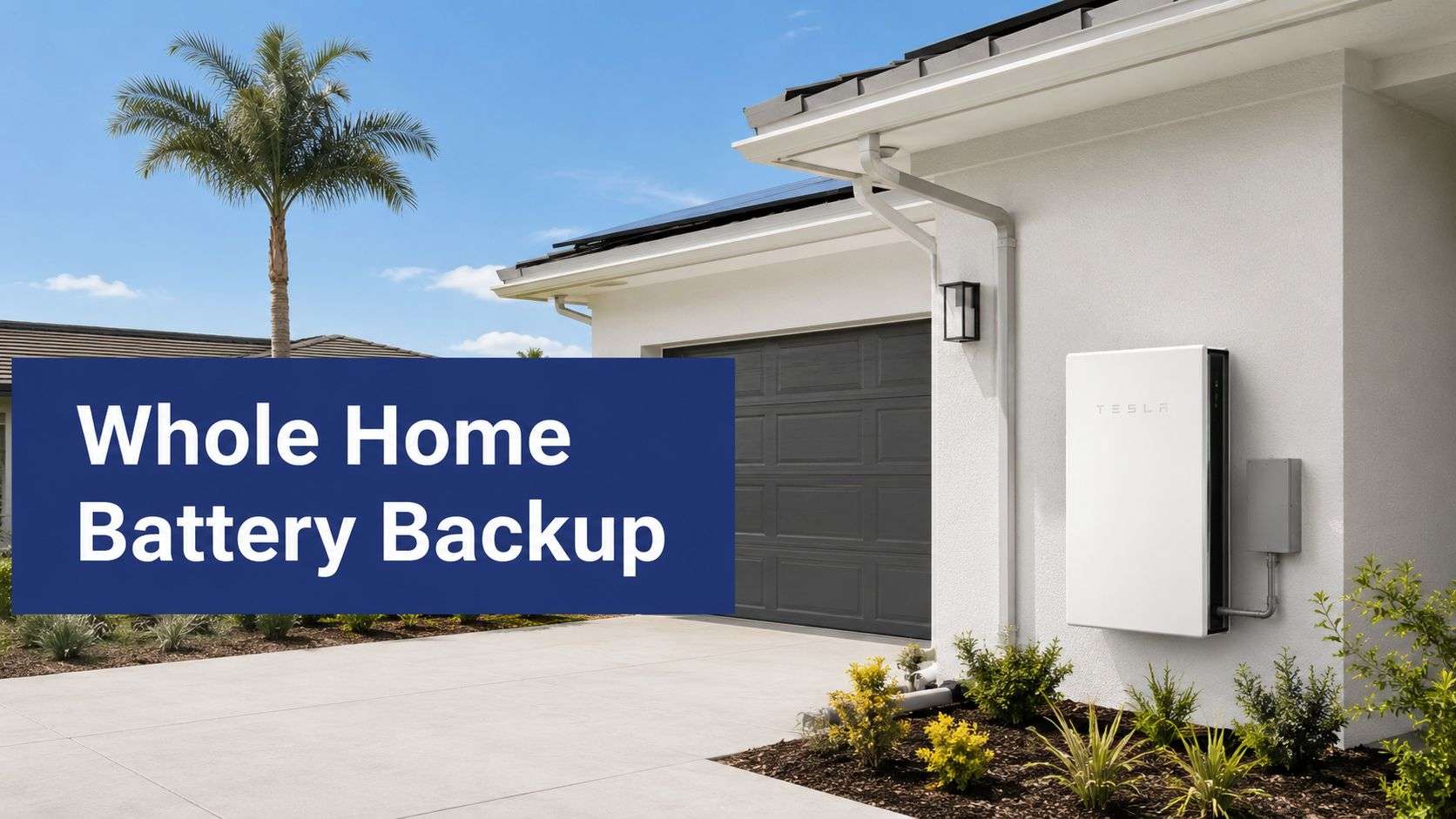
Ask them to show exactly how the battery plan supports your critical loads. "Whole home backup" language often means something narrower once you get into the design documents.
Who Should Hire May Electric Solar
May Electric Solar makes the most sense for homeowners who want a support focused partner and are comfortable with an Enphase centered ecosystem. If resilience planning matters and you value labor coverage, they move up the list quickly.
Their main strengths and limitations are clear:
- Strong labor coverage: The long service and labor warranty stands out.
- Clear battery integration path: Good option if you want one coherent equipment family instead of a custom hardware mix.
- Less flexible equipment menu: Buyers who want to compare multiple inverter or battery ecosystems may find the choices narrower.
- Potentially higher pricing: High touch service models and long warranty commitments usually aren't the cheapest route.
If you're comparing them with a lower cost competitor, don't stop at the system price. Compare response obligations, service terms, and what happens when a component fails after the installer has moved on to the next market cycle.
5. Solar Bear
Solar Bear becomes more attractive the moment roof work enters the conversation. Tampa homeowners often discover that the solar decision isn't just about energy. It's about whether the roof has enough life left to justify panel installation. A company that handles solar and roofing together can simplify sequencing, permitting, and accountability.
That's Solar Bear's core appeal. The company operates in Florida, has a Tampa presence, markets solar PV and battery backup, and positions itself as a no subcontractor provider with long warranties and heavy homeowner education around incentives. If you need reroofing and solar under one umbrella, this is one of the more practical names to review.
Best Use Case For Solar Bear
This is not my first recommendation for every buyer. It is one of the better recommendations for properties where the roof is part of the solar problem. Coordinating two contractors can create delays, warranty disputes, and finger pointing over penetrations or sequencing. A bundled provider reduces that friction.
Solar Bear also has strong visibility and review volume, which usually means you'll find plenty of buyer experiences to read before moving forward. That doesn't replace due diligence. It just gives you more signal.
Use them when these conditions apply:
- Your roof is aging: One company handling reroof and solar can reduce scheduling conflict.
- You want a simplified homeowner process: Financing and project communication can be easier under one organization.
- You still want written verification: Compare the marketed warranty story against the contract documents.
- You need timeline clarity: Rapid growth and broad service territory can affect scheduling consistency.
One more point matters in Tampa. A lot of sales organizations can explain incentives well, but fewer can explain how roof replacement timing changes total project economics. Ask Solar Bear whether they recommend reroofing now, delaying solar, or designing around the remaining roof life. Their answer will tell you whether you're talking to a project advisor or a closer.
6. ESD Solar

ESD Solar is the scale player on this list. ESD Solar has a broad Florida footprint, a Tampa Bay presence, and a model that spans residential PV, roofing, and larger project support through EPC style partnerships. If your priority is logistics, deployment capacity, and a company that's used to handling many roof types and jurisdictions, they deserve consideration.
This isn't the boutique choice. That's the point. Some buyers want a regional operator that can move projects through a repeatable process and support partner work at larger scale.
Where Scale Helps And Where It Doesn't
A bigger operator can be useful when speed matters. Standardized operations, broader staffing, and experience across multiple permitting environments can help keep residential jobs moving. That can matter if you're trying to coordinate solar with roofing, refinancing, or a property turnover timeline.
The tradeoff is variability. Larger companies can deliver excellent results, but the customer experience often depends on which crew, project manager, and service path you get assigned. That's why buyers should verify who is performing the work and how service requests are routed after interconnection.
Bigger isn't safer by default. In solar, process quality at the branch and crew level matters more than company size on a truck wrap.
When ESD Solar Makes Sense
ESD Solar is a practical option for buyers who want a regional Florida provider with enough operational depth to manage straightforward residential jobs efficiently and support partner driven project models.
Consider them if these priorities match your project:
- Operational reach: Useful if you want a company familiar with different Florida jurisdictions and roof conditions.
- Roofing included: Helpful when the project involves both roof work and solar.
- Scalable delivery: Better fit for volume oriented work than a highly customized consultant led process.
- Need for verification: Ask direct questions about crew assignment, quality control, and service escalation before signing.
If you compare ESD Solar against smaller Tampa focused firms, don't reduce the decision to sales presentation style. Compare execution path, roof coordination, post install service, and who owns the project from permit to final commissioning.
7. Solar Advantage

Solar Advantage is the local specialist for buyers who want a Tampa based contractor with credentials, published licenses, roofing integration, and commercial capability in the same package. Solar Advantage positions itself as NABCEP certified and supports both residential and commercial projects, including battery backup and roof bundled work.
This is the company to keep on your shortlist if you're not looking for a statewide brand and you want a more locally centered relationship. Their integrated model is especially relevant for buyers who need tighter coordination between solar scope and roof scope.
Why Local Commercial Capability Matters
A lot of firms market to both homeowners and businesses, but their commercial depth can be hard to verify from the outside. Solar Advantage appears to lean into structured financing support and larger project experience rather than treating commercial work as a side offering.
That matters for property owners who need more than a basic offset system. Commercial solar in Florida often involves a different conversation. Roof use strategy, tenant metering, financing alignment, and resilience planning usually matter more than headline panel pricing.
For homeowners, Tampa's economics still look attractive when the project is sized and priced properly. A Tampa market page reports an average post incentive price of $2.94 per watt, a typical 6 year payback period, and projected 20 year savings in the range of about $24,837 to $25,976 for standard residential systems, according to PowerOutage's Tampa solar market overview. Use that as a market check when reviewing a Solar Advantage proposal.
Who Should Put Them On The Final Shortlist
Solar Advantage is a strong fit for Tampa buyers who want local focus, roofing integration, and a company that can credibly discuss commercial solar alongside residential work.
Their profile is easiest to understand this way:
- Best for Tampa focused buyers: Good choice if local presence matters to you.
- Useful for roof plus solar projects: Integrated delivery can simplify project coordination.
- Worth considering for commercial owners: Structured financing support is valuable if you need more than a homeowner style quote.
- Watch capacity constraints: Boutique local firms can hit scheduling limits during high demand periods.
Top 7 Tampa Bay Solar Companies Comparison
| Provider | Implementation complexity | Resource requirements | Expected outcomes | Ideal use cases | Key advantages |
|---|---|---|---|---|---|
| Solar Energy Management LLC | Moderate, consultancy-led planning and coordination | Site assessments, financial modeling, design expertise; coordinates licensed EPCs for build | Data-driven feasibility, optimized financing, resilient system designs, clear ROI projections | Owners needing vendor-neutral analysis, complex commercial or microgrid projects, resilience planning | Independent, 20+ years experience; incentive and financial modeling expertise |
| Tampa Bay Solar | Low–Medium, turnkey in-house installs | Local in-house crews, hurricane-ready components; subject to seasonal scheduling | Turnkey installations with local references; hurricane-ready and backup-capable systems | Homeowners and businesses wanting local, veteran‑owned in-house installer and battery backup | Veteran-owned, A+ BBB rating, transparent process, minimal subcontracting |
| Solar Source (Largo) | Medium, broad service and product portfolio | Established service/maintenance teams, multiple system types (PV, pool heat, batteries) | Long-term serviceability, diverse system options, takeover/repair support | Customers wanting long-tenured provider, pool heating or maintenance-heavy projects | Operating since 1984; deep service bench and published licenses |
| May Electric Solar | Low–Medium, focused on Enphase ecosystem and warranties | In-house service, Enphase microinverter and battery inventory, long warranty administration | Resilient backup systems with strong after-install coverage and labor warranty | Owners prioritizing long-term labor coverage and Enphase integration | 30‑year company-backed service/labor warranty; Enphase expertise |
| Solar Bear | Medium, integrated roofing + solar projects | Roofing and PV crews, warranty/admin for combined projects; financing support | Streamlined reroof + PV delivery, large review volume, packaged warranties | Customers needing roof replacement plus solar and single-provider coordination | One‑stop roofing + solar integration, marketed no‑subcontractor model |
| ESD Solar (Energy Solutions Direct) | Low, high-volume, scalable installation processes | Multiple Florida offices, logistics for volume installs, EPC partnerships | Fast timelines for residential/developer projects; broad jurisdiction experience | Large residential batches, developers, quick-turn residential jobs | Scale and logistics for high-volume installs; roofing services available |
| Solar Advantage (Tampa) | Medium, vertically integrated certified contractor | NABCEP-certified staff, roofing division, commercial financing capability | Integrated reroof + PV projects, ability to support commercial financing and compliance | Tampa commercial and residential clients needing certified contractor and roof bundling | NABCEP certification, published contractor licenses, commercial project experience |
Your Action Plan For Choosing The Right Solar Partner
Choosing among solar companies in Tampa Florida gets easier when you stop treating the installer as the whole decision. The installer is the final execution choice. Before that, you need a clear project definition, a financial framework, and a resilience plan that matches how your property uses electricity.
For homeowners, that means deciding whether your main goal is bill reduction, backup power, or a combination of both. For commercial owners, it means identifying whether the project is being judged on cash flow, long term operating cost control, tenant value, or outage resilience. Those are different objectives, and they don't all lead to the same system design.
Four Criteria That Actually Matter
Use these four filters when comparing any proposal:
- Warranties: Separate panel, inverter, workmanship, roof penetration, and battery warranty terms. Then ask who is responsible when something fails.
- Financing structure: A cheap monthly payment can still be a bad deal if fees, escalators, or tax assumptions are weak.
- Battery design: Ask what the battery will run, in what sequence, and for how long under a realistic outage scenario.
- Licensing and local execution: Verify Florida licensing, insurance, and whether employees or subcontractors are doing the install.
Don't let anyone steer you into a one line promise like "full home backup" or "best ROI." Make them show the assumptions.
Florida Incentives And Local Economics
Florida buyers still have a strong reason to evaluate solar now. The federal tax credit remains central to the financial case, and the local market is competitive enough that quote comparison can produce meaningfully different outcomes. EnergySage's Tampa marketplace notes high installer density, including more than 20 vetted firms, and says post incentive bids can vary significantly, which is exactly why independent quote review matters when you're trying to compare proposals cleanly.
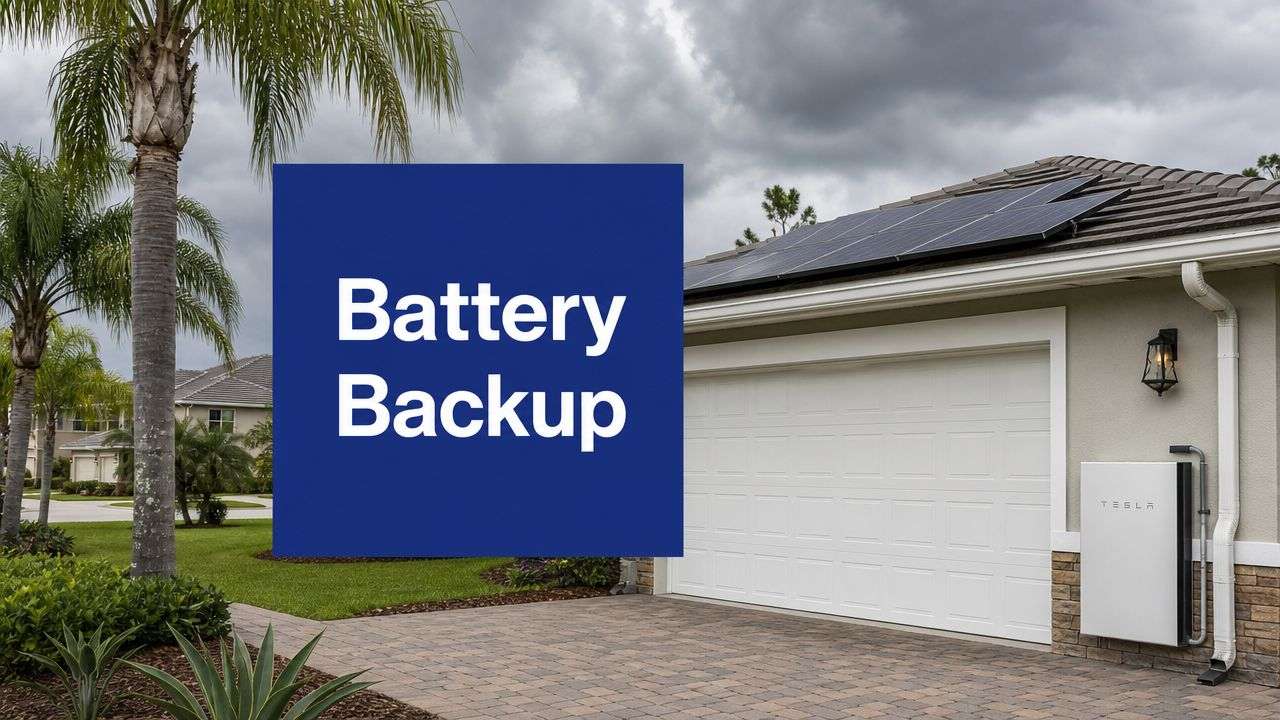
Residential buyers should also understand that batteries change the conversation. In Florida, storage isn't just an add on for gadget lovers. It's often the difference between a system that lowers bills and a system that also supports continuity during outages. That's especially important for owners with refrigeration needs, home offices, medical devices, or properties that cannot afford to sit dark after a storm.
A good solar proposal answers two questions at the same time. How much money will this save, and what keeps running when the grid goes down?
Questions Every Tampa Buyer Should Ask
Take these into every sales conversation:
- Who designed this system, and who will physically install it?
- What annual production assumptions are you using?
- What happens if my roof needs work sooner than expected?
- How does the battery plan prioritize my critical loads?
- What service path do I use if the system underperforms?
- Can you provide the full cost breakdown, including permitting and interconnection related items?
If a company can't answer those clearly, don't move forward.
The strongest path is simple. Start with independent analysis, compare installers against your actual goals, then choose the contractor that best matches the plan. If you need to improve how your own company gets found while buyers research local providers, this overview of local SEO best practices for Tampa Bay SMBs is worth reviewing.
If you want an objective plan before you sign with an installer, talk to Solar Energy Management LLC. They help Florida homeowners, businesses, and property stakeholders evaluate solar feasibility, compare bids, model ROI, plan battery storage, and coordinate with qualified installation partners so the final project supports real savings and real resilience.