You’re probably doing what most Florida property owners do first. You search “solar energy consultants near me,” open a few tabs, and get hit with fast quotes, panel brands, and savings claims before anyone has looked closely at your roof, load profile, or utility bills.
That’s backwards.
If you’re serious about lowering power costs, protecting cash flow, and avoiding a bad system design, bring in an independent advisor before you talk to an installer. In Florida, the difference between a well-modeled project and a rushed sale shows up later in production, financing terms, battery performance during outages, and whether the system matches how your home or facility uses power.
Why a Solar Consultant Should Be Your First Call
It's common to go straight to an EPC. That makes sense on the surface. Installers sell systems, so they seem like the starting point. But if the first person at the table is also trying to close a hardware sale, you’re not getting a neutral feasibility review. You’re getting a proposal built around what they want to install.
An independent consultant works from a different objective. The job is to test whether solar makes financial sense, what size system fits the site, how storage should be handled, and which risks need to be addressed before any contract is signed. That distinction matters in Florida, where roof orientation, shade, insurance considerations, utility rules, and hurricane resilience can change the economics quickly.
Consultant first, installer second
A consultant should act as your owner's representative. That means reviewing your usage, your site, your resilience goals, and your budget before equipment is selected. It also means separating design logic from sales pressure.
Here’s the practical difference:
- Installer-first process: You receive a prepackaged layout, a preferred equipment stack, and a financing pitch.
- Consultant-first process: You receive a feasibility study, production assumptions, financial modeling, design criteria, and a basis for comparing multiple installer bids.
- Installer incentive: Move a project into contract and construction.
- Consultant incentive: Make sure the project deserves to move forward at all.
Practical rule: If nobody has reviewed your utility history and building constraints before presenting a system price, you’re not looking at a real advisory process.
That’s why a lot of smart clients start with planning, not procurement. They want to know if the project should exist in its current form before they spend capital on it.
Where the financial protection comes from
The value of consulting isn’t theoretical. It comes from avoiding bad assumptions early. A consultant can identify whether your load profile supports solar, whether battery storage is justified, and whether the system should be optimized for bill reduction, backup power, or both.
In Florida, residential systems can reach payback periods of 5 to 7 years in the right conditions, and data-driven assessments are central to getting there, according to Florida solar system planning guidance. That kind of outcome doesn’t come from guessing. It comes from disciplined modeling.
A consultant also provides you with an advantage when installer proposals arrive. You’re no longer comparing glossy PDFs. You’re comparing bids against a defined scope, performance target, and financial objective.
That’s how you de-risk a solar project. Not by buying faster, but by deciding better.
Core Services of a Florida Solar Energy Consultant
A real consulting engagement should produce work product you can use. Not a sales deck. Not a rough estimate. Actual analysis that helps you decide whether to proceed, how to structure the project, and what to ask from installers.

What the process should include
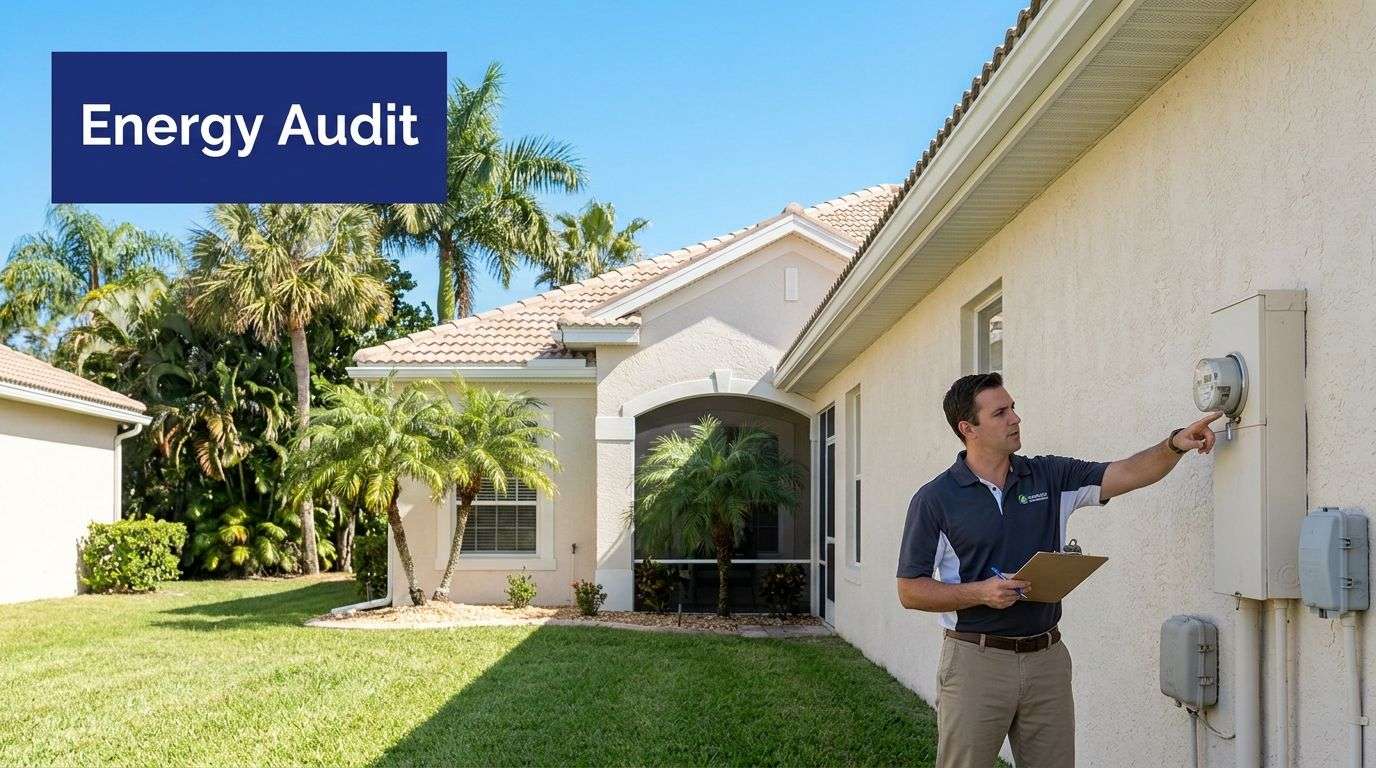
A strong consulting process usually starts with a feasibility study. That means reviewing 12 to 24 months of energy use and site data to model irradiance and estimate production. In Florida, that analysis often targets yields around 1,500 to 1,800 kWh/kWdc, with financial modeling aimed at 12 to 18% IRR over 25 years and 5 to 8 year payback periods, as outlined in NREL project methodology guidance.
From there, the consultant should move into preliminary design and technology selection. That doesn’t mean locking you into one manufacturer. It means defining what class of equipment fits the project.
Typical deliverables include:
- Usage analysis: Review of utility bills to identify annual consumption, seasonal swings, and daytime versus nighttime load behavior.
- Site review: Roof geometry, available area, shading, service equipment constraints, and whether battery placement is practical.
- Performance modeling: A production estimate based on Florida irradiance, not a generic national template.
- Financial modeling: Cash purchase, financed purchase, and commercial tax treatment analysis where applicable.
- Bid framework: A clear scope so multiple installers are pricing the same job.
- Oversight support: Proposal review, contract review, and coordination through EPC handoff.
Equipment decisions that deserve real analysis
Panel choice, inverter architecture, and storage sizing all have trade-offs. Higher-efficiency modules can help on space-constrained roofs. Microinverters may make sense when partial shading is unavoidable. String inverters can work well when the roof plane is clean and consistent. Battery selection depends on whether you care most about backup duration, critical-load support, or bill optimization.
If you’re still sorting out the bigger picture, it also helps to understand the distinction between active and passive solar energy. Florida clients often use the phrase “solar” broadly, but solar electric systems are only one part of building energy strategy.
A consultant’s job isn’t to push a favorite box. It’s to match system architecture to site constraints, operating goals, and the economics of the property.
What a finished consulting package should let you do
By the end of the advisory phase, you should be able to answer four questions clearly:
- Is the project financially viable?
- What system size and configuration make sense?
- Which risks need to be solved before procurement?
- How should installers be asked to bid the work?
That’s why consultant-led projects tend to progress to the EPC stage at a higher rate than the broader market, as noted in the NREL methodology above. Good planning filters out weak projects early and improves the ones worth building.
How to Find and Vet the Right Local Advisor
Typing “solar energy consultants near me” into Google won’t tell you who is independent, who understands Florida utility realities, or who can actually read a proposal beyond the sales summary. Search results are a starting point, not a vetting process.
What you want is local competence with no hidden alignment to a single installer or equipment line. In Florida, that means familiarity with interconnection expectations, permitting friction, roof conditions common to the Gulf Coast, and how residential and commercial usage patterns differ in hot, humidity-heavy climates.
What to look for first
Start with independence. Ask whether the consultant is paid by you or compensated through an installer relationship. If they’re steering every project to the same EPC or the same hardware stack, you need to know that upfront.
Then look at whether they produce real analysis. A credible advisor should be comfortable showing sample feasibility work, redacted financial models, and the decision logic behind system sizing.
Use this checklist when screening candidates:
- Market knowledge: Ask whether they routinely work in the Florida markets you care about, including utility territories relevant to your property.
- Scope clarity: Ask what deliverables you receive before any installer is engaged.
- Financial fluency: Ask how they model savings, tax credit treatment, depreciation for commercial assets, and battery economics.
- Design judgment: Ask how they choose between string inverters, microinverters, and storage options.
- Bid management: Ask whether they can prepare or review installer proposals on an apples-to-apples basis.
Questions worth asking on the first call
Don’t ask, “How much can I save?” first. Ask how they’ll determine it.
A better script is:
- How do you size a system for a property like mine?
- What data do you need before making a recommendation?
- How do you test whether battery storage is justified?
- How do you stay independent from installers and manufacturers?
- What does your feasibility study include?
- How do you handle proposal review and EPC coordination?
If you want a useful benchmark, review this set of questions to ask a solar company and adapt it for consultants as well. The goal is to hear how they think, not just what they sell.
If an advisor can’t explain their modeling assumptions in plain English, they shouldn’t be making capital-planning recommendations.
Don’t confuse visibility with credibility
Some firms are easy to find because they know how to improve local visibility. That’s fine. Good marketing isn’t a problem. The problem starts when visibility is mistaken for technical judgment.
Check whether the advisor talks in specifics or slogans. A serious consultant will discuss load profiles, shading, battery dispatch priorities, contract terms, and procurement risk. A weak one will stay at the level of “big savings” and “energy independence.”
Local reputation matters. Sample work matters more.
Decoding Solar Proposals and Florida Incentives
Most solar proposals look more certain than they are. They’ll give you a production estimate, a monthly savings graphic, and a projected payoff story. But if you don’t know what assumptions sit underneath those numbers, you can’t judge the proposal properly.
In Florida, the money side of solar usually comes down to four moving parts. System cost, production assumptions, incentive treatment, and how your utility bill behaves after the system is operating.

The numbers that matter
When I review a proposal, I care less about the headline savings graphic and more about the structure behind it.
Look closely at these items:
- Production assumptions: Are they based on your site, or a generic template?
- Bill reduction logic: Does the model reflect how your home or facility uses power across the day?
- Incentive handling: Is the federal tax credit treated correctly for your ownership structure?
- Escalation assumptions: If future utility price inflation drives the model, that should be visible.
- Battery purpose: Is storage modeled for backup, bill optimization, or both?
For Florida homeowners, consultant-led analysis is tied to an average 20% reduction in electricity bills, with payback periods of 5 to 7 years for residential systems in the right conditions, according to Florida solar incentive guidance. That same planning discipline can also support property value increases of 4 to 6%, while the long-term economics have improved as solar costs have fallen 89% since 2010.
How incentives actually affect the decision
The federal Investment Tax Credit is a major lever. In the current framework described in the verified data, the 30% federal Investment Tax Credit through 2032 can materially improve project returns for eligible systems. For commercial properties, depreciation treatment can also change the cash-flow profile in a meaningful way.
That said, incentives don’t rescue a bad project. If the system is oversized, poorly sited, or attached to weak financing terms, the tax credit just softens the mistake.
A cleaner way to read a proposal is to ask:
- Would this system still make sense if production comes in below the rosy case?
- Is the payback driven by actual bill offset or by aggressive assumptions?
- Does the system fit the property’s goals, or was it sized to maximize a sale?
Good solar proposals make their assumptions easy to audit. Weak proposals hide them in the fine print.
A Florida decision framework
For residential clients, the right question usually isn’t “How many panels fit?” It’s “What level of bill reduction and backup support justifies the investment?”
For commercial clients, the question gets broader. You may care about payback, internal rate of return, depreciation, downtime protection, and whether the system helps stabilize long-term operating costs.
One advisory firm in this space, Solar Energy Management LLC, provides feasibility studies, ROI modeling, and design guidance for Florida projects before installer procurement. That consultant-first model is useful when you want financial discipline before signing an EPC contract.
If a proposal can’t be explained in plain language, don’t approve it yet.
Beyond Panels Planning for Energy Resilience
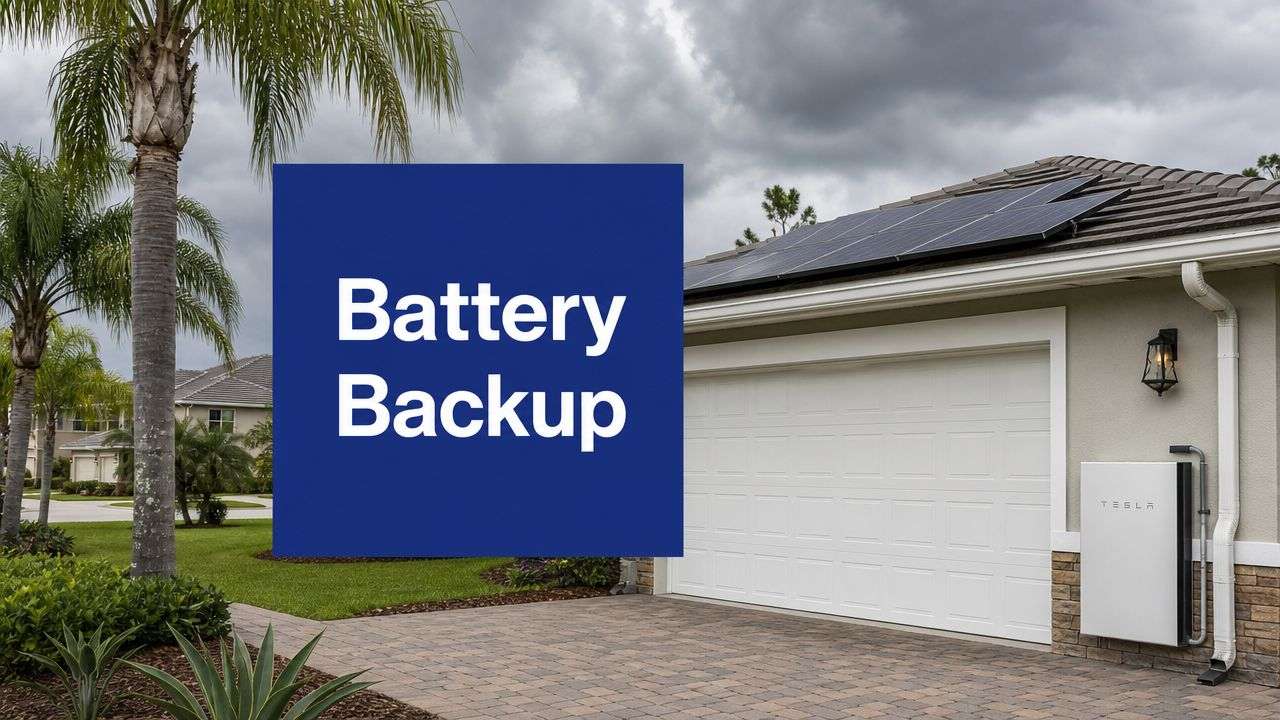
In Florida, solar is not only a utility bill decision. It’s also a resilience decision. Panels alone won’t keep critical loads running during an outage unless the system is designed with storage and the right controls.
That’s the part many buyers miss. They think “solar” means backup power. It doesn’t. Backup power comes from a system architecture that intentionally includes battery storage, critical-load planning, and outage operating logic.

What battery planning changes
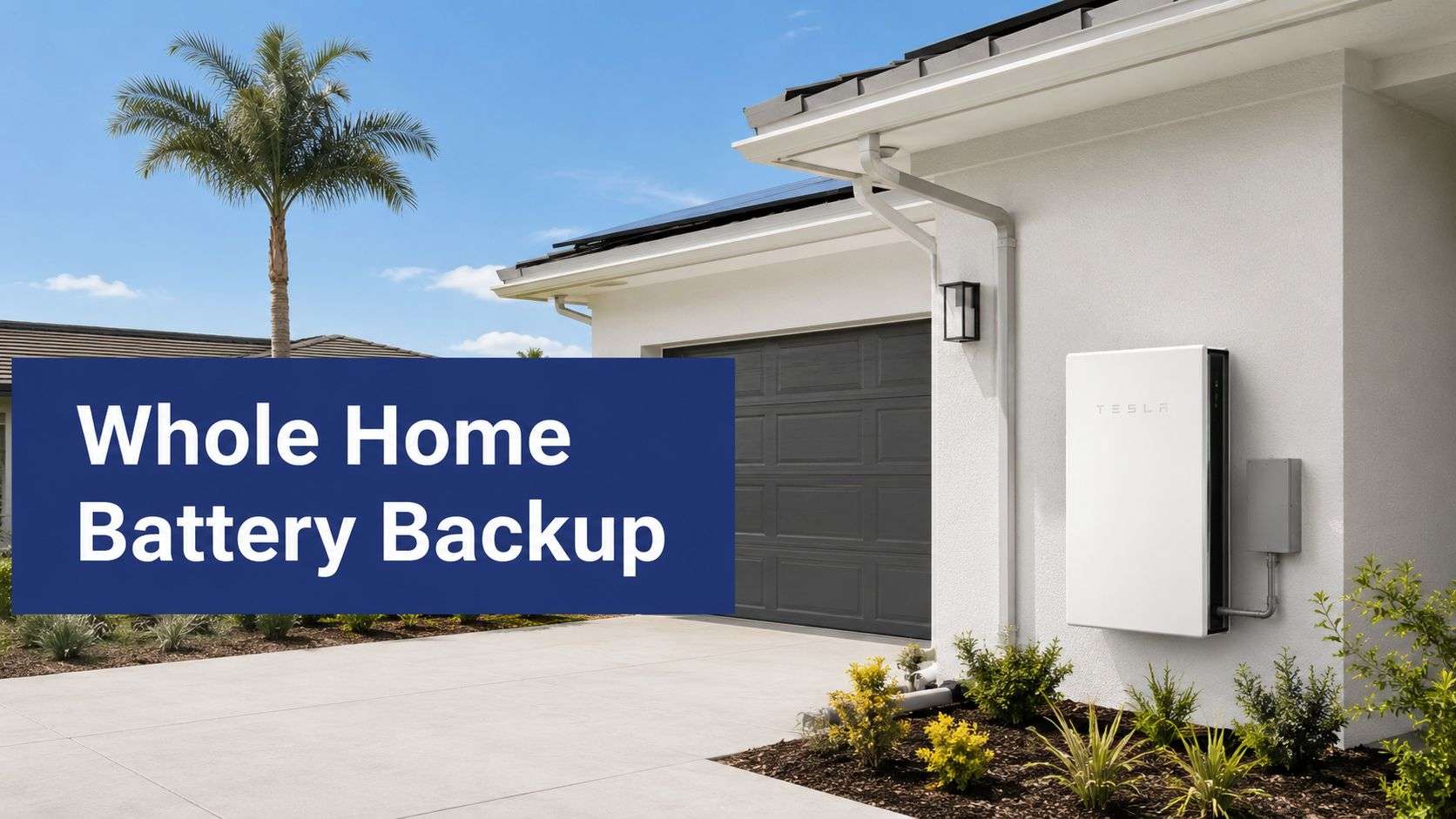
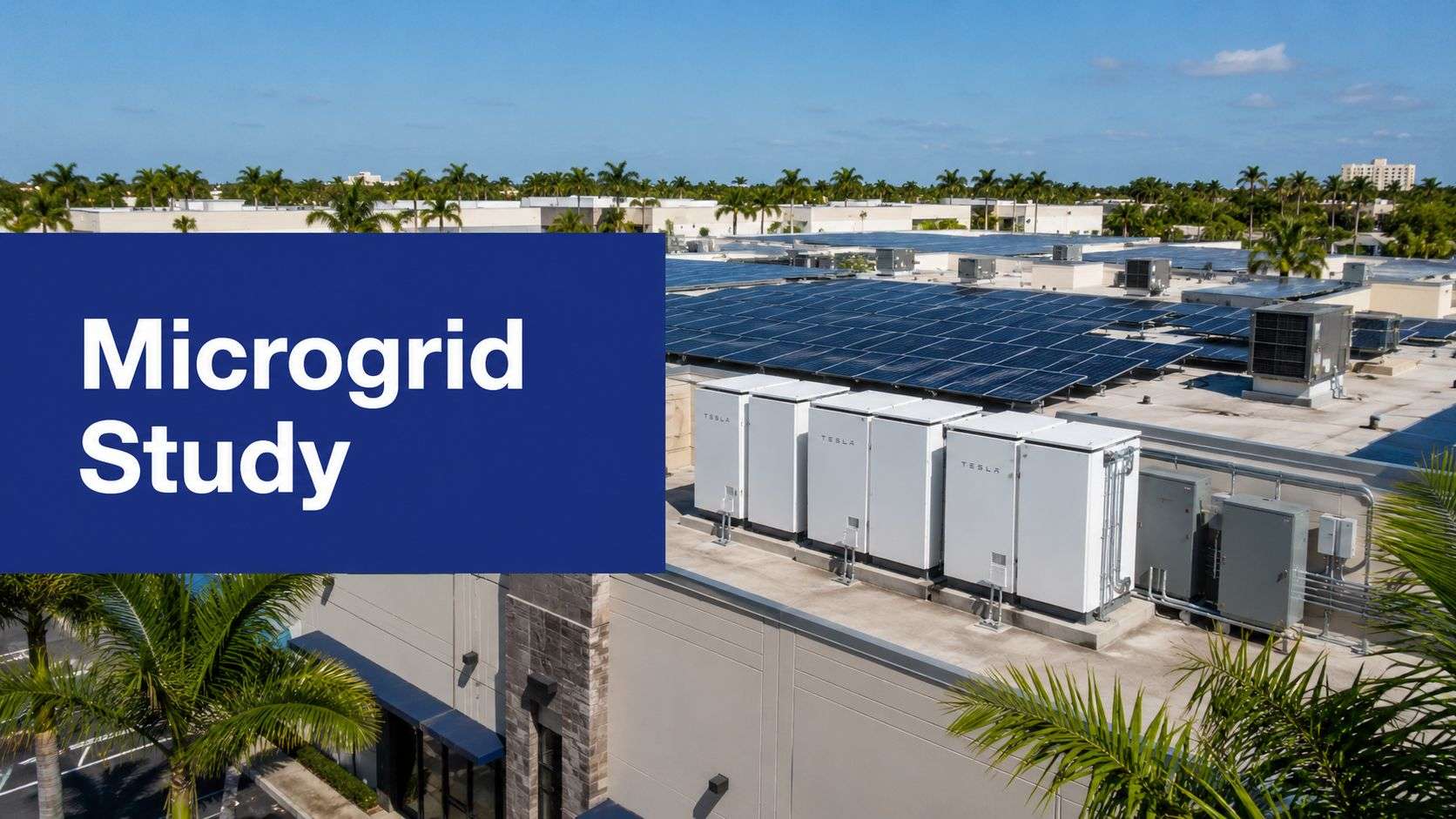
For Florida property owners, pairing solar with battery storage such as a 13.5 kWh Tesla Powerwall is an important resilience strategy for hurricane conditions, and consultant modeling can show ROIs of 10 to 20% annually when the 30% federal Investment Tax Credit is applied appropriately, based on U.S. energy facts and market context.
That doesn’t mean every property needs the same battery setup. A home that wants to cover refrigeration, lighting, internet, and limited cooling during outages has a different design target than a medical office, restaurant, or multi-tenant commercial building trying to protect revenue and critical systems.
Homes, businesses, and microgrids
Battery sizing starts with a hard question. What do you need to stay on when the grid is down?
For homes, that might include:
- Critical circuits: Refrigeration, lighting, communications, garage access, and selected outlets.
- Comfort loads: Limited air conditioning or fans, depending on battery capacity and runtime goals.
- Operational discipline: Whether the household will manage loads actively during an outage.
For businesses, the conversation often moves into selective backup or microgrid planning. The goal may be to keep POS systems live, preserve cold storage, protect server rooms, or maintain core operations long enough to avoid a shutdown cascade.
The verified data shows that for commercial clients, consultants can design microgrids and battery storage to reduce utility dependence by up to 70% in optimal setups through the planning process cited in the earlier Florida consulting reference. That kind of result depends on site conditions and operating strategy. It doesn’t happen by adding a battery as an afterthought.
Resilience planning works best when backup priorities are decided before the hardware is specified.
The trade-off most people need to hear
Storage adds cost. It also adds capability. The mistake is treating it like a simple add-on instead of a separate design problem.
A consultant should help you decide whether you need whole-home ambition, critical-load practicality, or a commercial resilience strategy that protects revenue first. In Florida, that distinction matters more than the brand name on the battery cabinet.
Critical Red Flags and How to Request a Feasibility Study
The biggest mistake in solar isn’t paying too much for equipment. It’s committing to a project before the project has been properly tested.
Bad outcomes usually start with one of three things. Wrong system size, weak contract terms, or unrealistic assumptions about performance. Those are exactly the issues an independent consultant should catch before you’re locked in.

Red flags that should slow you down
The verified data is clear on the risks. Incorrect sizing can cause 15 to 30% underperformance, predatory financing is tied to 33% median cancellation rates, and consultant-led projects achieve 92% on-time completion, according to solar project pitfalls research.
Use that as a screen. Be cautious when you see any of the following:
- Fast quotes with no bill review: If no one has looked at your usage history, the system size is probably being guessed.
- Savings promises without assumptions: If the model doesn’t show how savings are calculated, the proposal isn’t ready for approval.
- Financing pressure: If the conversation turns to monthly payment tactics before feasibility, step back.
- No discussion of service equipment: Older panels, including legacy electrical issues such as Zinsco panel issues, can affect safety, scope, and project timing.
- Battery sold as backup without load planning: Storage only performs as expected when critical loads are defined in advance.
What to send when requesting a feasibility study
A good first conversation should be simple. You don’t need to arrive with a full engineering package.
Usually, a consultant will want:
- Recent utility bills, ideally enough history to understand usage patterns.
- Property address so roof and site conditions can be reviewed.
- Your goal such as bill reduction, backup power, or both.
- Any existing proposals you’ve already received.
- Known electrical constraints if you’re aware of them.
From there, the consultant can tell you whether the project deserves deeper analysis, what unknowns need to be resolved, and whether installer bidding should wait until the design basis is cleaner.
The right next step isn’t “buy solar.” It’s “get the feasibility right.”
If you want an independent review before talking with installers, Solar Energy Management LLC provides Florida-focused solar feasibility studies, ROI modeling, storage planning, and design guidance for homeowners and commercial clients. Bring your utility bills, your resilience goals, and any proposals you’ve already received. That’s enough to start a serious conversation.