A lot of Florida nonprofit leaders are in the same spot right now. The mission is clear, demand for services keeps rising, and the electric bill keeps taking money that should be going to staff, programs, food, housing, outreach, or facility improvements.
Solar changes that equation when the project is structured correctly. For nonprofits in Florida, the true opportunity isn't just putting panels on a roof. It's combining solar grants for nonprofits, federal direct pay, careful financial modeling, and disciplined project management so the system supports the mission instead of becoming another capital headache.
Power Your Mission With Florida Solar Energy
Florida nonprofits don't need another nice-sounding sustainability idea. They need predictable operating costs, better control over long-term expenses, and more resilience when the grid is under stress.
That's why solar should be evaluated first as a financial and operational asset. In Florida, heavy cooling loads and long summers put constant pressure on facility budgets. If your organization owns its building, runs daytime operations, or serves vulnerable populations during storm season, solar can become part of a broader financial stewardship strategy.

Why Florida Nonprofits Should Treat Solar As Infrastructure
A solar project is often discussed as an environmental choice. That framing is too narrow. For a nonprofit, the better question is simple: does this reduce fixed overhead in a durable way?
When the answer is yes, the impact compounds operationally. Lower utility spend can free budget room for programming, and energy resilience planning can support continuity during outages. Organizations that serve children, seniors, faith communities, or medically sensitive populations often see this clearly once solar is evaluated alongside backup strategy and facility planning.
A useful way to think about it is to compare solar with any other long-life building upgrade. Roof work, HVAC modernization, and electrical improvements all affect mission delivery. Solar belongs in that same conversation, especially when paired with serious analysis of your load profile and usage pattern. If you're already looking at long-term cost control, this broader Florida solar energy guide for improving your bottom line gives helpful context on how organizations approach that decision.
Practical rule: If your board only sees solar as a green initiative, the project often stalls. If they see it as an operating-cost strategy with resilience benefits, the conversation gets much sharper.
The Mission Benefit Is Budget Flexibility
The strongest nonprofit solar projects aren't driven by ideology. They're driven by math, timing, and execution.
That matters in Florida because buildings here face heat, humidity, storm exposure, and utility volatility. A nonprofit that cuts a recurring expense gains flexibility every budget cycle. That flexibility can support staffing, donor confidence, and capital planning.
Solar also creates a different kind of predictability. Instead of treating energy as a line item that always drifts upward, leadership can start planning around a facility that produces part of its own power. For boards and finance committees, that's often the shift that moves solar from "interesting" to "actionable."
Mapping Your Solar Funding Opportunities In Florida
The funding stack for a Florida nonprofit usually has several layers. The mistake I see most often is treating it like a single grant search. It isn't. The strongest projects are built by combining federal incentives, Florida-specific opportunities, and selective private funding where it fits.

Start With Federal Direct Pay
For most nonprofits, the anchor incentive is the 30% direct pay option created by the Inflation Reduction Act. Tax-exempt entities can receive a cash payment equal to 30% of solar installation costs, and a $30,000 system would qualify for a $9,000 direct payment, as explained in this overview of nonprofit solar direct pay.
That changed the market for charities, churches, schools, universities, and government-related entities that couldn't use a traditional tax credit. The same source notes that some projects may also qualify for bonus credits, including a 10% bonus for locating in a low-income community. Structuring eligibility early matters because these incentives influence the entire capital stack.
Many boards finally realize solar grants for nonprofits aren't just about chasing competitive awards. The federal government created a path that functions more like a reimbursement framework for eligible tax-exempt owners.
Florida Incentives Need To Be Reviewed Case By Case
At the state and local level, Florida opportunities are more fragmented. Some benefits improve project economics directly. Others improve financing flexibility or utility bill value after the system is online.
The most common buckets to review are:
- Property-related benefits: Florida organizations often explore property tax treatment and assessment issues when making capital improvements.
- Net metering and utility policy: The value of exported power, interconnection terms, and rate structure all affect system sizing.
- PACE-related financing discussions: In some cases, organizations investigate whether property-based financing tools are feasible for the building and ownership structure.
- Local or utility programs: Availability varies, and many opportunities are highly specific to service territory or municipality.
Because these items shift by location and utility, they should be modeled rather than assumed. A broad Florida solar incentive resource is a useful starting point, but the essential work is matching the incentive to your actual meter, property, and nonprofit structure.
A grant that looks attractive on paper can be less valuable than a cleaner project structure with fewer restrictions and faster execution.
Private Grants And Corporate Funding Can Help, But They Rarely Carry The Project Alone
Private and foundation funding can play an important role, especially when a nonprofit serves low-income communities, resilience hubs, schools, or faith-based campuses. But private grants work best as gap fillers, not as the sole project foundation.
Use private funding strategically. It can support early development work, related facility improvements, or a portion of capital cost. It usually shouldn't be the first assumption in your model. In Florida, organizations that wait for the perfect private grant often lose time they could've used to prepare a financeable project.
The practical sequence is better than the idealized one. Build around federal eligibility first. Then test Florida-specific economics. Then add private support where it improves feasibility without complicating compliance.
Building The Financial Case For Your Solar Project
Most nonprofit solar projects are won or lost before the application is ever submitted. The deciding factor isn't enthusiasm. It's whether your organization can show a credible, organized financial case.

A rigorous application process often spans 12-18 weeks before submission, including a 4-6 week pre-application phase for SAM.gov registration and document gathering and a 6-8 week technical development phase for audits and system design. Delayed SAM/UEI registration can cause 30% of rejections, and incomplete energy audits account for a 20% failure rate in some programs, according to this breakdown of solar grant application timelines and pitfalls.
What Decision-Makers Need To See
A finance committee or grant reviewer wants proof that the project is real, not aspirational. That means you need more than a proposal with a savings headline.
The core package usually includes:
- Organizational documents: Your 501(c)(3) determination materials, ownership records, and any board approvals needed for capital planning.
- Utility history: A clean set of electric bills that shows how the building consumes power over time.
- Site information: Roof age, electrical service details, shading conditions, structural considerations, and any known facility constraints.
- Project assumptions: Expected system size, estimated installed cost, interconnection path, and whether battery storage is being evaluated.
This work de-risks the project because it exposes weak points early. An old roof, limited switchgear capacity, or a bad usage match can derail economics fast. Better to find that during planning than after an application is already in motion.
Good Financial Modeling Is Specific
A nonprofit shouldn't approve solar because "it should save money." That's not analysis. A usable model should connect your facility data to a realistic ownership path and funding structure.
At minimum, the model should answer these questions:
- Does the building support the right system size? Oversizing a system creates underwriting problems and can weaken the grant narrative.
- What happens to cash flow in year one? Boards often focus on lifecycle value while ignoring near-term strain.
- How sensitive is the project to delay? Timing affects incentives, coordination, and procurement.
- What related work has to be included? Roof prep, electrical upgrades, and interconnection tasks should be surfaced early.
Some organizations also compare direct ownership against third-party structures during this stage. That's often where a simple sizing benchmark becomes useful. Reviewing examples like this 10,000 kWh solar system analysis can help leadership understand how production estimates relate to actual building demand.
The strongest applications don't just say the project is worthwhile. They show that the organization has already done the hard thinking.
What Doesn't Work
Weak applications usually fail in familiar ways. The organization relies on a generic installer proposal, assumes every claimed incentive will stack cleanly, or submits before the site work is mature enough to support the numbers.
Another common problem is mixing fundraising language with capital planning language. Donors may respond to mission storytelling. Grant reviewers and financial gatekeepers respond to documentation, schedule control, and a believable implementation path.
Securing Your Federal Direct Pay Incentive
Direct pay is the single most important federal incentive available to many Florida nonprofits. It also requires precise timing. If your organization gets the sequence wrong, the project can still move forward, but the economics may suffer.

To claim the IRA direct pay successfully, nonprofits must pre-file with the IRS before installation begins. 25% of applications can fail due to incorrect timing, and after the system is placed in service, the organization files its annual tax return, such as Form 990-T, to claim payment, which is typically issued within 45 days. The same source notes that pairing direct pay with a 20% cost grant can bring ROI to under 7 years in a high-sunshine market like Florida, based on this guide to nonprofit direct pay and financing structures.
The Sequence Matters More Than Most People Expect
The practical order is straightforward, even if the paperwork isn't.
- First, confirm entity readiness: Your nonprofit needs its registrations and internal authorization in order before federal filing activity begins.
- Then, complete IRS pre-filing: This step must happen before installation starts.
- After that, move into construction: Once the project is installed and placed in service, the tax filing process can be completed.
- Finally, claim the payment: The reimbursement step follows the tax return process, not the construction contract.
Organizations frequently get tripped up. A board approves a project, an installer wants to move quickly, and someone treats the federal filing as an administrative detail that can be handled later. It can't.
Ownership Structure Needs To Match The Incentive Strategy
Some Florida nonprofits own the system directly. Others consider a power purchase agreement or another third-party arrangement because they want lower upfront burden, maintenance separation, or a different cash-flow profile.
Neither path is automatically better. The right structure depends on your capital posture, site control, and tolerance for long-term contractual obligations. For boards that need help evaluating that trade-off, this plain-language overview of how a solar power purchase agreement works is worth reviewing before any contract gets signed.
Get the ownership decision right before procurement. Fixing a bad ownership structure after documents are drafted is expensive and slow.
Common Filing Mistakes
The direct pay process tends to break down for three reasons.
- Bad timing: Construction starts before pre-filing is complete.
- Poor document control: Key records aren't organized for filing and later substantiation.
- Disconnected advisors: Legal, tax, finance, and project teams aren't working from the same timeline.
In Florida, speed is often rewarded in procurement, but haste can wreck incentive eligibility. The safest path is disciplined sequencing, not fast signatures.
Choosing Your Solar Consultant And Implementation Partners
Nonprofits need two things during project development. They need someone to protect the financial logic of the project, and they need someone to build it correctly. Those are not the same role.
A consultant works upstream. The consultant helps evaluate feasibility, model incentives, review proposals, pressure-test assumptions, and coordinate the process so leadership makes informed decisions before committing. The implementation partner, often called an EPC, handles engineering, procurement, and construction.
That separation matters because installer proposals are built to sell and deliver projects. They are not always built to compare ownership pathways, grant restrictions, board concerns, or facility-wide capital priorities. A nonprofit needs an advocate who can read the proposal without being tied to one equipment lineup or one contracting structure.
What A Strong Advisory Team Actually Does
The right consultant should be able to do several things well:
- Translate project economics: Board members need to understand cost, payback logic, and risk in plain language.
- Review scope discipline: A project can fail financially because too much unrelated work gets folded in too late.
- Coordinate stakeholders: Finance, facilities, legal, grant writers, and EPC teams rarely move at the same speed.
- Challenge assumptions: If production estimates, interconnection timing, or savings claims look aggressive, someone needs to say it.
The need for coordination is not theoretical. Grants can cover up to 50% of project costs, but 40% of nonprofit solar projects exceeded timelines by more than six months due to EPC coordination needs, and in Q1 2026, Florida nonprofits secured only 8% of available REAP solar grants, according to this review of grant coordination shortfalls affecting Florida applicants.
What To Ask Before You Sign Anything
If you're vetting a consultant or implementation team, ask direct questions.
Who is responsible for incentive sequencing? Who owns interconnection tracking? Who verifies that assumptions in the board presentation match the final contract set? Who is flagging risks tied to roof condition, landlord consent, or utility process?
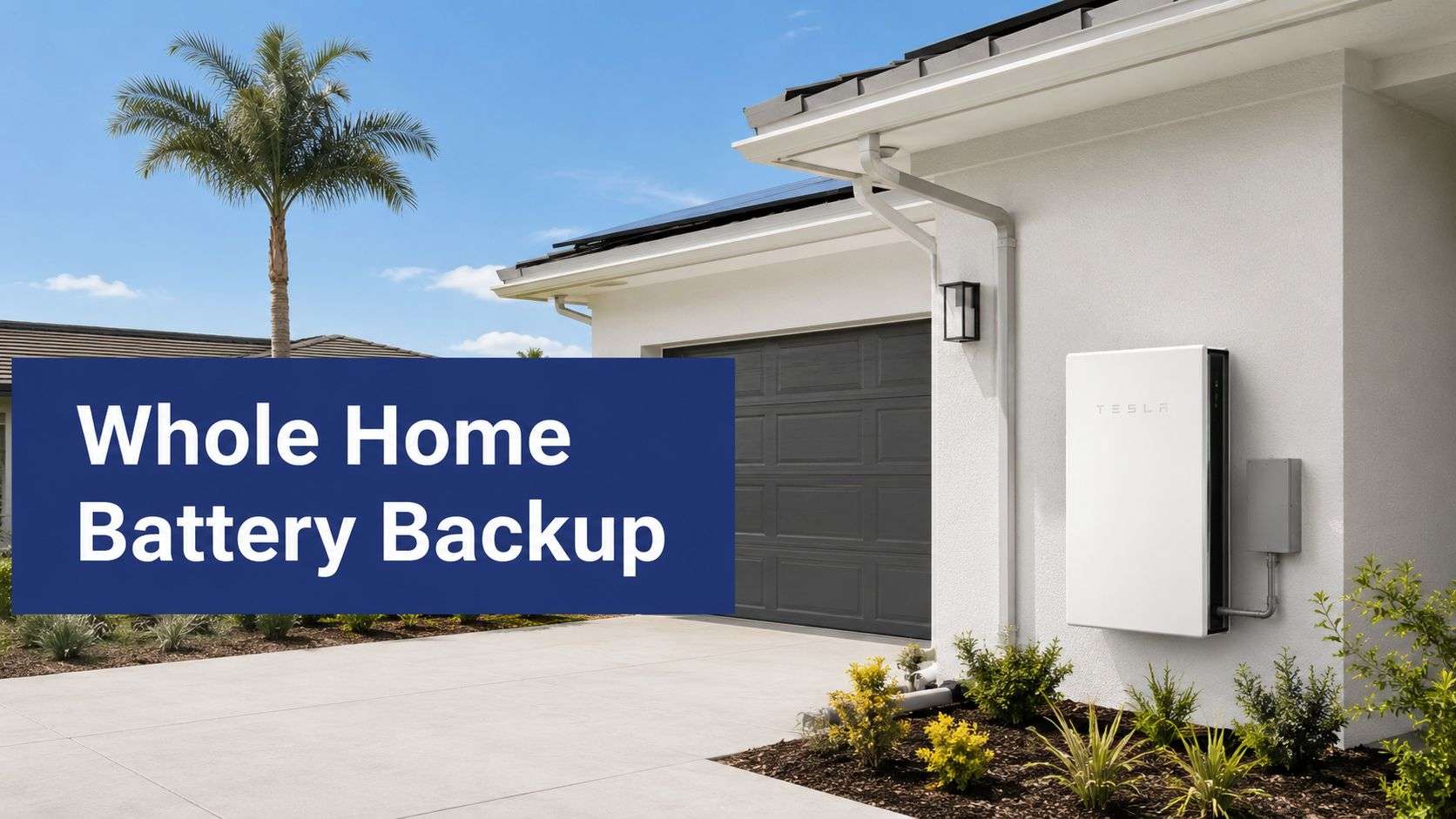
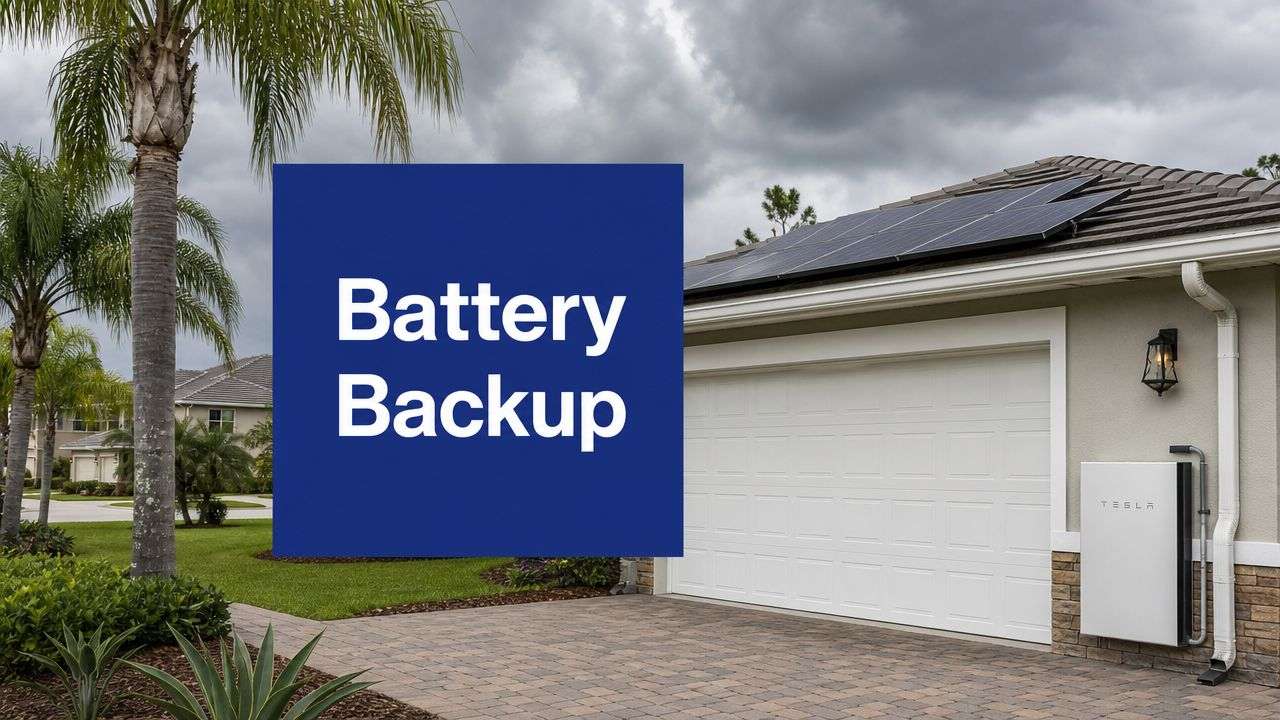
If battery backup is part of the project, ask who is defining critical loads and resilience objectives. A system designed for bill reduction isn't automatically designed for outage support. Resources such as this Tesla Powerwall 2 planning page can help frame the difference between adding storage as an accessory and designing backup intentionally.
A nonprofit shouldn't hire based on enthusiasm alone. Hire the team that can keep the model, paperwork, and implementation aligned.
Managing Compliance And Long-Term Solar Success
The project isn't finished when the system turns on. That's the point when the asset starts proving whether the original plan was sound.
Since the Solar ITC was established in 2006, it has fueled a 200-fold expansion of the U.S. solar industry, and the stability of the IRA's 30% direct pay through 2032 gives nonprofits long-range confidence to project 50-100% energy savings, with some organizations eliminating electric bills entirely, according to this overview of nonprofit solar financing and long-term savings.
Compliance Is Operational Work, Not Closing Paperwork
A funded solar project creates reporting obligations, file retention responsibilities, and performance expectations. Nonprofits that treat compliance as an afterthought usually create avoidable problems later.
Keep the post-award file organized. That means executed contracts, utility approvals, commissioning records, equipment schedules, change orders, grant correspondence, and tax filing support documents should all be accessible in one controlled system. If your organization handles federal funds broadly, it also helps to review a practical explainer on the OMB A-133 Compliance Supplement so finance and administrative teams understand the mindset behind federal oversight.
Compliance works best when one person owns the checklist and everyone else knows where documents live.
Monitor Performance Like You Would Any Other Capital Asset
Solar should be managed the same way you manage HVAC replacement, roofing, or major IT infrastructure. Set expectations, review actual performance, and investigate variance.
That doesn't require a complicated internal department. It does require someone to watch production data, compare expected utility savings against actual billing outcomes, and flag issues before they linger. If storm debris, inverter alerts, communications failures, or billing anomalies show up, they need action.
A simple long-term oversight routine usually includes:
- Monthly review: Check solar production and utility bills side by side.
- Seasonal inspection: Look for visible issues after storms, roof work, or site changes.
- Annual reconciliation: Compare actual savings and operational performance against the original financial model.
- Warranty tracking: Keep manufacturer and installer warranty records easy to access.
The Real Measure Of Success
The best nonprofit solar projects create durable budget relief. They also create confidence. Leadership can plan around lower energy exposure, boards can see the asset performing, and program teams benefit from funds that no longer disappear into overhead.
For Florida nonprofits, that's the primary value of solar grants for nonprofits. The grant or direct pay incentive helps launch the project. Long-term discipline is what turns it into a mission-supporting asset.
If your nonprofit in Florida is evaluating solar and wants independent guidance before signing with an installer, Solar Energy Management LLC can help you assess feasibility, model direct pay and grant scenarios, compare ownership options, and coordinate a smarter path from concept to implementation.