If your Florida solar system is around a decade old and you're seeing lower production, random fault messages, or an inverter that keeps resetting, you're not looking at a surprise. You're looking at a normal ownership milestone.
Too many property owners treat inverter failure like bad luck. It isn't. In most Florida systems, the inverter is the component that ages out first. The smart move is to treat solar inverter replacement as a planned system upgrade, not a last-minute repair. That shift in mindset protects production, improves long-term ROI, and gives you a rare chance to make the system more resilient for outages, batteries, and future load changes.
Your Solar Inverter Is The Heart Of Your System
A Florida system can look fine from the ground. Panels are intact, the sun is out, and the app still shows activity. Meanwhile, an aging inverter can be clipping production, throwing intermittent faults, or limiting what the system can do next.
That is why the inverter deserves more respect than it usually gets. It handles the conversion from solar DC power to the AC power your property uses, and it controls how efficiently your system performs day after day. If the inverter is weak, the whole investment underperforms.
For many Florida property owners, inverter replacement is the first real decision point after the original installation. Treat it that way. This is not just a repair ticket. It is your chance to correct early design compromises, recover lost value, and decide whether the next phase of the system should support batteries, backup power, or higher household demand.
Florida raises the stakes. Heat stresses electronics. Humidity shortens component life when installation quality is poor. Salt air adds corrosion risk near the coast. Storm season also changes the conversation. A replacement inverter should not only restore conversion. It should fit the way you want the property to operate over the next decade.
Ask the questions that affect return, not just replacement speed:
- Will the new inverter improve real-world production and monitoring?
- Is this the right time to choose a battery-compatible model?
- Does the inverter still match your current usage, added appliances, or business load?
- Will this replacement make the system easier to service and protect in Florida conditions?
Waiting for a complete failure usually costs more than people expect. You lose generation, make rushed choices, and often end up with a basic swap that solves today's outage but ignores tomorrow's needs.
A planned replacement gives you room to review consumption, utility rates, outage priorities, and expansion goals. If you are reviewing the bigger picture of utility dependence versus on-site generation, this is also the right time to look at how electric and solar planning in Florida should work together.
My recommendation is simple. If your inverter is aging, acting inconsistently, or no longer fits your goals, treat the replacement as a mid-life system upgrade. That mindset protects production and puts you back in control of the investment.
Recognizing The Signs Your Inverter Needs Replacement
August in Florida is a bad time to learn your inverter has been underperforming for months. Your panels are in full sun, your cooling load is high, and the system that should be offsetting expensive power is leaving production on the table.
Most inverter failures start that way. Output slips. Faults come and go. The unit still powers up, so the problem gets ignored.

Watch Production Trends, Not Just Total Failure
A dead inverter is obvious. A weak inverter is more expensive because it keeps cutting savings while giving you just enough output to delay action.
Start with the production history. If monthly generation has dropped under similar weather conditions, and you have not added new shade or changed the array, the inverter deserves immediate attention. Look at daily curves too. Clean solar production should rise in the morning, hold a predictable midday shape, and taper in the afternoon. Repeated dips, flat spots, random shutdowns, or inconsistent restarts usually point to an inverter problem, not normal seasonal variation.
Heat also matters. Florida garages, exterior walls, and mechanical spaces can push inverter temperatures high enough to shorten life and reduce performance. If the enclosure feels unusually hot, the fans are running harder than they used to, or the unit frequently derates during peak sun, treat that as a warning. For property owners comparing symptoms with installation variables, this guide to inverter and solar installation factors that affect long-term performance is worth reviewing.
A proper service review should include:
- AC output checks: Compare actual AC production to what the array should be delivering under current conditions.
- Monitoring history: Identify repeated disconnects, unexplained fault events, and irregular daily production shapes.
- Temperature review: Confirm whether overheating or thermal derating is showing up during high-load hours.
- Site inspection: Check for moisture intrusion, corrosion, pests, loose conduit, or damaged disconnects around the inverter.
The Warning Signs That Justify Replacement
Some symptoms point to repair. Others tell you the inverter is nearing the end of its useful life and should be replaced on your terms.
- Frequent resets or reboots: Intermittent recovery is still failure.
- Recurring fault codes: Repeated warnings usually signal internal component decline, not a one-off glitch.
- Unexpected standby periods: If the array has usable sun and the inverter is not converting, production is being lost.
- Abnormal sound: Buzzing, clicking, or grinding can indicate fan failure, relay issues, or internal electrical stress.
- Visible casing damage: Rust, water staining, discoloration, warped covers, or burn marks call for immediate action.
- Communication dropouts: If monitoring disappears often, the problem may be broader than Wi-Fi. In many cases, it starts inside the inverter.
A unit that still turns on can still be the wrong unit to keep.
Age Matters Most When It Shows Up With Symptoms
Inverters age faster than modules. That is standard system economics, not a surprise. The National Renewable Energy Laboratory has published reliability work showing that inverter service life is often shorter than panel life, which is why replacement should be expected during a solar system's operating life, according to NREL research on photovoltaic system reliability and performance.
For Florida owners, age becomes a replacement trigger when it lines up with production loss, recurring faults, heat issues, obsolete monitoring, or a warranty that is about to expire. At that point, continued troubleshooting usually wastes money. You pay for service calls, lose generation, and postpone a better equipment decision.
My advice is simple. If your inverter is older and showing more than one of these signs, stop treating it like a temporary repair problem. Treat it like a mid-life upgrade decision. That approach protects ROI, gives you better control over battery compatibility and resilience planning, and avoids a rushed replacement after a complete outage.
Choosing Your New Inverter Technology And Size
The wrong replacement decision is simple. You approve the cheapest like-for-like unit and hope the problem is solved.
Sometimes that's fine. Often it isn't. Florida roofs, Florida weather, and Florida outage concerns make inverter selection more strategic than most property owners realize. The replacement point is where you decide whether your next decade of system performance will be average or well-managed.

String Inverters Versus Microinverters Versus Hybrid Options
Each architecture solves a different problem.
| Inverter Type | Best Fit In Florida | Main Tradeoff |
|---|---|---|
| String inverter | Simpler roof layouts with consistent sun exposure | Less forgiving when part of the array is shaded or mismatched |
| Microinverter | Roofs with multiple orientations, partial shading, or panel-level complexity | More distributed equipment and usually a different service approach |
| Hybrid inverter | Owners who want solar plus battery integration or future storage flexibility | Requires stronger planning around backup loads and compatibility |
A string inverter can still be the right answer for a straightforward array with uniform conditions. But if palm trees, roof facets, venting, or nearby structures create uneven solar access, a panel-level strategy can make more sense.
A microinverter setup gives you panel-level conversion and more granular monitoring. For many Florida homes with mixed roof planes or intermittent shade, that can be a better long-term fit than forcing all production through one central unit.
A hybrid inverter is the serious option if resilience matters. If you want the system ready for batteries, backup operation, or phased storage expansion, then a hybrid inverter is the appropriate choice.
Don't Accept A Generic Replacement
One industry explainer makes a point I strongly agree with. Inverter replacement is a chance to re-optimize DC-to-AC ratio, storage readiness, and monitoring features, and owners shouldn't blindly accept a generic inverter choice. The emphasis should be on designing for annual production, not just peak output, while also checking warranty fine print and installation quality, as discussed in this inverter selection explainer.
That means your consultant or EPC partner should ask questions like:
- Has your electric usage changed since the system was first installed?
- Does the current inverter size still make sense for the array?
- Are you planning EV charging, more air conditioning load, or expanded operating hours?
- Do you want battery integration now, or just the option later?
Size For Real Performance, Not Lazy Assumptions
I see too many replacement projects treated like appliance swaps. They're not. Inverter sizing should reflect the actual array, site conditions, heat profile, and energy goals.
For Florida property owners, I recommend reviewing:
- Roof geometry and shading exposure
- Current panel count and condition
- Monitoring quality and desired visibility
- Battery compatibility
- Shutdown and safety features
- Warranty terms and service path
If you're weighing redesign options, battery readiness, or inverter architecture before engaging an EPC, inverter and solar installation planning can help frame the right scope before procurement starts.
Integrating Battery Storage During Your Replacement
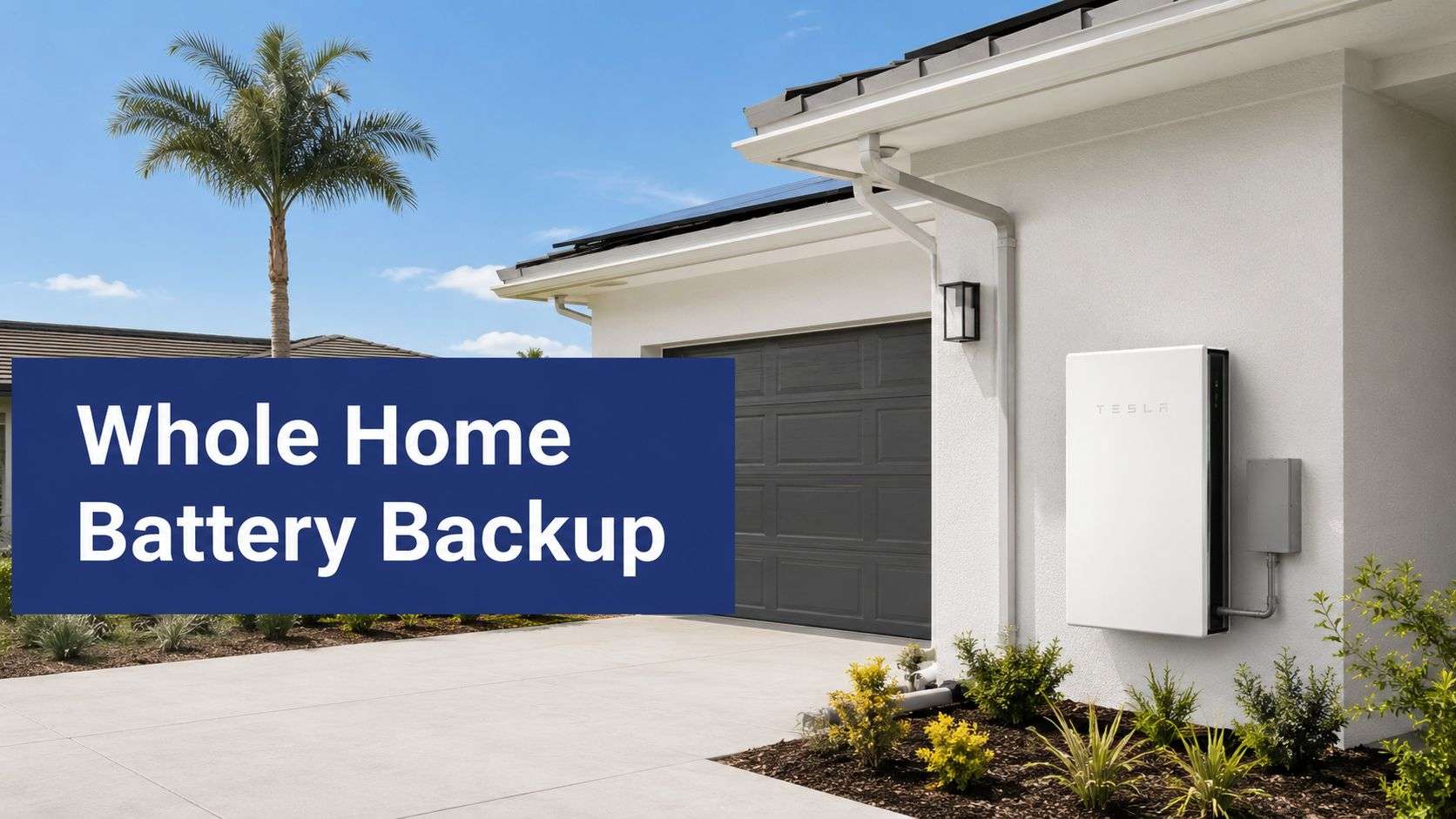
If you're replacing an inverter in Florida and you're not discussing battery storage, you're leaving a major strategic option on the table.
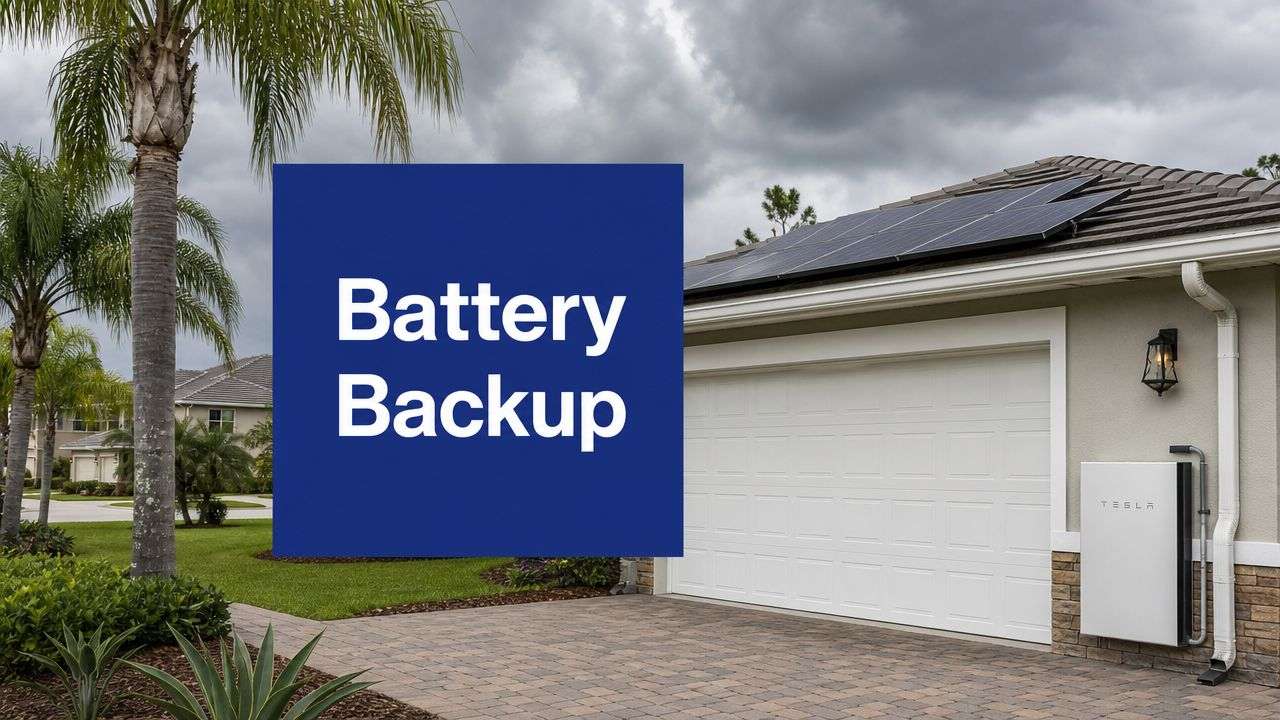
Grid outages aren't theoretical here. Storm season, hurricanes, feeder issues, and utility disruptions all change the value of solar. A standard grid-tied system without the right inverter setup won't give you meaningful backup power when the grid goes down. That's the part many owners learn too late.

Why Replacement Is The Right Moment
This is the cleanest point to decide whether your system should stay a production-only asset or become a resilience asset too.
If you replace with a battery-ready or hybrid inverter, you can align the electrical backbone of the system with future storage. That avoids the common mistake of installing a new inverter now, then realizing later that battery integration will require additional redesign or hardware changes.
If backup power matters to you, don't buy an inverter that locks you out of storage flexibility.
For many Florida homes, the practical goal isn't whole-building backup. It's keeping the right loads alive. Refrigeration, communications, lighting, security systems, internet, selected outlets, and in some cases limited cooling can all be prioritized if the system is designed correctly.
Commercial owners should think the same way. Critical circuits matter more than broad marketing language about “energy independence.” During an outage, continuity comes from planning load priorities, transfer behavior, and battery strategy before the equipment is ordered.
What To Decide Before You Replace
Ask these questions before the final inverter selection:
- Do you want immediate battery installation or future readiness?
- Which loads need backup during outages?
- Will the battery strategy support comfort, operations, or both?
- Does the replacement design include proper monitoring and control logic?
A lot of owners also need help deciding whether backup power should cover a few circuits, a subpanel, or a broader operational load set. If storage is part of your replacement discussion, review your options for battery storage for solar in Florida before locking in the inverter specification.
Navigating The Replacement Process In Florida
A Florida owner calls after the inverter fails in July. Panels are still on the roof. Utility bills keep coming. The hardware swap may be straightforward, but the primary work is permits, utility paperwork, system verification, and making sure the new inverter fits the property's next phase, not just today's outage.
That is the right way to treat this step. In Florida, inverter replacement is a mid-life system decision. If you handle it like a basic service call, you miss the chance to improve monitoring, prepare for storage, and tighten up a system that has already spent years in heat, humidity, and storm exposure.
The Florida Workflow That Actually Matters
A good replacement process follows this order:
Inspect the existing system
Review inverter fault history, production trends, array specifications, shutdown equipment, monitoring access, and any code issues that need correction during the replacement.Set the project scope
Decide whether you need a like-for-like replacement, a service-panel update, a monitoring overhaul, or a battery-ready redesign.Confirm equipment compatibility before ordering
Match the new inverter to the array, voltage window, communication platform, rapid shutdown setup, and any planned storage architecture.Handle permitting and utility approval
Florida AHJs and utilities do not process these projects the same way. Paperwork quality matters. One missing diagram or mismatched model number can stall the job.Install, commission, and verify operation
Replace the unit, program settings correctly, confirm communications, test startup behavior, and document the final configuration.Restore owner visibility
Get monitoring back online, save serial numbers and warranty documents, and make sure the owner has admin access instead of depending on an installer login.
Where Owners Lose Time
Delays usually start before installation day. Old permit sets are missing. Monitoring credentials are gone. The replacement inverter gets chosen before anyone checks compatibility with the array or future storage goals.
That is why scope control matters. A qualified consultant can define the technical path before procurement starts, especially if the property owner is weighing resilience upgrades at the same time. Solar Energy Management LLC is one Florida-based option that provides feasibility review, design guidance, ROI analysis, and battery planning so owners can make a clear decision before equipment is ordered.
For field execution, choose a contractor that handles solar-specific permitting, interconnection, commissioning, and documentation, not just electrical labor. If you are screening implementation partners, review these Florida solar installer requirements and selection factors.
Choose the team that can get the replacement approved, installed, documented, and running correctly, with a system design that still makes sense three to five years from now.
Costs ROI And Warranty Considerations
A Florida owner usually reaches this point after a frustrating stretch. The system is underperforming, the inverter is aging out, and every quote looks like a simple equipment swap. Treating it that way is how owners leave money on the table.
Inverter replacement is a mid-life upgrade decision. It affects production, future battery options, storm resilience, monitoring quality, and the long-term economics of the entire system. Price matters, but price alone is the wrong filter.
How To Think About ROI
Start with one question. What does the replacement let your system do better over the next several years?
A bargain replacement can get the system back online and still be a poor investment if it limits storage integration, gives you weak monitoring, or forces another round of electrical work later. In Florida, that mistake gets expensive fast because heat, humidity, grid interruptions, and evolving backup power goals put more pressure on the inverter than many owners expect.
Judge ROI against outcomes you can use:
- Recovered production: If the old inverter has been clipping output, dropping offline, or operating inconsistently, restoring stable conversion can recover lost energy value.
- Better system visibility: Strong monitoring helps catch faults earlier, which protects production and reduces long periods of unnoticed underperformance.
- Battery readiness: A replacement that supports storage or can be paired cleanly with battery equipment protects you from paying twice for labor and redesign.
- Stronger resilience planning: If backup power matters to you, inverter choice now determines how practical that upgrade will be later.
- Better fit for current usage: Your load profile may have changed since the original installation. EV charging, pool equipment, or work-from-home cooling loads can justify a different replacement approach.
That is the standard I recommend. Buy the inverter that improves the asset, not the one that produces the lowest invoice.
Warranty Terms You Should Read Carefully
Warranty length gets too much attention by itself.
Read the terms that decide whether the warranty will prove beneficial when something fails in year six or year ten. Manufacturers often separate equipment coverage from labor. Communication devices and accessories may carry different terms. Replacement units for discontinued models may not match the original form factor or feature set.
Check these points before you approve the job:
- Equipment coverage vs. labor coverage
- Start date of the warranty and whether registration is required
- Exclusions tied to installation method, environmental conditions, or commissioning errors
- Coverage for monitoring and communication components
- Claim process, turnaround time, and replacement policy for discontinued products
- Whether a battery-ready configuration changes warranty responsibilities across brands
This is also the right time to review the financial side of the project as a whole. If the inverter replacement may be bundled with storage, panel work, or other system upgrades, review Florida solar rebates and financial considerations before you commit to the final scope.
A good replacement restores production. A smart replacement improves your return, protects your next upgrade, and gives you a system that still makes financial sense in Florida several years from now.
Responsible Disposal And End Of Life Options
Don't throw an old inverter in the trash.
It contains electronic components that should be handled as e-waste, and that matters if you care about doing the job properly from start to finish. A clean energy system shouldn't end with careless disposal.
The Right Disposal Path In Florida
Start with the installer or EPC handling the replacement. Some teams will remove the old unit and direct it into an appropriate recycling or manufacturer return channel.
If they won't, ask your county or municipal solid waste department about local e-waste drop-off options. Many Florida communities have electronics recycling programs or designated collection events. The exact process varies by county, so verify accepted materials before transport.
Use this simple checklist:
- Ask for removal responsibility in writing: Don't assume the old inverter disappears as part of the job.
- Check for take-back options: Some equipment pathways may allow recovery through the installer side.
- Use county e-waste programs: This is usually the safest public option for responsible disposal.
- Keep a record: Save a photo of the model label and note where the unit went.
That closes the loop the right way. Replace strategically. Improve the system. Dispose of the old equipment responsibly.
If your Florida system is approaching inverter replacement, Solar Energy Management LLC can help you evaluate the right path before you commit to equipment or installation. Their team advises homeowners, commercial owners, and organizations across Florida on solar design, battery strategy, ROI modeling, and replacement planning so you can make a data-driven decision instead of a rushed one.