Your electric bill is landing in the inbox at the same time storm forecasts are getting more serious. If you own a home in St. Petersburg, manage a warehouse in Tampa, or oversee a multifamily property anywhere in Florida, that combination creates a specific question. Not “should solar exist,” but “what solar panel tech performs here, pays back well, and holds up in heat, salt air, and hurricane season?”
That's the right question to ask.
A Florida solar decision isn't just about panel wattage or a sales brochure headline. It's about matching panel technology, mounting, electrical design, and financing to the way Florida buildings operate. A coastal roof in Clearwater has different corrosion concerns than an inland metal roof. A retail property with expensive afternoon power use has different priorities than a homeowner who mainly wants lower utility bills and backup power.
The good news is that solar panel tech has matured into a practical planning problem, not a science experiment. The better news is that Florida gives you plenty of sunlight. The catch is that bad design choices get exposed faster here than they do in milder climates.
Why Solar Panel Tech Matters More in Florida
Florida owners usually start in one of two places. They either want relief from utility bills, or they want more control when the grid goes down. In practice, most projects need both.

The Florida Problem Isn't Generic
Heat changes panel output. Humidity stresses components over time. Hurricanes turn mounting details into business continuity issues. And utility economics matter because a system that looks good on paper can disappoint if it's oversized, poorly oriented, or paired with the wrong equipment.
Florida's unique climate makes solar technology more critical here than in broad national discussions. The state tests every technical vulnerability. High temperatures expose panels with poor heat management, while inadequate racking makes wind load a major project risk. If backup planning was neglected, the system provides little benefit during a power outage.
A Florida solar project should be evaluated like an energy asset, not like a commodity purchase.
At a global level, solar is no longer niche. Annual new installations reached 447 GW, and solar provided 7% of the world's electricity in 2024, with costs down over 70% in the last decade according to Statista's solar PV market overview. For Florida property owners, that scale matters because it signals a mature industry with proven supply chains and long-term relevance.
What Good Decisions Look Like
A strong Florida project usually gets four things right:
- It matches the roof to the technology. Limited roof space often points toward higher-efficiency modules.
- It accounts for weather risk. Wind exposure, corrosion potential, and drainage details need attention early.
- It models the utility bill correctly. Savings depend on your rate structure, usage pattern, and resilience goals.
- It plans the full system. Panels alone don't solve outages. Storage, controls, and critical load strategy matter too.
If you're still weighing the upside and trade-offs, this overview of the pros and cons of solar panels in Florida is a useful starting point before you compare technologies.
Why The Tech Choice Changes The Outcome
The difference between “good enough” and “well selected” panel tech shows up over years, not days. In Florida, that can mean better output on hot afternoons, slower degradation, fewer headaches with roof constraints, and a cleaner path to battery integration later.
That's why this decision deserves more than a price-per-panel conversation.
Decoding Core Solar Panel Technologies
Most Florida buyers still encounter three basic panel families first: monocrystalline, polycrystalline, and thin-film. Think of them as different tools, not as universally good or bad options.
The Practical Good Better Best View
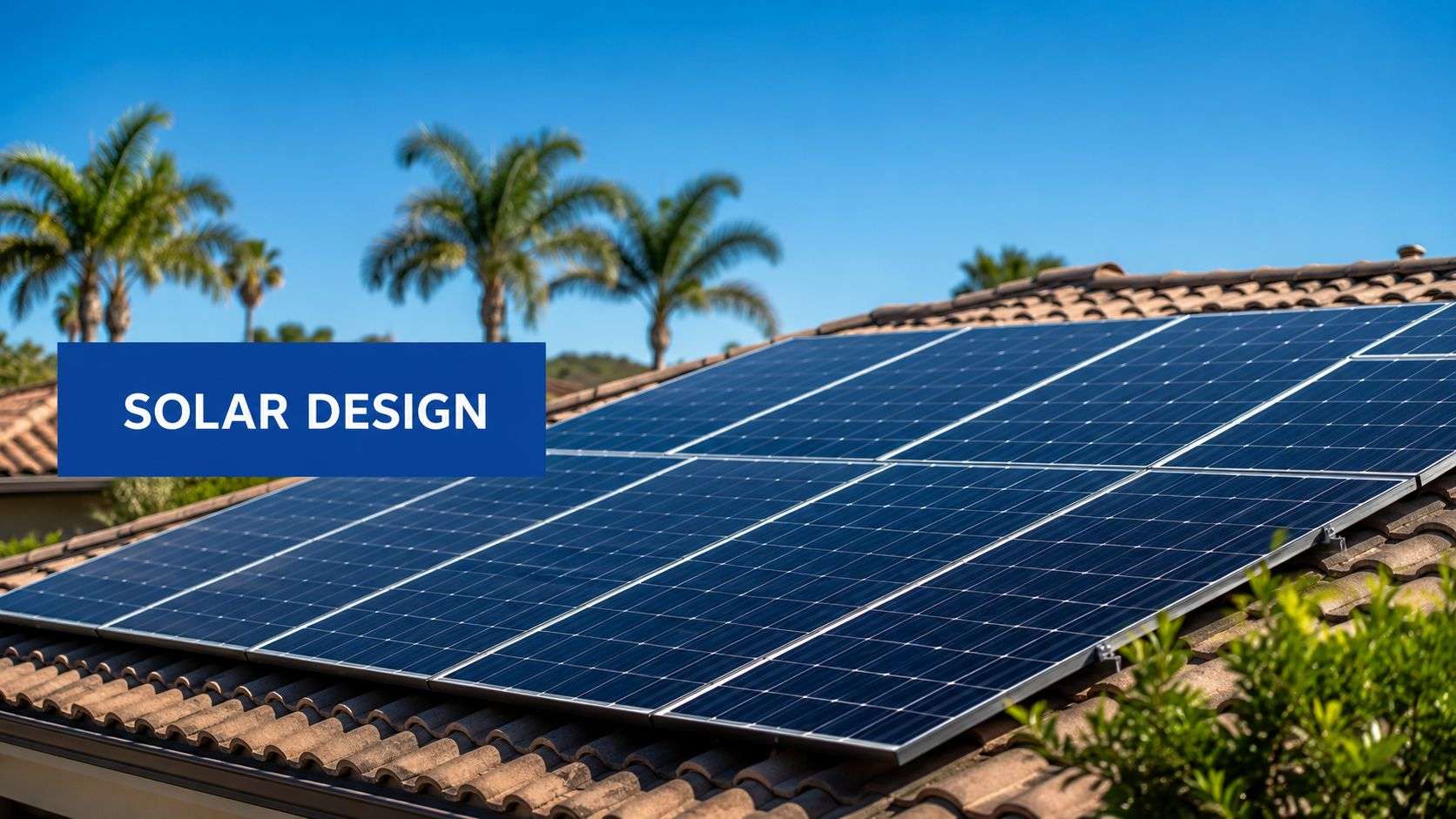
For most Florida rooftops, monocrystalline is the default recommendation because roof space is usually finite and aesthetics often matter. Polycrystalline used to fill more budget-conscious projects, but it has lost ground as higher-performing options became more common. Thin-film remains more specialized and usually makes more sense in select commercial or utility contexts than on a typical Florida house.
Here's the fast comparison.
| Technology | Typical Efficiency | Appearance | Best For Florida Use Case |
|---|---|---|---|
| Monocrystalline | Higher among mainstream rooftop options | Uniform dark or black look | Homes and commercial roofs with limited space |
| Polycrystalline | Lower than monocrystalline in typical use | Bluish, speckled look | Budget-focused projects where space is less constrained |
| Thin-film | Generally lower for standard rooftop space efficiency | Thin, darker, less traditional panel appearance | Select large-area commercial applications where design priorities differ |
Monocrystalline Panels
These are usually the safest answer for Florida owners who need the most production from a limited roof. They're the panels typically envisioned today: dark, clean-looking, and typically used on homes with visible front-facing roof planes.
Their main advantage is straightforward. If your usable roof area is limited by hips, valleys, vents, shade, or setback rules, higher-efficiency panel tech gives you more design flexibility. That matters on Florida roofs because roof geometry often reduces usable space faster than owners expect.
The trade-off is cost. Higher-performing modules often carry a premium, so the question isn't whether monocrystalline is “best” in the abstract. It's whether the extra output or space savings helps your specific project pencil out.
Polycrystalline And Thin-Film
Polycrystalline panels can still work, but they're rarely my first recommendation for a Florida roof where every square foot matters. They're more of a value play. If the roof is large and the budget is tight, they may still deserve a look, but many buyers now find the performance gap hard to justify.
Thin-film is a different category. It's less about traditional sloped residential roofs and more about specialized applications.
Practical rule: If you have a normal Florida home and want the most output from the roof you already have, start with monocrystalline and only move away from it for a clear site-specific reason.
Don't Evaluate Panels In Isolation
A panel family tells you part of the story, not the whole story. Cell architecture, heat behavior, degradation profile, warranty language, and inverter pairing often matter more than the broad category label.
That's why the panel conversation should happen alongside the electrical design. If you're comparing technologies, it helps to understand how the module works with the rest of the system, especially inverters and layout strategy. This guide to inverter and solar installation gives useful context for that side of the decision.
Next-Generation Innovations You Should Know
If basic panel categories are the foundation, modern cell architecture is where the real performance separation happens. This is the part of solar panel tech that most Florida buyers hear about in fragments: PERC, TOPCon, HJT, bifacial. The labels sound technical, but the payoff is practical.

Why PERC Stopped Being The End Point
PERC improved standard silicon performance by helping cells capture and use light more effectively, especially from the rear side of the cell. It was a meaningful step forward, and many installed systems still use it.
But for new Florida projects, PERC is no longer the technology I'd treat as the automatic front-runner. Heat performance and long-term output matter here. Newer architectures have pushed the benchmark higher.
TOPCon In Florida
TOPCon stands for Tunnel Oxide Passivated Contact. The engineering detail matters because it explains the financial result. A very thin oxide layer and passivating contact structure reduce recombination losses, which helps the cell hold onto more of the energy it captures.
That translates into stronger commercial efficiencies and better long-term retention. As of 2026, TOPCon panels account for about 75% of new production, deliver roughly 24% to 26% module efficiency, and show annual degradation under 0.4%, according to this review of TOPCon solar technology. For a Florida-specific example, that same source notes that a 10 kW TOPCon system in Tampa can offset over $2,500 in annual energy bills with payback under 7 years when federal incentives apply.
That's why TOPCon is getting so much attention. It isn't hype. It's an efficiency and durability upgrade that maps well to Florida conditions.
HJT And Where It Fits
HJT, or heterojunction technology, combines different silicon layers to improve efficiency and heat behavior. In Florida, that second part matters. A panel that handles high temperatures better can produce more useful energy across long, hot afternoons than a lower-cost alternative that looks similar on a proposal.
HJT can be compelling on premium residential or commercial projects where roof area is constrained and performance is prioritized. The main limitation is usually pricing and product availability compared with more mainstream TOPCon options.
If two panels look close in standard test conditions, Florida heat can widen the real-world gap.
Bifacial Panels
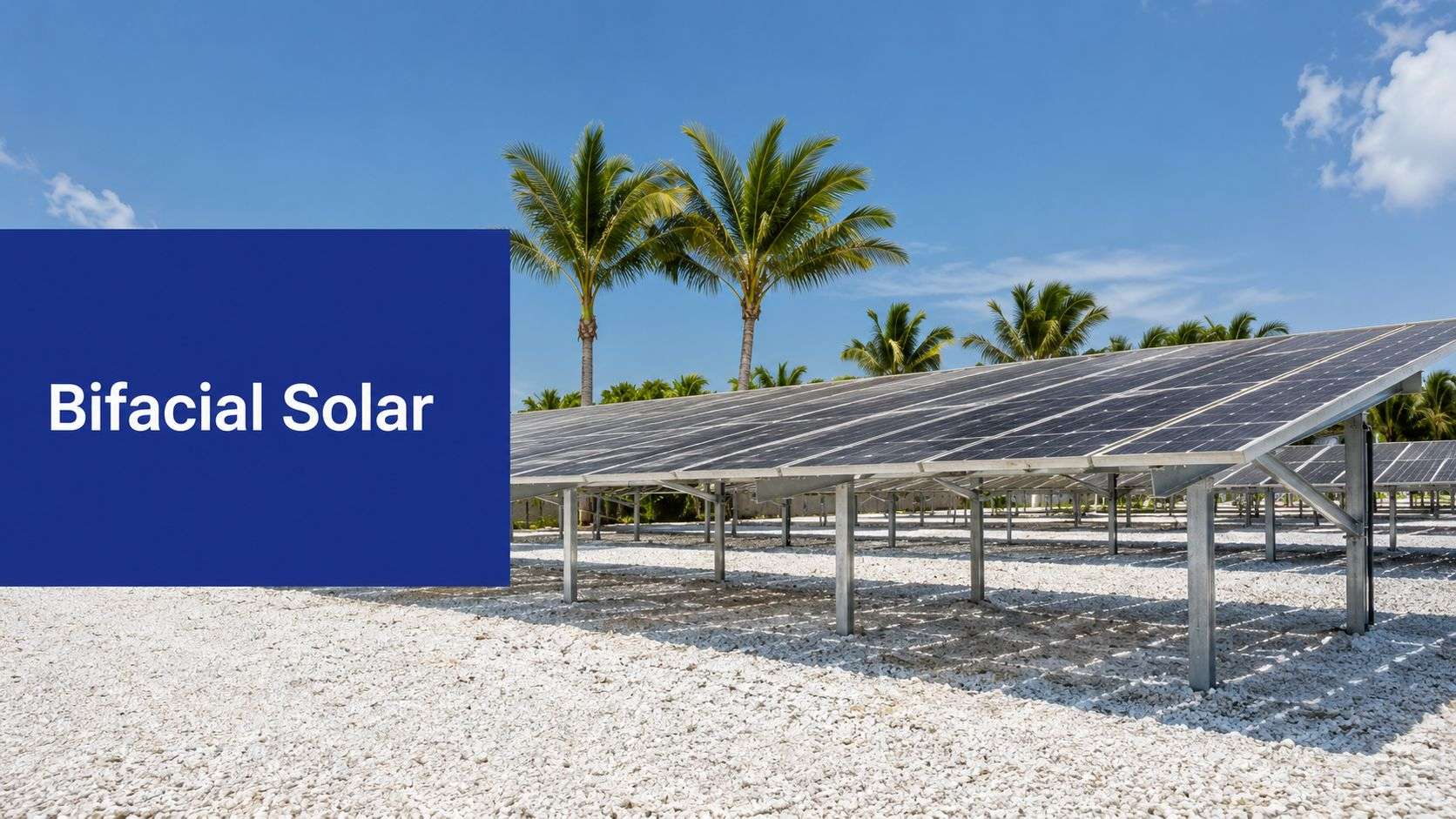
Bifacial modules generate from both sides. They aren't automatically a win on every project. On a typical shingle roof with minimal reflected light under the panel, the benefit may be limited.
They become much more interesting in these Florida scenarios:
- Reflective commercial roofs: White membranes can increase rear-side light exposure.
- Ground mounts: Open backside exposure improves the case for bifacial gain.
- Canopies and carports: Elevation and reflected light can make the design work better.
- Large industrial sites: Space and layout flexibility give bifacial modules more room to perform.
In the right setup, bifacial design pairs well with TOPCon. In the wrong setup, it turns into a brochure feature with little practical return.
Storage Changes The Tech Conversation
Higher-output panel tech gets more valuable when the system also supports backup or load shifting. Better daytime harvest can improve how effectively you charge batteries and manage critical loads.
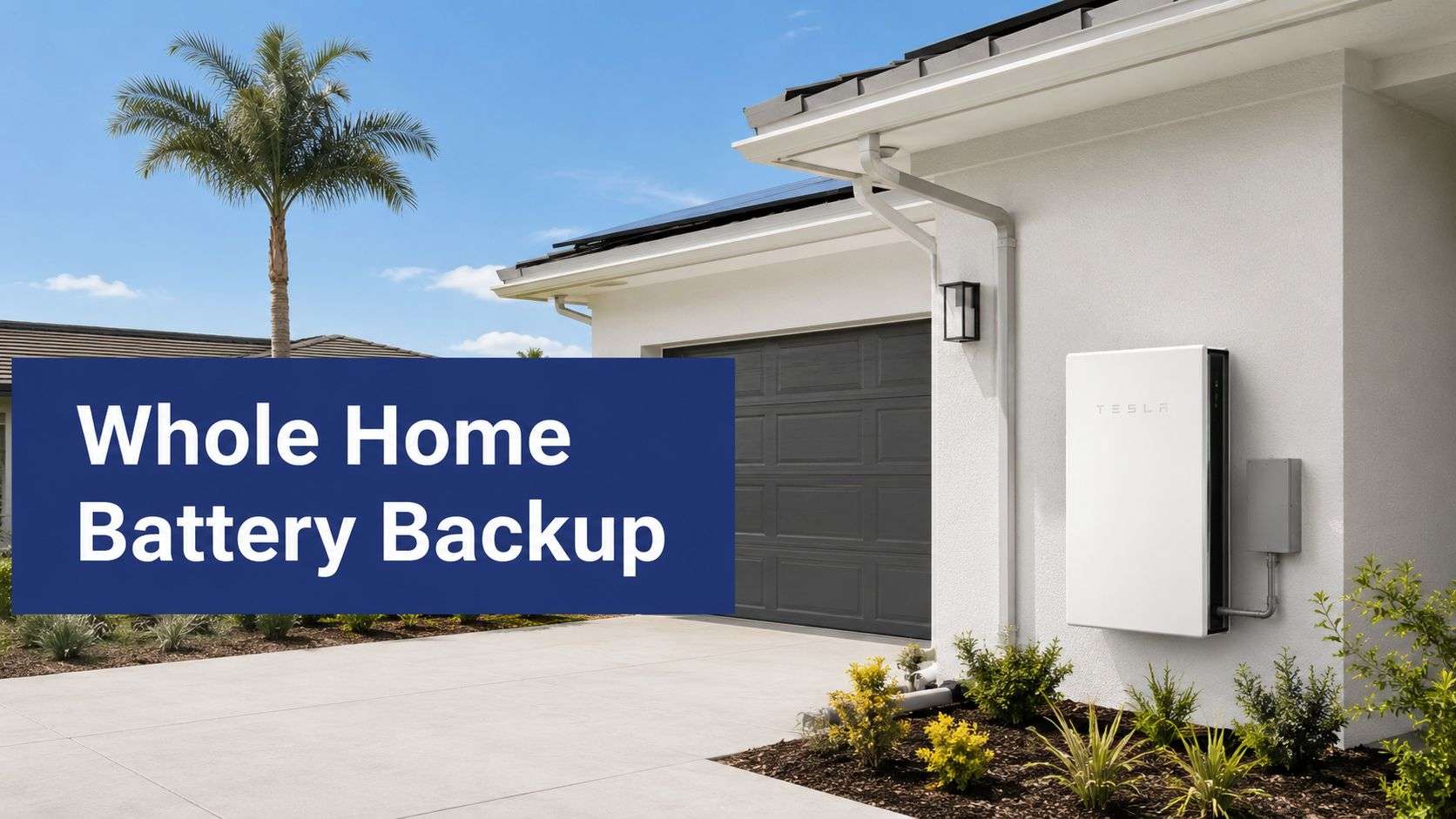
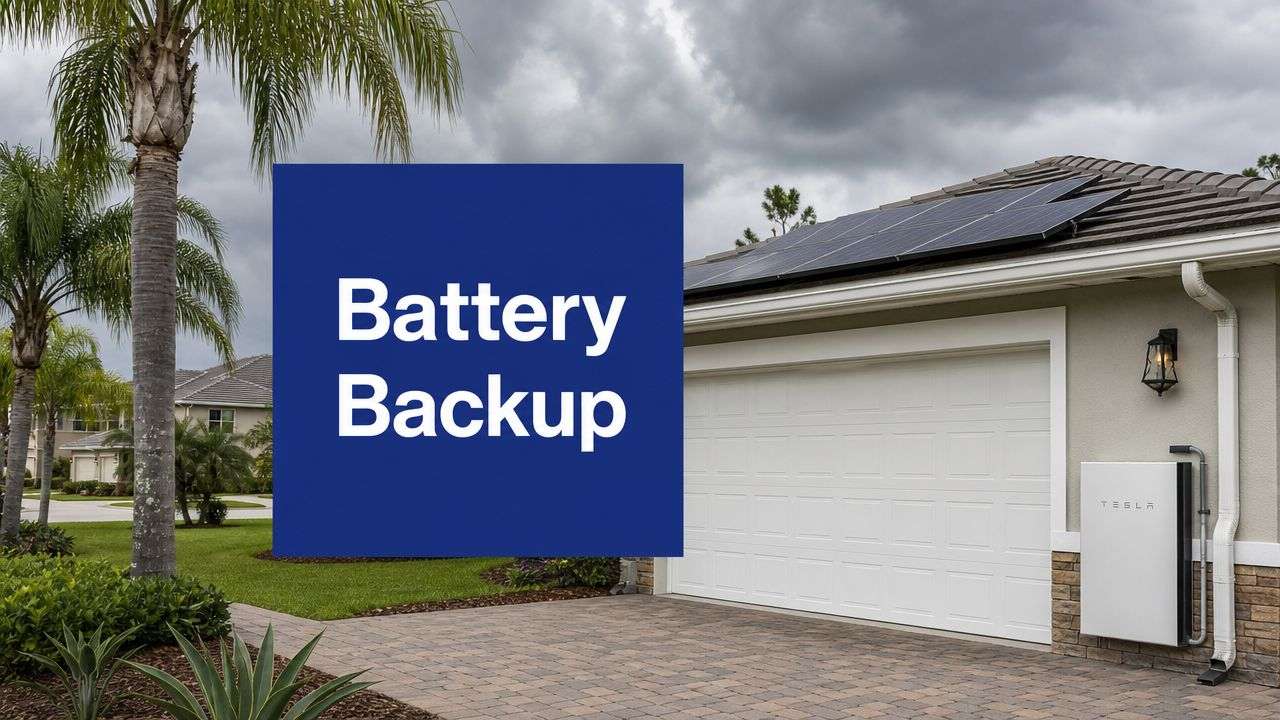
That's one reason battery planning should happen early, not after the panel choice is locked. If resilience is part of the goal, this overview of Tesla battery storage systems is relevant as part of the broader technology stack.
Key Metrics for Evaluating Panel Performance
A spec sheet tells you a lot, but only if you know which lines deserve attention. Florida owners often get distracted by the headline wattage and miss the numbers that shape long-term return.

Efficiency Is About Space Value
Efficiency tells you how much sunlight a panel converts into electricity. It doesn't automatically mean a system will save more money than every lower-efficiency alternative, but it does tell you how much output you can fit into a given area.
That's why efficiency matters more on Florida roofs with limited workable space. Dormers, setbacks, venting, mechanical equipment, and roof orientation can reduce available area. A more efficient panel may let you hit the target system size without forcing awkward compromises.
Solar has earned that focus over decades of improvement. The modern PV era began with Bell Labs' practical silicon cell at 4% efficiency in 1954, then moved to 14% by 1960 through Hoffman Electronics, and now to commercial panels exceeding 23%, as outlined in EnergySage's history of solar panel technology. That progression matters because it shows today's panel metrics rest on a long, proven engineering curve.
Temperature Coefficient Is A Florida Metric
Temperature coefficient is one of the most important lines on a panel data sheet for this state. It tells you how much output drops as the panel gets hotter. Since Florida roofs run hot for long stretches of the year, this isn't a minor detail.
A better temperature coefficient means less performance loss during high-heat conditions. If you compare two similar-looking modules and one handles heat better, that panel may produce more usable energy over time even if the brochure comparison seems close.
A panel that looks strong in a lab but fades in roof heat can weaken your ROI without showing obvious failure.
Degradation And Tolerance
Degradation rate affects how much output the panel retains over the years. This matters for long-term ownership because your savings model depends on future production, not just day-one performance.
Power tolerance matters too. It tells you how close the actual delivered panel output is to the labeled rating. Tight manufacturing control reduces unpleasant surprises when the system is energized.
Look for these questions when reviewing a specification sheet:
- How does it perform in heat: Ask for the temperature coefficient and a plain-English interpretation.
- What does the warranty guarantee: Separate product warranty from performance warranty.
- How fast does the panel degrade: Long-term retention matters if you plan to own the property for years.
- Does the module help a space-constrained roof: Higher efficiency may justify higher upfront cost.
If you're modeling these numbers against your utility bill, this guide on solar power ROI helps connect panel metrics to the financial side.
Designing for Florida's Unique Climate
Florida punishes generic solar design. I've seen plenty of proposals where the module choice gets careful attention, but the mounting, materials, and site exposure get treated as routine. That's a mistake.

Wind And Attachment Matter As Much As The Panel
A Florida system has to survive storms, not just produce on sunny days. That means racking, roof attachments, flashing details, and structural review all deserve serious scrutiny. A panel with excellent efficiency doesn't compensate for weak mounting strategy.
For homes, the roof type changes the design approach. Tile, shingle, metal, and flat roof systems each present different attachment and waterproofing concerns. For commercial buildings, parapets, roof traffic, drainage paths, and membrane compatibility all need review before equipment is selected.
Coastal Exposure Changes Material Choices
Salt air creates a very different durability environment than inland projects. Hardware, fasteners, frames, and coatings need to be chosen with corrosion resistance in mind, especially in coastal markets like Clearwater and St. Petersburg.
That doesn't mean coastal solar is a bad idea. It means the design team can't treat the site like a generic inland roof. The panel may last, but the supporting components and attachment strategy still determine whether the system performs cleanly over time.
Near the coast, corrosion planning isn't a premium upgrade. It's basic due diligence.
Roof Mount Versus Ground Mount In Florida
This decision is rarely just aesthetic. It affects service access, shading risk, storm exposure, usable land, and long-term maintenance.
A roof mount usually makes sense when:
- Roof area is strong: The structure, orientation, and remaining roof life support the project.
- Land is limited: Urban and suburban lots often make ground mounting impractical.
- The goal is lower visual impact: Many owners prefer the system to stay on the building envelope.
A ground mount can be the better choice when:
- The roof is complicated: Too many facets, obstructions, or replacement concerns can undermine rooftop economics.
- Serviceability matters: Ground systems are often easier to inspect and maintain.
- You want layout freedom: Orientation and spacing can be optimized more easily.
If your roof is part of the decision, roof condition should be reviewed early, not after the solar design is mostly complete. This discussion of solar and roof planning is useful for sorting through timing, compatibility, and replacement issues before you commit to an array layout.
Integrating Solar Into Your Financial and Energy Strategy
Solar panels don't create value on their own. The value comes from how the array interacts with your building load, inverter design, battery strategy, financing structure, and outage priorities.
A Solar System Is Really An Energy System
For a Florida homeowner, that may mean deciding whether the system should lower bills or also support backup for refrigeration, internet, lighting, and selected circuits. For a commercial property, it may mean deciding whether battery storage should shave demand, preserve operations during outages, or support a broader microgrid plan.
Those are different projects even when the roof area is the same.
When owners skip this planning step, they often end up with a technically functional system that doesn't solve the actual problem. A bill-savings design isn't automatically a resilience design. A backup-focused design isn't automatically the cheapest payback play.
Match The Electrical Design To The Building
The panel choice has to work with the inverter architecture and service equipment. Some buildings benefit from module-level electronics because of roof geometry or partial shading. Others are better served by a string-based design with simpler maintenance access. Critical load subpanels, transfer equipment, and storage controls all need to be coordinated from the beginning.
That's also where electrical panel capacity enters the picture. Some Florida buildings need service upgrades before solar and storage can be integrated cleanly. If you're evaluating whether your existing panel can support a future-ready system, Heatwave's panel upgrade tips offer a practical overview of what to look for before design work gets too far along.
Incentives Should Shape The Strategy
For tax-exempt entities in Florida, one of the most important developments is Direct Pay, created under the IRA. It allows nonprofits, schools, and municipalities to receive a direct cash payment equivalent to the 30% solar tax credit, which can enable solar plus storage projects for critical facilities, according to the Rockefeller Foundation's review of clean energy incentives.
That matters because resilience projects for community facilities often stall on financing structure, not technical feasibility. Direct Pay changes that conversation.
For private owners, the same principle applies even though the mechanism differs. Incentives, depreciation treatment, and cash-flow goals should influence system size, storage scope, and ownership structure. A strong consultant models the project around your real utility profile and capital priorities, not around a generic production estimate.
Where Independent Planning Helps
In more complex Florida projects, independent advisory work can clarify the decision before procurement starts. Firms such as Solar Energy Management LLC handle feasibility studies, ROI modeling, storage planning, and microgrid strategy so owners can compare options before moving to installation contracts.
That kind of process is especially useful for:
- Schools and nonprofits: Where resilience and incentive structure need to be modeled together
- Commercial facilities: Where demand patterns and outage exposure shape the design
- Industrial sites: Where microgrid readiness may matter as much as bill reduction
- Multifamily properties: Where common-area loads and tenant considerations complicate the economics
The best result isn't “adding solar.” It's building a system that lowers energy costs, improves operational resilience, and fits the property's long-term capital plan.
Essential Questions for Your Solar Consultant
A good consultant shouldn't just answer questions. They should welcome hard ones. In Florida, that's how weak assumptions get exposed before they become expensive mistakes.
Questions About Technology Fit
Start with the panel recommendation itself.
Ask questions like:
Why are you recommending this panel technology for my property instead of another one?
You want an answer tied to roof space, heat performance, degradation, and layout constraints. “It's popular” isn't enough.How will this panel perform on my roof in Florida heat and humidity?
The answer should discuss heat behavior in practical terms, not just quote brochure language.Is bifacial, TOPCon, or HJT useful on my project, or just attractive on paper?
A serious consultant separates real value from feature inflation in this context.
Questions About Structure And Resilience
The hardware conversation has to include storm risk and roof condition.
Use questions such as:
- How are you accounting for hurricane wind loads on this specific building?
- What corrosion precautions are being built into the design if I'm near the coast?
- Is my current roof a good solar platform, or should roof work happen first?
If roof timing is uncertain, it helps to review practical scenarios around replacing a roof with solar panels before finalizing the project scope. That issue affects attachment design, scheduling, and long-term cost more than many buyers expect.
The right time to discover a roof problem is before the array design is finalized.
Questions About Money And System Value
Many proposals get shallow at this stage. Ask for modeling that reflects your actual building and utility profile.
Push on these points:
- What does the ROI model assume about my usage pattern and utility bill structure?
- How does battery storage change the economics versus the resilience value?
- Which incentives apply to my ownership type, and how are they reflected in the analysis?
- What happens if I want to expand later with storage, EV charging, or a larger critical-load backup plan?
The strongest proposals usually show multiple scenarios, not a single “best case” path.
Questions About The Future
Solar panel tech won't stop improving after you buy. That doesn't mean you should wait forever. It means your consultant should explain whether today's equipment is the right fit now and how future changes affect your timing.
One technology worth asking about is the rise of perovskite-silicon tandem cells. They've reached a 34.85% lab efficiency record, and residential availability is expected by 2026, according to GreenLancer's review of solar panel technology trends. For most Florida buyers, that doesn't automatically justify waiting. But if your roof is severely space-constrained, future module evolution may deserve a serious timing discussion.
A strong consultant will tell you where waiting makes sense, where it doesn't, and what you give up by delaying savings and resilience today.
If you want an independent review of your Florida property before you commit to equipment or installation, Solar Energy Management LLC helps homeowners, businesses, schools, and nonprofits evaluate solar panel tech, storage, ROI, and resilience planning with a consulting-first approach.