You're probably in the same spot as a lot of Florida property owners. You know solar should make sense here. The sun is strong, utility bills keep climbing, and every week another company promises huge savings if you “sign today.” But once you start comparing proposals, the numbers shift, the equipment changes, and nobody seems to agree on what your property can support.
That's why a solar power feasibility study matters. It cuts through marketing and replaces guesswork with a plan built on your roof, your usage, your electrical setup, and your risk tolerance. In Florida, that last part matters more than people admit. A system that looks good on paper but ignores storms, outages, or structural limits isn't a strategy. It's a gamble.
As consultants, our role isn't to sell a prepackaged installation. It's to help you decide whether solar is the right financial move, what system type fits, and whether battery storage belongs in the conversation from day one.
Is Solar Power the Right Move for Your Florida Property
If you've been comparing quotes, you've probably noticed a pattern. One company says your roof is perfect. Another says you need fewer panels. A third pushes a battery before anyone has looked closely at your actual load profile. That confusion is normal, but it shouldn't drive a major capital decision.
A Florida solar project should start with one question: Does this property support a strong financial and operational case for solar power? Not “Can panels fit on the roof?” Almost any sales process can answer that. The key issue is whether the project works for your building, utility usage, and resilience goals.
For many owners, the early decision comes down to a few practical concerns:
- Bill reduction: You want lower operating costs without buying the wrong-sized system.
- Storm readiness: You want to know whether solar alone helps during outages, or whether storage belongs in the plan.
- Property constraints: Roof age, shading, and electrical limitations can change the economics fast.
- Decision confidence: You want a recommendation based on evidence, not a commission structure.
If you're still weighing the basic tradeoffs, this breakdown of the pros and cons of solar panels in Florida is a useful starting point. Then move past general pros and cons and get specific about your property.
Practical rule: If a proposal can't clearly explain why the system size, savings assumptions, and backup strategy fit your building, you don't have a decision-ready plan yet.
A proper feasibility study gives you that plan. It tells you whether to proceed, what to avoid, and where the actual value is. Sometimes the answer is “yes, move forward.” Sometimes it's “wait until the roof is replaced” or “battery storage changes the equation.” That kind of honesty saves money.
What a Feasibility Study Delivers Beyond a Sales Quote
A Florida owner can get three solar quotes in a week and still have no clear answer about whether the project should happen. That is the problem. A quote can price panels, inverters, and financing. It usually does not test roof risk, interconnection limits, outage priorities, or whether battery storage improves the economics and the storm plan.

The Difference in Plain English
A real feasibility study gives you a decision framework.
It checks whether the project fits the building, the load profile, the budget, and the resilience goals before you sign anything. That matters in Florida, where one bad assumption can ripple into roof work, electrical upgrades, insurance questions, or a battery system that does not cover the circuits you care about during an outage.
The U.S. Department of Energy describes project development as a process that starts with screening site conditions, energy use, and economics before final design and procurement. That is the standard owners should expect, not a polished proposal with optimistic savings and a generic payback. See the DOE guidance for planning distributed solar projects.
What You Should Expect Instead of a Pitch
A proper study should answer specific questions that affect risk and return:
- Physical fit: Will the roof, structure, and electrical service support the proposed system without expensive surprises?
- Production realism: Are the generation assumptions based on your site conditions, not a broad average?
- Financial logic: Do the savings, incentives, and financing terms hold up under realistic utility and usage assumptions?
- Storm-readiness: If backup power matters, which loads should a battery support, for how long, and at what cost?
- Timing: Should you install now, pair solar with roof work, or delay until another capital project is complete?
That is what separates planning from selling.
If a proposal cannot show how panel layout, inverter choice, and system design affect performance, review the basics of solar panel technology and system design choices before accepting the savings model at face value.
Why This Matters in Florida
Florida projects fail on details, not on interest in solar. Roof age, wind exposure, utility rules, and outage expectations all shape whether the investment works. Battery storage belongs in that analysis early because resilience has a price, and you need to know what you are buying. Whole-home backup, selective load coverage, and critical-load panels produce very different results during a storm.
Good studies also tighten up early site assumptions. For example, remote tools used for improving roof measurement accuracy can sharpen preliminary layout and capacity estimates before field verification. That helps owners spot bad proposals sooner and ask better questions.
The value is straightforward. A feasibility study reduces the chance that you approve the wrong system, at the wrong size, on the wrong timeline, with the wrong backup strategy. That is how you protect capital and make a confident decision.
The Core Components A Deep Dive
A solid feasibility study isn't one spreadsheet and a satellite image. It's a set of checks that answer one thing: can this project be built, perform as modeled, and justify the money?
Site and Roof Review
The first layer is physical reality. That means roof condition, usable area, orientation, obstructions, and shade. It also means asking whether the roof should host solar at all, especially if replacement or reinforcement is close.
For remote planning, modern tools can help with improving roof measurement accuracy, especially during early screening. But satellite measurements are only one part of the puzzle. They don't replace structural review, attachment planning, or local field verification.
If you want context on the equipment side, this guide to solar panel technology helps explain why module layout, inverter choice, and roof geometry all affect performance.
Electrical and Structural Constraints
Many glossy proposals are often exposed by the demands of a technically thorough study. Such a study must verify both electrical and structural constraints. The requirements used by DC Green Bank call for at least one year of electricity usage data, module orientation and tilt, inverter specifications, site plan and electrical connection point, plus financial inputs such as roof upgrades or structural reinforcement, as described in the DC Green Bank solar feasibility study requirements.
That matters because a project can look profitable until one overlooked issue changes the build.
- Roof loading: A structurally marginal roof may need reinforcement or a different mounting approach.
- Service capacity: An undersized panel or service entrance can limit system size or trigger added electrical work.
- Interconnection setup: The point of connection and utility requirements can force redesign.
- Battery location: If storage is part of the plan, the physical placement and electrical integration need to work from the start.
Load Analysis
Twelve months of utility data isn't paperwork for paperwork's sake. It shows how the building behaves across seasons, occupancy changes, cooling demand, and operating hours.
A Florida property with heavy summer air-conditioning loads won't behave like a simple annual average. Neither will a church, warehouse, restaurant, or school. If the analysis doesn't look at how and when you use power, the proposed system size may be wrong.
Field advice: Don't accept a solar recommendation based only on annual kWh and roof square footage. That's screening, not due diligence.
Generation Modeling
A good study also models how the system should perform in real conditions, not in a perfect-world brochure. That means expected production, site-specific losses, equipment behavior, and practical design assumptions.
The output should be more than “X panels produce Y savings.” It should show how the proposed array interacts with your property conditions and why those assumptions are reasonable.
Financial Inputs Tied to Reality
The last core component is a financial model built on the technical findings. If the roof needs work, that cost belongs in the decision. If the service needs upgrades, that belongs in the decision too. Separating “solar costs” from “required project costs” is how bad economics get hidden.
An independent consultant can be very useful. Firms such as Solar Energy Management LLC provide feasibility studies and financial modeling that connect usage, site conditions, storage options, and procurement planning before an owner commits to installation.
Decoding Florida's Solar Incentives and Financial Models
A Florida owner signs a solar contract because the tax credit and bill savings look great on page one. Six months later, the project still exists, but the economics look weaker because the proposal overstated production, ignored the utility rate structure, and treated resilience as a side note. A feasibility study prevents that mistake.
Most incentive conversations start too high level. A serious financial review starts lower, with the inputs that drive the outcome. If the production model is inflated or the billing assumptions are lazy, every savings claim built on top of them is unreliable.

Incentives Only Matter if the Inputs Are Sound
The federal tax credit can improve returns. Florida's favorable tax treatment can improve them further. Utility bill credits can also add value. None of that fixes a bad model.
A credible study ties incentive value to expected generation, site losses, rate design, and ownership structure. That means using long-term solar resource data, realistic derates, and a billing model that reflects how your utility charges for power. The National Renewable Energy Laboratory's PVWatts calculator is one common benchmark for estimating system output under real operating assumptions.
Here is the practical rule. If a proposal shows strong payback but does not explain production losses, export credit treatment, or tariff assumptions, treat the financial case as incomplete.
What Florida Owners Should Review
Florida solar economics depend on more than one headline number. Review the full stack:
- Federal tax credit eligibility: This affects after-tax cost and can materially change the return for qualifying owners.
- Florida tax treatment: Sales tax and property tax treatment can improve project economics and should be shown clearly in the model.
- Utility tariff and export credits: Energy charges, demand charges, and net metering terms determine what each kilowatt-hour is worth.
- Ownership path: Cash, loan, lease, and PACE financing shift risk, cash flow timing, and total project cost.
- Insurance and storm-readiness implications: In Florida, resilience planning belongs in the financial review because outage protection has real operational value.
- Battery economics: Storage can change the project from a pure savings play into a risk-mitigation plan for storms, refrigeration, communications, security, or critical business continuity.
If you want a state-specific primer before reviewing your own numbers, this guide to Florida solar incentives and tax considerations is a useful starting point.
Use More Than Simple Payback
Simple payback is easy to understand. It is also easy to misuse.
Make the study show cash flow by year, not just one break-even date. Make it test different system sizes against your actual utility structure. Make it compare ownership options side by side. For commercial properties, demand behavior and operating hours often matter as much as total annual consumption. For homes, future EV charging, pool loads, electrification plans, and outage priorities can change the right system size.
The best financial model does one job well. It helps you choose the version of the project that protects your downside, captures the available incentives, and fits how the property will operate in Florida, including during storm season.
Beyond Savings Planning for Resilience with Battery Storage
In Florida, a solar power feasibility study that ignores battery storage is incomplete.
That doesn't mean every property needs batteries. It means every serious study should test whether storage adds enough value through backup power, load management, or both. If nobody runs that analysis, you're making a decision with a major blind spot.

Why Battery Analysis Belongs Up Front
Many solar analyses stop at bill savings. That's a problem in a state where storm-related outages are part of life. Guidance on feasibility now increasingly includes storage options because battery value can materially change the project's overall justification, especially when resilience matters, as discussed in this overview of the solar energy feasibility study process and battery considerations.
For Florida owners, that's not academic. It affects food refrigeration, medical devices, communications, security, server uptime, elevator operations, and HVAC strategy during outages.
What a Useful Storage Review Looks Like
A real battery assessment should look at your critical loads, not your whole building in the abstract.
For a home, that might mean:
- Refrigeration and kitchen essentials
- Internet and communications
- Medical equipment
- Selective lighting and outlets
- A limited cooling strategy
For a commercial site, it might focus on server rooms, emergency lighting, access control, point-of-sale systems, or a defined life-safety package.
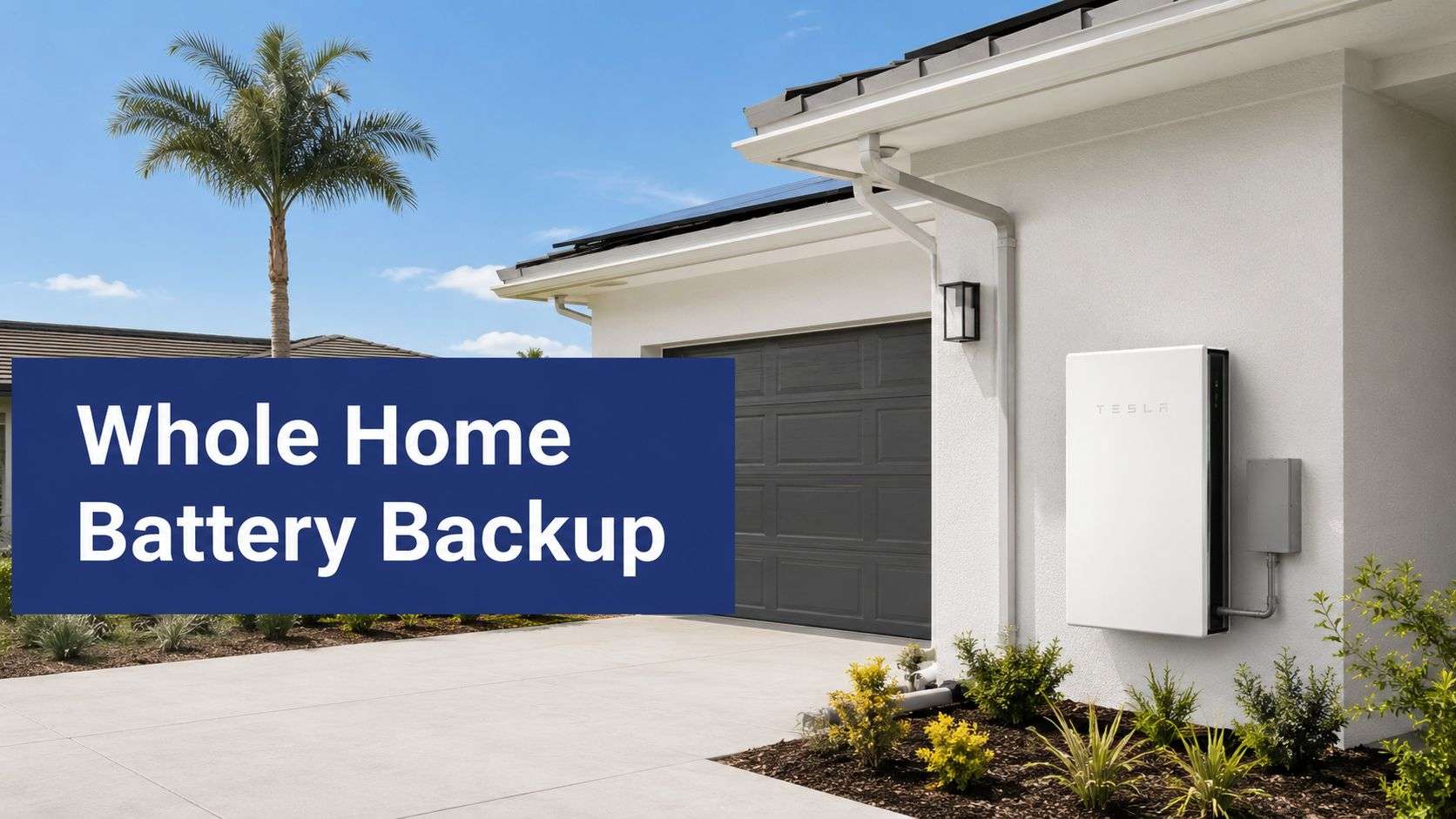
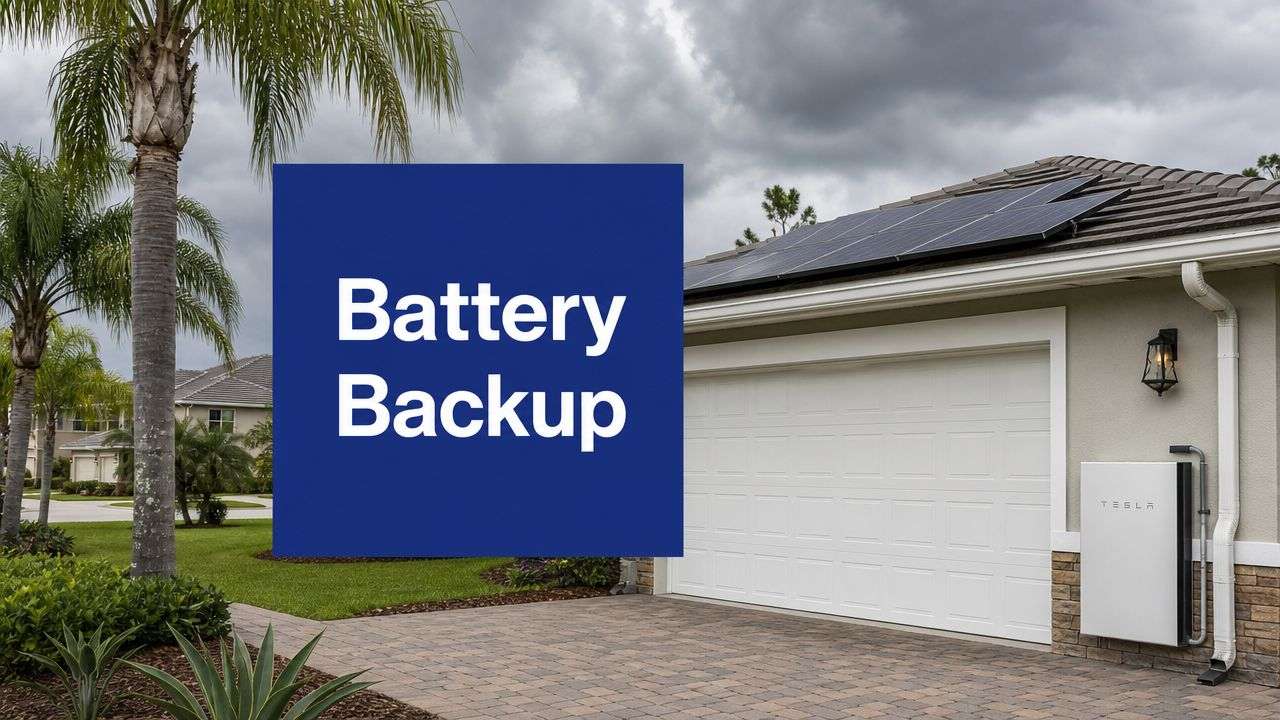
If resilience is one of your goals, you should also review solar battery backup for power outages before deciding on a PV-only design. The key is to tie battery sizing to what you need to keep running.
Don't ask, “Should I add a battery?” Ask, “What do I need powered during an outage, for how long, and what's that worth to me?”
The Florida Decision Rule
Here's my view. If you live or operate in Florida and a proposal talks only about utility savings, it's leaving out a core part of the value discussion.
Storm exposure changes the conversation. A PV-only system may reduce bills, but it usually won't deliver the backup experience many owners assume they're buying. If resilience matters, the study needs to model storage from the start. Otherwise, you're not comparing full options. You're comparing partial ones.
Study Costs Timelines and Sample Deliverables
Most owners hesitate at the idea of paying for a study because they're used to “free quotes.” That's understandable. It's also backward thinking when the decision affects a much larger budget.
A feasibility study is due diligence. You don't skip due diligence just because somebody offered a free sales proposal.

What Studies Commonly Cost
There is a real cost range for feasibility work. According to an industry guide, residential feasibility studies typically cost $500 to $2,000 for basic analysis and $1,500 to $5,000 for in-depth studies. Commercial studies commonly range from $5,000 to $25,000, while utility-scale studies can run from $50,000 to $500,000 depending on complexity. The same source notes that utility-scale feasibility studies often represent less than 1% of total project cost, which shows how small this line item can be relative to the risk it helps avoid, based on this guide to solar feasibility study costs and process.
For Florida property owners, the takeaway is straightforward. The study cost may feel noticeable up front, but it's cheap compared with oversizing a system, missing structural issues, or buying a battery setup that doesn't match your outage priorities.
What You Should Expect to Receive
A legitimate deliverable should be decision-ready, not just visually polished. That usually includes:
- A site findings summary: Roof or ground conditions, shading issues, and buildability constraints.
- Usage analysis: Review of your electricity consumption and the load patterns that matter most.
- System scenarios: More than one design path when multiple approaches make sense.
- Financial modeling: Cash flow, savings assumptions, and the key variables that drive returns.
- Resilience recommendations: Whether storage should be included, deferred, or excluded.
Timelines and Process
The exact timeline depends on project complexity, data availability, roof access, and whether storage or interconnection issues need deeper review. Straightforward properties move faster. Complex buildings don't, and they shouldn't.
If someone produces a “full feasibility study” almost instantly, be skeptical. High-quality work takes coordination, analysis, and review. That's especially true in Florida, where roofs, wind exposure, and backup planning often need closer attention.
Key takeaway: Speed is useful. Accuracy is more valuable.
Your Next Step Engaging a Florida Solar Consultant
If you're serious about solar, stop collecting random quotes and start assembling decision-quality information.
That means treating the first conversation with a consultant like the beginning of an investment review, not a sales appointment. You'll get a better result, and you'll spot weak proposals much faster.
What to Gather Before the First Call
Bring the basics that let someone analyze your property properly:
- Twelve months of utility bills: This shows seasonal usage and helps size the system around reality.
- Your property address and roof details: Roof age, known repairs, and any planned replacement matter.
- Electrical information if you have it: Main service details, panel information, and any known limitations.
- Your priorities: Bill savings, backup power, EV charging, tenant stability, or long-term hedging.
- Any prior proposals: These are useful for comparison, even if you don't trust them.
If you're looking for a starting point, this page on Florida solar energy consultants near me can help you understand what an advisory process should look like.
Questions You Should Ask
Don't focus only on panel brand or headline savings. Ask harder questions.
- What assumptions drive the production model?
- What site constraints could shrink the system or raise costs?
- How are outages and battery storage being evaluated?
- What happens if the roof or electrical system needs upgrades?
- Which system size best fits my goals, and why?
Those questions force clarity. Good consultants welcome them. Weak sales organizations usually pivot away from them.
The Right Mindset
The goal isn't to prove that solar works no matter what. The goal is to determine whether solar works well for your property in Florida, under your utility conditions, with your resilience priorities.
Sometimes the smartest move is to proceed now. Sometimes it's to fix the roof first, wait for a better financing structure, or change the system scope. A good advisor will tell you the difference.
That's what a solar power feasibility study is really for. It gives you a clear yes, a clear no, or a clear “not yet,” backed by analysis you can trust.
If you want an independent, Florida-specific review before committing to installation, Solar Energy Management LLC helps homeowners, businesses, and organizations evaluate solar and storage with feasibility studies, ROI modeling, and resilience planning built around real property conditions.