Florida doesn't offer one big statewide solar rebate. The main financial benefits are the 6% state sales tax exemption, the 100% residential property tax exemption, and the federal solar tax credit commonly described as 30% of eligible installed cost.
That distinction matters because many Florida homeowners and business owners start by searching for “solar power Florida rebates” and expect a simple cash-back program. Then they get conflicting answers. One website talks about tax credits, another mentions local rebates, and a third focuses on utility rules. The result is confusion at the exact moment you're trying to decide whether solar makes financial sense.
If you're looking at a rising power bill, planning a roof replacement, or trying to add backup power before the next outage, the right question isn't just “What rebate can I get?” It's “How do all the incentives work together on my property?”
That's where Florida is different. The state's solar economics are built less around a statewide rebate pool and more around a layered structure of tax treatment, federal incentives, and in some cases local programs. Once you understand that stack, the numbers become much easier to evaluate.
Understanding Florida's Solar Incentive Landscape
A lot of people use the word “rebates” as shorthand for any solar incentive. In Florida, that shortcut causes problems.
Florida's strongest solar incentives are usually tax exemptions, not a broad statewide cash rebate. Homeowners can avoid the state sales tax on qualifying equipment, and residential systems receive a property tax exemption on the added assessed value. Many households may also qualify for the federal solar tax credit, which is often the largest single financial driver in the project.
That structure is one reason Florida has become such a significant solar market. If you want background on how systems and planning work locally, this guide to solar panels in Florida is a useful starting point.
Why The Word Rebate Can Be Misleading
Individuals exploring solar power Florida rebates typically want to answer one of three practical questions:
- What lowers my upfront cost: They want to know whether there's immediate financial relief at the time of purchase.
- What lowers my long-term ownership cost: They want to know if taxes or recurring charges will eat into savings.
- What applies to my property type: A homeowner, nonprofit, and warehouse owner may all qualify for different forms of value.
Florida's system answers all three, but not always with a check in the mail.
Practical rule: In Florida, you should evaluate solar incentives in layers. First federal credit, then state tax treatment, then local rebates if any exist.
The Better Way To Think About It
Instead of asking only whether Florida has a rebate, ask:
- What reduces the system's purchase cost?
- What prevents the system from increasing taxes later?
- Are there any city, utility, or property-specific programs available?
That framework usually leads to a clearer decision than searching for a single statewide rebate that doesn't exist.
The Federal Solar Tax Credit The Biggest Financial Driver
A Florida homeowner might look at two solar proposals that seem close in price and wonder why one consultant keeps focusing on taxes. The reason is simple. The federal solar tax credit often changes the economics more than any other single incentive, so it affects how you compare bids, choose financing, and estimate your real net cost after installation.

What a Tax Credit Is
A tax credit reduces federal income tax liability. It does not lower the installer's contract price at signing, and it does not arrive the way a utility rebate might.
That difference matters.
If two neighbors install the same size system for the same cost, the credit may not feel identical in practice because their tax situations may differ. One may be able to use the credit more easily. The other may need to plan more carefully with a tax professional. For that reason, the right question is not only, “What percentage is the credit?” The better question is, “How much of that value can I realistically use, and when?”
Business owners have another layer to consider. The credit is only one part of the stack. Depreciation can change the picture materially, which is why a business owner should review the credit alongside depreciation timing and entity structure. This guide to solar energy tax credits for businesses explains that commercial side in more detail.
Why It Carries So Much Weight In Florida
Florida does not center its solar economics on one large statewide cash rebate. That makes the federal credit the anchor incentive in many projects.
A good way to view it is as the first major reduction in effective project cost, while Florida's tax exemptions protect value in other places. The federal credit helps reduce the after-tax cost of going solar. State sales and property tax exemptions, covered separately, help prevent extra cost from being added on the front end and over time. For a homeowner or business owner comparing options, that interplay matters more than chasing the word "rebate."
Many proposals are often subject to misunderstanding. One quote can look cheaper before incentives but weaker after tax treatment is considered. Another can appear more expensive up front yet produce a better financial outcome once the federal credit and other incentives are modeled correctly.
The federal credit often drives the largest share of incentive value, but the full return depends on how the project is owned, timed, and coordinated with other tax benefits.
Common Points Of Confusion
Florida clients usually ask three versions of the same question: how the credit shows up, whether it stacks with other incentives, and whether every buyer benefits equally.
- Is it money off the invoice? No. It is a federal tax benefit tied to eligible project cost.
- Can it be combined with Florida incentives? Yes. It typically works alongside Florida tax exemptions rather than replacing them.
- Does every owner receive the same practical benefit? No. The result depends on tax liability, ownership structure, and, for businesses, whether depreciation is also part of the strategy.
For homeowners, that means the tax conversation should happen before signing a contract.
For businesses and nonprofits, the lesson is even broader. The federal credit should be reviewed as part of a coordinated plan, not as a stand-alone headline number. That financial-first view is what separates a simple incentive list from a sound solar investment decision.
Florida's Powerful State-Level Solar Tax Exemptions
A Florida solar proposal can look ordinary until you account for taxes correctly. Then the math changes.
Florida helps solar owners in two different ways at two different times. First, qualifying solar equipment is generally exempt from state sales tax at purchase. Second, for residential property, the added assessed value from a solar system is generally excluded from property taxes. For a homeowner comparing quotes, that means Florida reduces friction both at the cash register and during years of ownership.

The Immediate Savings
The sales tax exemption is the simplest part to understand. If the equipment qualifies, Florida does not add state sales tax to that purchase.
That matters more than it first appears. Sales tax affects the amount you must pay or finance on day one. If you are using a loan, lowering the taxable purchase price can also reduce how much of the project ends up being financed over time. In other words, this exemption improves the starting point before you even evaluate bill savings.
The Long-Term Protection
The property tax exemption does a different job. Solar often improves a home's market appeal and can increase assessed value, but Florida generally does not treat that solar-related increase as taxable residential value for property tax purposes.
A simple analogy helps here. The sales tax exemption trims the entry cost. The property tax exemption helps prevent a future penalty for making the upgrade.
That distinction matters because payback is not just about what the system produces. It is also about what the system does not trigger. If an energy upgrade lowers your electric bill but raises your tax bill every year, part of the benefit leaks away. Florida's residential treatment helps stop that leak.
Why These Exemptions Matter Strategically
Homeowners often focus on rebates because rebates feel visible. Tax exemptions are quieter, but they can have a strong effect on total economics.
They usually stack with the federal tax credit rather than competing with it. That is the key financial point. The federal credit affects eligible project cost through federal tax treatment. Florida's exemptions reduce state-level tax drag at purchase and during ownership. They work on different parts of the equation.
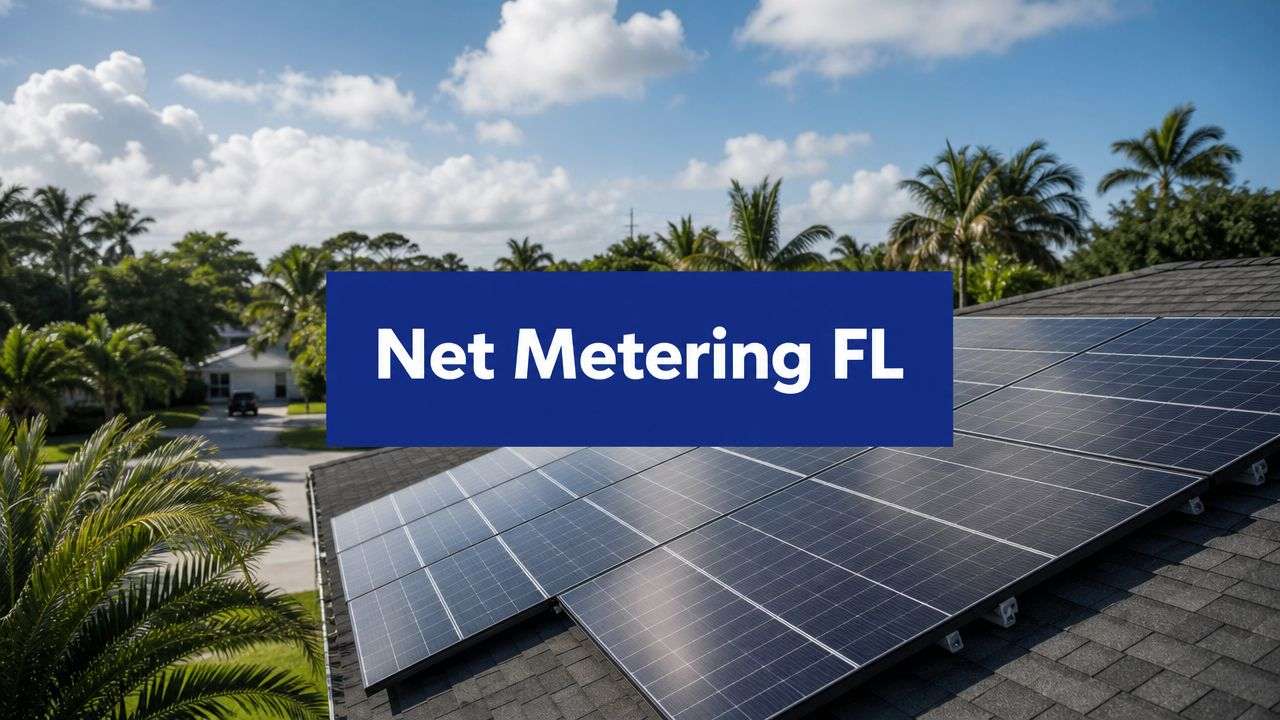
For commercial owners, the same logic applies, but the modeling gets more detailed. A business may be evaluating federal credit treatment, depreciation, and local utility rules at the same time. Someone also needs to separate incentives from billing mechanics, especially in utility territories where customers confuse net metering policy with cash incentives. If that is part of your review, this explanation of Duke Energy net metering rules in Florida can help clarify the difference.
A Better Way To Read The Financial Outcome
The practical takeaway is straightforward:
- Sales tax exemption: lowers upfront cost
- Residential property tax exemption: protects savings during ownership
- Federal credit: can further reduce effective project cost through tax treatment
- For businesses: the full result depends on how those benefits interact with depreciation and ownership structure
Florida's residential property tax exemption is currently authorized through December 31, 2037. That longer window matters because it gives property owners more planning stability than short-lived local programs, even though program rules can still change and should be verified before purchase.
If you want the shortest possible summary, use this one. Florida does not offer one big statewide rebate that defines solar economics. It offers tax treatment that subtly improves the project from more than one angle.
Finding Local and Utility-Specific Solar Rebates
A Florida homeowner in one city may qualify for a small cash rebate, while a homeowner a few miles away gets nothing beyond the broader tax benefits already covered above. That uneven patchwork is why local rebates should be treated like a bonus check, not the paycheck.
Some Florida cities and municipal utilities have offered cash-back programs for solar installations. The details vary widely by location, funding cycle, and customer type. A rebate might be limited to owner-occupied homes, tied to a specific utility service area, or paused once the yearly budget runs out. For that reason, the right question is not “Does Florida have a rebate?” It is “Does my city or utility have a live program right now, and what are the conditions?”
That distinction matters financially. A local rebate can reduce the amount you pay at installation, but it usually does not carry the long-term weight of the federal tax credit or Florida's tax exemptions. In other words, local incentives can improve the project at the margin. They rarely determine whether the project works.
How To Search Without Getting Lost
Start with the organization that sends your electric bill. Then check your city, county, or municipal utility website for current solar, distributed generation, or energy improvement programs. After that, confirm whether the program requires pre-approval before installation, because some do.
Use this order:
- Your utility provider for current solar, interconnection, or customer-generation programs.
- Your city or municipality for homeowner or primary-residence rebates.
- Your county or local public utility for smaller efficiency or renewable energy offers.
If you are in Duke territory, review Duke Energy net metering rules in Florida separately from any rebate search. Net metering affects how excess power is credited on your bill. It is a billing policy, not a cash rebate, and mixing those two ideas leads to bad financial assumptions.
What Makes Local Rebates Easy To Misread
Local programs often look simple on a summary page and become more restrictive in the actual application.
Common friction points include:
- Limited funding: The program may close early after funds are claimed.
- Timing rules: Approval may be required before permits are pulled or work begins.
- Customer eligibility: Some rebates apply only to primary residences or customers in a specific service territory.
- Equipment and installer requirements: The program may require approved equipment, licensed contractors, or interconnection paperwork.
- Documentation standards: Missing one signed form or proof of purchase can delay or eliminate payment.
A good way to think about local rebates is this: they are the top layer of the incentive stack, not the foundation. The foundation is built from the larger tools discussed earlier. The local piece sits on top if your address, utility, timeline, and paperwork all line up.
That is why careful modeling matters. A financially sound solar decision in Florida should still make sense if the local rebate disappears before you apply. If the rebate comes through, your return improves. If it does not, the project should still stand on the stronger incentives already built into the plan.
Specialized Incentives for Florida Businesses and Nonprofits
Commercial solar in Florida deserves its own conversation because the economics work differently from residential ownership. Businesses, nonprofits, schools, governments, and multifamily owners often care less about a simple payback headline and more about taxes, capital planning, resilience, and how a project fits a broader facility strategy.
For commercial properties, Florida offers an 80% property tax abatement on the added value of renewable energy systems, according to Florida solar incentive guidance from Solar United Neighbors. That is a different structure from the residential exemption, and it changes how owners model long-term holding costs.

Businesses Need A Stacked View
A commercial owner usually has to evaluate several layers together:
- Federal tax credit strategy: How the federal incentive affects net project cost.
- Property tax treatment: How much of the added value gets protected from higher tax exposure.
- Depreciation planning: How the asset is handled in the company's tax and accounting picture.
- Resilience design: Whether storage, backup power, or critical-load coverage changes the value of the system.
Many online rebate lists commonly fall short. They identify a few incentives but don't help owners connect them into a financial model.
Where Nonprofits And Governments Fit In
Many tax-exempt organizations used to face a structural disadvantage. They couldn't use tax credits the same way a taxable business could. That has changed. Nationally, the Direct Pay option now allows nonprofits and governments to access clean-energy tax credits, expanding access beyond traditional tax equity structures, as noted by Solar United Neighbors in the same Florida resource above.
That matters for resilience planning. A school, municipality, or nonprofit health facility may value solar not only for utility savings but also for backup power, critical-load support, and continuity during outages.
For nonprofits and public entities, the incentive question often isn't “Can we use a tax credit?” It's “What structure lets us capture equivalent value without taxable income?”
Organizations exploring this path often also review planning resources such as solar grants for nonprofits, because grants, Direct Pay, and resilience goals may all shape the same project.
The Commercial Depreciation Piece
Commercial buyers also need to consider depreciation strategy. That topic is often missing from homeowner-oriented articles, but it can materially affect project economics for taxable entities. The important point is strategic, not just technical. A business shouldn't evaluate a Florida solar project by looking only at energy savings and a tax credit. It should evaluate the project as an asset with tax treatment, operating savings, and resilience value.
That's the consultancy lens. It's less about “What rebate exists?” and more about “What ownership structure captures the most value for this building and this organization?”
How Incentives Affect Your Solar ROI and Financing
A Florida homeowner gets a solar quote, sees a large top-line price, and wonders whether the project will ever pay for itself. A business owner looks at the same kind of proposal and asks a different question: how much value comes from tax treatment, not just lower electric bills? Those are two versions of the same decision. Solar ROI improves when you calculate incentives in the right order.
The practical way to look at a project is as a stack of financial effects. Start with the installed price. Then reduce that number by any sales-tax savings and other applicable tax treatment. After that, estimate the federal tax credit based on who owns the system and whether that owner can utilize the credit. Then compare the adjusted cost to expected utility savings, financing payments, and how long you plan to keep the property.

A Better ROI Mindset
This sequence matters because incentives do different jobs.
The federal credit usually does the heaviest lifting on net cost. Florida's tax exemptions reduce friction that would otherwise chip away at returns over time. For commercial projects, depreciation can materially change the after-tax economics. That is the part many homeowner-focused articles miss. A consultant looking through a finance lens is not only asking, "What incentive exists?" The better question is, "How do these incentives work together for this owner, this building, and this tax situation?"
Here is the review process I use for Florida projects:
- Start with the proposed installed price.
- Apply any relevant sales-tax and property-tax treatment.
- Estimate the federal tax credit based on ownership structure and tax position.
- For businesses, include depreciation and other tax-planning effects where applicable.
- Model utility bill savings under the local rate structure.
- Compare cash purchase, loan, lease, or other financing based on cash flow and hold period.
That approach produces a clearer answer than a generic payback estimate.
Why Financing Can Look Different After Incentives
Financing is really a cash-flow question. Incentives change the cash-flow shape.
If incentives lower the effective cost enough, a loan payment may fit more comfortably alongside the expected bill reduction. For a homeowner, that can mean a project that feels manageable instead of tight. For a commercial owner, it can mean the difference between a marginal project and one that meets internal return thresholds. The hardware may be nearly identical in two proposals, but the financing outcome can differ because one proposal accounts for the full incentive stack and the other does not.
If you want to test those variables in one place, a solar panel ROI calculator for Florida projects can help organize installed cost, tax treatment, utility savings, and financing assumptions into a property-specific model.
The Planning Horizon Matters
Longer-running tax rules usually support better forecasting than short-lived rebate programs. In Florida, that matters because property owners are often making decisions with a long ownership horizon in mind. The residential property-tax exemption is currently authorized through December 31, 2037, which can give homeowners more confidence when estimating long-term carrying costs, assuming current law remains in place.
Use that lens when comparing ownership paths:
- Cash buyers usually focus on net installed cost and the amount of savings they keep over time.
- Loan buyers usually focus on monthly cash flow, not just total savings.
- Commercial owners usually focus on blended return, tax treatment, depreciation, and balance-sheet effects.
- Resilience-focused buyers often weigh outage protection and critical-load support alongside utility savings.
Solar ROI is not one number. It works more like a layered worksheet, where each incentive changes the line below it. Once you evaluate the full stack correctly, financing decisions become much easier to judge.
Frequently Asked Questions About Florida Solar Incentives
Does Florida Have A Statewide Solar Rebate Program
Not in the way many people expect. Florida's incentive framework is centered on tax exemptions and the federal tax credit, while some cities or local programs may offer separate rebates.
Are Florida Solar Incentives Better For Homeowners Or Businesses
They're different, not better in a universal sense. Homeowners often benefit from the sales-tax exemption, the residential property-tax exemption, and the federal credit. Businesses and larger property owners may have stronger tax-planning opportunities, but the best structure depends on ownership type, taxable income, and project goals.
Do Batteries Change The Incentive Conversation
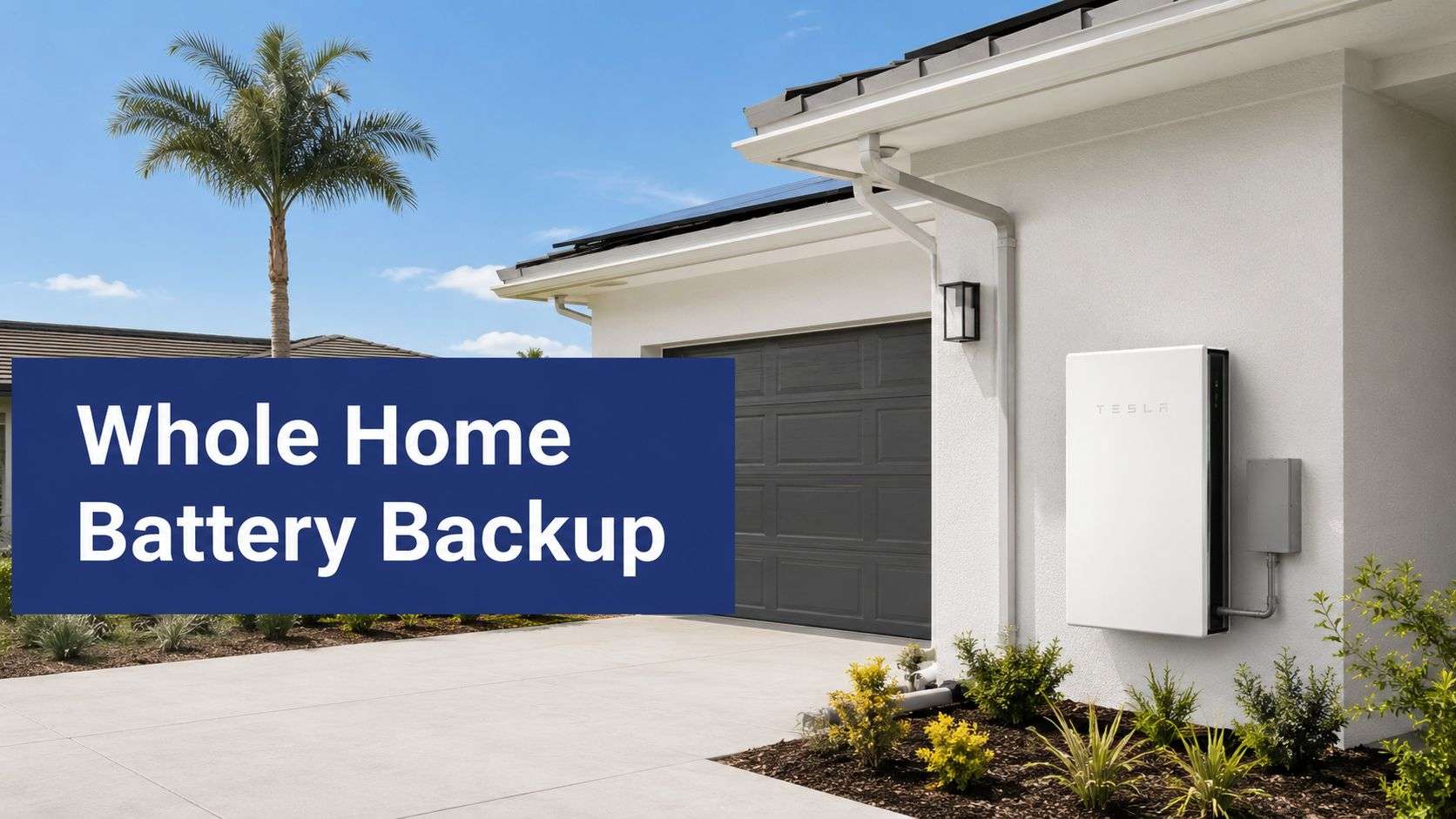
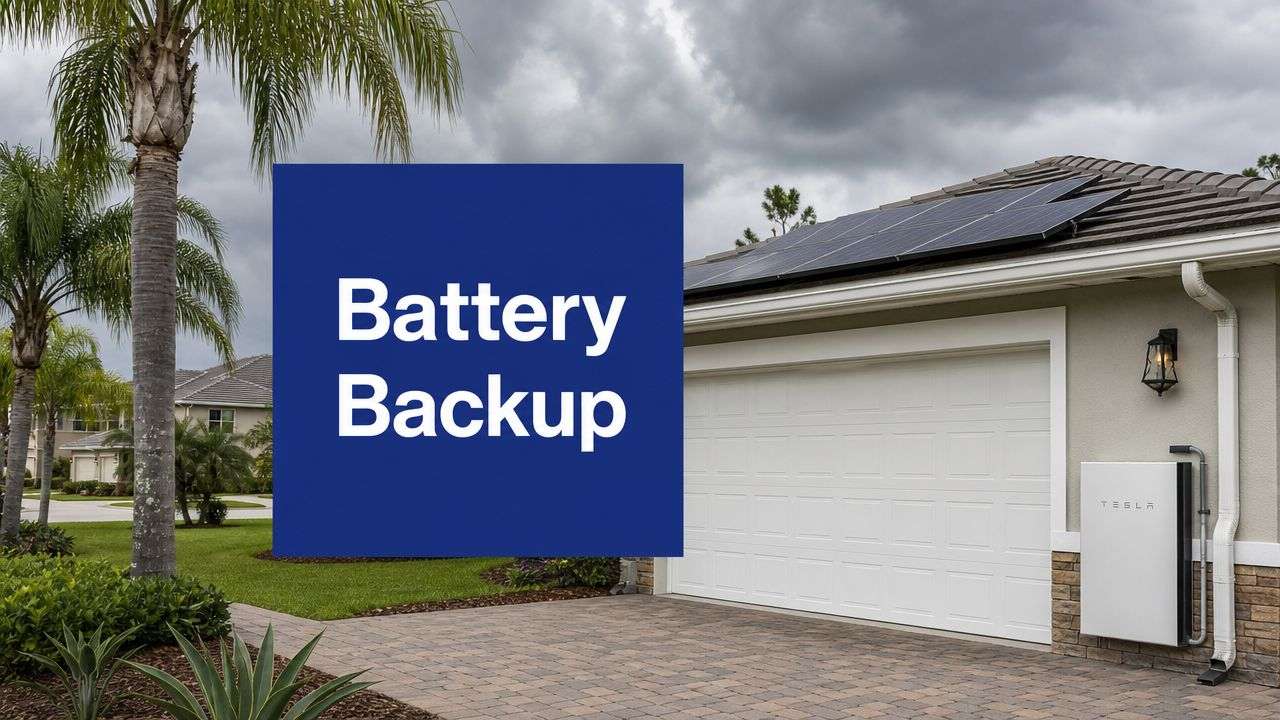
They can. For many Florida property owners, storage is less about chasing a local rebate and more about resilience, backup power, and critical-load planning. That's especially true for facilities that can't tolerate outages well, such as schools, multifamily properties, offices with server rooms, or organizations serving vulnerable populations.
If backup power matters to you, don't evaluate solar and storage as separate decisions. Evaluate them as one resilience strategy.
Should I Wait For A Better Rebate
Usually, waiting for a hypothetical local rebate isn't the strongest planning strategy. Local programs can be narrow, temporary, and funding-dependent. It's often more practical to evaluate your project based on the incentives already available and then treat any local rebate as additional upside if it appears and you qualify.
What Do People Most Often Miss
They focus on one piece and ignore the stack. A homeowner may obsess over whether there's a city rebate and overlook the property-tax exemption. A business may focus on utility savings and miss the tax treatment. A nonprofit may assume solar credits don't apply to them without exploring Direct Pay.
The most expensive mistake usually isn't choosing the wrong panel. It's misunderstanding the ownership and incentive structure before procurement.
When Should You Get A Custom Financial Review
As soon as you have real utility bills, a property address, and a general sense of whether you want solar only or solar plus storage. That's enough to start a meaningful review of economics, incentives, and project fit.
If you're comparing bids or trying to decide whether solar power Florida rebates are enough to justify moving forward, a property-specific model is more useful than another generic incentive list.
If you want help translating Florida's incentives into a real project plan, Solar Energy Management LLC provides Florida-focused solar consulting for homeowners, businesses, nonprofits, and public entities. The firm helps clients evaluate incentive eligibility, ROI, financing structure, battery storage, and resilience strategy so they can make an informed decision before committing to installation.