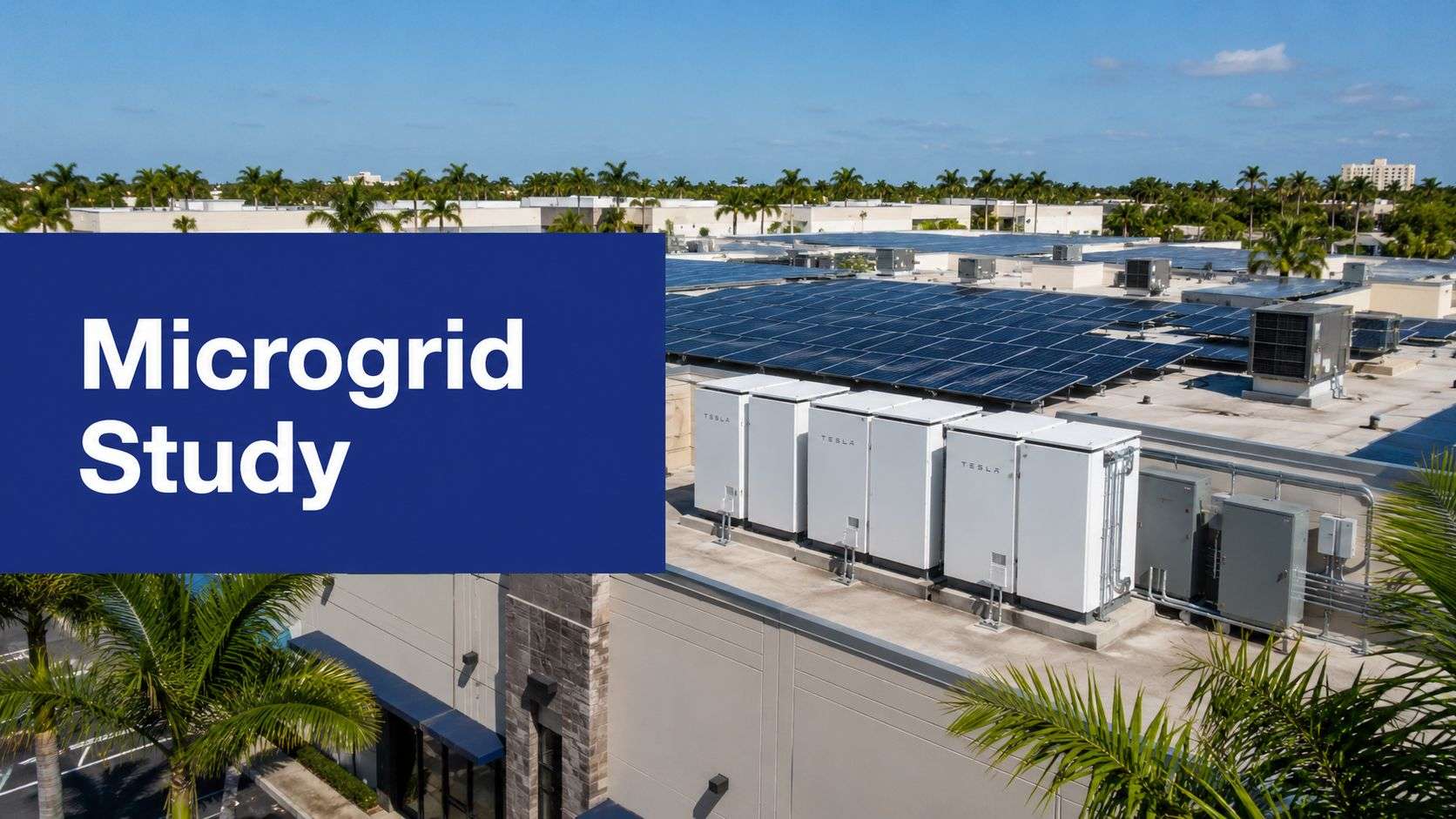
If you own or run a factory in Florida, you're probably dealing with two energy problems at the same time. The first is the monthly utility bill, which can swing hard enough to disrupt budgeting. The second is outage risk, especially when severe weather pushes the grid into an unstable operating mode.
That's why solar power for factories isn't just a facilities upgrade anymore. In Florida, it's a business planning decision. The right system can reduce grid purchases during expensive daytime production hours, support a broader resilience strategy, and give management a more predictable energy position before signing an installation contract.
The part many factory owners miss is this: the project usually succeeds or fails before procurement starts. Good outcomes come from load analysis, tariff modeling, interconnection review, and resilience planning. Bad outcomes usually start with a sales proposal that sizes panels to available roof area instead of actual operating needs.
Why Florida Factories Are Turning to Solar Power
Florida factory owners don't need another pitch about sunshine. They need a way to control operating costs and reduce exposure to grid interruptions that can stop production, spoil material, or idle labor and equipment.
Solar now deserves serious consideration because it's no longer a fringe technology. Global solar PV capacity reached 2.25 TW by the end of 2024, and generation reached 2,131 TWh, according to REN21's solar PV market summary. For an industrial buyer in Florida, that matters less as a headline and more as a sign of market maturity. The equipment base is large, the deployment ecosystem is established, and the technology has moved well beyond pilot-stage credibility.
What Florida Owners Are Really Buying
Most factory owners aren't buying panels. They're buying three practical outcomes:
- Lower daytime grid dependence so production uses less purchased power during operating hours
- Better budgeting discipline because a portion of future electricity cost becomes more controllable
- A platform for resilience if the site later adds batteries, controls, or microgrid capability
In Florida, that third point matters more than many owners expect. A standard grid-tied system may help with electricity costs, but resilience requires a different design conversation. If the facility has critical refrigeration, compressed air, process controls, or packaging lines that can't tolerate outages, the solar discussion has to include backup strategy early.
A factory should treat solar like any other capital project. Start with operational risk, then test the economics against real site conditions.
Why The Timing Makes Sense
Factories also benefit from acting while solar is a mainstream procurement category rather than waiting for an emergency. During a disruption, decisions get rushed. Under normal conditions, the plant can evaluate roof condition, structural capacity, switchgear, operating schedules, and utility tariff exposure in a disciplined way.
This is why Florida manufacturers are turning to solar power. It gives them another lever. Not a magic fix. Not a universal answer. But a controllable energy asset that can be designed around how the plant runs.
Is Solar Financially Viable For Your Factory
Financial viability starts with one question. Does solar offset the electricity your factory buys when that electricity is most expensive to buy? If the answer is yes, the project may work well. If the answer is unclear, no installer quote will fix that.
For factories, the highest value usually comes when the array is sized to match coincident daytime demand rather than annual consumption alone. UL notes that feasibility work should use hourly interval data because the same PV system can produce very different bill savings depending on the plant's schedule and tariff structure, as explained in UL's guidance on solar energy technical advisory services.

The Metrics That Actually Matter
Simple payback gets the most attention because it's easy to understand. It answers a narrow question: when do cumulative savings cover the upfront cost?
That's useful, but factory owners should also review two broader metrics:
- Internal rate of return compares the project to other uses of capital
- Net present value tests whether future savings justify the investment in today's dollars
- Cash flow timing shows whether the system supports or strains the business during the early years
A serious model also includes ongoing operations and maintenance, inverter replacement assumptions when relevant, expected degradation treatment, and financing structure if debt or third-party ownership is being considered. It should also account for tax treatment. If you're reviewing that part of the stack, a separate summary of business solar tax credit considerations can help frame the discussion.
Why Demand Structure Can Matter More Than Annual Usage
A common mistake is to ask, “How many kilowatt-hours does the factory use each year?” That matters, but it's not enough. Two Florida factories with similar annual usage can see very different results if one runs steady daytime production and the other runs mostly at night or shuts down heavily on weekends.
Here's a simple way to understand it:
- Review interval data from the utility meter, not just monthly bills.
- Map production schedules against solar production hours.
- Model bill impact under the actual tariff, including demand-related exposure where applicable.
- Test multiple system sizes instead of assuming more panels always mean better economics.
Practical rule: The most profitable system is often not the biggest system the roof can hold.
A Better Way To Read A Proposal
When I review industrial solar proposals, I look for signs that the numbers are tied to operations rather than marketing. A strong proposal explains why the selected system size fits the facility's weekday load, seasonal patterns, and likely export behavior. A weak proposal jumps straight to equipment counts and projected savings without showing the operational assumptions underneath.
For Florida factory owners, financial viability doesn't come from a generic payback claim. It comes from matching solar output to real plant demand, testing the utility tariff correctly, and deciding whether the project's return is strong enough compared with other capital priorities.
Understanding The Technical Needs Of Industrial Solar
Industrial solar isn't a bigger version of residential solar. It's a different planning exercise.
A house usually has a simpler load pattern, fewer process constraints, and less consequence if the design misses the mark. A factory has production lines, motor loads, HVAC demands, compressed air systems, process equipment, refrigeration, and operating schedules that change the value of every kilowatt of solar power.

Load Profile Comes First
The core technical concept is the load profile. That's the shape of your factory's electricity use over the day, week, and year.
Coldwell Solar's industrial guidance makes the key point clearly: the economic value of solar changes dramatically based on load shape, especially for facilities with 24/7 operations, weekend shutdowns, or shift-specific demand, which is why interval-metering analysis is so important for industrial solar decisions.
Think of solar as a water supply that peaks in the middle of the day. If your plant's demand for water also peaks at that time, you use most of what arrives. If your demand spikes late at night, the same supply system is much less useful unless you add storage.
The Site Constraints That Change Design
After load shape, the next technical filters are physical and electrical:
- Roof condition and structural capacity determine whether rooftop solar is practical now or better delayed until reroofing
- Land availability may make a ground-mount system more effective than trying to force every panel onto the roof
- Interconnection limits can cap export capacity or require design changes at the utility interface
- Electrical distribution layout affects how cleanly the solar system ties into the plant's switchgear and major loads
For larger factories, owners sometimes compare rooftop, ground-mount, and carport concepts at the same time. That's often the right move in Florida, where the best answer may be a mixed layout rather than a single mounting approach. Some industrial facilities also explore larger conceptual sizing early, especially if future expansion is likely. Reviewing examples of large commercial solar system planning such as a 10000 kW solar system can help owners understand the scale implications before detailed engineering begins.
Safety And Operational Discipline Matter
Industrial energy projects also need to fit the plant's broader safety and management systems. If your facility team already works under a formal health and safety framework, it helps to align solar planning with those procedures from day one. For owners with multinational operations or mature compliance programs, this overview of the ISO 45001 standard in Australia is a useful reference point for how structured safety management connects to contractor control, site access, and ongoing maintenance planning.
Good technical work doesn't begin with panel count. It begins with the factory's load, building condition, electrical architecture, and operating rules.
A proper assessment tells you what will work, what won't, and what needs to change before the project becomes investable.
Building Resilience With Batteries And Microgrids
For many Florida factories, resilience is the deciding factor. A utility bill hurts. Unplanned downtime hurts more.
That's where owners need to separate two very different ideas. A standard grid-tied solar system can reduce purchased electricity during normal operations. It does not automatically keep your factory running when the grid fails. If the site needs power during an outage, the design has to include batteries, controls, and islanding logic that support a microgrid approach.
Ameresco's industry guidance makes that distinction clearly. For factories with higher outage risk, a simple rooftop solar system may not meet resilience needs, and the better fit is often a microgrid that combines solar, storage, and potentially off-site generation.

Start With Critical Loads, Not Whole-Site Backup
Most factories don't need the entire facility backed up. They need the right loads backed up.
That list often includes:
- Process control systems that allow an orderly shutdown or continued operation of priority lines
- Cold storage or ventilation where product protection or worker safety is at stake
- Air compressors, pumps, and network equipment that support multiple parts of the plant
- Security and life-safety systems that must remain available during an outage
Battery sizing moves into the practical realm. The question isn't “How much battery can we buy?” It's “What load must survive, for how long, and under what operating condition?”
Microgrids Improve Decision Quality
A microgrid strategy forces a better business conversation because it puts risk in concrete terms. If a hurricane-related outage hits during production, what must keep running? What can shut down safely? What can restart quickly? Those answers shape system architecture far better than a generic backup power discussion.
Some owners also look beyond standard battery chemistry and want to understand adjacent storage pathways for industrial sites. For a broader view of innovative energy storage for industrial facilities, it can be useful to review how other storage concepts are being discussed, even if the final Florida project still centers on battery systems and controls.
What Usually Works In Florida
In practice, the strongest resilience designs for Florida factories usually share a few traits:
- They define critical loads early.
- They separate bill savings goals from outage survival goals.
- They account for site limits, including roof space, structural issues, and available electrical tie-in points.
- They treat controls as essential equipment, not an afterthought.
If you're evaluating battery options as part of that resilience plan, commercial solar battery storage planning is the right place to start before discussing equipment brands or installation schedules.
A factory owner shouldn't view batteries as a luxury add-on. In Florida, they're often the component that turns solar from a cost-saving tool into a continuity tool.
Navigating Florida Solar Incentives And Permitting
Florida factory owners usually ask about incentives early, and that makes sense. But incentives don't rescue a weak project. They improve a sound project.
The broader market backdrop supports taking solar seriously. In the United States, solar and wind generated 756,621 GWh in 2024, accounting for 17% of total electricity generation, according to Climate Central's review of 2024 U.S. solar and wind generation. For Florida manufacturers, that matters because it shows solar is fully established within a major industrial economy. The question now isn't whether the resource is real. It's whether your particular site can capture value from it.
The Incentive Conversation In Florida
For most factories, the incentive discussion centers on federal tax treatment and depreciation planning, then moves to how those items interact with ownership structure and taxable income. At this point, many deals get oversimplified.
A consultant or tax advisor should help answer questions such as:
- Who owns the system and therefore uses the available tax benefits
- How depreciation affects project economics under the company's tax position
- Whether direct ownership or a third-party structure better fits cash flow and balance sheet goals
- How incentive timing aligns with construction and placed-in-service dates
Florida owners also need to keep the local utility framework in mind. Export treatment, interconnection requirements, application review, and metering arrangements can all affect design choices. Those issues aren't exciting, but they often decide project timing.
Permitting And Interconnection Are Real Work
Large factory projects in Florida usually move through more review than owners expect. The system may trigger structural evaluation, electrical plan review, utility coordination, protective equipment questions, and construction sequencing challenges around active operations.
That's why I tell owners to treat permitting and interconnection as project disciplines, not paperwork. If the factory plans a reroof, service upgrade, switchgear work, or expansion, those schedules should be coordinated up front rather than discovered halfway through procurement.
The cheapest-looking solar proposal can become the most expensive one if it ignores permitting, interconnection, or tax structure.
For a Florida-specific overview of the policy side, Florida solar incentive planning for businesses is a useful starting point before you commit to any procurement path.
Your Next Steps To A Successful Solar Project
The first step is not calling three installers for bids.
That approach works for simple commodity purchases. It doesn't work well for industrial solar in Florida, where load shape, tariff design, resilience goals, roof condition, and interconnection limits can change the outcome before pricing even starts.

What To Do Before You Ask For Installation Pricing
A factory owner should start with an independent feasibility process. That work should produce four things:
- A load-based financial model that uses interval data and the actual utility tariff
- A preliminary technical concept showing rooftop, ground-mount, carport, or mixed-layout options
- A resilience framework identifying critical loads and whether storage or microgrid design is justified
- A procurement roadmap so installer bids are based on your requirements, not their sales template
This is the point where an independent advisor can add real value. For example, Solar Energy Management LLC provides solar feasibility study services for Florida projects that focus on analysis before contractor commitment. That type of work helps owners compare options on a consistent basis instead of trying to reverse-engineer assumptions from competing sales proposals.
A Practical Sequence For Florida Factory Owners
If I were advising a Florida plant manager from a clean starting point, I'd use this order:
- Gather recent utility bills and interval data.
- Confirm operating schedule, future production changes, and critical loads.
- Review roof age, structural conditions, and available land.
- Build an investment model that tests several system sizes.
- Decide whether the project is about savings only, resilience, or both.
- Issue a defined scope for engineering, procurement, and construction pricing.
That sequence protects you from the most common mistake in solar power for factories. Buying a system before defining the problem it needs to solve.
What A Good Outcome Looks Like
A successful Florida factory solar project doesn't always mean the largest array. It means the right-sized system, tied to the right loads, under the right ownership structure, with a clear path through permitting and utility review.
Sometimes the answer is rooftop solar only. Sometimes it's solar plus battery storage. Sometimes the analysis shows the plant should wait until reroofing, service upgrades, or process changes are completed. That's still a good result because it prevents a bad capital decision.
The best projects are de-risked before equipment is ordered. Once that groundwork is done, contractor selection becomes easier, pricing becomes more comparable, and the owner keeps control of the decision.
If you're evaluating solar power for factories in Florida and want an independent view before talking to installers, Solar Energy Management LLC can help you assess financial viability, load profile fit, battery strategy, and project feasibility so you can move forward with clear numbers and a defined plan.