Your electric bill arrives. You know Florida gets plenty of sun. You’ve probably seen neighbors add panels, and you’re wondering a simple question: if your roof makes extra electricity, what does TECO do with it?
That question matters more than the panels themselves.
For most homeowners and many business owners in West Central Florida, teco net metering is the billing rule that turns solar from a nice idea into a real financial asset. It decides how exported electricity is credited, how savings show up on the bill, and whether a system’s projected return looks solid or shaky.
A lot of people hear “net metering” and assume it’s straightforward. In practice, the details matter. Your credit structure, your rate plan, your meter behavior, and your interconnection paperwork all affect what happens after the system is energized. Those are the points where people usually get confused, and those are also the points that shape the economics.
Your Guide To Solar Savings With Tampa Electric
A common Florida solar story starts the same way. Your air conditioning runs hard for much of the year, rates never feel lower, and you want more control over a bill that seems to bounce around month to month.
Then you look at solar and hit the first big misconception. Many people think the value comes only from using solar power in real time. That’s only part of it. The bigger financial advantage often comes from what happens when your system produces more than the house needs in that moment.
That’s where teco net metering becomes the center of the conversation.
Under TECO’s program, excess electricity from a qualifying renewable system can be sent to the grid and credited to your account. In plain language, your roof can produce power in the middle of the day, and that production can help offset electricity you use later when the sun isn’t doing the work.
Why Florida Property Owners Care
Florida solar economics depend heavily on billing rules. Strong sunlight helps, but the bill credit mechanism is what gives exported power meaningful value.
A homeowner usually asks questions like these:
- Will daytime overproduction help with my nighttime bill
- Do unused credits disappear
- Can my current TECO rate plan create a conflict
- What if my monitoring app doesn’t match the utility bill
Those are practical questions, not technical trivia. They affect cash flow, payback, and confidence.
Net metering isn’t just a utility feature. For many Florida properties, it’s the rule that determines whether solar performs like a long-term hedge against utility costs or just an expensive appliance on the roof.
TECO’s program is especially important because it isn’t a voluntary marketing offer. It exists within a Florida regulatory framework, which gives property owners more certainty than a short-term promotional program would.
That stability doesn’t remove every complication. It does mean the core structure is established, and that gives you something worth analyzing before you choose system size, financing, or battery setup.
How TECO Net Metering Credits Work
The easiest way to understand TECO net metering is to think of your electric account like an energy ledger.
During some hours, your home pulls power from the grid. During others, your solar system may produce more than you need and push that extra electricity back out. TECO’s meter tracks both directions.

What The Meter Tracks
TECO uses a bidirectional meter. It measures electricity delivered to you and electricity received from you.
That matters because your bill isn’t based only on total solar production. It’s based on how your usage and exported generation interact over time.
Here’s the simple version:
- Your panels make electricity.
- Your property uses what it needs first.
- Extra generation flows to the grid.
- TECO applies credits based on that exported energy.
Why The 1 To 1 Credit Is So Valuable
TECO’s net metering program provides 1:1 retail rate credits for excess solar energy, which means exported electricity offsets usage at TECO’s full retail rate of $0.13 to $0.15 per kWh as of 2026, with monthly rollover and annual surplus paid at the avoided cost rate. The same source notes that a typical 6 kW residential system owner may save $1,500 to $2,000 annually under the program (TECO solar programs guide).
That 1:1 structure is a key concern for buyers. If you export a kilowatt-hour, that exported energy has the same monthly retail value as a kilowatt-hour you otherwise would have bought from TECO.
It's akin to depositing energy credits into an account during sunny hours and spending those credits later when your system isn’t producing enough.
Practical rule: A solar system doesn’t have to match your usage hour by hour to create value. Net metering lets daytime excess help cover later consumption.
How Monthly Rollover Works
If your system exports more than you need in a given billing cycle, those credits don’t necessarily vanish at the end of that month. They can roll forward.
That’s useful in Florida because solar production and household demand rarely line up perfectly every day. A strong production month can help cushion a heavier-use month later.
What Happens At The Annual True Up
This situation often trips up many buyers.
Monthly excess is credited at the retail rate, but if you still have surplus left at the end of the annual cycle, that remaining amount is handled at the avoided cost rate, not the same retail value noted above. That’s why careful system sizing matters. Bigger isn’t always better if the goal is strongest financial performance.
A right-sized system usually aims to reduce purchased power substantially without creating unnecessary year-end leftovers that receive a lower value.
Navigating Program Rules And Eligibility
A homeowner can have a good roof, a strong solar proposal, and solid projected production, then still get surprised by TECO billing rules after the system is installed. That usually happens because eligibility is wider than panel choice. It includes your rate plan, your meter setup, your electrical equipment, and whether the account can be configured for net metering under Florida rules.
The Legal And Technical Foundation
TECO’s net metering program exists within Florida Statutes 366.91(2) and 366.92(2) and Florida Public Service Commission Rule 25-6.065. That matters for one practical reason. The program follows a regulatory framework, so approval depends on meeting defined utility and interconnection requirements, not on a marketing offer or a promotional plan.
The underlying rules can apply to more than solar photovoltaic systems. They also cover other qualifying renewable generation technologies recognized under Florida law. For a typical homeowner, though, the key question is simpler. Is the system designed, permitted, and documented in a way TECO can approve for net metering?
Paperwork matters more than many buyers expect. Equipment specifications must match what is installed. Local approvals must be in place. Account details must also line up correctly. A mismatch in any of those areas can slow approval or delay the point when credits start appearing on the bill.
The Energy Planner Conflict
One overlooked trade-off deserves direct attention. TECO net metering does not work alongside Energy Planner. If you enroll in net metering, you move to TECO’s standard residential rate structure.
That can change the economics more than the solar panels themselves.
A good analogy is comparing two scoreboards. One tracks your bill under Energy Planner rules. The other tracks your bill under standard residential rates with net metering credits. Solar may improve the second scoreboard, but you still need to compare it against what you were paying on the first one. If a proposal skips that comparison, the savings estimate is incomplete.
This is why consultant-level modeling matters. A simple production estimate can show how many kilowatt-hours the system should generate. It does not automatically show whether leaving Energy Planner helps or hurts your total outcome.
Where Buyers Miscalculate
The common mistake is focusing only on panel output. TECO eligibility and billing rules affect value just as much as production does.
Review these factors before signing:
- Your current TECO rate plan. If you are on Energy Planner, your post-solar bill will be calculated under standard residential rates.
- Your usage pattern. Households with high evening use or sharp seasonal swings can see different results than homes with steadier demand.
- Your meter and account setup. In some homes, the billing account, physical meter arrangement, or property configuration creates extra work before net metering can be approved.
- Your electrical infrastructure. Older service equipment can create delays or added cost. If your home has aging gear, issues such as Zinsco panel problems should be addressed before interconnection planning gets too far.
One more point often gets missed. Meter discrepancies can create confusion even after installation. If the utility account, meter programming, or system records do not match the approved setup, the bill may not reflect the credits a customer expected right away. That is not the part TECO marketing emphasizes, but it is part of the practical experience clients need to plan for.
Property details also matter. Ownership, site control, and how the service is structured can determine whether rooftop solar moves ahead smoothly, requires extra documentation, or does not fit the current rules for that account.
The Grid Interconnection And Enrollment Process
A TECO solar project does not start producing savings the day panels go on the roof. It starts producing savings after the utility, the inspector, and the meter setup all line up correctly on the same account.
That gap catches many homeowners off guard.

The Usual Path From Application To Activation
TECO interconnection works a lot like closing on a house. Everyone can agree on the goal, but one mismatch in the paperwork can delay the finish line. In practice, the process usually looks like this:
System planning and site review
The installer confirms roof condition, service equipment, panel layout, and equipment choices before submitting anything. If the roof is near the end of its life, fix that first. A project tied to an aging roof often costs more to correct later. This guide on how your roof condition affects solar planning explains why timing matters.Interconnection application
TECO requires formal application documents, and those documents need to match the final design. If the inverter model, panel count, or service details change after submission, the file may need to be revised.Utility review and agreement
TECO checks whether the proposed system meets its interconnection rules and account requirements. Approval is not just about whether solar can be installed. It is also about whether the account, meter setup, and rate structure fit the program.Installation and inspection
After installation, the local permitting authority usually inspects the work. TECO cannot treat the system as ready for normal net metering billing until required approvals are in place.Meter setup and permission to operate
This is the step many homeowners underestimate. The utility has to confirm the billing account and meter configuration are correct before exports are tracked the way the customer expects. If that setup is wrong, the system may be producing power while the bill still does not reflect credits correctly.
Where Delays Usually Come From
The panels themselves are often the easy part. Delays usually come from administrative details.
A name mismatch between the utility account and the property owner can slow approval. So can an outdated main panel, a design revision after permitting, or a meter record that does not match the installed equipment. From a consultant's perspective, these are the overlooked trade-offs in TECO's program. The headline promise is simple. The actual process depends on documentation being precise.
Meter discrepancies deserve special attention here. Your inverter app may show one story, while the utility meter and billing system show another. That does not always mean TECO is wrong or that the solar equipment is failing. It often means the production data, export data, and billing data are measuring different things. Clients need to know that before the first bill arrives, not after.
Who Commonly Runs Into Eligibility Problems
Some properties are harder to enroll than homeowners expect. If you do not own the home, do not control the roof, or do not have authority over the electric account and meter, standard rooftop net metering may not be available. Renters, many apartment residents, and many mobile home occupants often run into these limits.
Another practical issue gets missed during sales conversations. TECO's program does not pair neatly with every TECO billing option. For example, customers on Energy Planner should expect a change in how the account is billed once solar is enrolled. That can affect the before-and-after savings comparison if nobody explains it early.
What Keeps The Process On Track
Projects move faster when a few basics are handled upfront:
- Equipment details match the final installed system
- The utility account holder and property records are clear
- The roof and service equipment are ready before design is locked
- The homeowner understands any rate-plan changes before enrolling
- The installer verifies meter and account setup after approval, not just panel production
Clean paperwork shortens delays. Accurate expectations prevent billing surprises.
Integrating Batteries With Net Metering
A battery changes how a solar system behaves, but it doesn’t replace the need to understand net metering.
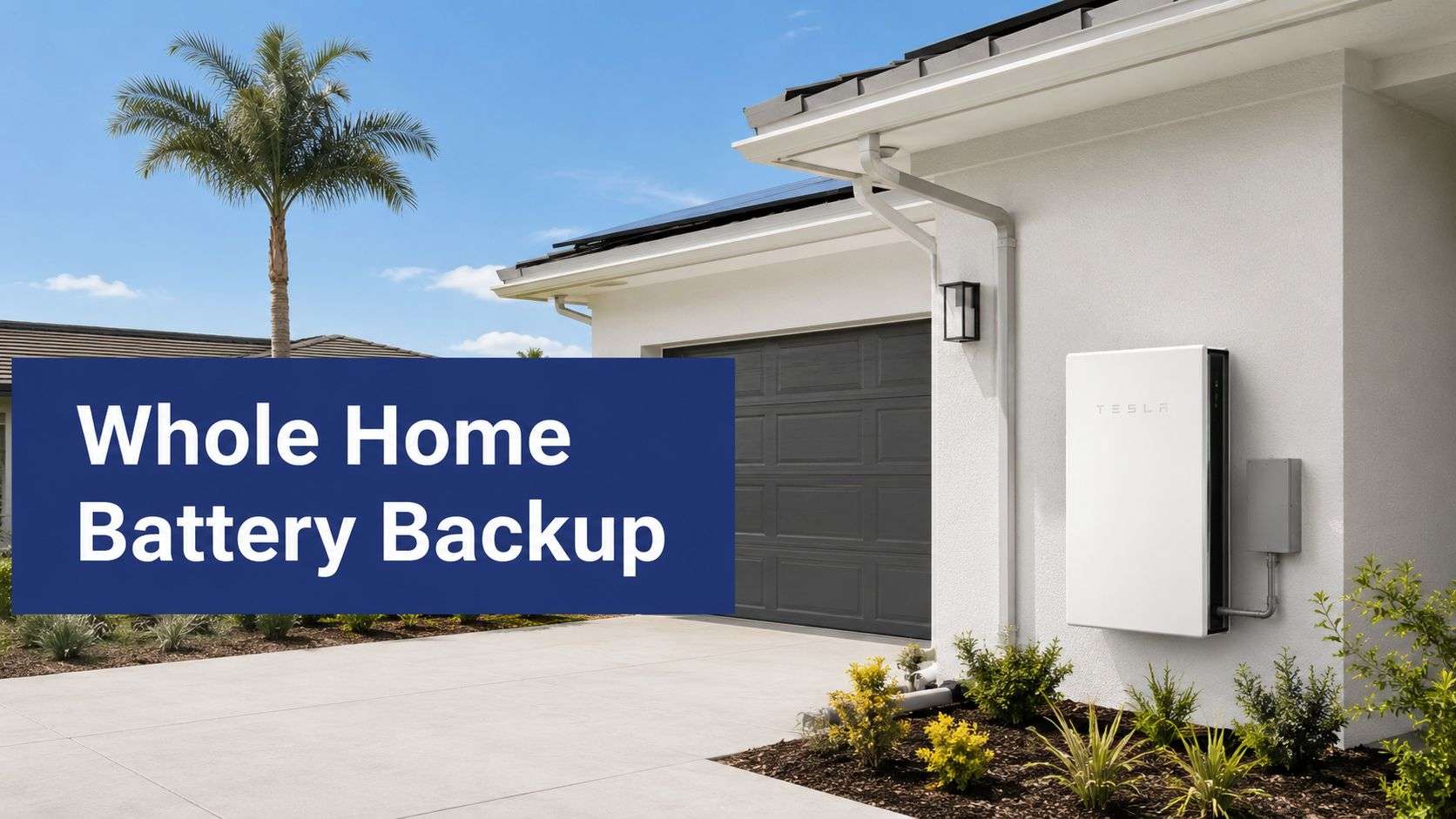
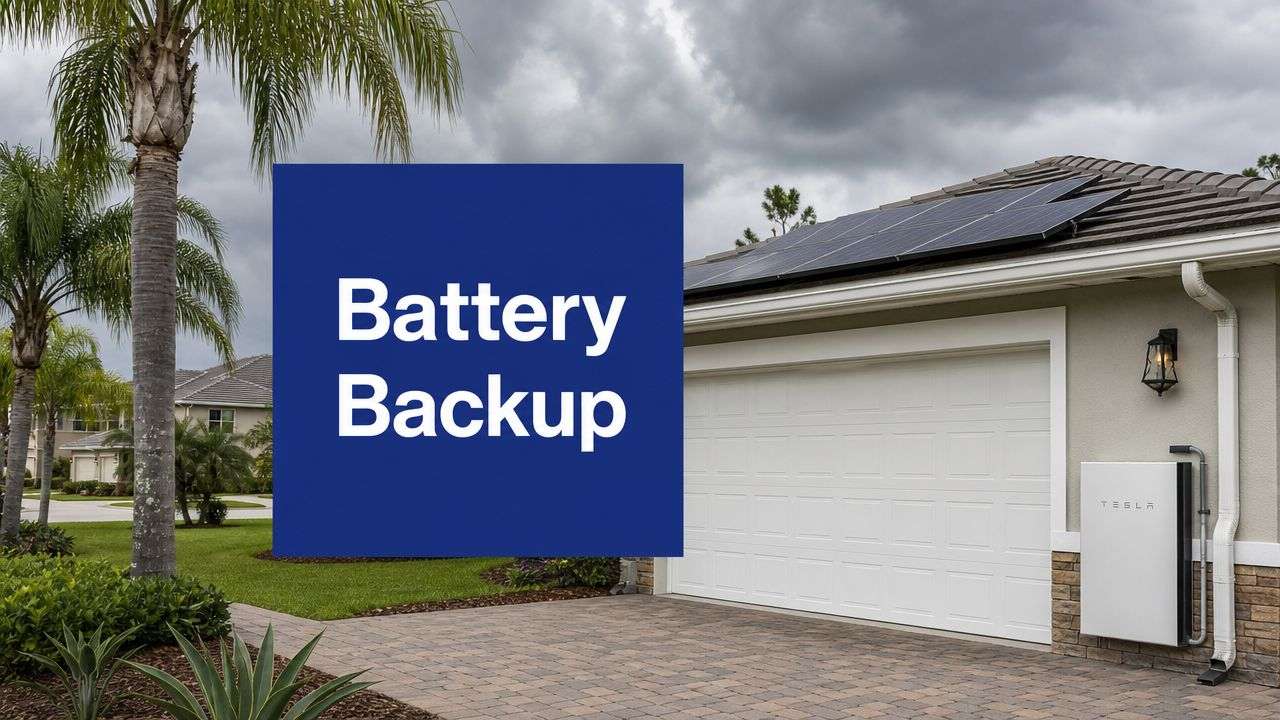
In Florida, many buyers want batteries for backup power during outages, nighttime energy use, and more control over critical loads. Those are valid goals. The catch is that battery operation can make billing and export tracking more confusing if the system isn’t designed and documented carefully.

What The Battery Actually Changes
Without a battery, extra daytime production typically goes straight to the home first, then to the grid if there’s surplus.
With a battery, some of that excess may charge storage instead of being exported right away. Later, the battery can serve the home when solar production drops. That can reduce grid purchases, but it also means your app, inverter data, and utility meter may all be telling slightly different parts of the same story.
That’s where confusion starts.
The Meter Discrepancy Problem
Many TECO solar customers report discrepancies between inverter production data and TECO net meter readings. In reported cases, users show over 1 MWh monthly in app data while TECO records only a fraction of the export, creating billing disputes that can reduce projected savings (reported Enphase and TECO net metering issue).
This issue gets overlooked in many solar conversations because production and credited export are not the same thing.
Your monitoring app may show total generation. TECO’s bill may reflect what crossed the net meter. A battery may store some production internally. Household loads may consume some instantly. Those flows don’t always line up in the way owners expect.
How To Protect Yourself
If resilience is one of your goals, battery planning should include export verification, not just backup marketing.
Use a checklist mindset:
- Ask what each monitoring platform measures: total production, home consumption, battery charging, or grid export.
- Confirm meter configuration early: don’t wait for the first disputed bill.
- Keep installation records: inverter settings, battery operating mode, and utility approval documents all matter.
- Match design to your objective: backup power, lower grid dependence, and export value are related goals, but they aren’t identical.
If you’re exploring independence and resilience in more depth, this guide to living off-grid in Florida helps clarify where battery-backed solar fits and where utility-connected net metering still has advantages.
When app data and utility data don’t match, don’t assume one side is lying. Start by identifying which energy flow each system is actually measuring.
Real-World Savings And ROI Scenarios
The value of TECO net metering becomes clearer when you stop thinking in abstract terms and start thinking like a property owner comparing long-term cash flows.

A Homeowner Scenario
For a typical residential property in TECO territory, the program’s 1:1 monthly retail credit structure can make a well-sized system financially attractive, especially when the home has strong daytime production and enough annual consumption to use those credits efficiently.
One verified benchmark is especially useful. Florida’s full retail net metering has persisted for over 15 years despite utility opposition, and that policy stability has helped solar systems in TECO territory achieve payback in 6 to 8 years (background on Florida net metering and TECO rate schedule analysis).
That doesn’t mean every home lands in the same place. Payback depends on roof orientation, usage profile, financing terms, and system sizing. But the resilience of the policy matters because long-lived energy assets need a dependable billing framework.
A Small Commercial Scenario
Commercial owners usually evaluate net metering differently.
A homeowner often asks, “Will this lower my bill enough to justify the investment?” A business owner asks, “How stable is the savings model, and does it support a capital decision over the life of the asset?”
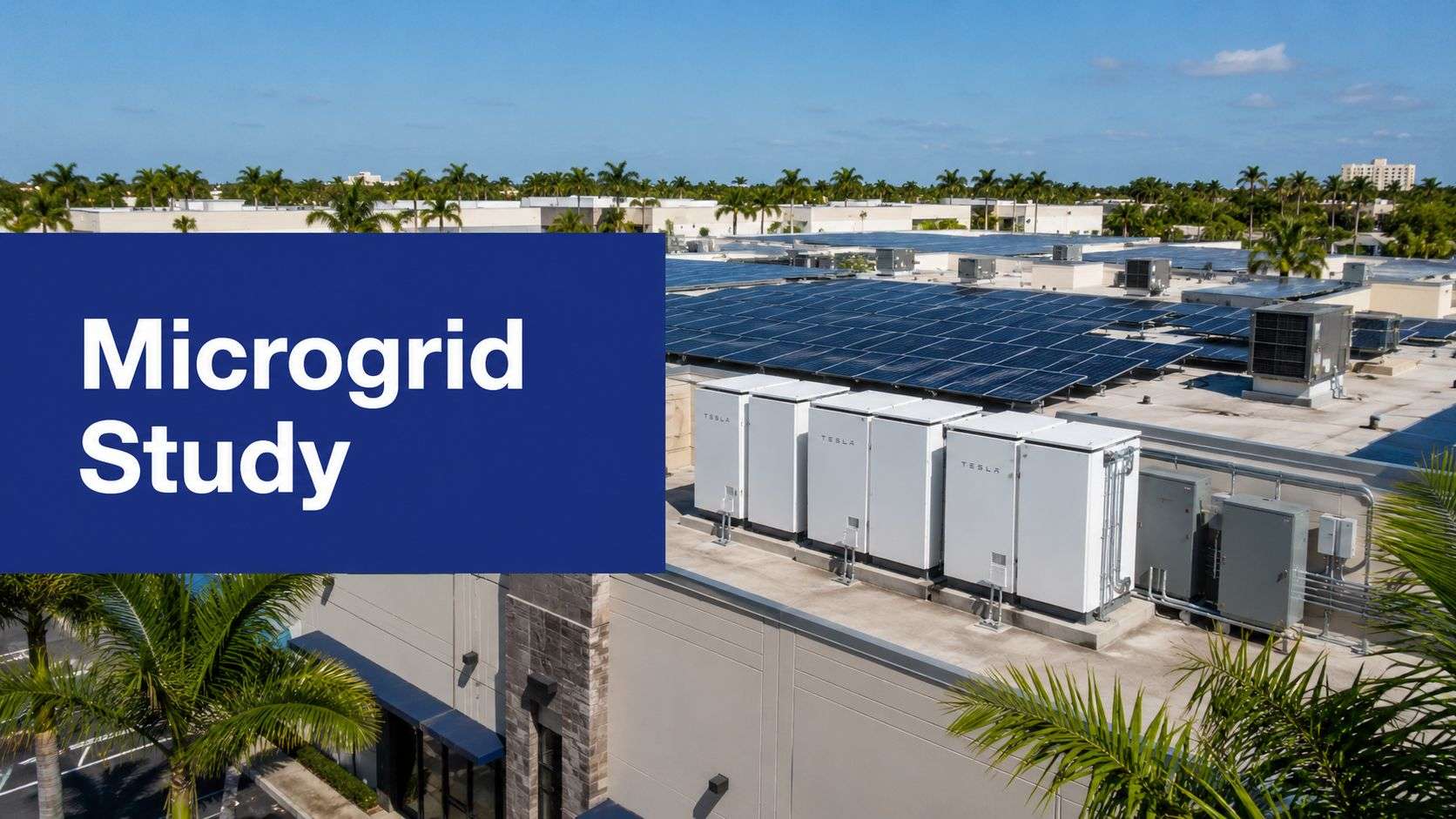
For a small commercial site, the benefit can be compelling when daytime operations align with solar production. Monthly retail credits can offset a meaningful share of purchased electricity, and the ability to model savings under a long-standing statewide framework makes decision-making easier.
If you want to pressure-test your assumptions, a simple ROI Calculator tool can help organize capital cost, annual savings, and payback into a cleaner decision model before you dig into a full feasibility study.
What Makes The ROI Strong Or Weak
The strongest TECO net metering economics usually come from a mix of factors, not one single feature:
Right-sized systems
Oversizing can push too much value into annual surplus treatment instead of higher-value monthly offset.Clean rate analysis
If a property is moving off a conflicting plan, that change has to be modeled accurately.Load alignment
Buildings that can use or bank daytime generation efficiently usually see better outcomes.Durable policy structure
Long-term planning gets easier when the underlying net metering framework has demonstrated staying power.
Florida property owners should also look at the broader incentive picture when building their financial model. This overview of Florida solar incentive is a useful starting point for understanding how net metering fits into the bigger return calculation.
Good solar ROI doesn’t come from the biggest possible system. It comes from the system that matches the property, the tariff, and the owner’s financial objective.
Planning Your Solar Strategy With Expert Guidance
Researching TECO net metering reveals the program is both favorable and more nuanced than it first appears.
The favorable part is clear. Exported energy can carry real monthly value, the framework is grounded in Florida law, and the long-term economics can be strong for the right property.
The nuanced part is where projects succeed or disappoint. Rate-plan conflicts, eligibility limits, meter-data mismatches, battery behavior, roof readiness, and year-end credit treatment all shape the final result. None of those issues mean solar is a bad fit. They mean generic quoting tools aren’t enough.
What A Smart Planning Process Looks Like
A strong strategy usually includes:
- Utility bill analysis based on the actual TECO tariff situation
- System sizing that avoids unnecessary year-end surplus
- Battery planning tied to resilience goals, not just product marketing
- Interconnection review before assumptions harden into decisions
If you’re evaluating a project in the Tampa area, a local planning resource like Tampa solar power and solar panels can help frame the local considerations before you commit to installation proposals.
The best outcome is a system that performs the way it was modeled. That requires careful planning first, not corrections later.
Frequently Asked Questions About TECO Net Metering
Do net metering credits transfer when I sell my home
Policies and account handling can depend on the utility account and transaction timing. Before listing a property, confirm with TECO how any remaining credits are treated and whether they stay with the account, the property, or the current customer record.
Is net metering the same as Sun Select
No. They’re different approaches. Net metering is tied to your own qualifying renewable generation system and the credits it earns on your bill. Sun Select is a separate TECO offering and doesn’t function the same way as owning a rooftop system that exports energy.
Can an HOA stop a solar project in Florida
HOA review can still affect aesthetics, documentation, and process, but it shouldn’t be treated as the final word without reviewing Florida-specific rules and your governing documents carefully. Many delays come from approval procedures and incomplete submissions, not from an outright technical barrier.
Why doesn’t my solar app match my TECO bill
Your app may be showing production, while TECO may be billing based on net meter flows. Add batteries or house loads into the mix, and the numbers can diverge quickly. Compare what each platform measures before concluding that credits are wrong.
If you want a data-driven plan before you commit to panels or storage, Solar Energy Management LLC helps Florida homeowners, businesses, and organizations evaluate feasibility, model TECO net metering savings, assess battery strategy, and design solar projects around real utility and property conditions.