A lot of Florida property owners arrive at the same point for the same reasons. Their utility bills keep moving in the wrong direction, they remember the last outage lasting longer than expected, and they’re tired of choosing between comfort, continuity, and cost control. If you’ve already looked at solar, battery storage is usually the next question, not because it’s trendy, but because Florida punishes weak energy planning.
That’s where tesla battery storage systems enter the conversation. In Florida, they aren’t just a way to save excess solar for nighttime use. They’re a resilience tool for hurricane season, a demand management tool for high cooling loads, and a planning decision that can affect everything from panel layout to electrical upgrades to backup priorities.
As a Florida solar consultant, I look at Tesla storage less as a gadget and more as infrastructure. The right battery plan can keep refrigeration, lighting, communications, internet, security, and selected air conditioning loads running when the grid drops. The wrong plan can leave a property owner with a battery that looks good on paper but doesn’t support the loads that actually matter in August.
Why Florida Properties Need Energy Resilience
Florida’s energy problem isn’t only about storms. It’s also about long cooling seasons, high afternoon demand, and that a short interruption can create a much bigger operational problem than people expect. At home, that may mean lost food, no air movement, internet failure, and no ability to charge devices. In a business, it can mean tenant complaints, downtime, spoiled inventory, or interrupted building systems.

Traditional backup generators still have a role, but they come with fuel logistics, noise, maintenance, and operational limits that many Florida owners don’t want to manage. A solar-plus-storage system behaves differently. It stores solar production during the day, discharges automatically when needed, and can support a property’s most important loads without depending on fuel deliveries during a regional emergency.
Tesla’s scale matters here because it tells you this isn’t a niche product category anymore. Tesla deployed 46.7 GWh of energy storage in 2025, up 49% year over year, and held 39% of the North American market for the third straight year, according to Utility Dive’s report on Tesla energy storage growth.
What Resilience Means In Florida
Resilience isn’t the same thing as full-home backup. A lot of owners assume battery backup means the whole property runs as usual through an outage. That’s rarely the smartest design target.
A practical Florida resilience plan usually focuses on:
- Life and safety loads like refrigeration, lighting, communications, garage access, and medical equipment
- Comfort loads such as selected cooling zones, ceiling fans, or a critical mini-split
- Operational continuity for offices, retail, multifamily common areas, and facilities with sensitive electronics
- Storm recovery support so the property can recharge from solar when grid restoration lags
Practical rule: In Florida, battery planning should start with what must stay on for the first outage day, not with what would be nice to power under perfect conditions.
Why Solar Alone Often Isn’t Enough
A grid-tied solar system without battery storage usually shuts down during an outage for safety reasons. That surprises many people. They assume sunny weather means automatic backup power, but without storage and the right backup architecture, solar by itself doesn’t provide the outage protection they expect.
That gap is why batteries have become strategic. They turn solar from a bill-reduction tool into a continuity asset. For Florida owners trying to reduce risk, that’s the fundamental shift.
How Tesla Powerwall And Megapack Capture Solar Energy
The simplest way to understand Tesla storage is to think of it as an energy reservoir. Your solar panels generate electricity during the day. Your property uses some of it immediately. If production exceeds demand, the battery stores the excess so you can use it later, at night, during cloudy periods, or during a grid outage.

For homes and smaller commercial applications, that reservoir is the Powerwall. For utility-scale and larger site applications, Tesla uses Megapack. The principle is the same. The scale and use case are different.
How Powerwall Works In A Florida Home
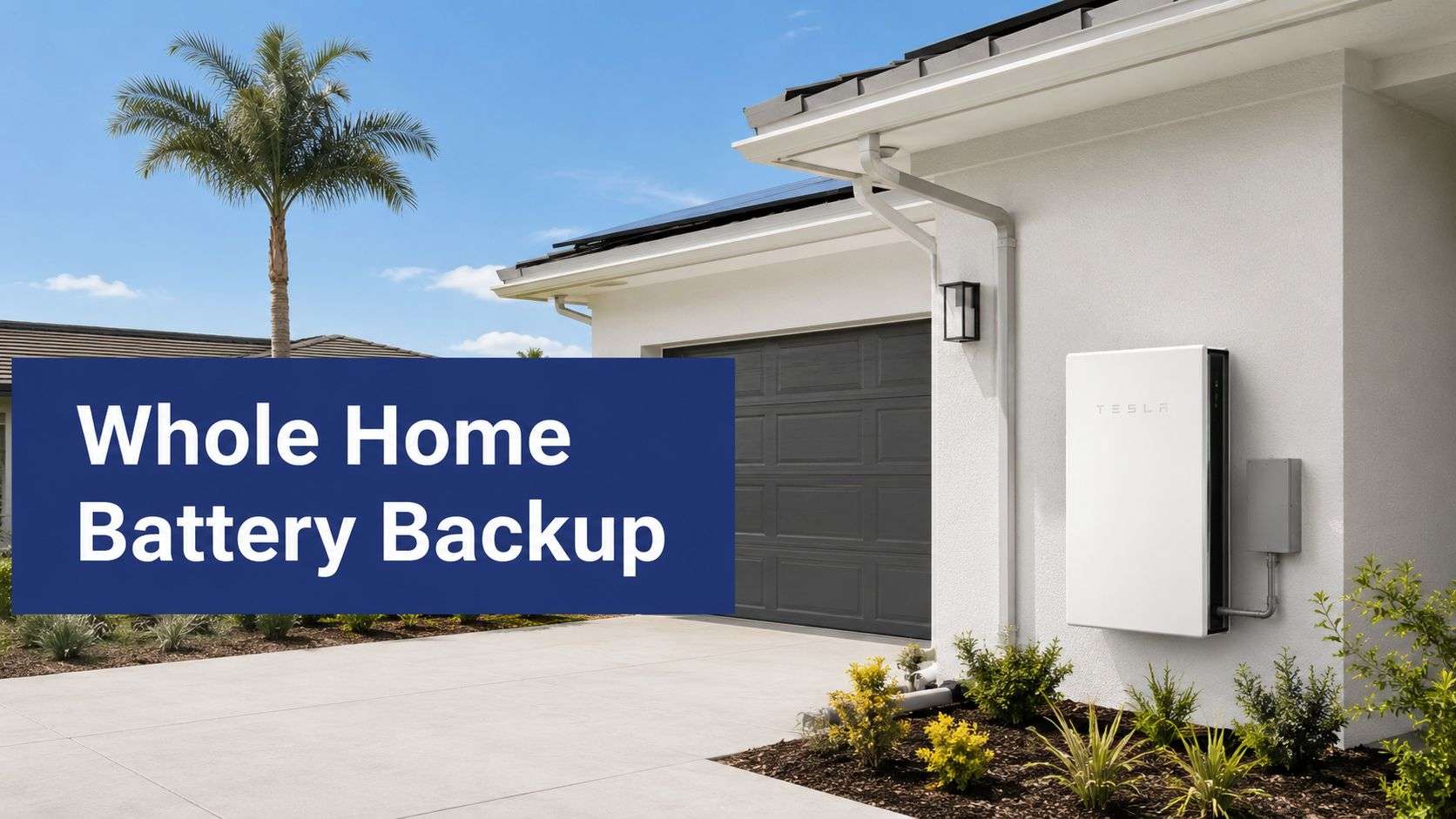
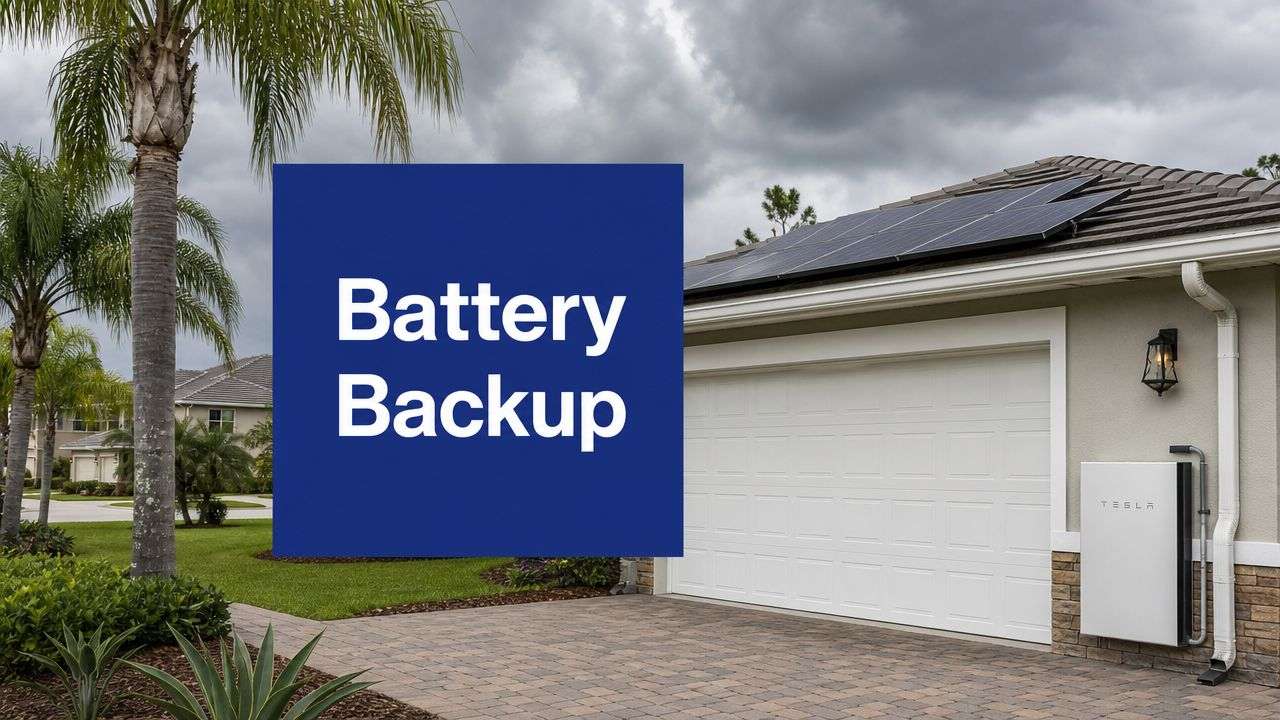
A home solar array produces electricity. The Powerwall stores available excess energy and then dispatches it when the house needs power and the grid is unavailable or when stored energy makes more sense than importing utility power. For the owner, the process feels automatic. The battery charges, discharges, and responds to outages without constant manual control.
The current hardware matters because Powerwall 3 uses an integrated inverter design. Tesla’s Powerwall 3 delivers 11.5 kW of continuous backup power and 185 LRA load-start capability, which is a 106% improvement over Powerwall 2 in this category, according to the Tesla Powerwall 3 datasheet. In Florida terms, that matters because battery systems often struggle not with steady running loads, but with starting loads like air conditioning compressors.
If you want a closer look at legacy and current residential configurations, this overview of Tesla Powerwall system options in Florida is useful for understanding where older and newer architectures differ.
Where Megapack Fits
Megapack isn’t a home product. It belongs in larger commercial, institutional, and grid-support applications where the owner needs substantial energy shifting, demand management, or site resilience. In Florida, that can apply to campuses, industrial users, private microgrids, and facilities where downtime is expensive.
Megapack-scale planning changes the conversation from appliance backup to operational strategy. A facility may want to support refrigeration, pumps, server rooms, elevator recall systems, emergency lighting, or tenant-critical circuits. The battery becomes part of a broader site energy design, not a bolt-on accessory.
What Works Well And What Doesn’t
Tesla’s integrated approach works well when the project needs clean system coordination, simplified controls, and strong backup capability in a compact package. It works less well when an owner assumes battery storage can ignore panel orientation, load profile, electrical service constraints, or backup panel design.
The battery is only one part of the job. The outcome depends on how the solar array, gateway, load selection, and operating strategy are designed together.
That’s why good battery planning starts at the one-line diagram, not at the product brochure.
Planning Your System For Florida Power Outages And Peak Demand
The biggest sizing mistake I see is simple. People ask, “How many batteries do I need?” before they’ve decided what the batteries need to do. In Florida, a system designed for evening bill savings can be very different from a system designed to ride through a multi-day post-storm outage.

A proper plan starts with a critical load assessment. That means listing the circuits and equipment you need during an outage, then mapping when they run, how long they run, and whether they have heavy startup characteristics. In Florida, the air conditioning discussion usually drives the whole design.
Start With Critical Loads
A good load review separates needs into tiers. That’s important because not every load deserves battery support.
Consider grouping loads like this:
- Must-run loads such as refrigerator, communications, lights, internet, security, and medical equipment
- Operationally important loads such as office electronics, point-of-sale equipment, garage doors, and selected receptacle circuits
- High-demand comfort loads like central AC, pool equipment, electric water heating, and cooking appliances
- Deferred loads that can stay off until solar production is strong or the grid returns
For larger properties, the same idea applies. The difference is that the load list may include access controls, pumps, refrigeration, tenant systems, or critical mechanical equipment. Commercial owners looking at battery planning alongside broader resilience design usually benefit from a more formal commercial solar and battery storage review.
Florida Heat Changes The Math
Battery specifications don’t live in a vacuum. Florida heat affects performance, and that matters when owners assume the published efficiency number is exactly what they’ll get year-round.
Tesla’s Powerwall 90% round-trip efficiency rating is tied to 77°F, and in hotter conditions efficiency can degrade by 1% to 2% for every 5°C rise, based on the Tesla Powerwall 2 datasheet. In practice, that means summer conditions can reduce effective performance right when demand is high.
That doesn’t mean Tesla storage is a poor fit for Florida. It means placement and modeling matter.
A battery mounted in a shaded, better-ventilated location will usually perform more predictably than one exposed to direct heat all day.
What A Strong Florida Design Usually Includes
I advise owners to think through these questions before finalizing system size:
Outage duration
Are you planning for evening interruptions, overnight failures, or extended storm recovery with solar recharging during daylight?Cooling strategy
Do you need whole-home central AC, a smaller protected zone, or only enough backup to maintain basic habitability?Recharge path
Will the solar array produce enough energy to restore battery charge while also serving daytime loads after a storm passes?Site conditions
Is there a protected mounting location that avoids unnecessary thermal stress and keeps wiring runs practical?
What Doesn’t Work
The weakest battery plans usually share the same flaws:
- Oversimplified online sizing tools that ignore Florida cooling demand
- Whole-home backup assumptions without reviewing startup loads
- No backup load panel strategy for separating essential and nonessential circuits
- Battery placement decisions based only on convenience instead of heat, access, and electrical layout
A battery should be sized around the way your Florida property uses power, not around a generic national template.
The Financials Of A Tesla Storage Investment In Florida
The financial case for battery storage in Florida is never just about one number. It’s a blend of avoided utility purchases, outage risk reduction, resilience value, tax treatment, equipment life, and how the battery fits into the larger solar design. Owners who focus only on upfront cost often miss the essential decision. The better question is whether the system improves long-term cash flow and risk exposure enough to justify the investment.
For many property owners, incentives are the first place to start. Battery storage may qualify alongside solar depending on how the project is structured, and that can materially change the economics. Florida owners should also review local utility conditions, tariff structure, and ownership model before assuming the same return profile they’ve seen in national marketing content. A grounded overview of Florida solar incentive planning helps frame those variables correctly.
What Goes Into The Business Case
A clean financial review usually includes:
- Installed system scope including battery equipment, gateway components, electrical work, and integration with solar
- Tax treatment based on current eligibility and the owner’s tax position
- Utility bill impact from self-consumption and avoided higher-cost usage periods
- Resilience value based on what outage protection means for that specific property
- Lifecycle considerations such as performance in Florida heat, future expansion, and replacement timing
Residential owners often value continuity and comfort as much as strict payback. Commercial owners tend to look harder at downtime avoidance, refrigeration protection, tenant retention, and whether critical operations can continue through interruptions.
The VPP Revenue Question
One of the biggest information gaps in the market is Virtual Power Plant revenue. Consumers hear that batteries can support the grid and may earn incentives for doing so, but reliable Florida-specific guidance on average monthly earnings or how that changes payback is still hard to find. That gap is noted in this discussion of Tesla Powerwall market adoption and VPP uncertainty.
That matters because many buyers want a straight answer to a fair question: if the battery helps the grid, what does the owner earn? Right now, that answer is often unclear and program-specific. As a consultant, I treat VPP income as a potential upside, not as the foundation of the investment case, unless the specific program terms are already known.
Don’t build the entire ROI model around uncertain grid-services income. Build it around bill control and resilience first, then layer any future participation on top.
Cash Flow Matters As Much As Payback
A project can be economically sound and still strain a household or business if the cash flow timing is wrong. That’s especially true when battery storage is paired with HVAC replacement, electrical upgrades, or roofing work. In those cases, owners often need to coordinate multiple capital decisions at once.
When cooling equipment is part of the broader resilience strategy, it can help to compare financing structures for related building systems. For example, property owners evaluating battery backup alongside HVAC upgrades may want to review affordable HVAC payment solutions so the full energy plan is financed in a way that fits operating cash flow.
One practical option in the planning phase is to have an independent advisor model several scenarios instead of one. Solar Energy Management LLC provides feasibility studies, ROI modeling, battery planning, and procurement guidance for Florida owners who want to compare resilience-first and savings-first storage strategies before committing to installation.
Exploring Alternatives And System Integration Tradeoffs
The most important battery choice often isn’t brand. It’s architecture. In Florida, many properties already have solar, older inverters, or electrical setups that weren’t designed with storage in mind. That turns the decision into a system-integration question.
The biggest fork in the road is usually AC-coupled retrofit versus larger redesign. And for many existing solar owners, clear guidance is limited. One commonly noted market gap is the lack of practical advice for the 60%+ of Florida homes with existing solar that need help evaluating whether AC-coupling a Powerwall makes more sense than replacing or redesigning the system, as discussed in this article on Powerwall retrofit and grid-service planning.
AC-Coupled Retrofit
An AC-coupled approach usually makes sense when the existing solar system is still performing well and the owner wants to add backup capability without tearing apart a working array.
Pros include:
- Less disruption to an operating solar system
- Faster path to storage when the current array still has useful life
- Practical backup upgrade for owners focused on resilience first
Tradeoffs include lower elegance from a design standpoint compared with a fully integrated new-build system, plus the need to verify compatibility across legacy equipment, controls, and electrical layout.
Full Redesign Or Replacement
A redesign can make more sense when the solar array is aging, the inverter strategy is outdated, or the owner wants to rework the project around current backup goals.
That approach can be stronger when:
- The existing solar system no longer matches the property’s load profile
- The owner wants better integration between array production and battery charging
- Electrical service changes are already on the table
- The resilience target has shifted from partial backup to a more structured microgrid concept
Integrated Versus Modular Thinking
Tesla’s integrated approach simplifies a lot of decisions. That can be a major advantage for owners who value coordinated controls and a cleaner user experience. Modular designs can offer more configuration flexibility, but they also demand tighter engineering discipline and better coordination between components.
For Florida projects with existing inverters or mixed equipment, the details matter. The wrong integration choice can create avoidable inefficiencies, controls friction, or future expansion limits. Owners sorting through those tradeoffs often benefit from reviewing solar inverter and system integration planning before making a battery decision.
The right battery plan fits the property you have now and the operating goal you’ll have later. It shouldn’t solve today’s outage problem by creating tomorrow’s expansion problem.
Warranty Maintenance And Long Term System Performance
Battery storage should be treated like long-life building infrastructure. That means owners need to understand not just how it performs in year one, but how it holds value over time, what kind of maintenance it requires, and how to think about normal degradation versus a real issue.

The good news is that residential battery ownership is no longer experimental. There are now over one million Powerwall units installed, and those systems collectively help homeowners save about $1 billion annually on electricity costs, according to EnergySage’s report on Tesla’s residential battery position. Scale doesn’t replace project-specific due diligence, but it does show that the platform has broad real-world deployment.
What Owners Should Actually Monitor
Battery systems don’t need the kind of routine physical attention that fuel-based backup equipment does. Most owners won’t spend much time on maintenance at all. But that doesn’t mean they should ignore the system.
Pay attention to:
- App visibility so you can confirm charging, discharge behavior, and outage response
- Physical access around the unit so service personnel can reach it if needed
- Mounting environment with an eye on heat exposure, debris, and drainage conditions common in Florida
- Load creep because homes and businesses often add equipment over time, which can subtly shift backup expectations
What Long-Term Performance Really Means
All batteries age. The key question is whether the system still serves the purpose it was designed for as it matures. If the design target was too aggressive from the beginning, normal aging becomes more painful because there wasn’t enough margin built into the project.
That’s why I prefer conservative resilience design for Florida properties. If the owner needs reliable backup for refrigeration, communications, and a protected cooling zone, the system should be planned to do that under realistic summer conditions, not under idealized assumptions.
Maintenance Is Mostly About Good Planning
In practice, the strongest long-term outcomes usually come from simple decisions made early:
- Select a sensible mounting location
- Design the backed-up load set carefully
- Account for Florida heat
- Avoid overselling whole-property autonomy if the load profile doesn’t support it
A battery system should feel quiet and uneventful most of the time. If owners are constantly working around its limitations, the issue usually traces back to design, not to the idea of storage itself.
Your Decision Checklist For Solar Battery Storage
A battery purchase gets easier when you stop treating it like a product decision and start treating it like a property strategy decision. The checklist below is the one I’d want any Florida owner to work through before requesting proposals.
Start With Your Actual Goal
Ask yourself which statement is closest to the truth:
- I want outage protection first
- I want bill control first
- I need both, and neither one can be an afterthought
That answer shapes everything else. A resilience-first design won’t look the same as a savings-first design.
Review The Property As It Exists Today
Before sizing anything, confirm:
- Critical loads that need backup
- Existing solar equipment and whether it’s worth retaining
- Cooling priorities during a summer outage
- Mounting and electrical constraints that could affect battery placement or integration
If you already have solar, your next decision is whether storage should be added around the current system or whether the whole design should be revisited.
Pressure-Test The Financial Picture
Make sure you can answer these questions clearly:
- Which incentives apply to my project structure?
- Am I evaluating resilience value, not just utility bill savings?
- Is uncertain VPP revenue being treated cautiously?
- Does the financing fit my household or business cash flow?
Choose The Right Advisory Process
Not every proposal answers the questions that matter most in Florida. Look for a planning process that addresses load selection, outage duration, thermal conditions, system architecture, and future expansion. If you want help organizing those decisions before you talk with installers, a conversation with Florida solar energy consultants near you can make the next step far more productive.
The right Tesla storage plan should leave you with a clear answer to one final question. If the grid fails on a hot Florida afternoon, do you know exactly what stays on, for how long, and why?
If you want an independent review of whether tesla battery storage systems make sense for your Florida home, business, or facility, Solar Energy Management LLC helps property owners evaluate solar-plus-storage feasibility, backup goals, ROI scenarios, and integration options before they commit to an installation path.