Late summer in Florida has a way of focusing people. The forecast starts filling with storm tracks, the afternoon heat keeps the air conditioner working hard, and utility bills land with enough force to make homeowners rethink what “normal” power costs really look like. That's usually when the search for Tesla Powerwall installation begins.
Individuals aren't just shopping for a battery. They're trying to solve a very specific Florida problem. They want the lights on when the grid goes down, refrigeration protected during storm season, internet for work, and enough control over their energy use to stop feeling exposed every month.
A Powerwall can absolutely be part of that answer. But the battery itself isn't the hard part. The hard part is deciding what you want it to do, what your home can support, what your local utility will require, and whether the numbers still make sense after installation labor, permitting, and electrical design are accounted for.
That's why the smartest projects don't start with equipment. They start with planning.
Securing Your Power in the Sunshine State
A lot of Florida homeowners reach this point after one of two moments. The first is a long outage. The second is a power bill that makes them realize they need more control over how their home uses electricity.
In both cases, the instinct is the same. You want resilience, not theory. You want a system that can carry critical loads when a storm knocks out service, and you want that system sized around your real life, not a generic sales package. That's where battery storage shifts from being an upgrade to being infrastructure.
Tesla Powerwall has moved well beyond early-adopter territory. Tesla reported its one-millionth Powerwall installation in 2025, after previously reaching 100,000 installed units by April 2020 and 200,000 by May 2021, showing how quickly home battery storage became a standard part of solar resilience planning in residential markets, as summarized in the Tesla Powerwall product history. For Florida homeowners, that matters because it signals a mature product category, not an experiment.
Why Florida Buyers Think Differently About Backup
Florida battery planning is usually less about novelty and more about consequences.
When the grid is stable, a storage system helps you manage self-consumption and energy use. When the grid isn't stable, it becomes a backup asset. Those are two very different value conversations, and both need to be weighed before an installer is even called.
Three questions usually drive the first planning meeting:
- Outage protection: Which loads have to stay on if utility service drops?
- Budget tolerance: Are you planning for one battery, multiple batteries, or a phased approach?
- Financial logic: Is the project meant mainly for resilience, mainly for bill management, or for both?
Practical rule: If you can't clearly rank your backup priorities, you're not ready to price the system yet.
That's also why many Florida homeowners benefit from reading through broader guidance on solar battery backup for power outages before they compare proposals. It helps separate emotional urgency from design reality.
The Consultant's Role Before Equipment Gets Ordered
The most expensive mistake in Tesla Powerwall installation usually isn't buying the wrong brand. It's buying the right product for the wrong design goal.
A consultant's job is to pressure-test the project before contracts get signed. That means reviewing your service panel setup, backup expectations, likely permitting path, utility coordination issues, and whether your home should be designed around whole-home backup or a critical-load strategy.
In Florida, that early work saves money because it reduces redesigns, change orders, and mismatched expectations. A clean installation starts long before a battery shows up on the wall.
Understanding The Tesla Powerwall System
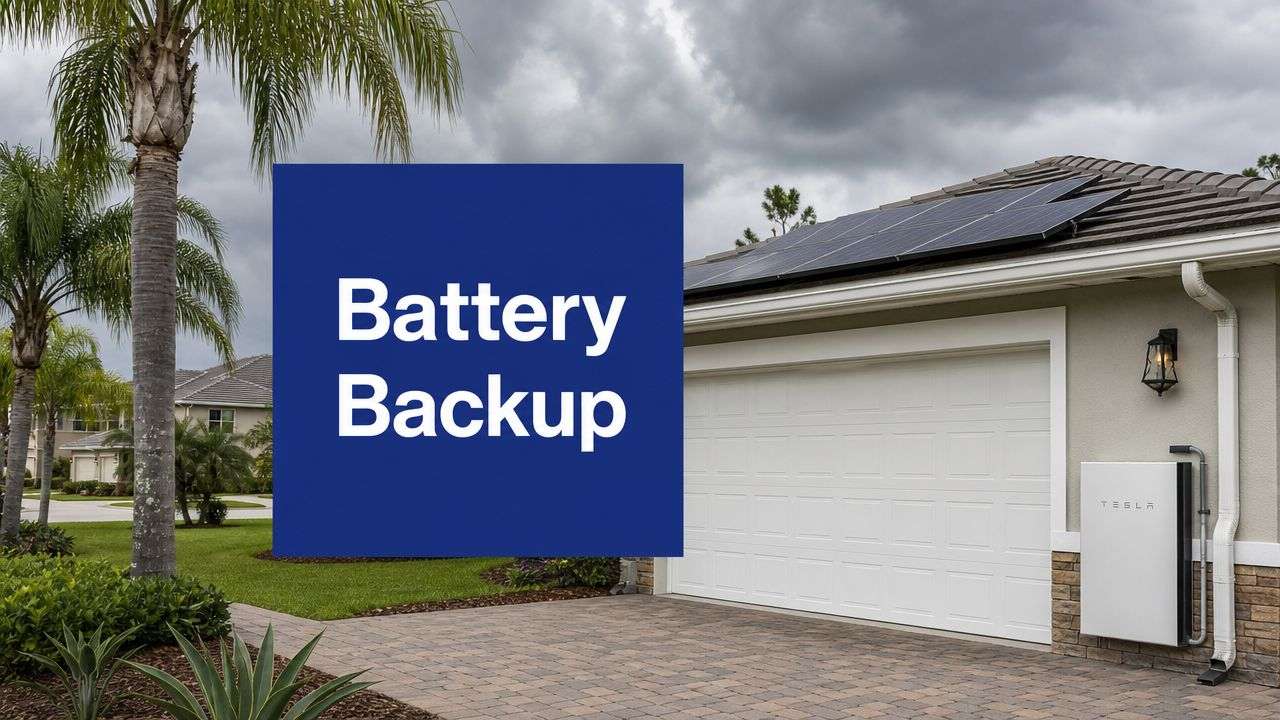
People often hear “battery backup” and picture a single box that magically keeps the house running. In practice, a Tesla Powerwall system works more like a coordinated electrical team. The battery stores energy, control hardware manages when power flows where it should, and the home's panel determines what gets served during normal operation and during an outage.
The easiest way to think about it is as an energy savings account. Your solar array generates electricity during the day. The home uses what it needs first. Excess energy can be stored in the Powerwall, then used later when solar production drops or when the grid fails.

What The Main Components Actually Do
A standard Tesla Powerwall installation for a Florida home usually revolves around a few core elements:
- Powerwall battery unit: This is the storage component that holds usable energy for later use or outage backup.
- Backup Gateway or Backup Switch: This hardware helps the home safely separate from the utility grid during an outage so power can continue flowing to backed-up loads.
- Solar array: The solar system produces electricity that can serve the home directly and recharge the battery.
- Main electrical panel and subpanels: These determine which circuits receive backup power and how loads are organized.
- Utility interconnection point: The system interacts with the grid here under approved operating conditions.
The distinction between a normal grid-tied solar system and a true backup-capable system matters. Without the proper backup hardware and approved configuration, solar alone does not mean your house stays powered during an outage.
Why Powerwall 3 Changed The Installation Conversation
Powerwall 3 simplified the architecture in a way Florida homeowners should understand before comparing bids. Tesla's documentation states that Powerwall 3 integrates the solar inverter directly into the battery cabinet, which reduces external equipment, streamlines wiring, and can speed commissioning when solar and storage are designed as one system, according to Tesla's Powerwall 3 datasheet.
That integrated design can make projects cleaner. Fewer boxes on the wall often means fewer wiring transitions and fewer failure points to manage later. It also changes how installers lay out equipment and how planners think about retrofit versus new-build projects.
If you're comparing system approaches, it helps to review how Tesla battery storage systems fit into a full Florida solar design, because the battery is only one part of the electrical strategy.
A clean single-line diagram matters more than a polished sales proposal. If the electrical path isn't clear on paper, it won't get simpler in the field.
Grid-Tied Versus Backup Ready
Many buyers often get tripped up.
A grid-tied home with solar can lower utility dependence during normal operation. A backup-ready home can continue serving selected loads when utility service is interrupted. Those are not the same thing, and they should not be priced as if they are.
For Florida homeowners, the practical takeaway is simple. If outage protection is the main reason you're buying storage, then backup topology has to be decided early. You don't want that design choice left until permit drawings are already in progress.
Planning Your Powerwall Costs and ROI in Florida
A Florida homeowner usually starts with one question: “What will this cost me?” The better question is, “What system am I trying to build, and what does that design do to cost, payback, and storm coverage?” That shift matters before you talk to installers, because the budget changes fast once backup scope, electrical upgrades, and battery count are defined.
For early planning, I advise clients to separate three buckets. Equipment cost. Installation and electrical work. Soft costs such as design, permitting preparation, and utility paperwork. If those are blended into one sales number too early, it becomes hard to tell whether you are paying for more battery capacity, more labor, or a more complicated house.

What You're Paying For
The battery itself is only part of the proposal. Tesla lists the Powerwall 3 with 13.5 kWh of energy capacity on its Powerwall 3 datasheet. From there, project cost rises or falls based on the house and the backup plan.
The line items that move pricing the most are usually:
- Battery quantity: One unit may cover priority loads. Two or more can support longer runtime or a wider backup panel strategy.
- Backup scope: Whole-home backup costs more than backing up selected circuits, and in many Florida homes it also changes load-management decisions around air conditioning, well pumps, pool equipment, and water heating.
- Electrical conditions: Older panels, service changes, long conduit runs, and limited wall space can add real labor and material cost.
- Mounting location: Garage, exterior wall, flood exposure, clearance requirements, and distance to the main service equipment all affect layout.
- Engineering and admin work: Permit-ready drawings, utility documents, and inspection coordination are part of the job even though they are easy to miss in a quick quote.
Two homes on the same street can end up with very different numbers for those reasons alone. That is normal. It is also why I prefer to build a planning model before the homeowner starts comparing installer proposals line by line.
If you're budgeting storage as part of a larger solar project, review current Florida solar incentive considerations at the same time so the battery decision is tied to the full system economics.
ROI Depends On What Problem You're Solving
Powerwall return in Florida is rarely a single-number calculation. It is a mix of utility savings, tax treatment where applicable, and resilience value during outages. Those are different benefits, and they do not carry the same weight for every household.
A retired couple in Sarasota may care most about keeping refrigeration, lights, internet, and a bedroom mini-split running through storm outages. A family in Orlando with two people working from home may put higher value on continuous internet, office circuits, and a central air strategy during summer interruptions. The battery can support both households. The right system size and the return math will not look the same.
Consulting insight: The cleanest Powerwall projects start with a load list and an outage plan, not a product count.
That is where pre-install planning earns its keep. A homeowner who buys storage for outage protection should model runtime by circuit priority. A homeowner focused on reducing grid purchases should model solar production, evening consumption, and battery cycling behavior. Mixing those goals without ranking them usually leads to overspending.
What Usually Improves The Economics
In Florida, the projects with the strongest financial logic tend to share a few traits.
- The house has a favorable solar profile. Storage performs better when there is enough daytime production to charge it consistently.
- The owner has defined backup priorities. Clear circuit selection keeps the battery count from drifting upward.
- The existing electrical setup is workable. Straightforward interconnection usually lowers labor and reduces change orders.
- The design is tested before procurement. Early consulting can catch panel limitations, placement issues, and unrealistic whole-home backup expectations before money is committed.
Price still matters. Scope matters more.
I tell Florida clients to treat Powerwall planning like a hurricane-hardening decision with an energy component, not just a battery purchase. If the design matches the home's loads, the family's outage tolerance, and the actual installation conditions, the financial picture gets much easier to judge.
Navigating The Florida Permitting and Inspection Process
A lot of homeowners assume the hard part is mounting the battery and wiring it in. In reality, the longest stretch of many Tesla Powerwall installation projects happens after the design is chosen and before the system is fully activated.
In a typical residential workflow, real-world timelines often stretch to 4 to 8 weeks from consultation to activation, with permitting taking 2 to 4 weeks and utility inspection or commissioning adding another 1 to 2 weeks, based on the installation process timeline described in this Powerwall permitting overview. In Florida, that administrative sequence often dictates the project calendar more than the physical install itself.

Where Delays Usually Happen
The permit path varies by municipality and utility territory, but the trouble spots are familiar.
- Plan review delays: Local authorities may request revisions if electrical drawings, equipment specs, or mounting details are incomplete.
- Utility interconnection review: Approval timing can be outside the installer's direct control.
- Inspection scheduling: Municipal inspection windows sometimes lag, especially after storm events or during high-demand periods.
- Site readiness issues: If the home needs panel changes, communication setup, or corrected equipment placement, the clock can reset quickly.
Florida projects also need to account for local code interpretation. Two jurisdictions may both allow battery installations, yet still ask for different plan details or sequencing. That's one reason copy-paste proposal packages often fail under real permitting conditions.
A Better Way To Think About The Sequence
Most successful projects move through the process in this order:
- Energy and backup planning first. Decide what the battery must support.
- Electrical review second. Confirm panel compatibility, service layout, and site constraints.
- Permit-ready design next. Drawings need to reflect the actual intended installation.
- Installer scheduling after approvals are in motion. This reduces idle time and frustration.
- Inspection and utility coordination last. Activation only happens when everyone signs off.
Homeowners who are also evaluating rooftop solar scope can benefit from understanding the broader workflow behind how rooftop solar panels are installed, because battery permitting often overlaps with larger interconnection decisions.
Permitting doesn't feel like progress, but it decides whether the project moves smoothly or stalls at the finish line.
What Florida Homeowners Should Ask Early
Before moving ahead, ask these questions in plain language:
- Who is responsible for permit submission?
- Who tracks utility interconnection status?
- What happens if the authority having jurisdiction asks for revisions?
- Will activation happen immediately after final inspection, or is a separate utility sign-off required?
- Is the proposal based on a critical-load backup design or a whole-home concept?
These aren't small details. They define whether your battery is available when you need it, or still waiting on paperwork while storm season is already underway.
Designing Your Backup for Florida Weather and Lifestyles
The most common design mistake in Florida is assuming backup should be all or nothing. It usually shouldn't. A smart Tesla Powerwall installation is built around priorities, because Florida homes often have a big gap between what people want to run during an outage and what they need to preserve safety and comfort.
That decision gets especially important once air conditioning enters the conversation. In this climate, backup planning isn't only about lights and a refrigerator. It's also about humidity, sleeping conditions, indoor air quality, and whether vulnerable occupants can safely remain in the home when utility power is down.

Whole-Home Backup Versus Critical Loads
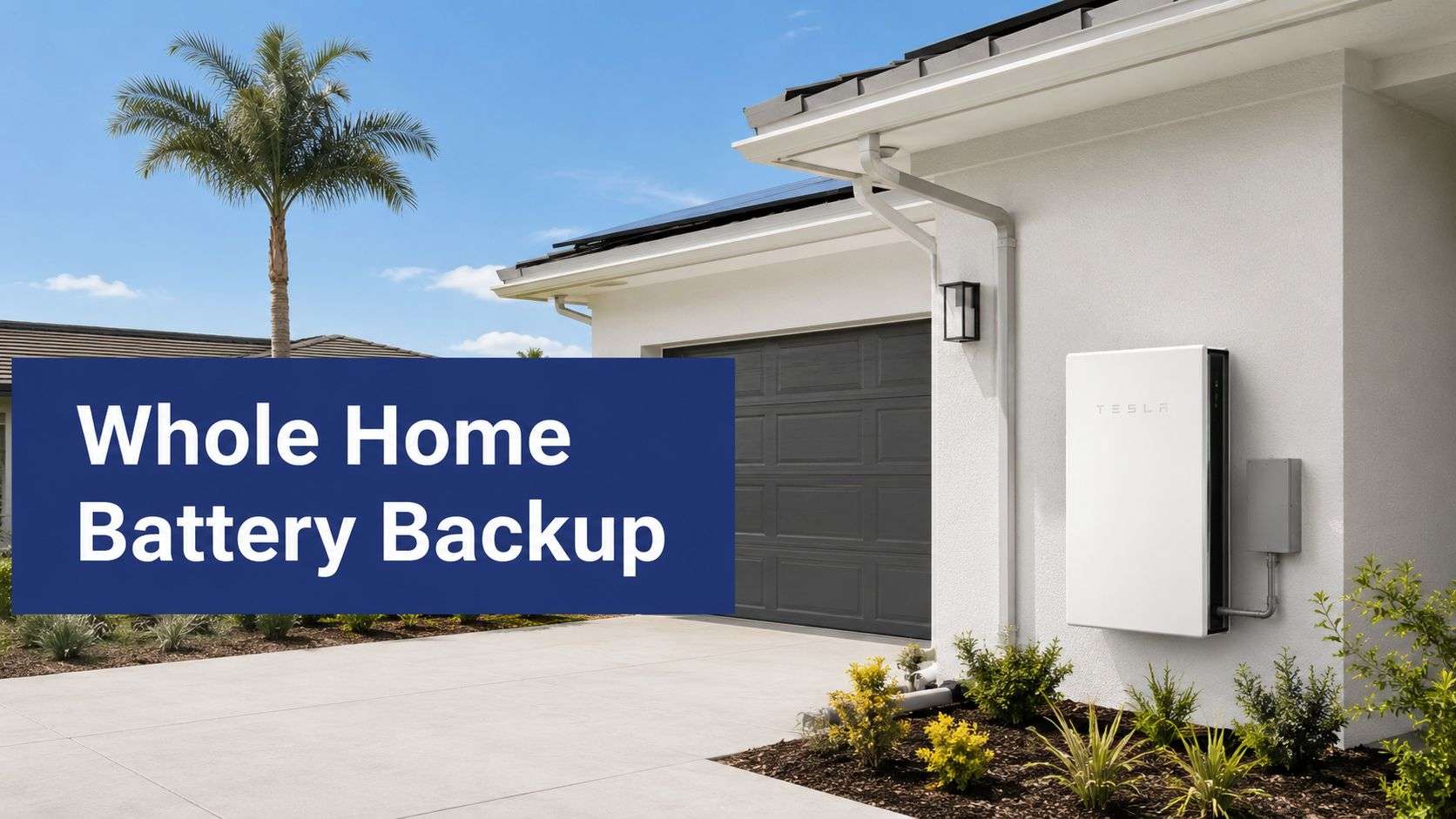
A whole-home concept sounds appealing because it feels simple. The problem is that many homes aren't simple loads. Electric water heating, pool equipment, ovens, dryers, vehicle charging, and central air can stack demand quickly. That can force a larger and more expensive battery design than the owner needs.
Critical-load backup is often the better fit. It prioritizes the circuits that matter during an outage, such as refrigeration, internet, lighting, selected outlets, garage access, medical equipment, and in some homes a carefully planned HVAC path.
Here's the practical difference:
- Whole-home backup: Better for homeowners who want broader lifestyle continuity and understand the added electrical and budget implications.
- Critical-load backup: Better for owners who want resilience without paying to support every discretionary load.
- Hybrid design: Sometimes the right answer is a mostly critical-load approach with selective support for one major comfort load.
Why Motor-Start Capability Matters In Florida
A tangible example from Tesla's datasheet is its listing of motor-start capability up to 185 A LRA for Powerwall 3, which matters because it affects whether the system can successfully start demanding inrush loads such as central HVAC compressors or well pumps during an outage, as shown in Tesla's Powerwall 3 performance documentation.
That doesn't mean every Florida home can run every air conditioner from a single battery. It means the system has meaningful backup capability, but only if the design matches the actual equipment. Tonnage, locked-rotor characteristics, start behavior, and what else is on the backed-up panel all matter.
A battery that can technically start an HVAC system can still be a poor design if the rest of the load plan drains storage too fast.
Design Around Real Risk, Not Wish Lists
Florida backup planning works better when it's tied to property risk and occupancy needs.
For example, if a home has elderly occupants, refrigerated medication, a shallow well pump, or a work-from-home requirement, the backup hierarchy should reflect that. The same is true for homes with storm exposure concerns. Broader property resilience often overlaps with safeguarding your property effectively before and after severe weather, because backup power is only one layer of risk management.
If the storage system is being paired with rooftop solar, it also makes sense to review how hurricane-proof solar panels fit into the broader resilience picture. In Florida, battery performance and roof-system durability should be planned together, not as separate purchases.
What Usually Works Best
The best outcomes usually come from restraint.
A custom design often beats an oversized promise. Back up the loads that protect health, food, communications, and basic comfort first. Then decide whether larger comfort loads deserve battery capacity too. That order keeps the project focused on what is most important when the grid fails.
Choosing Your Expert Partner for a Flawless Project
Tesla requires Powerwall installations to be performed by a Tesla Certified Installer, which is important because the physical work, backup configuration, and code-compliant interconnection all need to be handled correctly. But for Florida homeowners, certified installation and project strategy are not the same thing.
The installer builds the system. The consultant helps decide what system should be built in the first place.
What A Consultant Does That An Installer May Not
A consultant starts earlier and asks different questions. The work is less about selling a battery and more about testing the project before money is committed.
That usually includes:
- Feasibility review: Is the home electrically suitable for the backup goal you have in mind?
- Load analysis: Which circuits should be backed up, and what should be excluded?
- Financial modeling: Does the battery support your resilience goals at a budget level you can defend?
- Procurement guidance: Which installer is qualified for this exact scope and local jurisdiction?
- Design coordination: Are the panel layout, equipment placement, and interconnection approach sensible before permit submission?
This is the stage where independent planning can prevent expensive misunderstandings. Solar Energy Management LLC, for example, works as a Florida-based solar power consultancy focused on feasibility studies, ROI modeling, storage planning, and coordination with implementation partners rather than presenting itself as the party doing every part of the field installation.
How To Vet The Team Around Your Project
A Powerwall project can also expose issues beyond the battery itself. If rooftop work is involved, homeowners should evaluate roof condition and contractor quality with the same care they apply to electrical scope. General guidance on how to find a reliable roofing professional can be useful because roofing decisions often affect solar and storage timing, warranty coordination, and long-term serviceability.
When you're evaluating who should be involved, look for clear answers to questions like these:
- Who owns the system design? If no one can explain the backup topology plainly, that's a warning sign.
- Who is accountable for permit revisions? Administrative ownership matters.
- Who verifies load assumptions? You don't want guessed circuit priorities.
- Who coordinates utility approval? Activation delays often live there.
- Who clearly explains trade-offs? Not every home should be sold whole-home backup.
The right partner doesn't just say your project can be installed. They show you how it should be scoped, priced, and sequenced.
The Best Projects Use Both Roles Well
This isn't a contest between consultants and installers. Strong projects use both.
The consultant reduces decision risk on the front end. The certified installer executes the approved design in the field. When those roles are aligned, homeowners usually get cleaner proposals, better expectation setting, and fewer surprises once permits and inspections begin.
Living With Your Powerwall Long-Term Performance and Care
Once the system is active, ownership is usually much simpler than the planning phase. That's good news, because by the time a Florida homeowner reaches activation, they've already done the hard work of deciding what the system should accomplish.
Day to day, most owners interact with the system through monitoring rather than hands-on maintenance. They want to know whether the battery is charging, whether solar production is covering daytime use, and how much stored energy is available if weather turns or the grid drops.
What Long-Term Ownership Usually Looks Like
Powerwall ownership is largely about awareness, not routine servicing.
A few practical habits help:
- Check app data periodically: Watch how the home uses stored energy during normal evenings and storm alerts.
- Review outage behavior after events: If backup performance didn't match expectations, revisit load priorities.
- Keep equipment areas accessible: Batteries need proper service clearance and shouldn't be boxed in by later renovations or storage clutter.
- Document inspections and approvals: Keep permit closeout and interconnection records where you can find them.
There's also a mindset shift that happens after installation. Homeowners start seeing their house less as a passive utility customer and more as an actively managed energy system.
What Doesn't Work Well After Installation
Problems usually show up when expectations were never aligned in the first place.
If someone expects hotel-style comfort from a minimally sized backup system, frustration follows. If the household never learns which loads are prioritized, they may assume the battery “underperformed” when the actual issue was design scope. And if no one explained the app, operating mode choices, or outage behavior, the owner can end up with a strong system that still feels confusing.
Good battery ownership starts with a realistic backup plan. The app confirms the plan. It doesn't replace it.
Why The Planning Still Pays Off Years Later
The value of a well-designed Tesla Powerwall installation isn't limited to storm season. It shows up in how confidently the owner understands their energy use, how clearly the project fits the home's priorities, and how little scrambling is required when severe weather approaches.
For Florida homeowners, that confidence is often the payoff. Not perfect independence. Not fantasy economics. Just a system that was properly planned, built correctly, and matched to the way the property functions.
If you're evaluating a Tesla Powerwall installation in Florida and want the project scoped before you hire an installer, Solar Energy Management LLC helps homeowners and property owners with feasibility review, backup-load planning, financial modeling, and system design guidance so the numbers, permitting path, and resilience goals are clear before procurement begins.