If you're in Florida, you probably already know the feeling. A storm track shifts overnight, the utility outage map starts filling up, and suddenly the question isn't abstract anymore. It's whether your refrigerator, internet, lights, medical devices, security system, or a small slice of air conditioning will keep running when the grid doesn't.
That's why so many homeowners and property managers start searching what is energy storage system in the first place. They're not looking for a physics lesson. They want a practical answer. Can this help during hurricanes? Can it work with rooftop solar? Can it lower power bills instead of only sitting there for emergencies?
The short answer is yes, but only if the system matches the job. In Florida, energy storage isn't just about owning a battery. It's about deciding what kind of resilience or savings you want, sizing around real loads, and planning for safety, permitting, and long-term value.
Why Florida Properties Need Energy Independence
A Florida home can feel completely normal at noon and vulnerable by nightfall. The AC is running hard, your phone is charging, dinner is in the fridge, and then the power drops. For some families, that means inconvenience. For others, it means spoiled food, a hot house, interrupted work, or serious health concerns.
That's the context for energy storage. A modern storage system gives you a controlled reserve of electricity you can use when utility power is unavailable or expensive. For Florida properties, that usually means two goals. First, backup power during storms and outages. Second, better control over how and when you use solar power.
Why This Has Moved Into The Mainstream
Battery storage isn't a fringe idea anymore. In the United States, operational battery storage capacity rose from less than 50 MW in 2010 to nearly 45 GW by 2024, a 900-fold increase according to CleanPower facts on clean energy storage. That kind of growth tells you something simple. Utilities, businesses, and homeowners now treat storage as real infrastructure.
For a Florida client, that matters because it changes the conversation. You're no longer asking whether storage is experimental. You're asking how to apply a proven tool to your own property.
Practical rule: In Florida, most people don't buy storage because they love gadgets. They buy it because they want their home or building to stay functional when the grid doesn't cooperate.
Storage Versus Generators In Real Life
Some clients compare batteries directly with standby generators. That's a fair comparison. Generators can be a strong fit for long-duration backup, especially when the top priority is extended outage coverage. If you're weighing both paths, this overview of Lighthouse Energy Services generator installation helps clarify how generator-based backup is typically approached.
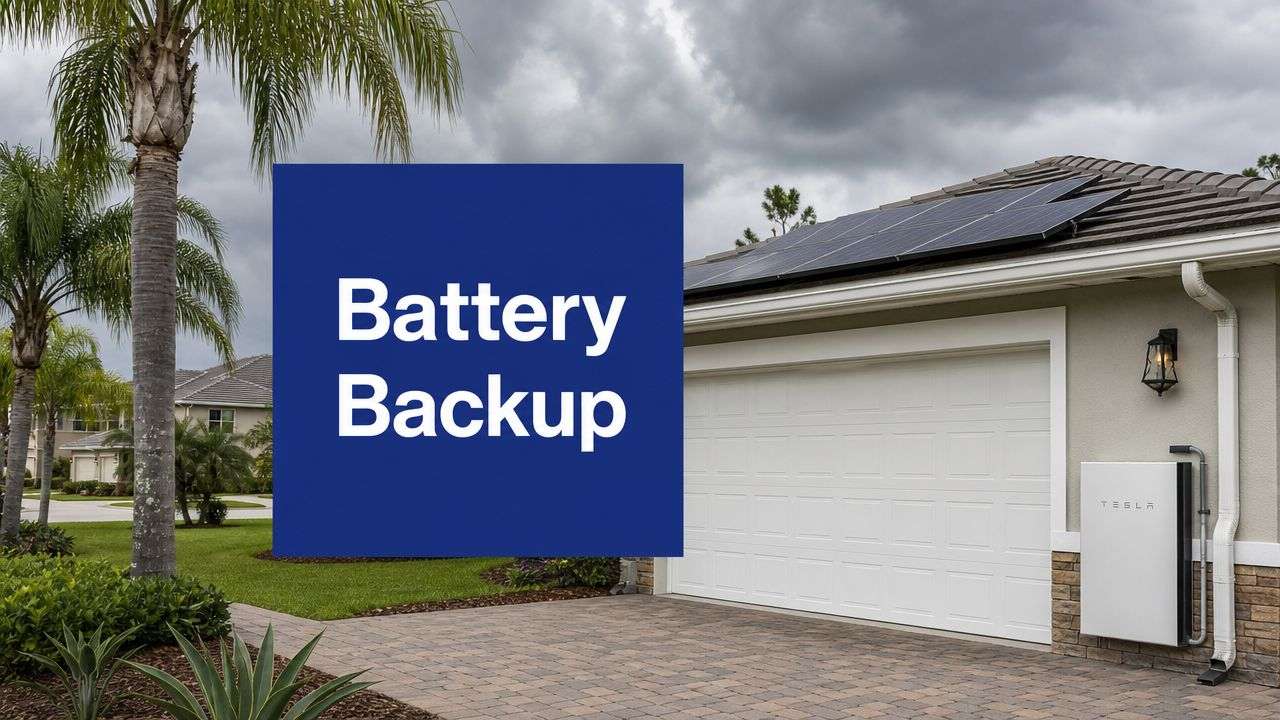
Battery backup solves a different problem well. It delivers quiet, automatic power with no fuel deliveries, and it pairs naturally with solar. If your main concern is storm resilience plus daily energy management, a guide to solar battery backup for power outages is often the better starting point.
Here's the plain-language distinction:
- Generator backup: Better when you want long runtime and you're comfortable with fuel, engine maintenance, and generator operating conditions.
- Battery storage: Better when you want silent operation, fast switchover, solar integration, and day-to-day bill strategy.
- Hybrid thinking: Some Florida properties use batteries for instant backup and a generator for longer events.
Beyond The Battery What Makes Up An Energy Storage System
A lot of people hear “energy storage system” and picture a big battery on the wall. That's understandable, but incomplete. A battery energy storage system, often called BESS, is an integrated power system with multiple parts working together.
According to Sinovoltaics' explanation of BESS specifications, a complete BESS includes battery modules, a battery management system or BMS, a power conversion system or PCS, and an energy management system or EMS.

The Four Parts In Plain English
Think of the system like a coordinated team instead of one box.
- Battery modules store the electricity. These are the energy tanks.
- BMS watches the cells and protects them. It keeps voltage, current, and temperature within safe limits.
- PCS converts electricity so your property can use it. Batteries store DC electricity, while most Florida homes and businesses use AC power.
- EMS decides strategy. It manages when the system charges, discharges, holds reserve power, or responds to an outage.
If you like computer analogies, the battery is the memory bank, the BMS is the protection logic, the PCS is the translator, and the EMS is the operating system making decisions in the background.
Why The Other Parts Matter As Much As The Battery
Readers often get confused. They compare two battery products as if all batteries behave the same once installed. They don't. The intelligence around the battery affects safety, usable power, backup behavior, and how smoothly the system works with solar.
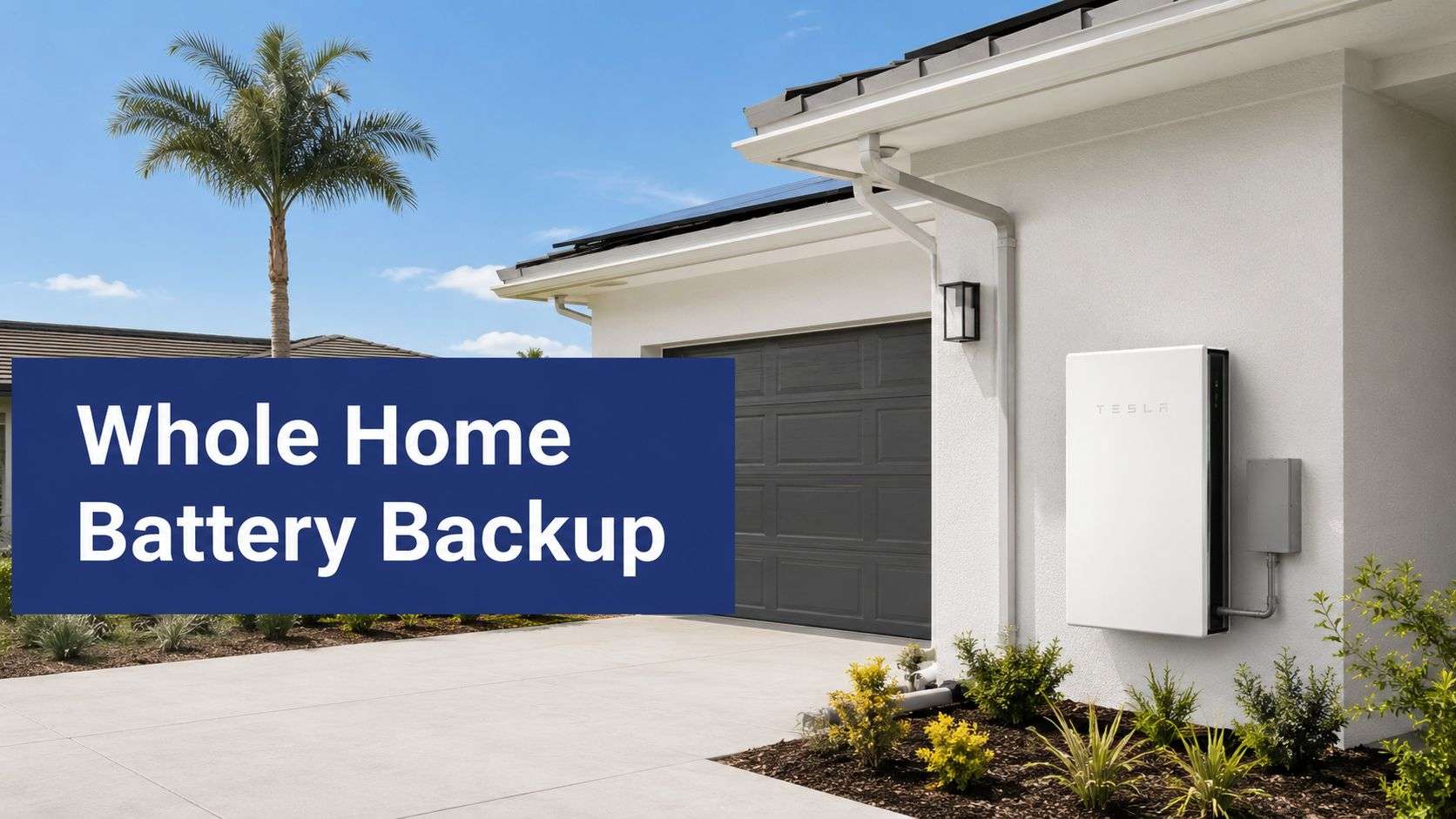
That's one reason homeowners often ask about specific products rather than generic “battery packs.” If you're looking at a named product category, a page about Tesla Powerwall installation can help you understand how an integrated residential storage system is typically framed in the market.
A storage system isn't just a bucket of electricity. It's a managed power system that has to decide what to do every minute of the day.
Why This Matters In Florida
In Florida, a good control strategy matters because your goals can shift fast. One day you want to store midday solar and use it in the evening. The next day a hurricane watch appears and you want the battery to stay full for backup. The hardware matters, but the controls decide whether the system acts like a smart resilience tool or just expensive equipment.
That's the big takeaway. When someone asks, what is an energy storage system, the best answer isn't “a battery.” It's “a battery plus the safety, conversion, and control systems that make stored electricity usable.”
Understanding Key Energy Storage Specifications
The fastest way to get lost in battery shopping is to stare at spec sheets without translating them into daily life. Most Florida clients don't need engineer-level detail. They need to know which specifications affect comfort, resilience, and bill savings.
The two terms that matter first are power and capacity.

Power And Capacity Are Not The Same Thing
A good analogy is water.
Power, measured in kW, is like the width of the pipe or the pressure at the faucet. It tells you how much electricity the system can deliver right now.
Capacity, measured in kWh, is like the size of the water tank. It tells you how much total energy you have stored.
That means a battery can have enough capacity to last a while but not enough power to start several large appliances at once. Or it can deliver strong power briefly but run out sooner than you expect.
For a Florida home, this distinction affects practical questions like these:
- Can the battery start the air conditioner, or only smaller essential loads?
- Can it run the refrigerator, lights, internet, and garage door together?
- Will it cover an evening load shift after solar production drops?
- Is it meant for whole-home backup, or a critical-load panel?
If you're also sorting out the solar side of that equation, the relationship between storage and inverter and solar installation becomes important because the inverter setup helps determine how power flows during normal operation and during an outage.
The Other Specs That Deserve Attention
After power and capacity, clients usually benefit from four more terms.
- Usable energy: This is the portion of stored energy you can rely on in practice.
- Depth of discharge: Think of this as how much of the battery's tank is designed to be used before recharging.
- Round-trip efficiency: This describes how much energy you get back after storing and discharging it. Some energy is always lost in the process.
- Cycle life: This is the expected service life measured by repeated charging and discharging over time.
Quick filter: If a spec doesn't help you answer “what can this run, for how long, and under what conditions,” it shouldn't dominate your decision.
What A Florida Buyer Should Focus On
Most confusion disappears when you anchor specs to one use case. A hurricane backup system should be evaluated around critical loads and outage behavior. A solar savings system should be evaluated around daily charging and evening discharge. A commercial battery should be judged by how it handles peak demand and operating schedules.
That's why the same battery can be perfect for one building and wrong for another. The sheet of numbers only becomes useful when tied to your actual load profile.
How Floridians Use Energy Storage Systems
The U.S. Energy Information Administration explains that energy storage can support second-to-hour grid balancing, backup power, and commercial demand-charge reduction, which is why the right system design depends on the job you want it to do, as noted by the EIA overview of electricity energy storage.
For Florida properties, I usually see three clear use cases. Each one points to a different design priority.

Hurricane Resilience
This is the use case people understand immediately. When the grid goes down, the battery keeps selected circuits or equipment energized. That might include refrigeration, lighting, communications, security, medical loads, and sometimes a portion of cooling.
The key question isn't “Can a battery power my house?” The better question is “Which parts of my property matter most during an outage?” That usually leads to a more practical design and avoids overspending.
Solar Self-Consumption
Florida gets abundant sun, but solar production peaks during the day when many families are away or using less energy. Storage lets you keep some of that production for the evening, overnight, or the next outage event.
For EV owners, this gets even more interesting. A battery can help coordinate solar production, home use, and charging strategy, which is part of why some clients also explore solar-powered EV charging station planning as part of a broader energy design.
Commercial Peak Shaving
Commercial properties often face a different problem. One short burst of high demand can increase electricity costs even if total energy use isn't extreme. Storage can help flatten those spikes by discharging at the right moment.
Batteries stop being “backup boxes” and start acting like financial tools. The battery doesn't just wait for an outage. It actively manages when the building draws from the grid.
LFP Versus NMC For Florida Buyers
Many buyers eventually ask about battery chemistry. The two names they hear most often are LFP and NMC. You don't need a chemistry degree to understand the trade-off.
Here's the practical comparison:
- LFP: Often favored when safety, long service life, and thermal stability are high priorities.
- NMC: Often considered when energy density and compact packaging matter more.
- Florida lens: In a hot, storm-prone market, many buyers care less about squeezing every bit of density into a small footprint and more about durability, conservative operation, and resilience planning.
If your main goal is hurricane readiness, don't start with chemistry. Start with the loads you need to keep alive and the operating strategy you want before, during, and after a storm.
The mistake I see most often is mixing goals. A homeowner wants outage protection, bill reduction, and whole-home coverage from a modest system. A business owner wants demand-charge savings from a battery sized only for emergency backup. Those aren't impossible goals, but they require honest trade-offs.
Sizing Safety And Installation Planning
Three Florida clients can ask for “a battery” and need three completely different systems.
One homeowner wants the refrigerator, lights, internet, and bedroom mini-split running through a hurricane outage. Another family wants to use more of their daytime solar after sunset and reduce dependence on the utility. A business owner wants to avoid sharp demand peaks that punish the monthly electric bill. The right battery size for one of them may be wasteful or inadequate for the others.
Start With The Loads, Not The Product
Sizing starts with a plain question. What are you trying to protect or optimize?
For a homeowner focused on storms, the answer may be a critical loads panel rather than whole-home backup. For a family focused on bill control, the answer may be evening usage patterns. For a business, it may be a narrow window of high-demand equipment.
A simple decision process usually looks like this:
- List the must-run loads. Separate true essentials from nice-to-haves.
- Define the goal. Backup, bill savings, solar self-use, or a mix.
- Map when energy is needed. Daytime, evening, overnight, outage periods, or short demand spikes.
- Check site constraints. Available wall space, electrical layout, solar configuration, and local permitting.
If you're trying to get a basic feel for how system size discussions are framed in the broader solar market, AdVoltage Electrical solar advice is one example of how sizing questions get translated into homeowner language.
Safety Is A Design Issue, Not A Footnote
Storage planning also has a safety side that shouldn't be treated as an afterthought. According to the Edina BESS overview discussing EPA safety guidance, battery storage siting requires careful planning, including thermal monitoring, permit compliance, and, for large commercial systems, potential isolation zones of at least 330 feet depending on the site.
That doesn't mean a typical Florida homeowner needs a giant exclusion area around a wall battery. It means all storage projects need real siting review, code compliance, and emergency planning appropriate to their scale.
What Good Planning Looks Like
A solid storage plan should answer these questions before equipment is purchased:
- Location: Where can the equipment be installed safely and compliantly?
- Operation: What happens in a utility outage, and which loads transfer over?
- Integration: How will the battery interact with the solar system and inverter setup?
- Growth: Can the system be expanded later if the property's needs change?
A battery system that isn't properly sited and planned can create expensive rework, permit delays, or a backup setup that doesn't perform the way the owner expected.
Financial Incentives And Your Next Steps
Most buyers start with resilience, then quickly ask about economics. That's reasonable. A battery is a technical asset, but it's also a financial decision, especially when paired with solar on a Florida property.
The market direction reinforces that point. The global BESS market is projected to grow from USD 50.81 billion in 2025 to USD 105.96 billion by 2030 according to MarketsandMarkets battery energy storage system market data. That kind of growth reflects a broader shift. Storage is increasingly treated as a tool for energy cost management and supply security, not only emergency backup.

Incentives Matter, But Planning Matters More
For Florida clients, incentives can improve project economics, but they don't fix poor system design. A battery that's oversized for your real needs is still oversized. A battery that's undersized for your outage plan can still disappoint you the first time the grid fails.
That's why I push clients to decide in this order:
- First, define the job. Resilience, savings, or both.
- Then, model the loads. Not guesses. Real equipment and real usage patterns.
- Then, review incentives and financing. A project should make sense operationally before it's optimized financially.
If you're reviewing available programs, a practical place to start is this overview of the Florida solar incentive, which helps frame how solar-related incentives fit into project planning in the state.
Why Expert Review Comes First
This isn't a great DIY category. Storage touches electrical design, outage behavior, permitting, equipment compatibility, and safety rules. Even the “simple” question of whether a system will run your AC can depend on startup behavior, inverter limits, panel configuration, and how the backup circuits are structured.
One option Florida property owners use at the planning stage is Solar Energy Management LLC, which provides feasibility studies, ROI modeling, battery storage planning, and design guidance before installation decisions are made. That consultant-first approach is useful when you want an independent view of what size, configuration, and operating strategy fit your property.
The best next step usually isn't choosing a battery brand. It's getting a load-based plan and a financial model built around your actual goals.
Frequently Asked Questions About Energy Storage
Can I Add A Battery To Existing Solar In Florida
Often, yes. The key question is compatibility. The existing inverter setup, service panel, backup goals, and available space all affect whether a battery can be added cleanly or whether other equipment changes are needed.
A retrofit can work very well, but it shouldn't be assumed to be plug-and-play.
Does A Battery Mean I'm Off-Grid
No. Most Florida battery systems are grid-connected systems with backup capability. They still rely on utility interconnection during normal operation.
Off-grid design is a separate category. It requires a different approach to load planning, solar production assumptions, storage duration, and backup strategy.
Will A Battery Run My Whole House
Sometimes, but not always, and not automatically. Whole-home backup depends on the size of the battery system, the power rating, the starting loads of major equipment, and how long you expect backup to last.
For many Florida homes, a more sensible goal is backing up the circuits that matter most.
What's Better For Me, Backup Or Bill Savings
That depends on what problem bothers you most. If outages are your top concern, the design should prioritize reserve power and critical loads. If utility costs and solar self-consumption matter more, the operating strategy may look different.
Many clients want both. That's possible, but it needs honest load analysis and clear trade-offs.
Is A Faster Battery Better
Not in every situation. Fast response is valuable for managing sudden changes in load or supporting sensitive equipment. But some buyers need longer-duration storage more than ultra-fast power delivery.
The better question is whether the system's power and energy profile match your use case.
What Should I Do Before Requesting Quotes
Do these three things first:
- Write down your goal. Storm backup, solar savings, demand reduction, or a mix.
- Identify critical loads. Name the exact appliances or building systems you care about.
- Gather your utility data. A consultant or installer can make better recommendations with real usage history.
A battery can be one of the smartest upgrades for a Florida property. It can also be one of the easiest categories to misunderstand if you focus on brand names before function. When you understand what an energy storage system is, and how it should be matched to your property, the buying decision gets much clearer.
If you're evaluating solar plus storage for a Florida home or commercial property, Solar Energy Management LLC can help you start with feasibility, load analysis, and financial modeling so you can choose a system that fits your backup goals, bill strategy, and site conditions before you commit to installation.