
TL;DR:
- Pairing solar with energy efficiency programs offers the most cost-effective way to cut utility bills and reduce carbon emissions.
- Efficiency upgrades lower building energy waste, allowing smaller, less expensive solar systems that pay back faster.
Solar energy paired with energy efficiency programs is the most cost-effective path to cutting your utility bills and shrinking your carbon footprint. The combination works because efficiency upgrades reduce how much energy your building wastes, while solar generates clean power to cover what remains. Together, combined retrofits cut annual costs by over 30–40% compared to installing either measure alone. That is the core reason why solar pairs with efficiency programs so reliably. Solar Energy Management has guided Florida homeowners and small business owners through this exact strategy for over 20 years, and the financial logic holds every time.
Why solar pairs with efficiency programs: the core case
The industry term for this approach is “integrated energy retrofitting,” and it outperforms standalone solar in nearly every financial metric. When you reduce your building’s energy demand first, your solar system does not have to work as hard. A smaller array costs less to install, qualifies for the same federal incentives, and pays back faster.
Energy efficiency programs are structured initiatives that fund or incentivize specific upgrades: insulation, air sealing, LED lighting, smart thermostats, and high-efficiency HVAC equipment. These programs exist at the federal, state, and utility level. They lower the total energy load your building draws from the grid, which directly improves the economics of any solar investment you make afterward.
The sequencing is the key insight most homeowners miss. Solar installers are not always motivated to tell you that a smaller system is better for your budget. An independent consultant will.
What are energy efficiency programs and how do they complement solar?
Energy efficiency programs target the biggest sources of wasted energy in a building. The most common measures include:
- Air sealing: Closing gaps around windows, doors, and penetrations to stop conditioned air from escaping. Air sealing costs as little as $300 to $1,500 and pays back in 1–3 years. That is a faster return than almost any other energy investment.
- Attic insulation: Adding R-30 or higher insulation to reduce heat transfer through the roof. Payback runs 7–10 years, still well ahead of solar’s typical 10–15 year payback period.
- LED lighting: Replacing fluorescent or incandescent fixtures with LED reduces lighting loads by 50–75% and requires no structural changes.
- Smart thermostats: Devices like programmable or learning thermostats cut HVAC runtime by adjusting temperatures based on occupancy patterns.
- High-efficiency HVAC: Heat pumps replace gas furnaces and older AC units, cutting heating and cooling energy use significantly.
Each of these measures reduces your baseline energy consumption. A lower baseline means your solar system needs to generate less power to cover your needs. That translates directly into a smaller, less expensive solar array.
Pro Tip: Before requesting a solar quote, get a home energy audit. An auditor will identify which efficiency upgrades deliver the fastest payback in your specific building, so you size your solar system correctly from day one.
Efficiency upgrades also improve comfort in ways that solar alone cannot. A well-insulated, air-sealed home stays cooler in Florida’s summer heat without running the AC constantly. That comfort benefit has real dollar value that does not show up in a solar payback calculation.
How does sequencing upgrades maximize your solar investment?
The order in which you make energy upgrades determines how much you save and how quickly. The “envelope-first” rule is the governing principle: invest in air sealing and insulation before you install solar panels. Powering a drafty house with solar is like filling a leaking bucket. You generate clean energy, but much of it compensates for preventable losses.
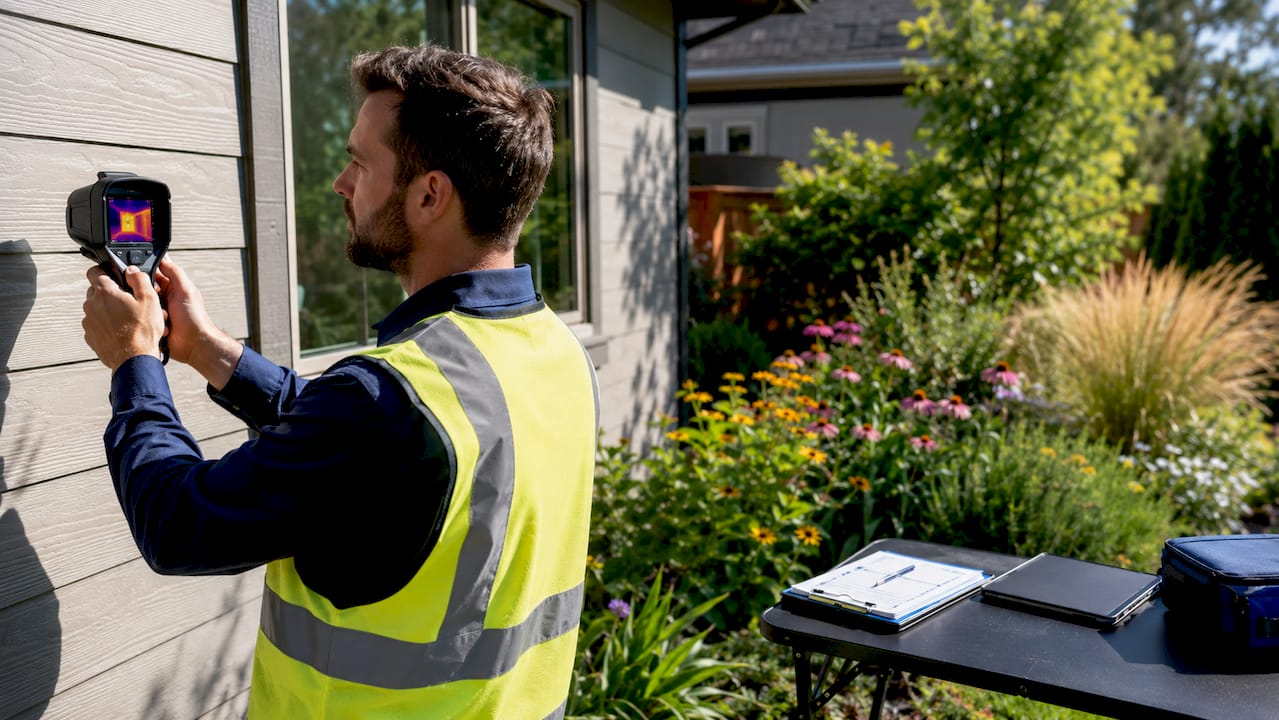
The financial case for sequencing is concrete. R-30 or better insulation reduces the required solar system size by 5–15%. On a $25,000 solar installation, a 10% reduction saves $2,500 before any tax credits apply. That is money you keep by spending a fraction of it on insulation first.
The recommended sequence for homeowners and small business owners is:
- Commission an energy audit. A professional audit identifies your building’s biggest energy losses and ranks upgrades by cost-effectiveness. This is your planning document.
- Complete air sealing and insulation. These are the cheapest kWh savings available. Do them first, regardless of your solar timeline.
- Upgrade lighting and controls. LED retrofits and smart thermostats reduce peak loads, which matters for both solar sizing and utility demand charges.
- Install solar. Now your system is sized to a lower, more stable load. Your solar system design reflects real consumption, not inflated pre-retrofit numbers.
- Add battery storage if appropriate. Once solar is producing, storage lets you shift daytime generation to evening use, increasing self-consumption and resilience.
The most common mistake is installing solar on an inefficient building. You end up with a system that is 15–20% larger than necessary, costs more upfront, and takes longer to pay back. Fixing efficiency after the fact does not shrink your solar loan.
Stacking federal incentives reinforces the sequencing argument. The 30% federal Investment Tax Credit applies to your solar installation. Separately, the 25C Energy-Efficient Home Improvement Credit covers up to $1,200 annually for qualifying insulation, air sealing, and HVAC upgrades. You can claim both in the same tax year. That combination materially reduces your net out-of-pocket cost for the entire upgrade sequence.
What financial and environmental benefits come from pairing solar with efficiency?
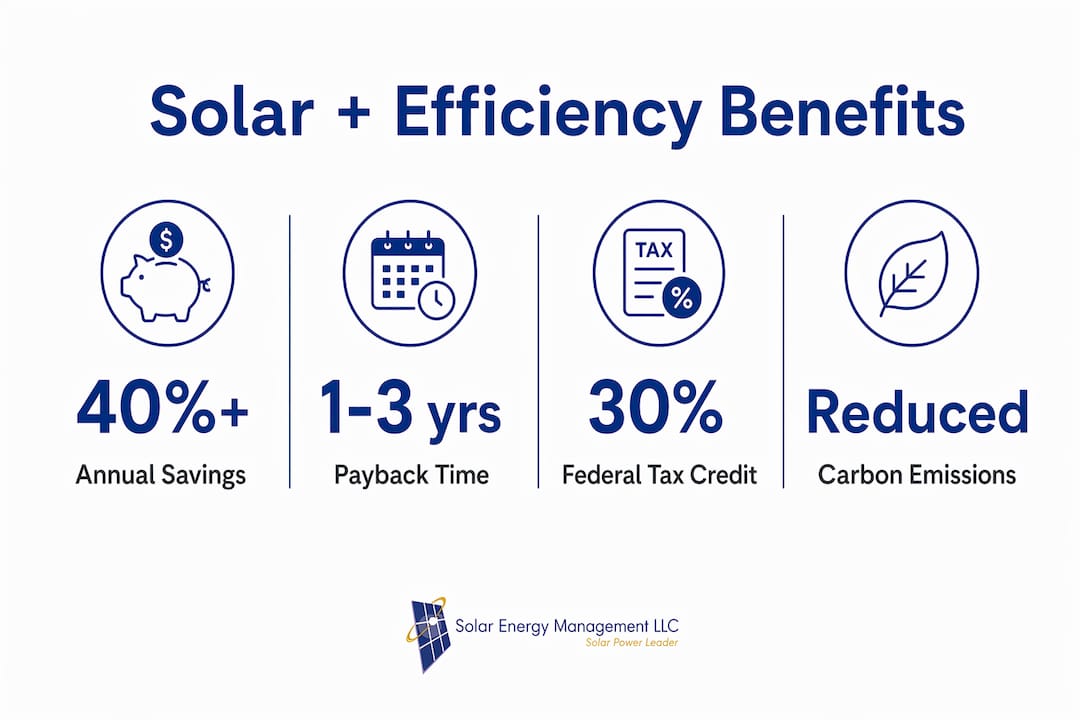
The financial case for solar integration with efficiency programs is strongest when you look at total system economics rather than individual measures. Combining cool roofs, insulation, and solar achieves over 40% energy savings with payback under 10 years. Neither measure reaches that threshold alone.
| Upgrade approach | Typical payback | Annual savings potential |
|---|---|---|
| Air sealing only | 1–3 years | Moderate |
| Attic insulation only | 7–10 years | Moderate |
| Solar only | 10–15 years | High |
| Solar plus efficiency combined | Under 10 years | Over 40% of energy costs |
The environmental benefits follow the same logic. Solar combined with efficiency reduces carbon emissions more effectively than either approach alone. Efficiency cuts the total energy demand, so less power needs to be generated from any source. Solar then replaces the remaining grid power with clean generation. The synergy between demand reduction and clean supply produces a larger emissions cut than adding the two effects separately.
Efficiency upgrades also improve the export value of your solar system. When your building draws less power from the grid, more of your solar generation is available for net metering credit or battery storage. That improves your solar panel return on investment without adding a single panel.
For small business owners, the financial modeling gets more specific. Demand charges, which utilities levy based on your peak consumption in a billing period, can represent 30–50% of a commercial electric bill. Efficiency upgrades that flatten your load profile reduce demand charges directly. Solar alone does not reliably cut peak demand unless paired with storage and load controls.
How do solar and efficiency programs support electrification and resilience?
Pairing solar with efficiency programs is not just about today’s energy bill. It is preparation for the electrification of your home or business over the next decade. Heat pumps, electric vehicle chargers, and induction cooking all add new electrical loads. A building that has already reduced its baseline consumption through efficiency upgrades can absorb those new loads without requiring a larger solar array or a costly electrical service upgrade.
The key benefits of planning for electrification through combined upgrades include:
- Right-sized solar and storage: A lower baseline load means your solar array and battery system cover a higher percentage of your total consumption, including new electric loads.
- Avoided service upgrades: Buildings with reduced loads often avoid the $3,000–$8,000 cost of upgrading their electrical panel when adding EV chargers or heat pumps.
- Grid resilience: A solar plus storage system shifts daytime solar generation to evening use, improving self-consumption and providing backup power during outages.
- Load shifting: Smart controls and time-of-use rate management let you run high-consumption appliances during peak solar production hours, reducing grid draw and demand charges.
- Future-proofed value: Homes and businesses with integrated solar and efficiency upgrades command higher property values and are more attractive to buyers and tenants.
Pro Tip: If you plan to add an EV charger or heat pump within the next three years, tell your solar consultant now. Sizing your system for future loads at the time of installation costs far less than adding capacity later.
Solar acts as a hedge against inflation when paired with efficiency, heat pumps, and battery storage. Utility rates in Florida have risen consistently over the past decade. Every kilowatt-hour your building does not need from the grid, whether through efficiency or solar generation, is a kilowatt-hour priced at today’s rate, not tomorrow’s higher one. That inflation protection compounds over a 25-year solar system lifespan.
Planning for electrification also means thinking about home energy storage solutions as part of the initial design. A battery system sized for your current load may be undersized once you add a heat pump and two EV chargers. Getting the storage sizing right from the start avoids a second installation project and a second set of permitting costs.
Key Takeaways
Pairing solar with efficiency programs delivers superior savings, faster payback, and better resilience than installing solar on an unimproved building.
| Point | Details |
|---|---|
| Sequence upgrades correctly | Complete air sealing and insulation before solar to right-size your array and reduce wasted energy. |
| Stack federal incentives | Claim the 30% ITC for solar and the 25C credit for efficiency upgrades in the same tax year. |
| Combined savings exceed 40% | Integrated retrofits cut annual energy costs by over 40%, with payback under 10 years. |
| Plan for electrification now | Size solar and storage for future heat pumps and EV chargers to avoid costly upgrades later. |
| Efficiency improves solar ROI | A 5–15% reduction in solar system size from efficiency upgrades directly lowers your installation cost. |
What 20 years of Florida projects taught us about this combination
Solar installers often push for the largest array the roof can hold. That is not always the right answer. At Solar Energy Management, the projects that deliver the best long-term outcomes are the ones where efficiency upgrades came first. We have seen homeowners install 10-kilowatt systems on buildings that needed 7 kilowatts after a basic insulation and air sealing package. The extra capacity costs real money and takes years longer to pay back.
The other pattern we see repeatedly is homeowners who treat solar and efficiency as competing choices. They are not. The choice is about sequencing, not exclusion. Fix the big energy losses first, then invest in solar generation. That order produces the best financial outcome every time, and it is the approach we recommend to every client regardless of budget.
Florida’s climate makes this especially relevant. Attic temperatures in a poorly insulated Florida home can exceed 140°F in summer. Your AC fights that heat load constantly. Addressing the attic before installing solar reduces your cooling load, which is your largest single energy expense. The solar system you install afterward is smaller, cheaper, and more effective.
One more observation worth sharing: the homeowners who engage an independent consultant before contacting a solar installer consistently make better decisions. An independent advisor has no incentive to sell you a larger system. Their job is to find the right combination of upgrades for your specific building, budget, and goals. That independence is the most valuable thing you can bring to an energy upgrade project.
— Solar Energy Management
Solar Energy Management’s approach to integrated energy upgrades
Solar Energy Management works with Florida homeowners and small business owners to plan and sequence solar and efficiency upgrades for the best possible financial outcome.

Our independent consulting process starts with your current energy use, not a panel count. We model your load profile, identify efficiency opportunities, and design a solar system sized to your actual post-retrofit consumption. That approach consistently produces smaller upfront costs, faster payback, and better long-term returns. If you are ready to understand what a combined upgrade plan looks like for your property, connect with our team through our solar energy consulting service. For business owners, our commercial energy audit is the right starting point.
FAQ
Why does solar work better with efficiency upgrades?
Efficiency upgrades reduce your building’s energy demand, so your solar system needs to generate less power to cover your needs. A smaller, right-sized system costs less and pays back faster.
What efficiency upgrades should I do before installing solar?
Air sealing and attic insulation deliver the fastest payback, typically 1–3 years and 7–10 years respectively, and reduce required solar system size by 5–15%. Complete these before requesting a solar quote.
Can I claim tax credits for both solar and efficiency upgrades?
Yes. The 30% federal Investment Tax Credit applies to solar installations, and the 25C Energy-Efficient Home Improvement Credit covers up to $1,200 annually for qualifying efficiency upgrades. Both credits can be claimed in the same tax year.
How much can I save by combining solar with efficiency programs?
Combined retrofits achieve over 40% annual energy savings with payback under 10 years, outperforming either solar or efficiency upgrades installed in isolation.
Does efficiency first really reduce my solar system size?
R-30 or better insulation and air sealing reduce solar system size by 5–15%. On a typical Florida installation, that reduction translates to thousands of dollars in lower upfront cost before incentives.


