A lot of Florida property owners start in the same place. The utility bill jumps during hot months, the roof gets blasted by sun all day, and solar starts to look less like a nice idea and more like a serious financial project.
That's where sizing matters. If the system is too small, you leave savings on the table. If it's too large, you can tie up capital in production you may not use the way you expected. And if you want backup power during outages, a panel count alone won't answer the key question, which is what must stay on when the grid goes down.
The right way to approach how to size a solar system in Florida is to treat it like a planning exercise, not a shopping exercise. Start with your actual energy use. Separate normal bill reduction from outage resilience. Then test what your roof, your usage pattern, and Florida weather will realistically support.
Starting Your Solar Sizing Journey In Florida
In Florida, solar sizing isn't just about sunlight. It's about matching a system to air conditioning loads, storm season priorities, roof geometry, and the way your utility bill behaves over a full year.
That's why rough online calculators often mislead people. They usually ask for a monthly bill amount, assume generic production, and skip the details that determine financial performance. A high bill doesn't always mean you need a massive array. Sometimes it means the property has an efficiency problem first. Sometimes it means your peak usage is concentrated in a few months. Sometimes it means the backup goal is driving the design more than annual consumption.
What A Good Sizing Process Looks Like
A practical Florida sizing process usually follows this sequence:
- Pull real usage data: Use a full year of electric bills or interval data from your utility account.
- Strip out waste first: If efficiency upgrades are likely, account for them before sizing solar.
- Decide the objective: Bill offset, resilience, or both.
- Estimate production realistically: Use local solar conditions, roof orientation, shading, and real-world system losses.
- Translate the target into equipment: Panels, inverter strategy, and battery capacity if backup matters.
- Pressure-test the economics: A system should make sense on paper before anyone talks hardware brands.
A solar design that ignores usage patterns is usually oversized, undersized, or pointed at the wrong goal.
What Works In Florida And What Doesn't
What works is a design based on your actual load profile and site conditions.
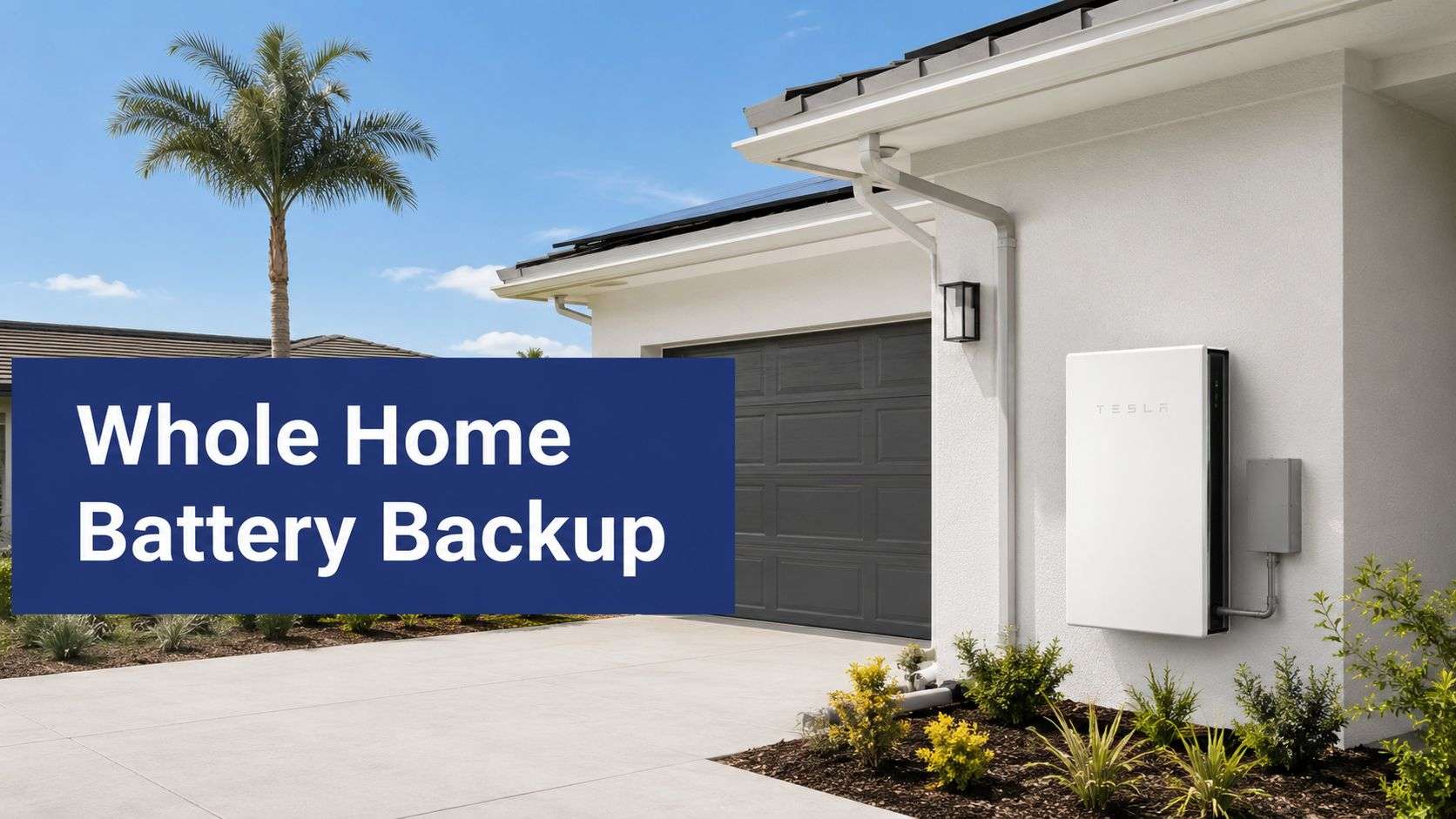
What doesn't work is assuming every sunny-looking roof should carry enough panels to erase the bill, or assuming battery backup means the whole property will operate normally during an outage. In Florida, resilience planning often comes down to selective backup, not whole-property backup.
This is also where independent consulting helps. A consultant's job is to clarify trade-offs, pressure-test assumptions, and keep the project grounded in numbers instead of sales scripts.
Start With Your Energy Bill Your Foundation For Sizing
A Florida property can look efficient in March and expensive in August. If the sizing work starts from a single bill, the system often misses the actual target.
The utility bill gives the first hard numbers. Start with usage, not the payment amount, because fuel charges, fees, and rate changes can make the cost swing even when consumption stays close to the same. For sizing, the number that matters is kilowatt-hours.
For a home or commercial property in Florida, pull a full year of bills. Cooling demand, humidity control, pool equipment, seasonal occupancy, and storm recovery patterns can all shift usage across the year. One mild month can understate what the property really needs solar to cover.

Pull The Right Data
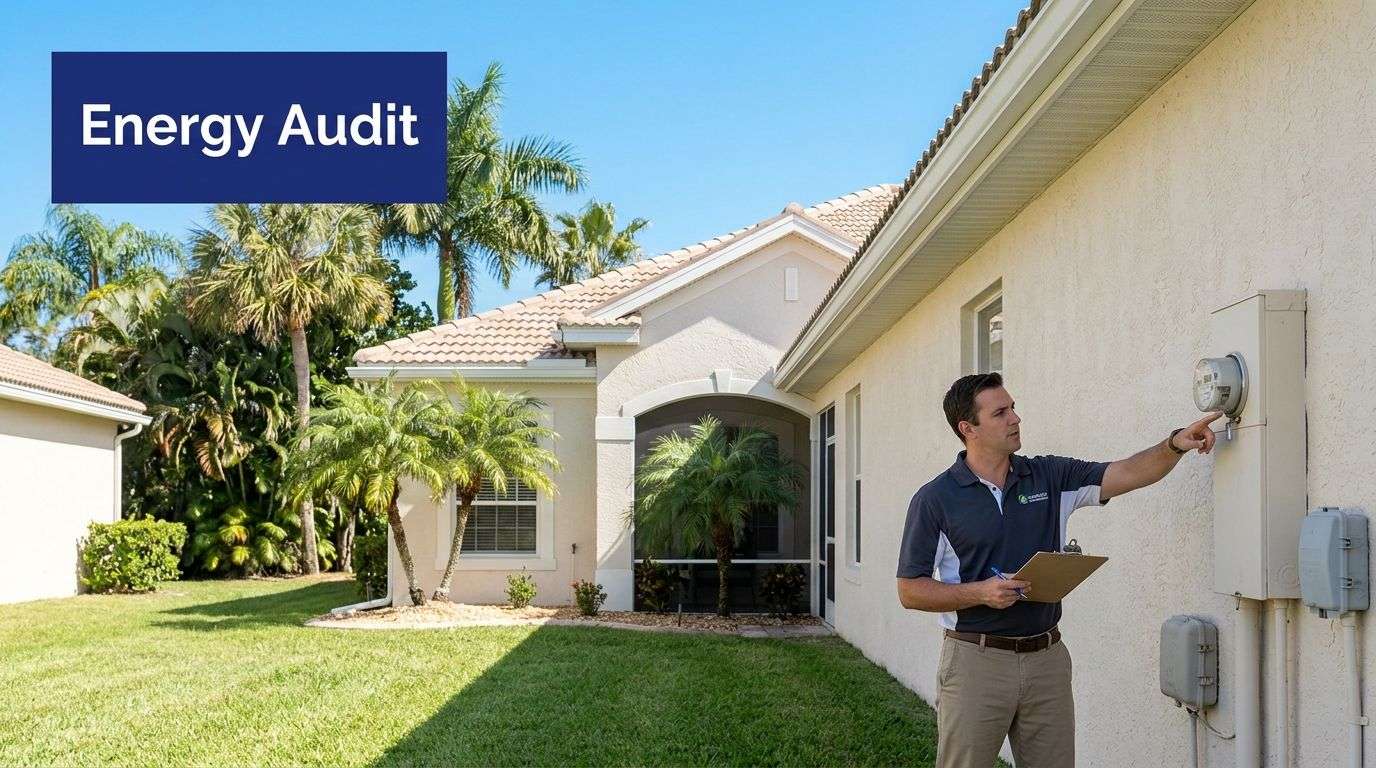
If you use FPL, Duke Energy, or TECO, log into the utility portal and download the monthly usage history in kWh. That record is far more useful than a stack of bills because it lets you spot patterns quickly.
Collect these items:
- Twelve months of usage: This captures summer air-conditioning demand and lower-use months.
- Monthly kWh totals: These show whether the load is flat, seasonal, or climbing.
- Notes on abnormal months: Vacancy, a failing AC unit, added refrigeration, EV charging, or tenant turnover can distort the baseline.
I also ask clients one simple question here. Is this usage likely to stay the same after the solar install? If the answer is no, the design target has to change before anyone talks panel count.
If the property has obvious inefficiencies, fix those numbers before you buy generation to cover them. A smaller, better-targeted system often produces a stronger return than a larger system built around wasted consumption. Review practical ways to reduce high Florida electric bills before sizing solar if insulation, duct leakage, or old HVAC equipment may be inflating usage.
Turn Bills Into A Usable Baseline
Add up the last 12 months of kWh usage. That annual total is the starting point for a grid-tied sizing estimate.
Then adjust it for known changes. If an old air conditioner is about to be replaced, if an EV is being added, or if business hours are expanding, use the expected future load instead of treating the past year as fixed. Good sizing is forward-looking. The goal is to match the system to the property you will own and operate, not the snapshot preserved on last year's bills.
For Florida projects, annual usage is only the first pass. Utility policy, roof orientation, summer production patterns, and resilience goals all affect the final design. A homeowner chasing maximum bill offset may size differently from a homeowner who wants battery support during hurricane outages, even if both properties used the same number of kWh last year.
Questions To Ask Before You Size
Before locking in a target, check whether the bill reflects normal operations.
- Will occupancy change: A home office, short-term rental use, or longer business hours can raise demand.
- Will new equipment be added: Pool pumps, EV chargers, refrigeration, and shop equipment can materially change usage.
- Will existing equipment be replaced: Old HVAC systems and water heaters often make current bills higher than future bills.
- Does the property have seasonal use: Florida second homes and some commercial properties do not follow a steady pattern.
A year of bills gives you the foundation. It does not answer every design question, but it prevents the most common sizing mistake, which is building around assumptions instead of actual consumption.
For many properties, this step changes the economics fast. It can show that the right answer is a smaller system after efficiency work, or a larger one because future loads are about to increase. Either way, the bill is where disciplined sizing starts.
Perform A Load Analysis For Your Property
Annual usage is enough to estimate a bill-offset system. It is not enough to plan resilience.
If backup power matters, you need a load analysis. That means listing what the property uses, identifying what matters during an outage, and separating those critical circuits from everything else.

For a Florida homeowner, that list often includes refrigeration, internet, selected lighting, garage access, medical devices, and perhaps one cooling strategy. For a business, it can mean networking gear, security, controls, payment systems, or process equipment that can't go dark without consequences.
A formal solar power feasibility study usually starts here because the battery decision depends less on total annual consumption and more on which loads must survive grid loss.
Nice To Have Versus Must Have
Many projects quickly incur high costs. People often say they want whole-home or whole-building backup when what they need is continuity for a smaller set of essential loads.
A useful filter is to sort loads into three buckets:
- Critical loads: Refrigeration, medical support, internet, communications, safety lighting, alarm panels, server racks, controls.
- Manageable loads: A small office area, selected receptacles, one mini-split zone, limited kitchen circuits.
- Deferred loads: Pool pumps, electric resistance heat, large water heating loads, dryers, decorative lighting, and some heavy process loads.
That separation changes battery scope immediately. A targeted backup design is usually more practical than trying to run every breaker as if nothing happened.
A Florida Example
For a house, one of the most common mistakes is assuming central air must be backed up in the same way the grid supports it. Sometimes that's appropriate. Sometimes a better resilience strategy is to back up one sleeping area, refrigeration, lighting, communications, and a smaller cooling load.
For a business, the equivalent mistake is treating all square footage as equally critical. It usually isn't. The front office, point-of-sale system, security network, and communications closet may matter far more than every lighting circuit or every rooftop unit.
During an outage, resilience comes from deciding what matters most before equipment gets priced.
How To Build The Load List
Use the panel schedule if available. If not, walk the property and create a working list.
Look for:
- Equipment that cycles often: Refrigerators, pumps, condensers, and controls.
- Loads with operational consequences: Anything that protects inventory, health, safety, or revenue.
- Loads that can be scheduled: Some equipment can wait until sunlight is available or the grid returns.
Then mark each item by priority. This doesn't require perfect engineering precision at first. What matters is creating an honest picture of what you need the system to do.
For many Florida properties, solar sizing splits into two designs at this point. One design offsets energy costs. The other defines the backup envelope. They influence each other, but they aren't the same problem.
Estimate Your Solar Production Potential In Florida
A Florida roof that looks perfect at noon can still miss the financial target once afternoon cloud buildup, high cell temperatures, and shade from nearby trees show up in the model. Production estimates need to reflect that reality before anyone talks about panel count.

Start With Climate And Roof Conditions, Not Nameplate Ratings
Panel wattage is a lab rating. Florida performance is a field result.
Heat reduces output. Humidity and salt air can increase maintenance pressure near the coast. Summer storm patterns shift production into different parts of the day than a simple annual average suggests. A usable estimate has to account for those losses, plus wiring, inverter conversion, soiling, and module mismatch.
For an early sizing pass, use a conservative production assumption rather than the panel label. Then test whether the roof can support the energy target under real operating conditions. That keeps the project grounded in expected savings, not brochure math.
Panel selection matters here too. Higher-efficiency modules can help on constrained roofs, while different cell and module designs handle heat and partial shading differently. This overview of solar panel technology options is useful if roof space is tight or resilience is part of the design brief.
Florida Solar Production Depends On Timing, Not Just Annual Totals
Two systems with the same annual output can create different bill outcomes.
That happens all the time in Florida. A west-facing array may produce less over the full year than a south-facing array, but it can still be financially stronger if it delivers more power during late-day cooling hours. Under some utility rate structures, that production timing has real value. For backup-focused projects, timing matters even more because the goal is often to keep specific loads running through storm season, not just maximize yearly kilowatt-hours.
Use this screening sequence:
- Match the production target to the usage target from the utility history.
- Check the site's solar resource by location in Florida, not with a national average.
- Apply real-world losses for heat, conversion, soiling, and shading.
- Compare expected production by hour, not only by year.
- Confirm the roof layout can physically support the design.
Roof Geometry And Shade Can Change The Whole Design
Square footage alone does not tell you much. I have seen large roofs produce poorly because the clean usable area was broken up by hips, valleys, vents, setbacks, and shade paths that cut into the best module locations.
Orientation also deserves a more careful look than generic online formulas give it. The old rule about matching tilt to latitude is too rough for Florida projects, where weather patterns, seasonal load shape, and roof form often matter more than theoretical optimum tilt. Site-specific modeling produces better decisions, especially for properties with east-west planes, tree cover, or partial-day shading, as discussed in this review from Eosense.
Good production modeling answers two questions. How much energy will the system make, and when will it make it?
Production Also Ties Back To Building Design
Solar output is only half of the equation. The building itself influences how much solar you need to buy.
On a new build or major renovation, roof overhangs, window placement, attic heat control, and shading strategies can reduce cooling demand before the first panel goes up. That can shrink system size, improve payback, or free up budget for battery storage and stronger mounting details for storm resilience. If you are planning from the ground up, it helps to understand passive solar design so the building and the solar system work together instead of fighting each other.
For a screening estimate, conservative assumptions win. If the model still works with Florida weather, roof constraints, and the property's actual usage pattern, the project is worth refining. If it only works under perfect conditions, the sizing is too aggressive.
Sizing Key Components Panels Inverters And Batteries
A Florida owner can have the annual kWh target exactly right and still end up with the wrong system if the hardware choices do not match the roof, backup goals, and utility constraints. Component sizing is where a workable concept becomes a buildable project.

Panels Translate Capacity Into Roof Area
Panel wattage converts the target array size into an estimated panel count. The arithmetic is easy. Roof layout is usually the limiting factor.
On Florida properties, I pay close attention to usable roof sections, not just total square footage. Setbacks, ridges, hips, plumbing vents, mechanical equipment, and orientation breaks can reduce how many modules fit cleanly. Hurricane exposure also affects layout decisions because attachment spacing, edge zones, and access paths matter during engineering and permitting.
That changes the sizing conversation. A 12 kW target may fit well with one module size and poorly with another. Higher-wattage panels can reduce module count, but they may also create tighter layout tolerances or push the design toward fewer roof planes with less flexibility.
Inverter Sizing Is About Operating Conditions
Inverter sizing should follow the array design and the way the property uses power. It is a conversion strategy decision, not a box-checking exercise.
Florida heat matters here. High cell temperatures can reduce panel output during the hottest part of the day, while morning and late afternoon production may be spread across multiple roof planes. That is one reason DC and AC nameplate values do not have to match one-for-one. A well-sized inverter setup accounts for clipping trade-offs, roof geometry, shading behavior, and whether the owner wants panel-level monitoring or simpler central equipment.
A few decisions carry real consequences:
- String inverter vs. module-level electronics: Complex roofs, partial shading, and troubleshooting preferences often point toward optimizers or microinverters.
- Backup compatibility: Some inverter platforms support battery integration and critical-load panels more cleanly than others.
- Interconnection limits: Utility rules can cap export or influence how much AC capacity makes financial sense.
- Expansion plans: Future EV charging, pool equipment, or added commercial load can justify a different inverter path now.
For owners comparing architectures, this guide to inverter and solar installation planning gives useful technical context before equipment is selected.
Batteries Should Follow The Critical Load Plan
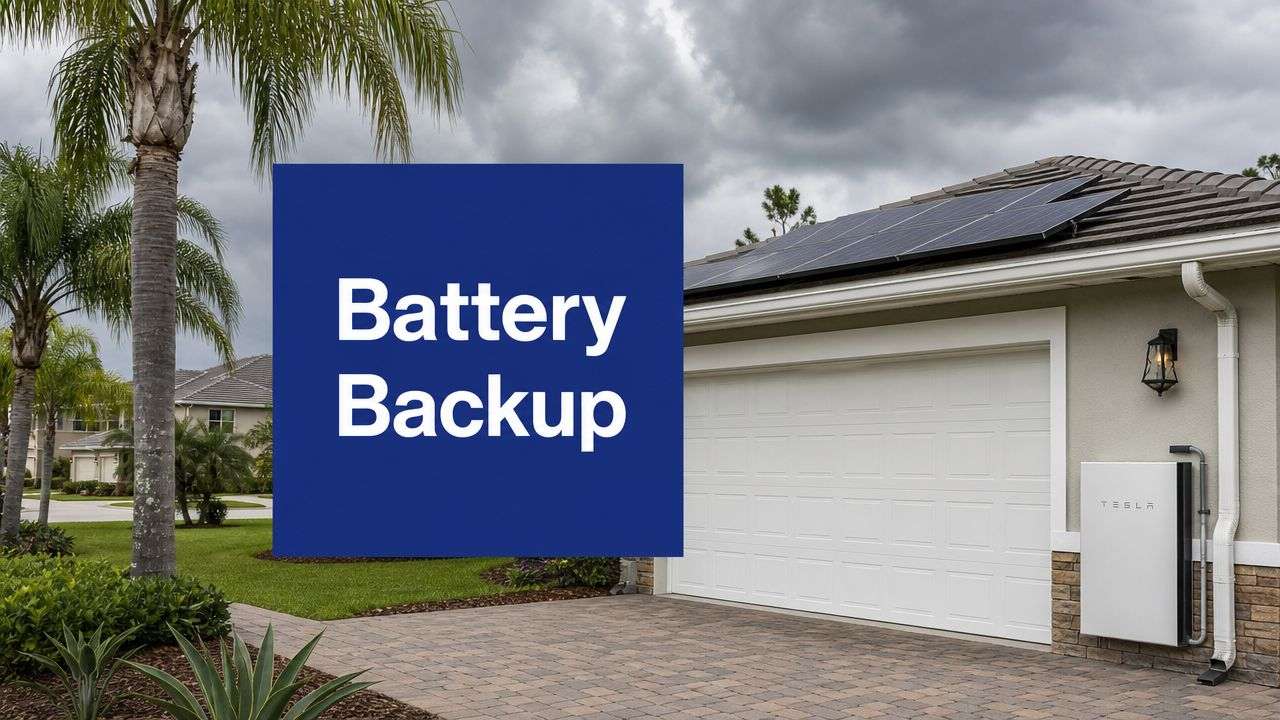
Battery sizing starts with the circuits that must stay on during an outage. In Florida, that often means refrigeration, internet, lighting, security, garage access, medical equipment, and a limited cooling strategy. For a business, it may be the POS system, network rack, alarm panel, emergency lighting, and one small HVAC zone.
That list drives battery capacity and power rating. A battery has to do two jobs. It must store enough energy to cover the outage plan, and it must deliver enough instantaneous power to start and run the selected loads.
Whole-home backup sounds attractive, but it pushes costs up quickly, especially if central air conditioning is included. Selective backup usually produces a better financial result unless the property has a clear reason to carry a larger resilience budget.
A battery plan should answer three questions clearly. Which loads stay on, for how long, and under what weather conditions?
At this stage, an independent advisor can add structure without steering the decision toward a specific brand. Solar Energy Management LLC provides consulting on system design guidance, battery storage planning, and feasibility analysis for Florida properties.
Keep The Procurement Sequence Clean
The best projects follow a disciplined order:
- Confirm the annual and seasonal energy target
- Test what the roof or site can host
- Choose panel dimensions and layout
- Match the inverter architecture to production, backup goals, and utility rules
- Size battery storage from the critical load schedule
- Review installation risk, contractor qualifications, and insurance
That last step gets overlooked. On larger residential jobs and commercial projects, contractor risk management affects schedule, liability, and long-term serviceability. Owners vetting installers can learn what proper risk protection looks like by reviewing tailored coverage for solar contractors.
A clean sequence prevents expensive rework. It also keeps the system sized around performance, payback, and outage resilience instead of marketing claims.
From Numbers To Reality Financials And Next Steps
A Florida owner usually reaches this point with one practical question. Will this system produce enough savings and backup value to justify the capital.
That answer comes from putting the sizing work into a real decision frame. Start with estimated annual production, compare it against your current utility costs, then test how Florida-specific factors affect the outcome. Net metering rules, rate structure, storm outage risk, insurance considerations, and battery use pattern all change project value. A system that looks good in a simple online calculator can underperform financially if those details are ignored.
For many properties, the next decision is not just system size. It is system scope. Some owners get a better return by pairing a slightly smaller solar array with efficiency upgrades first. Others benefit from adding storage because outage costs, spoiled inventory, tenant disruption, or business interruption carry real financial weight in Florida. For commercial projects, tax treatment also affects the numbers, so it makes sense to review the current rules for solar energy tax credits for businesses alongside depreciation, cash flow, and capital planning.
Why The Final Step Should Be A Professional Review
A homeowner can size a project well enough to ask smart questions. Final design still needs professional review.
In Florida, that review should confirm whether the project works on paper and in the field. Roof age matters. Wind exposure matters. Utility interconnection details matter. Backup planning matters because a battery sized for evening self-consumption is different from a battery sized to ride through a multi-day outage after a hurricane. Production modeling should also reflect Florida weather patterns instead of relying on generic national assumptions about sun hours and tilt.
Procurement deserves the same level of scrutiny. On commercial work, and on larger residential jobs, owners should understand installer accountability before signing a contract. Reviewing what tailored coverage for solar contractors includes helps you ask better questions about liability, workmanship exposure, subcontractor risk, and long-term service support.
Good review work protects the economics. It helps confirm payback assumptions, identifies where resiliency spending is justified, and prevents oversizing that looks impressive in a proposal but weakens return on investment.
If you want an independent, Florida-focused review of your usage, solar production potential, battery backup needs, and project economics, Solar Energy Management LLC provides decision support that turns a rough estimate into a plan you can price, compare, and approve with confidence.